
Understanding Singapore's Electrical Standards (SS 650 & BS 1363)
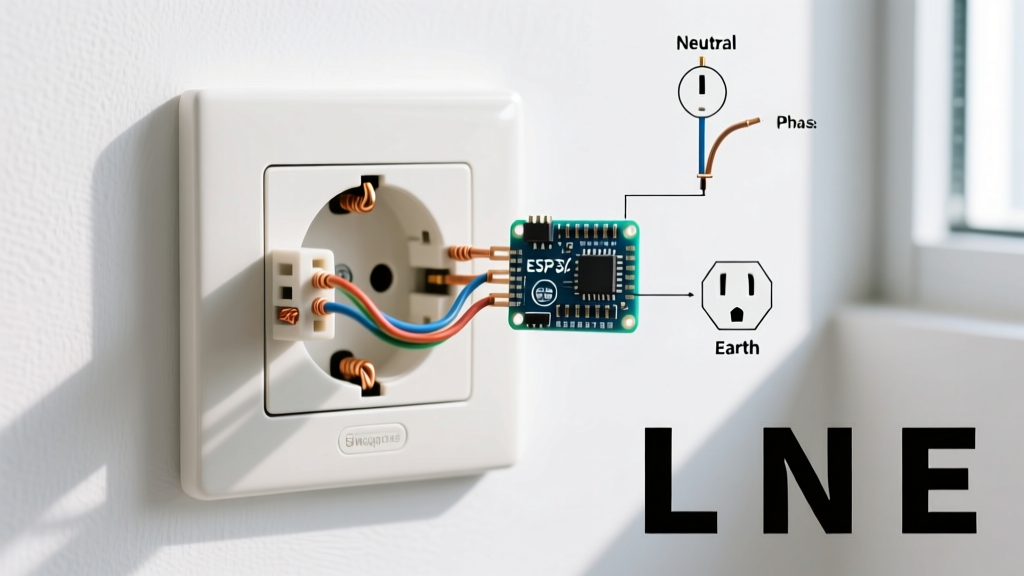
Inspecting an electric outlet in Singapore requires a firm grasp of local regulatory frameworks and physical standards. Unlike North American systems operating at 120V/60Hz, Singapore's grid delivers a nominal 230V at 50Hz. The governing wiring standard is Singapore Standard SS 650 (which officially replaced CP 5 in 2019), dictating the Code of Practice for Electrical Installations. Furthermore, all standard 13A socket outlets must comply with SS 145, which adopts the British BS 1363 standard for Type G plugs and sockets.
According to the Energy Market Authority (EMA), the acceptable voltage tolerance in Singapore is +10% / -6% of the nominal 230V. This means when testing an outlet, your multimeter should read between 216.2V and 253V. Readings outside this bandwidth indicate upstream transformer tap issues, severe voltage drop due to undersized conductors, or loose neutral connections at the distribution board (DB).
Essential Tools for Outlet Testing in Singapore (2026 Pricing)
Professional inspection goes far beyond a simple neon screwdriver. To properly verify polarity, earth loop impedance, and RCD trip times, you need calibrated equipment. Below is a breakdown of industry-standard tools used by Licensed Electrical Workers (LEWs) in Singapore, complete with current local market pricing.
| Tool Category | Recommended Model | Purpose | Approx. Cost (SGD) |
|---|---|---|---|
| Socket Tester | Kyoritsu KEW 5406A | Quick polarity, earth presence, and RCD trip check | $85 - $110 |
| Installation Tester | Fluke 1664 FC | Earth loop impedance (Zs), line impedance, and advanced RCD testing | $1,800 - $2,100 |
| True RMS Multimeter | Uni-T UT61E+ | Precise AC/DC voltage, continuity, and resistance measurements | $115 - $130 |
| Thermal Camera | FLIR C5 | Detecting high-resistance connections and overloaded terminals | $650 - $720 |
Phase 1: Visual & Mechanical Inspection
Before introducing any test equipment, a rigorous visual inspection is mandatory. Singapore's high humidity (often exceeding 80% RH) accelerates oxidation and can degrade mechanical components inside the socket.
- Shutter Mechanism Check: BS 1363 sockets feature protective shutters. Insert a single pin (or a non-conductive probe) into the Line or Neutral aperture. The shutter must not open. It should only open when the longer Earth pin is inserted, which mechanically unlocks the Line and Neutral shutters. Failure here is a critical child-safety hazard.
- Terminal Scorching: Remove the faceplate (after isolating the circuit at the DB). Look for brown or black carbon tracking around the brass terminals. This is a primary indicator of a loose connection causing localized arcing, or an overloaded circuit where the 13A plug fuse failed to clear the fault before the socket degraded.
- Cable Gland & Earth Sleeving: Ensure the PVC outer sheath of the cable enters the backbox fully. The bare earth wire must be covered with green/yellow PVC sleeving right up to the terminal block, as mandated by SS 650.
Phase 2: Electrical Testing Procedures
Once visual integrity is confirmed, proceed to live and dead testing. Ensure you are wearing appropriate PPE and using CAT III or CAT IV rated test leads.
Step 1: Voltage and Polarity Verification
Using your True RMS multimeter, measure the voltage between Line and Neutral (should be ~230V), Line and Earth (~230V), and Neutral and Earth (should be < 2V). A high Neutral-to-Earth voltage (e.g., > 5V) suggests a shared neutral on a multi-wire branch circuit or a high-resistance neutral bond at the substation.
Step 2: Earth Fault Loop Impedance (Zs)
This is the most critical safety metric. If a Line-to-Earth fault occurs, the impedance of the fault path must be low enough to allow sufficient current to flow, instantly tripping the Miniature Circuit Breaker (MCB).
SS 650 Compliance Note: For a standard 32A Type C MCB protecting a socket ring final circuit, the maximum permissible earth fault loop impedance (Zs) is 1.44 ohms. For a 20A Type C MCB on a radial circuit (common in HDB kitchens), the limit is 2.30 ohms.
Use an installation tester like the Fluke 1664 FC to inject a test current and measure Zs. If your reading exceeds these thresholds, the circuit is non-compliant and poses a severe shock hazard, as the MCB may not trip fast enough during a fault.
Step 3: RCD / RCBO Trip Testing
Singapore regulations require 30mA Residual Current Devices (RCDs) or RCBOs for all socket outlets intended for general use by ordinary persons. Testing the trip time ensures the device will protect against lethal ventricular fibrillation.
- Test at 1x IΔn (30mA): The RCD must trip within 300 milliseconds.
- Test at 5x IΔn (150mA): The RCD must trip within 40 milliseconds.
- Test at 0.5x IΔn (15mA): The RCD must not trip, proving it is not overly sensitive to nuisance tripping.
Common Faults Found in Singapore HDB & Condo Outlets
Through years of field inspections across HDB BTOs, older resale flats, and private condominiums, specific failure patterns emerge. The table below outlines these common faults, their symptoms, and the required remediation.
| Fault Type | Typical Symptom / Reading | Root Cause & Remediation |
|---|---|---|
| Reversed Polarity | Socket tester shows L/N swap; L-E and N-E voltages are inverted. | Wiring swapped at the socket or DB. Remediation: Isolate, swap Line (Brown) and Neutral (Blue) conductors at the terminal block. |
| Open Earth | No voltage reading between L-E; Zs test reads > 2000 ohms or OL. | Broken earth wire or missing sleeve causing a disconnect. Remediation: Trace cable, repair earth continuity, and re-test Zs. |
| High Resistance Neutral | N-E voltage reads > 5V; visible heat on thermal camera. | Loose neutral bar connection at the DB or undersized conductors. Remediation: Torque DB neutral bar to manufacturer specs (usually 2-3 Nm). |
| Ring Circuit Break (Condos) | End-to-end continuity test fails for Line, Neutral, or Earth. | A severed cable in the ring. Remediation: Locate break with TDR, convert to two radial circuits or re-pull cable. |
Regulatory Compliance: When to Call an LEW
While homeowners can perform basic visual checks or use a simple plug-in socket tester, any formal testing, certification, or modification of an electric outlet in Singapore must be carried out or endorsed by a Licensed Electrical Worker (LEW).
According to the Electricity Act and EMA regulations, if you are rewiring a kitchen, adding a new 20A radial circuit for high-draw appliances (like built-in ovens or induction hobs), or upgrading your DB to include RCBOs, an LEW (typically Grade 7 or higher for residential loads) must test the installation and submit a completion certificate to SP Services. The Singapore Civil Defence Force (SCDF) frequently cites unlicensed electrical modifications and degraded outlets as primary ignition sources in residential fires. Never bypass the LEW requirement for the sake of saving a few hundred dollars in contractor fees; the safety and insurance implications are immense.
Frequently Asked Questions (FAQ)
Can I use a US/Japan 110V appliance in a Singapore electric outlet?
No. Plugging a 110V appliance directly into a 230V Singapore outlet will instantly destroy the appliance and likely cause a fire. You must use a step-down transformer rated for the appliance's wattage, not just a physical plug adapter.
Why does my HDB kitchen socket trip when I use the kettle and microwave together?
Most HDB kitchen socket circuits are protected by a 20A MCB. A kettle (approx. 2000W / 8.7A) and a microwave (approx. 1200W / 5.2A) draw roughly 14A combined. If other loads (like a rice cooker or fridge compressor starting) are on the same radial circuit, the cumulative inrush current can exceed the 20A magnetic trip threshold of the MCB. The solution is to distribute loads across different circuits or have an LEW install a dedicated radial circuit for high-draw appliances.
How often should electrical outlets be tested?
For residential properties, a full periodic inspection and testing (including Zs and RCD tests) by an LEW is recommended every 10 years, or upon change of tenancy/ownership. For commercial spaces, Enterprise Singapore guidelines and SS 650 recommend testing every 5 years.