
The Physics of a 'Mild' Tingle vs. a Lethal Shock
Experiencing a mild electric shock from outlet receptacles or connected appliances is a common but deeply unsettling event. Before grabbing a screwdriver, it is critical to distinguish between a harmless electrostatic discharge, a capacitive coupling 'tingle,' and a genuine fault current that indicates a severe grounding failure. According to the Electrical Safety Foundation International (ESFI), electrical faults in residential settings cause hundreds of fatalities and thousands of injuries annually. While a 'mild' shock rarely causes ventricular fibrillation, it is often the primary symptom of a degraded safety ground path that could become lethal under wet conditions or if a secondary fault occurs.
Safety Directive: Never assume a mild tingle is static electricity. If you feel a continuous vibration or buzzing sensation when dragging your fingers across a metal appliance chassis (like a refrigerator, microwave, or laptop), you are experiencing alternating current (AC) leakage. Turn off the circuit breaker immediately and proceed with diagnostic testing.
Diagnostic Matrix: Identifying the Culprit
The root cause of a mild electric shock from outlet circuits usually falls into one of four categories. Use the matrix below to cross-reference your symptoms with the likely electrical failure.
| Symptom Profile | Probable Root Cause | Multimeter Reading (Hot-to-Ground) | NEC Code Implication |
|---|---|---|---|
| Continuous tingle on metal laptop/appliance chassis | Missing Equipment Ground (Open Ground) + SMPS Y-Capacitor Leakage | 0V (or phantom voltage 10V-40V) | NEC Article 250 (Grounding) |
| Sharp, brief snap when touching faceplate screws | Loose Hot Wire arcing to metal yoke or damaged insulation | 120V (fluctuating) | NEC Article 110.12 (Mechanical Execution) |
| Shock from plumbing/fixtures near the outlet | Neutral-Ground Reversal or Shared Neutral Overload | 120V (Neutral-to-Ground reads >5V) | NEC Article 250.142 |
| Appliance works, but 3-light tester shows 'Open Ground' | Bootleg Ground (Neutral jumpered to Ground terminal) | 120V (False Positive on Ground) | NEC Article 250.8 (Prohibited Connections) |
The Edge Case: Switch-Mode Power Supplies (SMPS) and Y-Capacitors
One of the most frequent reasons homeowners search for solutions to a mild electric shock from outlet setups involves modern electronics. Devices like the Apple MacBook Pro, Dell XPS, or high-end audio amplifiers use Switch-Mode Power Supplies (SMPS). To pass electromagnetic interference (EMI) regulations, these power bricks contain 'Y-capacitors' wired between the high-voltage AC lines and the DC ground (which connects to your device's metal chassis).
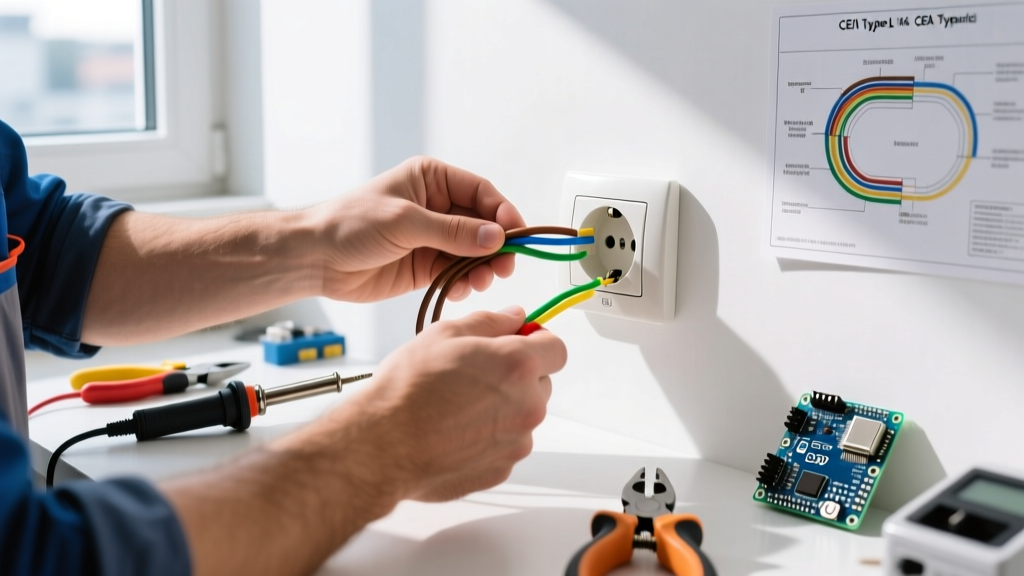
When the outlet has a proper equipment ground, the ~100 microamps (µA) of leakage current is safely shunted to earth. However, if you use a 2-prong adapter, plug into an ungrounded 3-prong outlet, or use a damaged ground pin, that 100µA has nowhere to go but through your body when you touch the chassis. While 100µA is well below the 10mA 'let-go' threshold, human skin is highly sensitive to 60Hz AC vibration, perceiving it as a distinct, fuzzy 'tingle.' The fix here is not necessarily rewiring the house, but ensuring the receptacle's ground pin is physically intact and continuous back to the main service panel.
Step-by-Step Multimeter Diagnostic Protocol
To definitively diagnose the circuit, bypass cheap 3-light neon testers. They cannot detect bootleg grounds or high-resistance neutral faults. You need a True-RMS digital multimeter (such as the Fluke 117 or Klein Tools MM400, retailing around $180 and $45 respectively in 2026).
Step 1: Verify Hot-to-Neutral Voltage
Insert the red probe into the shorter (hot) slot and the black probe into the longer (neutral) slot. You should read between 118V and 122V. If it reads significantly lower (e.g., 105V), you have a high-resistance connection or a shared-neutral overload upstream.
Step 2: Verify Hot-to-Ground Voltage
Move the black probe to the U-shaped ground hole. The reading must be virtually identical to your Hot-to-Neutral reading (within 1V). If it reads 0V, you have an open ground. If it reads 60V-70V, the ground wire is likely severed and acting as an antenna, picking up capacitive phantom voltage.
Step 3: The Critical Neutral-to-Ground Test
Place the red probe in the neutral slot and the black probe in the ground hole. This should read between 0.0V and 2.0V. If you read 5V or higher, current is flowing on the ground wire—a massive safety violation indicating a neutral-ground bond somewhere downstream, or a severely corroded neutral bus bar in your subpanel.
Step 4: Exposing the 'Bootleg Ground'
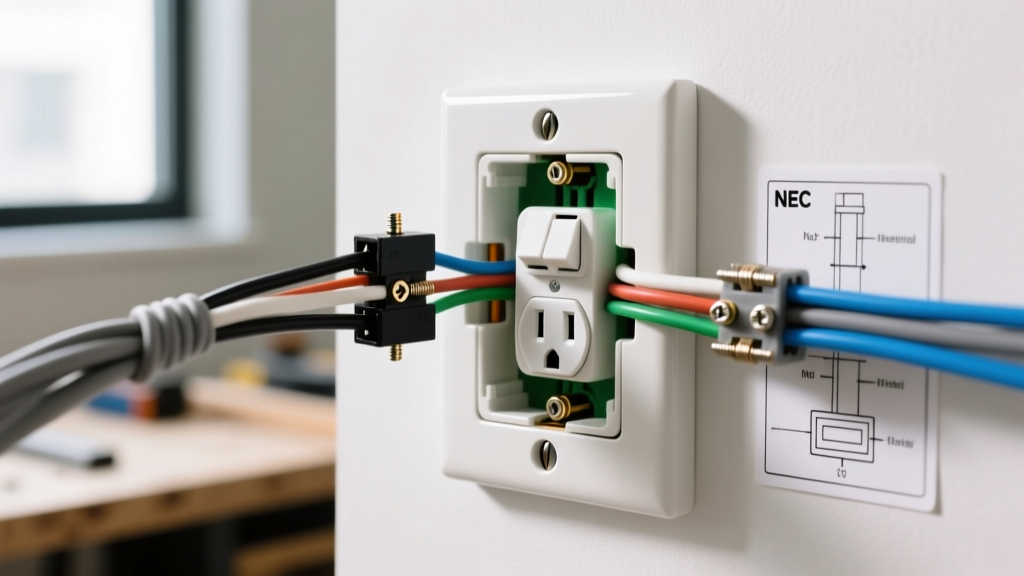
Unscrupulous sellers or lazy handymen sometimes install a jumper wire between the neutral (silver) and ground (green) terminals on the receptacle to trick home inspectors' 3-light testers. To check for this, turn off the breaker, remove the receptacle faceplate, and visually inspect the side terminals. If a wire bridges the silver and green screws, remove it immediately. As noted in the NFPA 70 (National Electrical Code), a bootleg ground becomes lethal if the upstream neutral wire breaks, energizing the appliance chassis with full 120V line voltage.
Remediation Strategies and 2026 Cost Estimates
Once you have isolated the reason for the mild electric shock from outlet circuits, you must apply a code-compliant fix. Below is a breakdown of standard remediation paths, material costs, and professional labor rates for 2026.
| Remediation Strategy | Best Use Case | Material Cost (2026) | Pro Labor (If Hired) |
|---|---|---|---|
| Replace with GFCI Receptacle | Ungrounded circuits (pre-1960s wiring) where pulling new ground wire is impossible. | $22 - $35 (e.g., Leviton GFNT2-W) | $150 - $225 (Service Call) |
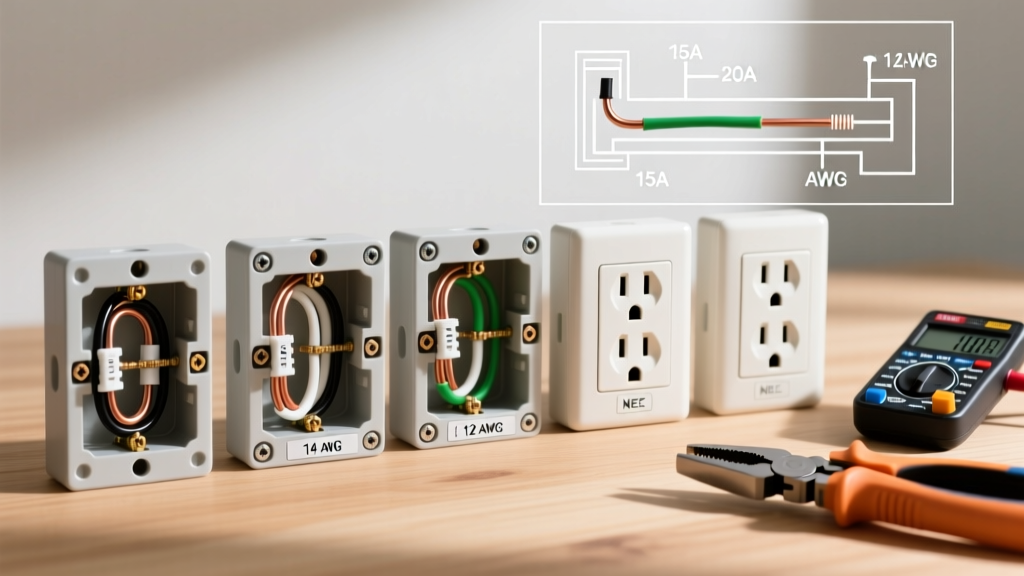
| Rewire Circuit with Equipment Ground | Kitchen/Bathroom circuits, major appliances, or home office setups. | $0.40/ft (12/2 NM-B Cable) | $1,200 - $2,800 (Full circuit pull) |
| Tighten Panel Lugs & Bus Bars | High Neutral-to-Ground voltage readings indicating panel degradation. | $0 (Torque screwdriver required) | $250 - $400 (Panel maintenance) |
| Replace Damaged SMPS Cord | Laptop/Appliance tingle caused by severed ground pin on the cord. | $15 - $40 (OEM Replacement Cord) | N/A (DIY Swap) |
The GFCI Loophole (NEC 406.4(D)(2)(b))
If your multimeter confirms an open ground and the walls are finished, the NEC allows you to replace the standard receptacle with a Ground Fault Circuit Interrupter (GFCI). A GFCI does not create a ground; instead, it monitors the current differential between hot and neutral. If it detects a 5mA leak (such as current passing through your body to a grounded pipe), it trips in under 25 milliseconds, preventing lethal electrocution. However, you are legally required to apply the included stickers reading 'GFCI Protected' and 'No Equipment Ground' to the faceplate. Note that surge protectors plugged into a GFCI-protected, ungrounded outlet will not function correctly, as they rely on the ground wire to shunt transient voltage spikes.
When to Call a Licensed Electrician
While replacing a receptacle is a standard DIY task, certain diagnostic results mandate professional intervention. The Consumer Product Safety Commission (CPSC) strongly advises against amateur panel work. Call a licensed master electrician immediately if:
- Your Neutral-to-Ground voltage exceeds 5V: This indicates a failing neutral connection at the utility transformer or main service mast, which can cause devastating overvoltage conditions (up to 240V on 120V circuits) that destroy appliances and start fires.
- You discover aluminum branch wiring (pre-1974): Aluminum wire requires special CO/ALR rated receptacles and specific torque settings. Improper termination leads to thermal expansion, arcing, and severe shock hazards.
- The breaker fails to trip during a dead-short test: If your diagnostic testing reveals a fault but the breaker does not trip, the panel's mechanical trip mechanism is seized—a critical life-safety failure requiring immediate panel replacement.
Frequently Asked Questions
Can a mild shock from an outlet cause long-term nerve damage?
A true 'mild' tingle (under 1mA) from capacitive leakage will not cause nerve damage. However, if the shock causes a secondary injury (e.g., jerking your hand back and striking a counter edge), or if the current path crosses the chest cavity under wet conditions, the risk escalates. Always treat unknown voltages as potentially lethal.
Why do I only feel the shock when I am barefoot?
Rubber-soled shoes act as an insulator, increasing the electrical resistance between your body and the earth. When barefoot, especially on concrete or tile floors, your body's resistance to ground drops significantly, allowing more microamps of leakage current to flow through your skin, making the previously imperceptible tingle highly noticeable.