
The Hidden Dangers of Extending Electrical Outlet Circuits
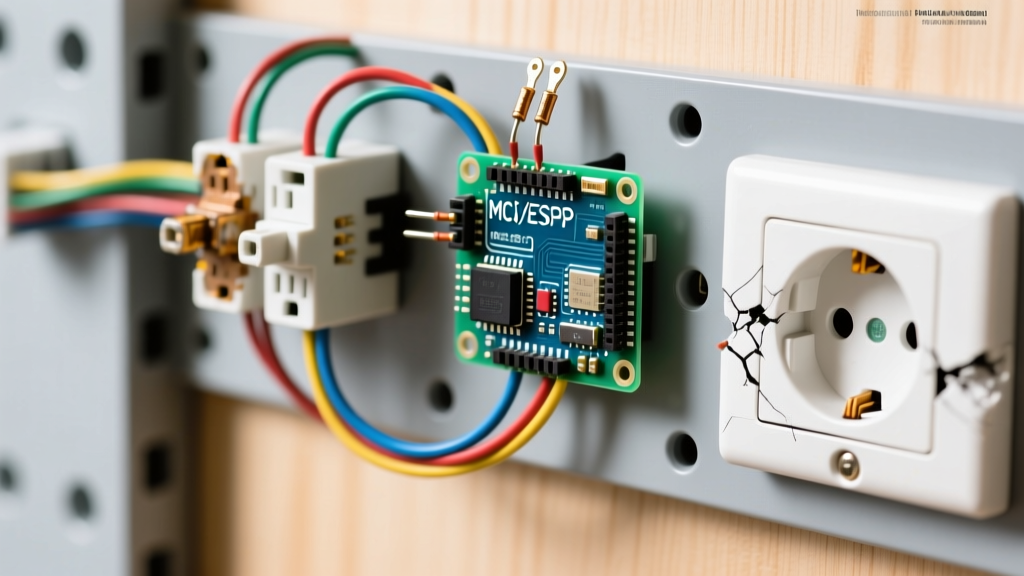
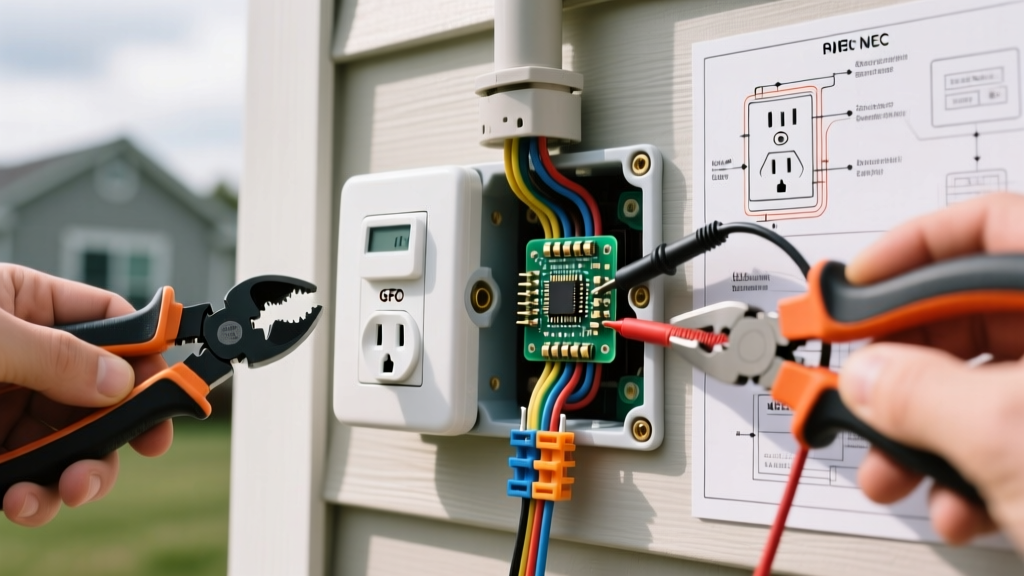
Extending an electrical outlet seems like a straightforward weekend project: run some 12/2 NM-B cable, wire brass to brass, silver to silver, and ground to ground. However, when you flip the breaker and the new receptacle is dead, or worse, it works but immediately trips the AFCI breaker downstream, you are facing a diagnostic challenge. As of 2026, with the widespread adoption of the 2023 NEC standards requiring Arc-Fault Circuit Interrupter (AFCI) protection in nearly all living spaces, the margin for error when daisy-chaining or extending circuits has shrunk dramatically.
At Electrical Flux, we see countless forum posts and service calls related to botched outlet extensions. This guide bypasses the basic 'how-to' and dives straight into advanced troubleshooting. We will diagnose the five most common wiring faults that occur when extending electrical outlet runs, providing exact multimeter readings, specific failure modes, and code-compliant solutions.
NEC 2023 Reference: Article 210.19(A)(1) Informational Note recommends that branch circuit voltage drop be limited to 3% for efficiency. Extending a circuit without calculating the new total run length is a primary cause of voltage drop violations.
Fault 1: The 'Dead Downstream' Dilemma (Open Neutral)
The Symptom: The original outlet works perfectly, but the newly extended outlet has zero power. A non-contact voltage tester might even beep at the new outlet, indicating 'phantom voltage,' but a lamp plugged into it won't turn on.
The Diagnosis: You have an open neutral. This almost always happens when DIYers use the push-in (backstab) connectors on the existing receptacle to feed the new one. Push-in connectors rely on a small brass spring clip that grips the wire. Under the thermal expansion and contraction of daily load cycling, these clips loosen over time, especially if the wire was nicked during stripping.
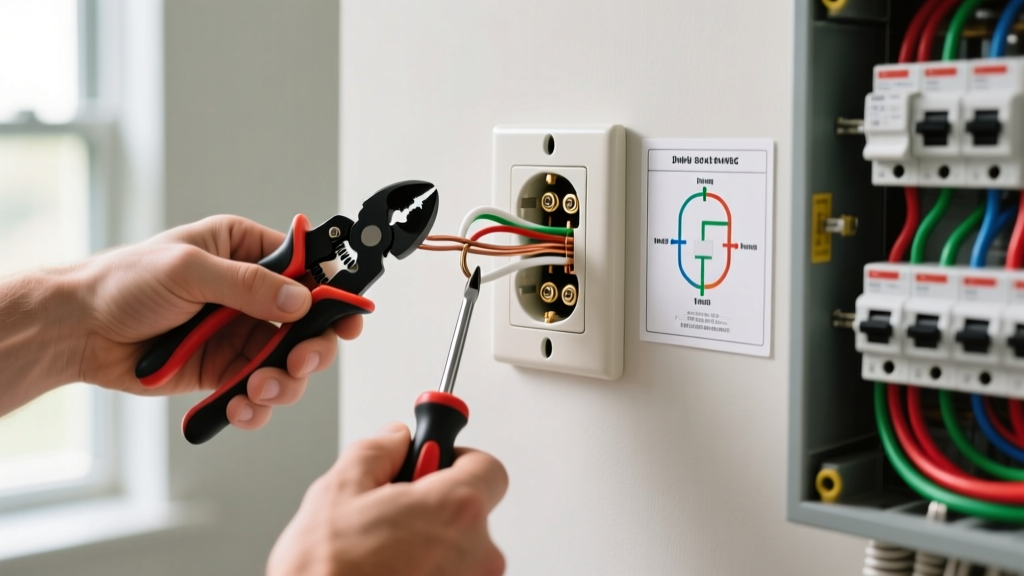
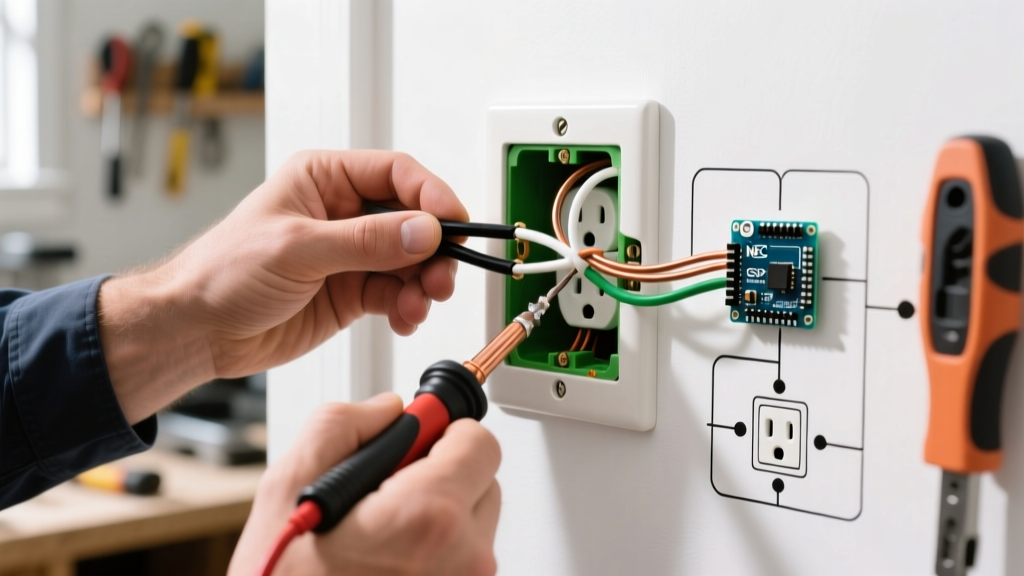
The Fix: Never use an existing receptacle's backstab terminals to extend a circuit. Remove the old receptacle and use a pigtail method. Connect the incoming hot, the outgoing hot, and a 6-inch black pigtail wire together using a Wago 221-413 lever nut (rated for 32A and highly reliable in 2026). Do the same for the neutrals and grounds. This ensures the downstream outlet receives power directly from the wire nut/lever nut junction, independent of the upstream receptacle's internal brass contacts.
Fault 2: Voltage Drop on Extended Runs
The Symptom: The new outlet works, but when you plug in a high-draw device like a space heater or a miter saw, the lights on the same circuit dim noticeably, and the outlet faceplate feels warm to the touch.
The Diagnosis: You have exceeded the maximum recommended run length for your wire gauge, resulting in a voltage drop greater than 3%. According to NFPA electrical safety guidelines, excessive voltage drop causes appliances to draw higher amperage to compensate for low voltage, generating dangerous heat in the conductors.
The Data Matrix: Wire Gauge vs. Run Length
| Wire Gauge (Copper) | Max Run @ 15A (3% Drop) | Max Run @ 20A (3% Drop) | 2026 Avg. Cost / ft |
|---|---|---|---|
| 14 AWG NM-B | 50 feet | 38 feet | $0.45 |
| 12 AWG NM-B | 85 feet | 64 feet | $0.65 |
| 10 AWG NM-B | 130 feet | 100 feet | $1.15 |
The Fix: If your total circuit length (from the breaker panel to the new extended outlet) exceeds the limits in the table above, you must either upgrade the entire run to a thicker gauge (e.g., pulling new 10/2 NM-B) or install a dedicated 20A circuit directly from the panel. Never mix 14 AWG wire on a 20A breaker, as this violates NEC 240.4(D) and creates a severe fire hazard.
Fault 3: Nuisance AFCI Tripping (Shared Neutral Faults)
The Symptom: You extend an outlet in a bedroom or living room. The moment you plug in a device and draw current, the AFCI breaker in the main panel trips instantly, even though there is no short circuit or ground fault.
The Diagnosis: You have accidentally created a shared neutral or crossed neutrals. In modern homes with multi-wire branch circuits (MWBC) or tandem AFCI breakers (like the Siemens QAF2 series), the breaker monitors the exact current balance between the hot and neutral wires. If you extend an outlet and accidentally tie the new outlet's neutral into a different circuit's neutral bundle in the junction box, the AFCI detects the imbalance and assumes an arc fault is occurring.
The Fix: Turn off the main breaker. Open the upstream junction box or the panel. Trace the exact neutral wire paired with your hot wire. Use a Fluke 117 True RMS Multimeter set to continuity mode to verify that the neutral you are extending belongs exclusively to the hot wire feeding the circuit. Keep all neutral bundles strictly isolated per circuit.
Fault 4: Bootleg Grounds and Reversed Polarity
The Symptom: A standard receptacle tester (like the Klein Tools RT250) plugged into your newly extended outlet lights up indicating 'Open Ground' or 'Hot/Neutral Reversed,' even though you wired it exactly like the existing outlet.
The Diagnosis: You have exposed a legacy wiring fault. In homes built before the 1970s, or in properties with unpermitted DIY work, the original outlet might have a 'bootleg ground'—a jumper wire connecting the neutral terminal to the ground screw to trick a tester into showing a 'correct' reading. When you extended the circuit, you likely connected to the actual ground wire (which is disconnected in the main panel) or failed to replicate the bootleg, revealing the true ungrounded nature of the circuit. For deeper diagnostic methodologies, refer to the Fluke guide on testing electrical outlets.
The Fix: Do not replicate a bootleg ground. It is highly dangerous and violates NEC 250.148. If the circuit lacks a true equipment grounding conductor, you must either:
- Run a new 12/2 or 14/2 cable with a dedicated ground back to the panel.
- Install a GFCI receptacle at the first outlet in the chain, and label the downstream extended outlets with the included 'GFCI Protected / No Equipment Ground' stickers, as permitted by NEC 406.4(D)(2).
Fault 5: Thermal Overload at the Receptacle Yoke
The Symptom: The outlet works, but after running a 12A vacuum cleaner for 10 minutes, the outlet faceplate is hot, and you smell faintly of melting plastic.
The Diagnosis: You used a cheap, builder-grade 15A receptacle (often costing less than $1.00) to extend a circuit that powers heavy loads. Builder-grade receptacles use thin brass internal contacts that lose their spring tension over time, creating high resistance at the plug interface. High resistance equals heat (I²R losses).
The Fix: Rip out the cheap receptacle. When extending electrical outlets that will serve high-draw appliances, always use Commercial Grade or Hospital Grade receptacles. Models like the Leviton T5262 (Tamper-Resistant, Commercial Spec Grade) cost around $4.50 in 2026 and feature massive brass contact surfaces and reinforced steel yokes that grip plugs tightly, eliminating thermal buildup.
Step-by-Step Diagnostic Workflow for Extended Outlets
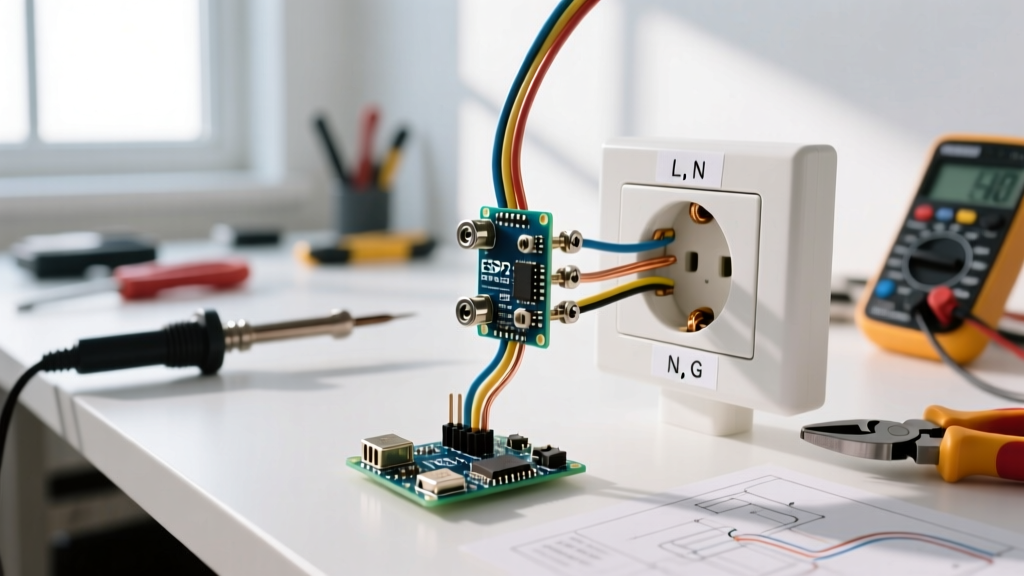
Before tearing open drywall to trace a faulty extension, follow this systematic diagnostic workflow using a digital multimeter (DMM):
- Step 1: Visual Inspection. Remove the faceplate. Check for stripped wire insulation pushed too far into the terminal box, which can cause the bare copper to short against the metal junction box.
- Step 2: Voltage Check (Hot to Neutral). Set DMM to AC Volts. Probe the brass screw and silver screw. You should read 120V (±5V). If you read 104V or lower, you have a voltage drop or a loose neutral upstream.
- Step 3: Voltage Check (Hot to Ground). Probe the brass screw and the bare copper ground wire. If this reads 0V but Hot-to-Neutral reads 120V, you have an open ground fault.
- Step 4: Continuity Test (Power OFF). Turn off the breaker. Test continuity between the neutral bus bar and the extended outlet's neutral terminal to ensure no breaks or hidden junction failures exist inside the walls.
Final Thoughts on Circuit Extensions
Extending an electrical outlet is rarely as simple as connecting A to B. It requires a holistic understanding of the entire branch circuit's load capacity, wire gauge limitations, and modern AFCI/GFCI sensitivity. By diagnosing these five specific faults and utilizing commercial-grade components, you ensure your extended circuits remain safe, code-compliant, and reliable for decades to come. Always consult a licensed electrician if your multimeter readings do not align with standard 120V nominal parameters.