
Understanding the "Brass" in Your Outlet
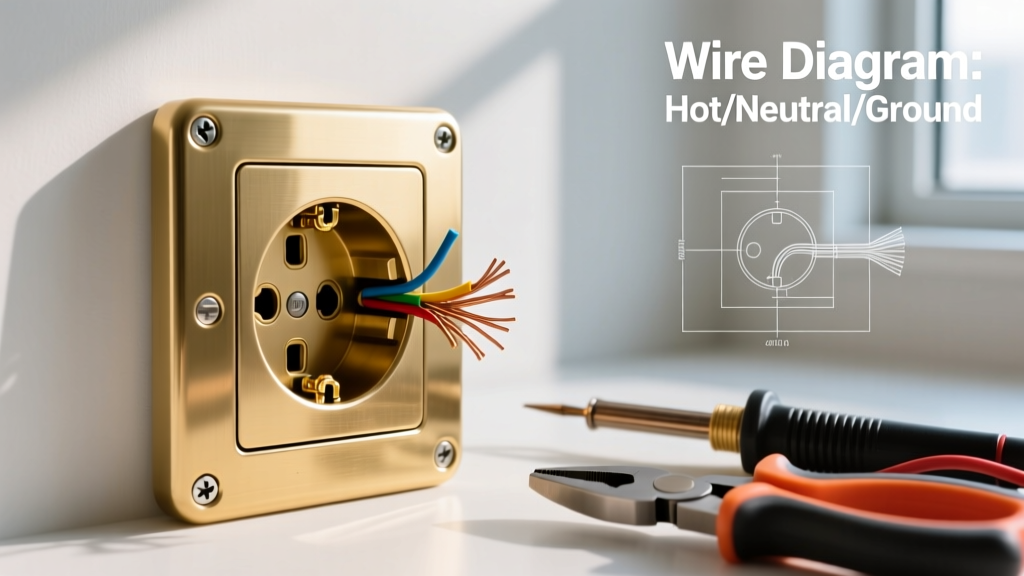
When homeowners and electricians search for solutions regarding a brass electrical outlet, they are typically referring to one of two distinct scenarios. The first involves the brass-colored screw terminals found on standard NEMA 5-15R duplex receptacles, which designate the "hot" side of the circuit. The second involves premium, decorative solid brass faceplates and receptacles (such as those from Forbes & Lomax or Legrand adorne) used in high-end architectural builds. Both present unique troubleshooting challenges.
In standard wiring, the brass terminal is strictly for the ungrounded (hot) conductor—usually black or red. The silver terminal is for the grounded (neutral) conductor, and the green screw is for the equipment grounding conductor. Miswiring, thermal degradation, or oxidation on these brass components can lead to intermittent power, arcing, or severe fire hazards. According to the U.S. Consumer Product Safety Commission (CPSC), loose or degraded electrical connections are a leading cause of residential electrical fires, making precise diagnosis critical.
Top 3 Failures of Brass Hot Terminals (and How to Diagnose Them)
If your standard receptacle is failing on the hot side, the brass terminals are the primary suspect. Here is how to diagnose the most common failure modes.
1. Thermal Creep and Backstab Burnout
Many modern 15-amp receptacles feature "push-in" or backstab connections on the rear. While the internal spring clips make contact with the wire, they are notorious for loosening over time due to thermal expansion and contraction (thermal creep). If a lamp or appliance plugged into the outlet flickers or loses power when you wiggle the cord, the backstab connection on the brass (hot) side has likely failed.
The Fix: Never reuse a failed backstab connection. Use a small flathead screwdriver or the release tool to free the wire, strip it back to fresh copper, and terminate it using the side brass screw terminal instead.
2. Reversed Polarity (Hot on Silver, Neutral on Brass)
If a receptacle tester shows "Hot/Neutral Reversed," the incoming black (hot) wire was incorrectly landed on the silver screw, and the white (neutral) wire was landed on the brass screw. While the device might still power on, this creates a severe shock hazard. The internal switch of a connected appliance will break the neutral path, leaving the appliance's internal components energized at 120V even when turned off.
Diagnosis: Use a non-contact voltage tester (NCVT) or a digital multimeter (DMM) like the Fluke 117. With the faceplate removed and power on, carefully measure from the brass screw to the bare ground wire. It should read ~120V. If it reads 0V, but the silver screw reads 120V to ground, your polarity is reversed.
3. Under-Torqued Terminal Screws
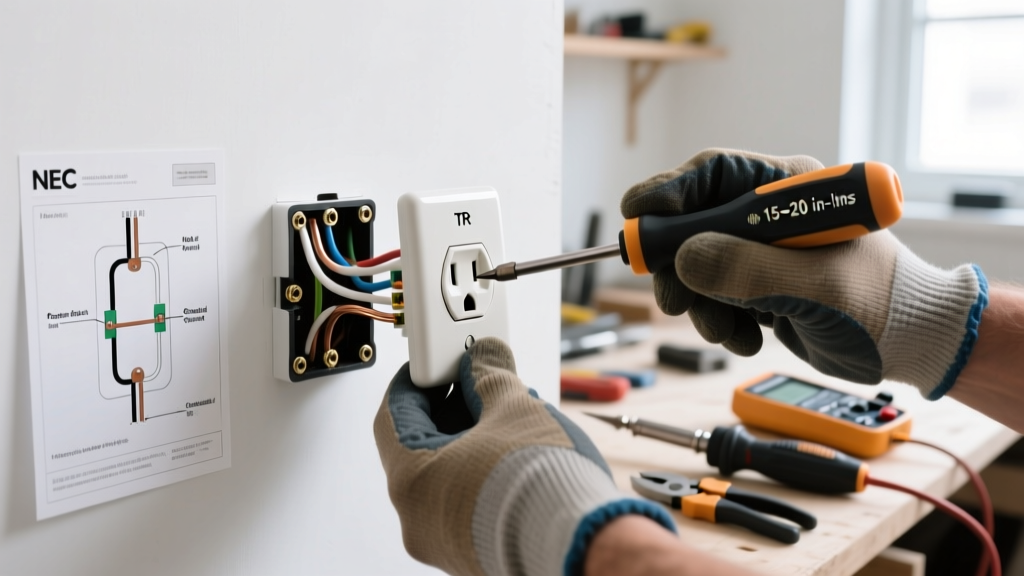
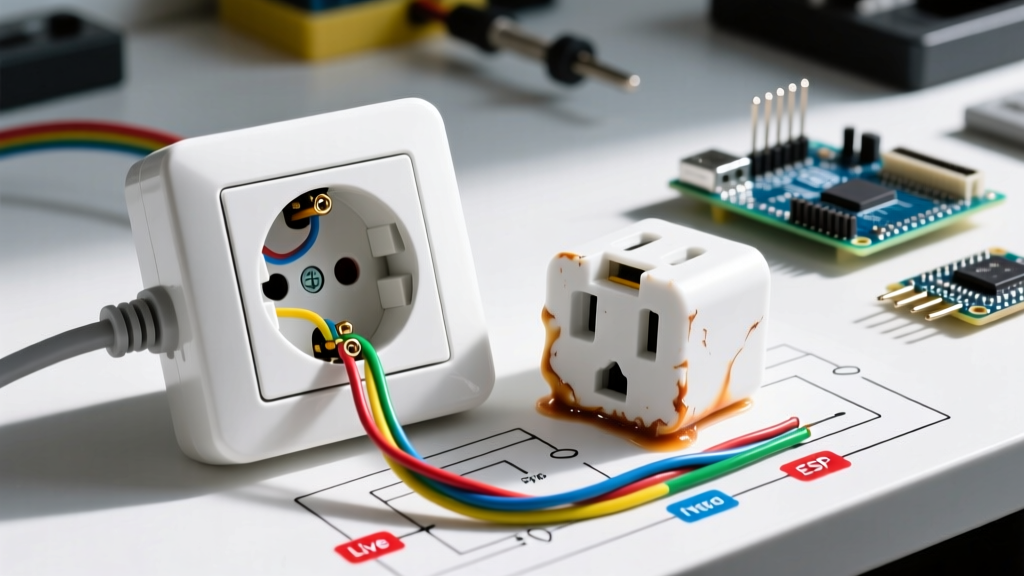
A loose brass screw causes micro-arcing, which generates immense heat and eventually melts the receptacle's thermoplastic housing. The National Electrical Code (NEC) 110.14(D) now strictly mandates the use of calibrated torque tools for terminations. As highlighted by the National Fire Protection Association (NFPA), proper torque ensures the connection survives decades of thermal cycling.
The Fix: Use a torque screwdriver (such as the Klein Tools 61080) set to the manufacturer's specification, typically between 12 and 16 inch-pounds for standard 15A/20A brass terminal screws.
Troubleshooting Decorative Solid Brass Faceplates
Decorative brass electrical outlets and switch plates (ranging from $45 to $85 per cover) introduce a different set of diagnostic variables, primarily regarding grounding and surface conductivity.
Expert Insight: Unlacquered solid brass develops a patina (copper and zinc oxide) over time. While aesthetically pleasing to designers, metal oxides are highly resistive. If your decorative brass setup relies on the plate-to-yoke contact for grounding continuity, this patina can cause an open ground fault.
The Grounding Continuity Test for Brass Plates
Some vintage-style or European-adapted brass plates do not have a dedicated green ground screw on the faceplate itself; they rely on the metal strap making contact with the brass plate to complete the ground path to the mounting screws.
- Turn off the breaker and verify zero voltage with a multimeter.
- Set your DMM to continuity mode (the diode/sound setting).
- Place one probe on the bare copper ground wire in the back of the box.
- Place the second probe on the surface of the brass faceplate.
- Result: If the multimeter does not beep (or reads OL / infinite resistance), the tarnish or a layer of wall paint is interrupting the ground path.
The Solution: Lightly sand the inside contact points of the brass plate and the metal yoke strap with 400-grit sandpaper. Apply a thin layer of anti-oxidant compound (like Noalox) to prevent future patina buildup, or install a dedicated ground pigtail wire directly to a grounding clip on the plate if the manufacturer provides one.
Diagnostic Matrix: Brass (Hot) vs. Silver (Neutral) Symptoms
When an outlet fails, identifying which side of the circuit is compromised speeds up the repair process. Use this matrix to isolate the fault.
| Symptom / Test | Brass Terminal (Hot) Fault | Silver Terminal (Neutral) Fault |
|---|---|---|
| Device Behavior | Device receives no power; breaker may trip instantly if shorted to ground. | Device receives no power; breaker does NOT trip (open circuit). |
| Voltage (Hot to Ground) | Reads 0V (Open Hot) or fluctuates wildly under load. | Reads a steady ~120V. |
| Voltage (Neutral to Ground) | Reads 0V. | Reads >2V under load (indicating voltage drop on a loose neutral). |
| Physical Burn Marks | Melting on the brass screw side; black soot near the black wire. | Melting on the silver screw side; white wire insulation is brittle. |
| Common Cause | Backstab failure, undersized wire for 20A circuit, loose torque. | Shared neutral overload, loose wire nut in the junction box. |
Step-by-Step Repair: The Perfect Brass Terminal Termination
If you have diagnosed a loose or burnt brass terminal, replacing the receptacle (a standard Leviton 5262-SW costs about $1.50 - $3.00) and terminating it correctly is mandatory. Follow these steps to ensure a connection that meets OSHA and NEC safety standards.
- Step 1: Strip to the Exact Length. Use the built-in gauge on the back of the new receptacle. Typically, 5/8 inch of insulation must be removed. Exposed copper beyond the brass screw washer creates a shock hazard.
- Step 2: Form the J-Hook. Use needle-nose pliers to bend the bare copper into a tight "J" shape. The hook must be perfectly round to match the radius of the brass screw head.
- Step 3: Orient Clockwise. Loop the wire around the brass screw in a clockwise direction. As you tighten the screw, the rotation will pull the hook tighter around the shaft rather than pushing it out.
- Step 4: Apply Calibrated Torque. Tighten the brass screw until your torque screwdriver clicks at the specified rating (usually 14 in-lbs). Do not overtighten, as brass screws can snap or strip the internal steel backing plate.
- Step 5: The Tug Test. Give the black wire a firm, sharp pull. It should not move or shift under the brass screw head.
Frequently Asked Questions (FAQ)
Can I use aluminum wire on a brass outlet terminal?
No, unless the brass terminal is specifically marked "CO/ALR" (Copper-Aluminum Revised). Standard brass terminals are rated for copper only. Connecting aluminum wire to a standard brass screw causes galvanic corrosion, leading to high resistance, extreme heat, and eventual fire. If you have aluminum branch wiring, you must use CO/ALR rated receptacles or pigtail the aluminum to copper using AlumiConn connectors before landing it on the brass terminal.
Why is my decorative brass outlet faceplate shocking me?
If you feel a tingle when touching a solid brass faceplate, you likely have a "hot-to-ground" fault somewhere on the circuit, and your outlet box lacks a proper ground path. The brass plate is becoming energized because it is touching a stray hot strand or a faulty internal yoke, and the electricity has nowhere to go to trip the breaker. Turn off the main power immediately and test the box with a multimeter to locate the short.
Does the brass screw need to be wrapped with electrical tape?
While not strictly required by the NEC if the box is large enough and wires are neatly folded, many master electricians wrap a single layer of 3M Super 33+ vinyl tape around the perimeter of the receptacle, covering the brass and silver screws. This prevents the hot brass terminal from accidentally shorting against a metal outlet box or a bare ground wire when the device is pushed back into the gang box.