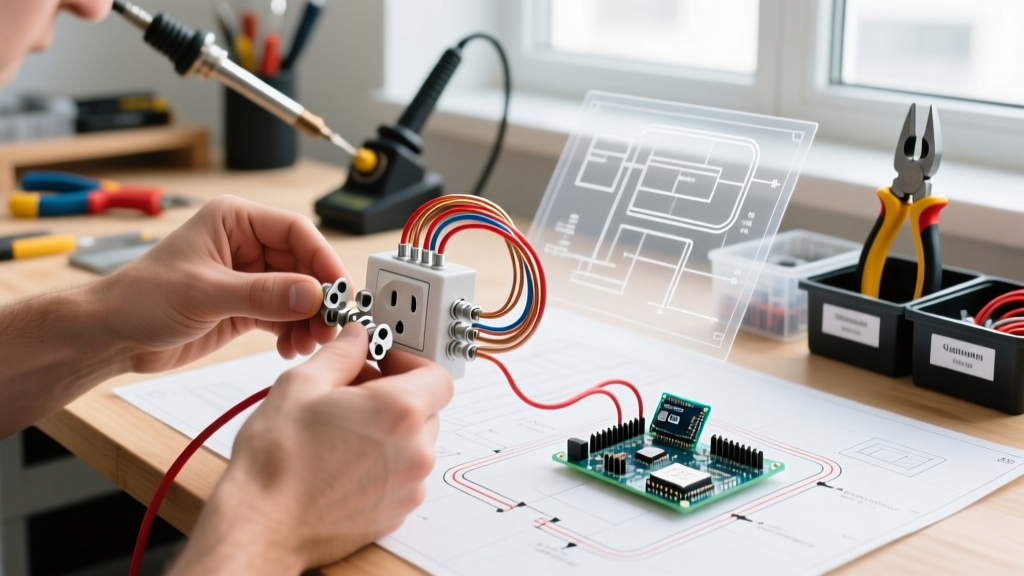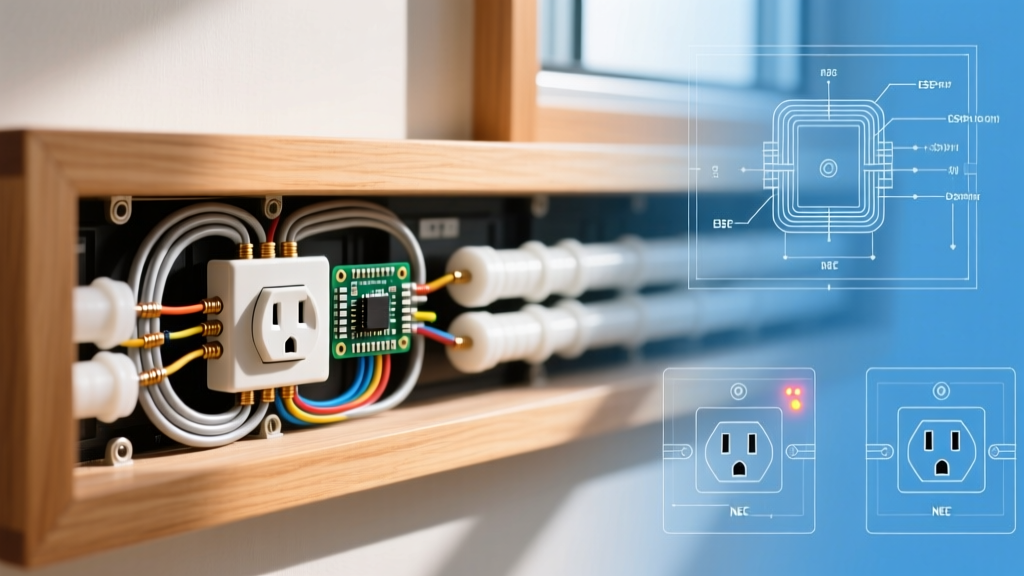

The Anatomy of a Dead 120 Electrical Outlet
A standard 15A or 20A 120 electrical outlet is the workhorse of North American residential wiring, powering everything from LED lamps to 1500W space heaters. When one suddenly stops working, homeowners often assume the receptacle itself has failed. In reality, according to the National Fire Protection Association (NFPA), the majority of dead outlet scenarios stem from upstream interruptions, loose daisy-chain connections, or tripped arc-fault protection devices rather than the physical receptacle failing.
Troubleshooting a 120V circuit requires a methodical approach to isolate the fault without risking arc flash or shock. This guide provides a master electrician's diagnostic framework for identifying and resolving 120 electrical outlet failures, incorporating 2026 NEC standards and modern tool diagnostics.
SAFETY WARNING: Never assume a circuit is dead just because a device plugged into it lacks power. Always verify the absence of voltage with a calibrated digital multimeter (DMM) before removing the receptacle faceplate. The Occupational Safety and Health Administration (OSHA) strictly mandates Lockout/Tagout (LOTO) procedures or verified testing before any physical contact with termination screws.
Essential Diagnostic Tools for 2026
Before opening the electrical box, gather the correct diagnostic equipment. Relying solely on a cheap neon tester can lead to misdiagnosis due to phantom voltages induced by adjacent live wires.
- True-RMS Digital Multimeter (DMM): The Fluke T6-1000 (approx. $230) is the industry standard. Its FieldSense technology allows for non-contact voltage and current measurements on closed-jaw conductors, minimizing exposure to live bus bars.
- Plug-In Circuit Analyzer: The Klein Tools RT210 (approx. $38) provides instant visual feedback on wiring faults like open grounds, reversed polarity, or open neutrals.
- Non-Contact Voltage Tester (NCVT): Useful for initial screening, but never use it as the sole verification tool for a dead circuit. The Fluke 2AC VoltAlert (approx. $35) is highly reliable.
- Insulated Screwdrivers: Wiha 1000V-rated insulated Phillips and flathead drivers to prevent accidental shorting across the hot bus and ground strap.
The 5-Step Diagnostic Matrix
Use this matrix to quickly map your initial symptoms to the most probable root causes before opening the junction box.
| Symptom Observed | Probable Root Cause | Diagnostic Action |
|---|---|---|
| Outlet dead, but room lights work | Tripped GFCI upstream or loose backstab connection | Test downstream GFCIs; inspect receptacle terminations |
| Outlet reads 90V-105V on DMM | Floating neutral or high-resistance splice in wall cavity | Measure Hot-to-Ground; check wire nuts in adjacent boxes |
| Breaker trips instantly upon plugging in load | Dead short or ground fault in appliance/cord | Isolate appliance; perform continuity test on receptacle |
| AFCI breaker trips randomly | Arcing from aging appliance motor or loose neutral | Inspect neutral bar; replace brush-heavy appliances |
| Receptacle faceplate feels hot to touch | Overloaded 15A circuit or failing internal brass wiper | Clamp ammeter on hot wire; replace backstabbed receptacle |
Step 1: Trace the Upstream Protection Cascade
Modern NEC codes (2020, 2023, and the upcoming 2026 revisions) heavily mandate GFCI and AFCI protection. A dead 120 electrical outlet in a bedroom or hallway is frequently the victim of a tripped GFCI located in an entirely different room, such as a bathroom, garage, or exterior wall.
Mapping the Daisy Chain
Residential wiring typically uses a 'daisy chain' topology. Power enters the first receptacle in a room and jumps to the next via the LINE and LOAD terminals. If a wire nut fails or a backstab connection releases at Receptacle A, Receptacles B, C, and D will lose power, even if the breaker is fully ON. Always identify the first outlet in the circuit loop (closest to the panel) and test continuity there first.
Step 2: Precision Voltage Testing
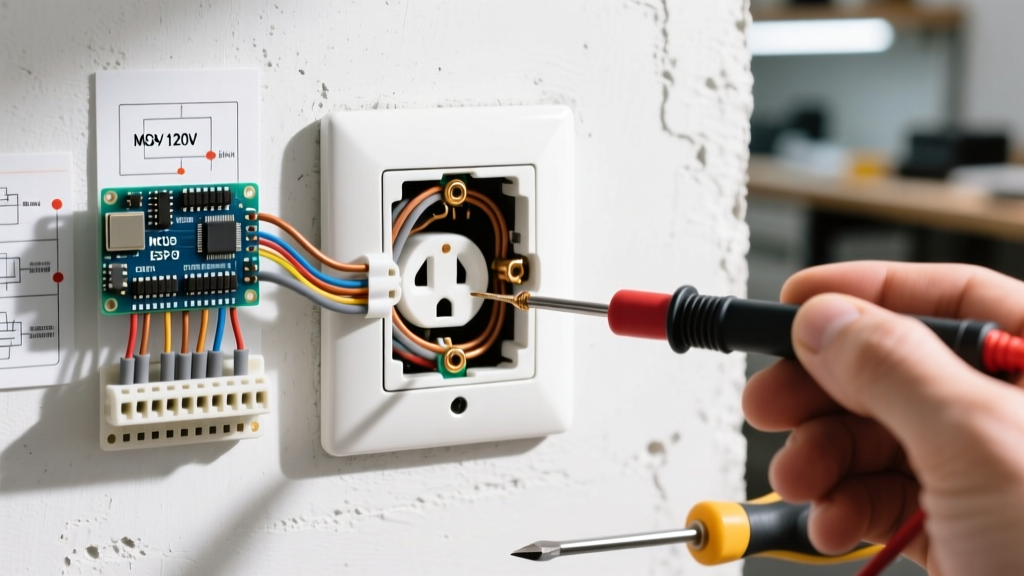
If the breaker is ON and no upstream GFCIs are tripped, proceed to voltage testing at the dead outlet. Set your DMM to AC Voltage (V~).
- Hot to Neutral (Short slot to Long slot): Should read between 114V and 126V (per ANSI C84.1 standards). If 0V, you have an open hot or open neutral.
- Hot to Ground (Short slot to U-shaped slot): Should read ~120V. If this reads 0V but Hot-to-Neutral reads 120V, you have an open ground (dangerous, but won't stop a device from operating).
- Neutral to Ground: Should read less than 1.5V. If you read 2V to 5V here, you have a 'loose neutral' condition somewhere upstream. This is a severe fire hazard as it causes voltage unbalance and overheating at the splice point.
Step 3: Inspect Internal Terminations and Failure Modes
Turn off the circuit breaker, verify zero voltage, and extract the receptacle from the electrical box. Examine the physical wiring method.
The Backstab Epidemic
Many builder-grade 15A receptacles (like older models of the Leviton 5262) utilize 'backstab' push-in terminals. These rely on a spring-loaded brass wiper to grip 14 AWG solid copper wire. Under heavy thermal cycling—such as running a 12.5A space heater for hours—the brass loses its temper and spring tension. The wire eventually backs out, creating a high-resistance arc fault. Always re-terminate using the side screw terminals or a screw-clamp plate.
Aluminum Wiring Edge Cases
If you are troubleshooting a home built between 1965 and 1973, you may encounter solid aluminum branch wiring. Aluminum creeps under pressure and oxidizes rapidly, leading to overheated terminals. If you find aluminum wire connected to a standard copper-rated (CU) 120 electrical outlet, this is an immediate NEC violation and fire hazard. You must replace the receptacle with a CO/ALR rated model (e.g., Leviton 1209-ALR, approx. $12) and apply Noalox antioxidant paste to the terminations.
Advanced Edge Case: Multi-Wire Branch Circuits (MWBC)
If you are testing a dead outlet in a kitchen or older home, check for a Multi-Wire Branch Circuit. An MWBC shares a single neutral wire between two 120V hot legs (phases A and B) to save copper. If an electrician previously replaced a panel or breaker and failed to install a handle-tie or 2-pole breaker on the MWBC, a tripped leg can cause severe neutral overloading. To diagnose an MWBC at a dead outlet, measure the voltage between the suspect hot wire and a known working hot wire from an adjacent circuit. If you read ~240V, they are on opposite phases, confirming an MWBC setup. Proceed with extreme caution, as the shared neutral remains energized even if one breaker is off.
Frequently Asked Questions (FAQ)
Can I upgrade a 15A 120 electrical outlet to a 20A receptacle?
Only if the branch circuit wiring is 12 AWG copper and the breaker is rated for 20A. Installing a 20A receptacle (NEMA 5-20R) on a 14 AWG / 15A circuit is a direct NEC violation, as it allows users to plug in 20A appliances that could overheat the 14 AWG wire inside the walls without tripping the breaker.
Why does my 120 electrical outlet spark when I plug in my vacuum?
This is typically inrush current. Universal motors in vacuums and power tools draw a massive instantaneous current to overcome initial inertia, causing a small arc at the receptacle's brass contacts. While common, if the spark is large or leaves black soot, replace the receptacle with a heavy-duty commercial grade model like the Hubbell 5262 (approx. $9), which features thicker internal contact springs to mitigate arcing.
My plug-in tester says 'Open Neutral', but the wires look connected. Why?
Visual confirmation is insufficient. A wire nut may have caught the insulation jacket instead of the bare copper, or a 14 AWG wire may have snapped flush with the insulation. Strip the wire back to reveal 3/4 inch of fresh, bare copper and re-terminate using a wire nut or Wago 221 lever connector.
When to Call a Licensed Electrician
While replacing a standard 120 electrical outlet is a common DIY task, you should immediately halt work and contact a licensed professional if you encounter:
- Scorched or melted wire insulation inside the junction box.
- Knob-and-tube wiring or ungrounded 2-prong circuits lacking an equipment grounding conductor.
- A buzzing sound emanating from the breaker panel when the circuit is loaded.
- Signs of water intrusion or corrosion inside the electrical box.
For comprehensive safety guidelines regarding residential receptacle maintenance and replacement, refer to the Consumer Product Safety Commission (CPSC) Electrical Safety Center to ensure your home remains compliant and protected against shock hazards.