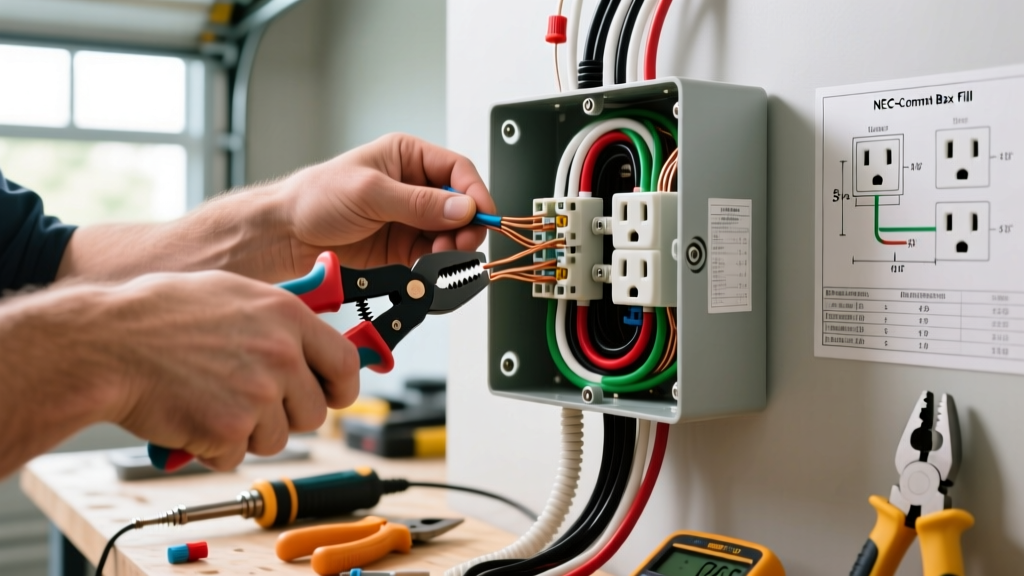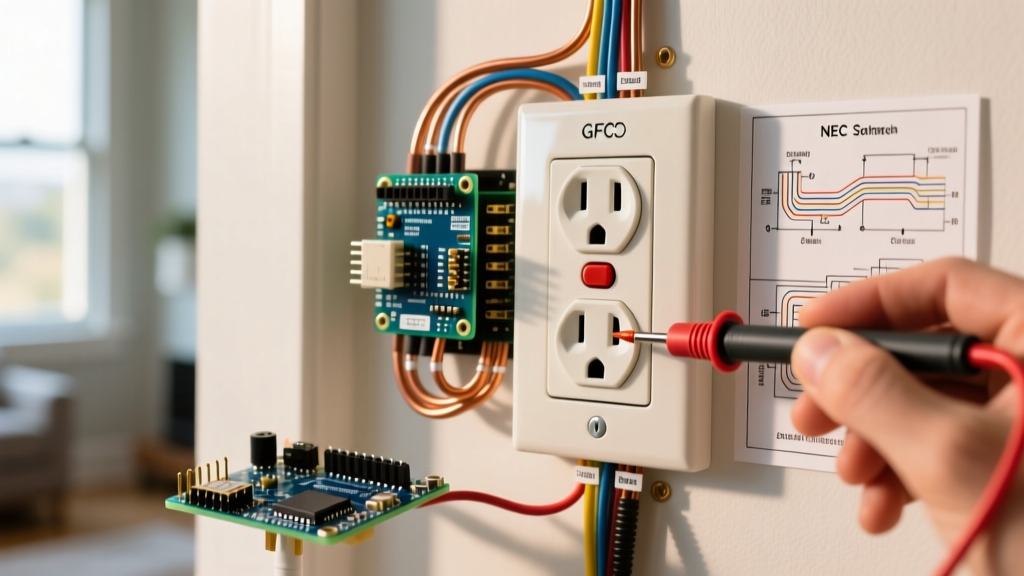

The Code-Compliant Approach to Outlet Testing
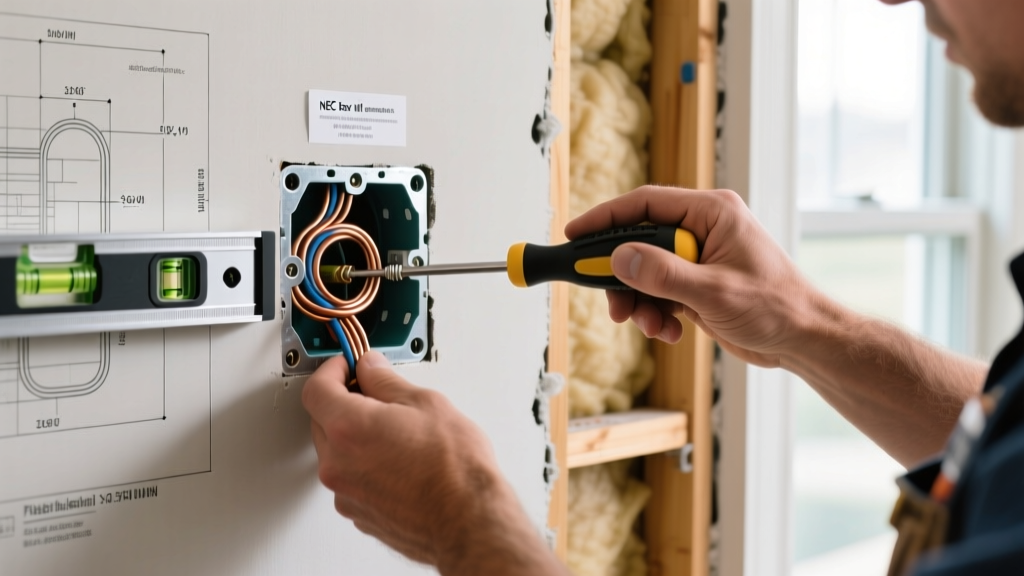
Knowing how to test an electrical outlet goes far beyond plugging in a lamp to see if it illuminates. For electricians, inspectors, and advanced DIYers, testing is a rigorous verification of National Electrical Code (NEC) compliance. With the adoption of the NEC 2023 and the rolling 2026 municipal adoptions, the requirements for Ground Fault Circuit Interrupter (GFCI) and Arc Fault Circuit Interrupter (AFCI) protection have expanded significantly. This guide breaks down the exact methodologies, professional tools, and NEC articles you need to ensure every receptacle in your home is safe and legally compliant.
NEC Code Snapshot (2023/2026 Cycle)
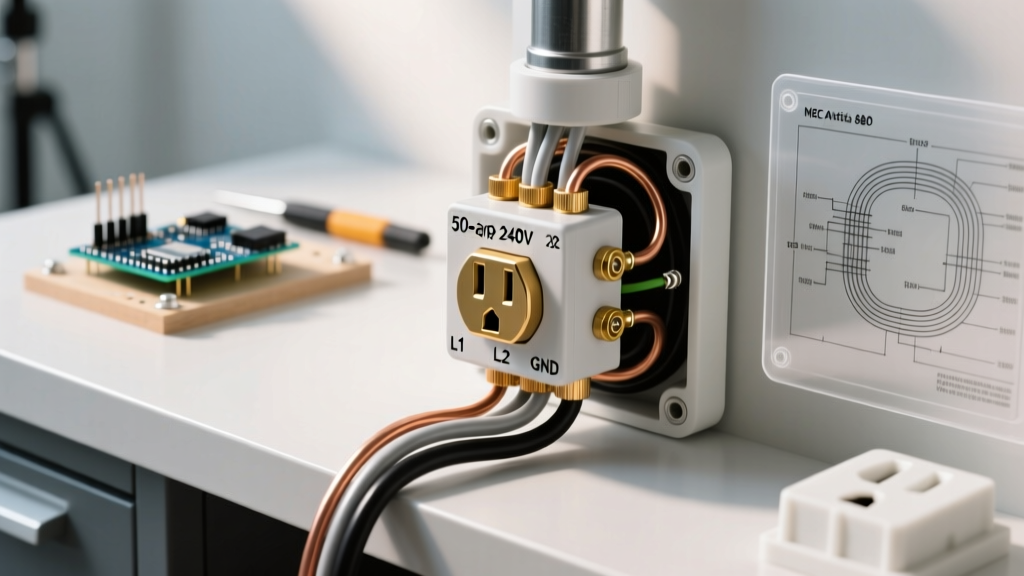
Article 210.8: Expands GFCI requirements to all 125V through 250V receptacles in specific locations, including crawl spaces, unfinished basements, and within 6 feet of sinks.
Article 210.12: Mandates AFCI protection for nearly all 120V, single-phase, 15- and 20-amp branch circuits supplying outlets in dwelling units.
Article 406.4(D): Dictates the exact replacement rules for ungrounded (2-prong) receptacles.
Professional Testing Tools: What You Actually Need
A standard $10 three-light receptacle tester is insufficient for true code verification. It cannot detect high-resistance neutrals, bootleg grounds, or verify precise voltage drops under load. Here is how professional-grade tools compare for NEC compliance testing.
| Tool Category | Recommended Model | Avg. Price (2026) | Best Used For | Code Limitations |
|---|---|---|---|---|
| Advanced Plug-In Tester | Klein Tools RT210 | $35 - $45 | GFCI trip testing, basic polarity, detecting bootleg grounds. | Cannot measure exact voltage or high-resistance faults. |
| True RMS Digital Multimeter | Fluke 117 Electricians Multimeter | $210 - $240 | Precise voltage measurement, Neutral-Ground voltage drop, load testing. | Cannot simulate GFCI/AFCI trips; requires manual probing. |
| Circuit Tracer / Analyzer | Amprobe AT-3500 | $350 - $400 | Tracing breakers, mapping panel directories, advanced fault finding. | Overkill for simple residential receptacle verification. |
Step-by-Step: Verifying Basic Wiring and Polarity
Before diving into complex fault detection, you must establish baseline voltage and polarity. According to OSHA electrical safety standards, verifying the absence of hazardous voltage conditions is the first step in any electrical diagnostic procedure.
- Hot to Neutral Test: Set your multimeter to AC Voltage (V~). Insert the black probe into the neutral slot (the longer slot) and the red probe into the hot slot (the shorter slot). You should read between 115V and 125V. Anything below 110V indicates a severe voltage drop or a loose connection upstream.
- Hot to Ground Test: Move the black probe to the U-shaped ground hole. The reading must remain identical to the Hot-Neutral reading (115V-125V). If it reads 0V, you have an open ground. If it reads significantly lower, you have a high-resistance ground path.
- Neutral to Ground Test: Place the probes in the neutral slot and ground hole. The reading should be 0V to 2V. A reading higher than 2V under no-load conditions indicates a shared neutral issue, an overloaded neutral, or a loose neutral connection back at the panel.
Decoding NEC Article 406.4: The Ungrounded Receptacle Dilemma
One of the most common code violations found in homes built before 1962 is the improper replacement of ungrounded 2-prong receptacles with standard 3-prong receptacles. This creates a lethal false sense of security. NEC Article 406.4(D) provides strict guidelines on how to test an electrical outlet and upgrade it when no equipment ground exists.
NEC 406.4(D)(2) Exception: Where a grounding means does not exist in the receptacle enclosure, the installation shall be permitted with a GFCI-type receptacle, but it must be marked with the provided 'No Equipment Ground' label.
The Testing Protocol: If your multimeter reads 120V Hot-to-Neutral but 0V Hot-to-Ground, you have an ungrounded box. You cannot simply install a standard 3-prong outlet. You must install a GFCI receptacle. The GFCI protects against ground faults by monitoring the current differential between the hot and neutral conductors, tripping at a 4mA to 6mA threshold, entirely bypassing the need for a physical ground wire for shock protection. However, surge protectors plugged into this outlet will not function, as they require a true equipment ground to divert transient voltage.
GFCI and AFCI Verification: The 'Test Button' Mandate
Many DIYers rely on the 'Test' button on a plug-in receptacle tester to verify GFCI and AFCI functionality. While this works for GFCI, it is fundamentally flawed for AFCI testing.
Why Plug-In Testers Fail AFCI Code Verification
A plug-in tester simulates a ground fault by routing a small current from the hot slot to the ground pin. This successfully trips a GFCI. However, an AFCI (Arc Fault Circuit Interrupter) is designed to detect the high-frequency signatures of parallel and series arcing. A simple resistive load from a plug-in tester does not create an arc signature. Therefore, the National Fire Protection Association (NFPA) and NEC inspectors require that AFCI functionality be tested using the physical 'Test' button located directly on the AFCI receptacle or the AFCI circuit breaker. This button injects a simulated arc signature into the internal microprocessor, verifying the digital logic and trip solenoid are operational.
Advanced Troubleshooting: Spotting the 'Bootleg Ground'
A 'bootleg ground' is a deceptive and highly dangerous wiring fault where a previous worker has intentionally connected a jumper wire between the neutral terminal and the ground screw on the receptacle.
The Hazard: A standard 3-light tester will read 'Correct Wiring' because it sees continuity between neutral and ground. However, if the neutral wire upstream becomes disconnected, the metal chassis of any appliance plugged into that outlet will become energized at 120V, posing a fatal shock hazard.
How to Test for a Bootleg Ground
- Method 1 (Advanced Tester): Use a tool like the Klein RT210, which features a dedicated bootleg ground detection circuit that analyzes the impedance path.
- Method 2 (Multimeter Load Test): Plug a high-draw appliance (like a hair dryer or heat gun) into the outlet. While it is running, measure the Neutral-to-Ground voltage. If the voltage jumps significantly (e.g., above 5V-10V), the ground and neutral are likely bonded at the receptacle rather than at the main service panel, confirming a bootleg ground.
Frequently Asked Questions (FAQ)
Can I use a non-contact voltage tester to verify an outlet is safe?
No. Non-contact voltage testers (NCVTs) only detect the presence of an electromagnetic field around the hot conductor. They cannot verify polarity, detect open neutrals, or confirm the integrity of the ground path. Always use a multimeter or plug-in tester for safety verification.
What does it mean if my Hot-to-Ground voltage is higher than my Hot-to-Neutral voltage?
This indicates a 'swapped neutral and ground' condition, or a high-resistance neutral connection. The neutral wire is carrying load current and experiencing voltage drop, while the ground wire is improperly bonded downstream. This requires immediate correction by a licensed electrician.
How often should GFCI outlets be tested?
The Electrical Safety Foundation International (ESFI) and manufacturer specifications recommend testing GFCI and AFCI receptacles at least once a month using the built-in test button to ensure the internal solenoid has not seized due to environmental corrosion or power surges.