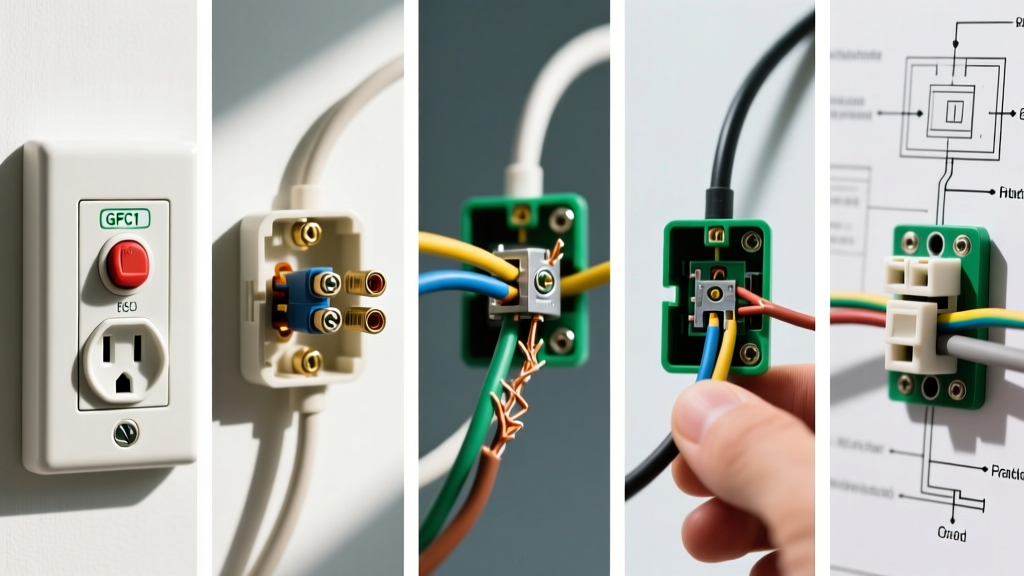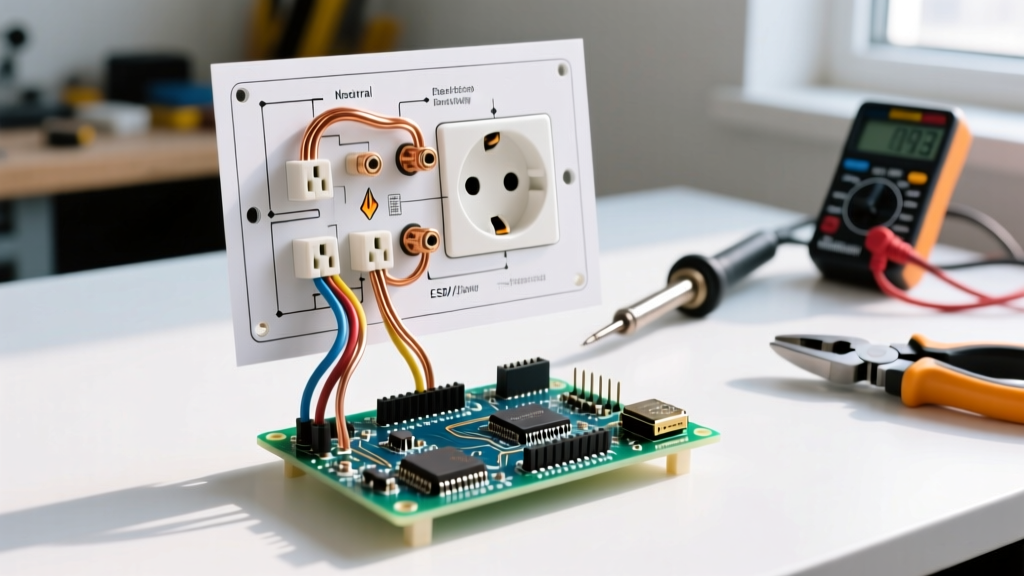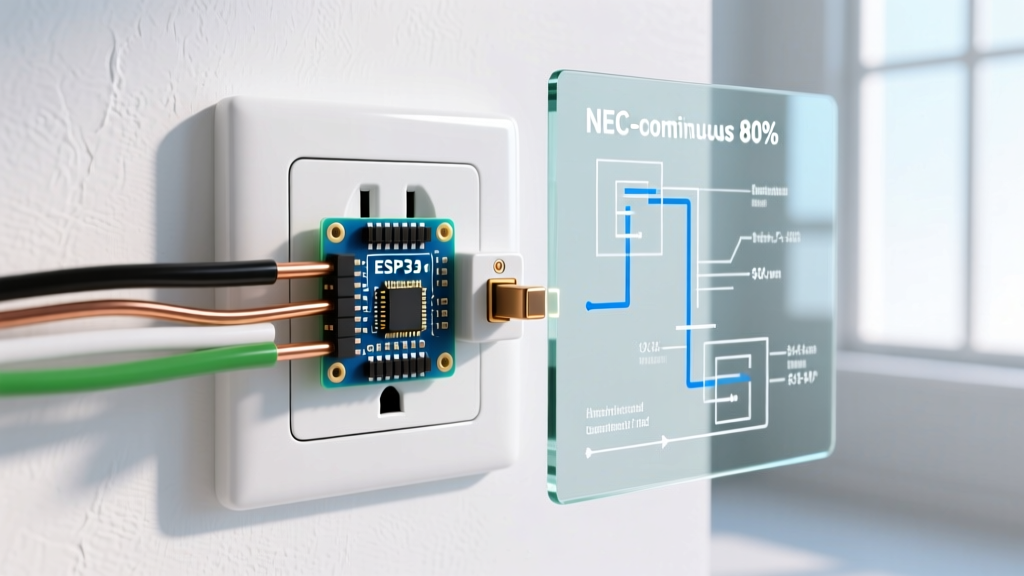

The Truth About Standard Electrical Outlet Wattage
When homeowners and DIYers ask about standard electrical outlet wattage, they are usually operating under a common misconception: that the physical receptacle on the wall dictates how much power can be drawn. In reality, a standard NEMA 5-15R receptacle is merely an interface. The true wattage limit is dictated by the branch circuit's overcurrent protection device (the breaker) and the wire gauge feeding it, as strictly governed by the National Electrical Code (NEC).
Understanding the exact wattage capacities, continuous load derating, and NEC compliance requirements is critical for preventing thermal degradation, nuisance tripping, and electrical fires. This guide breaks down the mathematical and code-mandated limits for standard 120-volt residential circuits in 2026.
The Core Formula: Calculating Circuit Wattage
Before applying code restrictions, you must understand the baseline electrical physics. Wattage (Power) is the product of Voltage and Current (Amperage).
Formula: Watts = Volts × Amps
In North America, standard residential branch circuits operate at a nominal 120 volts (often measured between 114V and 126V at the panel). Therefore, the baseline maximums before applying NEC safety margins are:
- 15-Amp Circuit: 120V × 15A = 1,800 Watts
- 20-Amp Circuit: 120V × 20A = 2,400 Watts
However, you can never safely or legally load a circuit to these absolute maximums for extended periods. This is where NEC Article 210 comes into play.
NEC Article 210 and the 80% Continuous Load Rule
The most critical code requirement affecting standard electrical outlet wattage is the treatment of continuous loads. According to NFPA NEC guidelines, a continuous load is defined as any load where the maximum current is expected to continue for three hours or more.
NEC 210.20(A) Overcurrent Protection: Where a branch circuit supplies continuous loads or any combination of continuous and noncontinuous loads, the rating of the overcurrent device shall not be less than the noncontinuous load plus 125 percent of the continuous load.
In practical terms, this means you must derate the circuit's capacity to 80% for continuous loads. If you are running a space heater, a server rack, or heavy lighting for more than three hours, the legal and safe wattage limits drop significantly:
- 15-Amp Circuit (Continuous): 1,800W × 0.80 = 1,440 Watts
- 20-Amp Circuit (Continuous): 2,400W × 0.80 = 1,920 Watts
Exceeding these continuous limits causes the bimetallic strip inside standard thermal-magnetic breakers (like the Square D Homeline or Siemens QP series) to heat up and eventually trip, even if the instantaneous draw is technically below the breaker's stamped amperage.
15-Amp vs. 20-Amp Circuits: A Technical Comparison
Not all standard outlets are wired the same. The NEC requires specific wire gauges and receptacle configurations depending on the circuit size. Below is a comprehensive matrix detailing the requirements for standard 120V branch circuits.
| Circuit Breaker Size | Min. Wire Gauge (NM-B) | Receptacle Type | Max Non-Continuous Wattage | Max Continuous Wattage (80% Rule) |
|---|---|---|---|---|
| 15 Amp | 14 AWG Copper | NEMA 5-15R (Standard) | 1,800W | 1,440W |
| 20 Amp | 12 AWG Copper | NEMA 5-20R (T-Slot) or 5-15R | 2,400W | 1,920W |
The Wire Gauge and Terminal Temperature Trap
A frequent mistake made by novice installers is referencing the 90°C column in NEC Table 310.16 for ampacity. For example, 12 AWG THHN wire in a conduit is rated for 30 Amps at 90°C. However, NEC 110.14(C) dictates that for circuits rated 100A or less, the ampacity must be based on the 60°C column unless the equipment terminals are specifically rated for 75°C.
Standard residential NM-B (Romex) cable is limited to the 60°C ampacity column. Therefore, 14 AWG is strictly capped at 15 Amps, and 12 AWG is strictly capped at 20 Amps, regardless of the insulation's higher thermal rating. Always match your breaker to the 60°C column limits to remain code-compliant and pass local inspections.
Real-World Appliance Loading and Failure Modes
To understand how standard electrical outlet wattage limits affect daily life, consider the modern appliance load profile. High-draw resistive heating appliances are the primary culprits for circuit overloads.
Scenario 1: The Winter Space Heater Overload
A standard portable oil-filled radiator or ceramic space heater draws exactly 1,500 Watts on its high setting (12.5 Amps). If plugged into a 15-amp circuit, it consumes 83% of the circuit's total capacity. If left running for three hours in a poorly insulated garage, it becomes a continuous load. Because 1,500W exceeds the 1,440W continuous limit, the breaker will eventually trip.
Failure Mode: Repeated thermal tripping weakens the breaker's internal calibration. Furthermore, if the receptacle was wired using push-in 'backstab' terminals rather than screw terminals, the high continuous current will cause the internal spring contacts to overheat, melt the plastic yoke, and create a severe fire hazard.
Scenario 2: The Kitchen Small-Appliance Circuit
NEC 210.11(C)(1) mandates at least two 20-amp small-appliance branch circuits for kitchen receptacles. A standard kitchen circuit utilizes 12 AWG wire and 20-amp breakers. If you run a 1,200W microwave and an 800W toaster simultaneously, you are pulling 2,000W. This is perfectly legal and safe, as it is below the 2,400W non-continuous maximum, and toasting/microwaving takes less than three hours.
Commercial vs. Residential Receptacle Wattage Calculations
It is vital to distinguish between how residential and commercial standard electrical outlet wattage is calculated during the design phase.
- Residential (NEC 220.12): General lighting and receptacle loads are calculated based on square footage (typically 3 Volt-Amperes per square foot). Individual general-use receptacles are not assigned a specific wattage limit during load calculations.
- Commercial (NEC 220.14(I)): Each single or duplex receptacle yoke is calculated at a minimum of 180 Volt-Amperes (VA). If a commercial office has 50 duplex outlets, the load calculation must account for 9,000 VA, regardless of what is actually plugged in.
For commercial environments, facility managers must actively monitor standard electrical outlet wattage to ensure tenant plug loads do not exceed the 180 VA design metric per yoke, which often requires installing submeters or smart breakers.
Best Practices for High-Wattage Installations
If you are designing or upgrading a space that demands high continuous wattage, follow these expert installation protocols:
- Eliminate Backstab Connections: Never use the push-in terminals on the back of a 15A or 20A receptacle for loads exceeding 1,000W. Always use the side screw terminals, or upgrade to commercial-grade receptacles (like the Leviton Decora Plus line) that feature screw-clamp pressure plates for superior wire retention.
- Isolate High-Draw Appliances: If a room requires a 1,500W continuous load (such as a grow tent, a large aquarium heater, or a server rack), run a dedicated 20-amp circuit using 12/2 NM-B wire. Do not share this circuit with lighting or general-use outlets.
- Upgrade to 240V for Extreme Loads: If your required wattage exceeds 1,920W continuously, stop trying to force it onto a 120V standard outlet. Install a 240V circuit (NEMA 6-15 or 6-20). A 240V 20-amp circuit provides up to 4,800W (3,840W continuous), drastically reducing amperage and voltage drop over long wire runs.
- Torque to Spec: Use a calibrated inch-pound torque screwdriver to tighten receptacle terminals. The OSHA electrical safety standards and NEC 110.14(D) now strictly require terminations to be torqued to the manufacturer's specifications to prevent high-resistance connections that cause localized heating under heavy wattage loads.
Frequently Asked Questions (FAQ)
Can I plug a 1,500W space heater into a standard 15-amp outlet?
Yes, but only for non-continuous use (under 3 hours). If you plan to run it continuously, it violates the NEC 80% rule for a 15-amp circuit (max 1,440W continuous) and will likely trip the breaker over time. For continuous use, plug it into a dedicated 20-amp circuit.
Does a power strip increase the wattage capacity of an outlet?
No. A power strip or surge protector merely multiplies the number of connection points; it does not increase the standard electrical outlet wattage limit. The total combined draw of all devices on the strip must still remain under the circuit's 1,800W (or 1,440W continuous) limit. For more on home electrical safety, refer to the NFPA home electrical safety resources.
Why does my 15-amp breaker trip when I use a 1,400W vacuum cleaner?
Vacuum cleaners feature universal motors that draw a massive inrush current (Locked Rotor Amperage) upon startup, which can briefly spike 2 to 3 times the running wattage. If the circuit is already carrying a 300W base load (like a TV and lights), the startup spike pushes the instantaneous current past the 15-amp magnetic trip threshold of the breaker.
Final Thoughts on Circuit Sizing
Mastering standard electrical outlet wattage requires looking past the plastic faceplate and focusing on the breaker panel and wire gauge. By strictly adhering to the NEC 80% continuous load rule, utilizing proper 12 AWG or 14 AWG copper conductors, and terminating connections with precision torque, you ensure a resilient, code-compliant electrical system capable of handling modern power demands safely.