
Understanding the Anatomy of an Outlet Electric Shock
Experiencing an outlet electric shock is a jarring, painful event that serves as an immediate warning of a severe electrical hazard. According to the U.S. Consumer Product Safety Commission (CPSC), hundreds of fatal electrocutions and thousands of non-fatal shock injuries occur in residential settings annually. As homes age and electrical demands increase, the risk of ground faults, degraded insulation, and improper wiring multiplies. From a safety and code compliance perspective, preventing these shocks is not just about avoiding discomfort; it is about mitigating the risk of ventricular fibrillation and fatal electrocution.
When you touch a faulty appliance or a compromised receptacle, your body can become the path of least resistance to the ground. The severity of the resulting outlet electric shock depends entirely on the current (measured in milliamperes, or mA) that flows through your body, the duration of the contact, and the pathway the current takes. Understanding these physiological thresholds is the first step in recognizing why the National Electrical Code (NEC) mandates specific protective devices in modern wiring systems.
The Milliampere (mA) Threshold Scale
Data compiled by the Occupational Safety and Health Administration (OSHA) outlines exactly how alternating current (AC) at standard household frequencies (60 Hz) affects the human body. This data forms the engineering basis for modern circuit protection:
- 1 mA: Barely perceptible; a slight tingling sensation.
- 5 mA: Slight shock felt; not painful but disturbing. This is the critical threshold where a Ground Fault Circuit Interrupter (GFCI) is designed to trip.
- 6-25 mA (Men) / 6-15 mA (Women): Painful shock; the 'let-go' threshold is exceeded, meaning muscle contractions prevent you from releasing the energized object.
- 50-150 mA: Extreme pain, respiratory arrest, and severe muscle contractions. Death is highly possible.
- 1,000+ mA (1 Amp): Nerve damage, severe burns, and cardiac arrest.
Because a standard 15-amp or 20-amp residential breaker will not trip until the current reaches 15,000 to 20,000 mA, it offers absolutely zero protection against a fatal outlet electric shock. This is why localized shock-prevention devices are legally required.
Primary Culprits Behind Residential Shocks
Before replacing hardware, it is vital to diagnose why the shock occurred. An outlet electric shock typically stems from one of three fundamental wiring failures:
- Missing or Open Equipment Grounding Conductor (EGC): In older homes (pre-1960s) or improperly renovated spaces, two-prong ungrounded outlets may still be in use. If a fault occurs in a plugged-in metal appliance, the chassis becomes energized. Without a ground wire to trip the breaker or safely route the current away, the next person to touch the appliance completes the circuit to the earth.
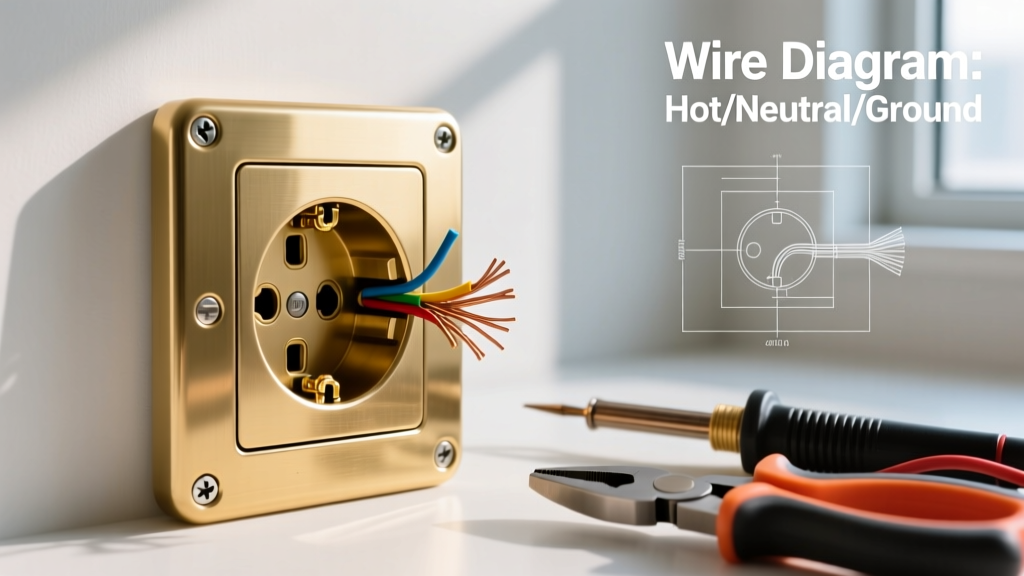
- Reversed Polarity (Hot/Neutral Swap): If the black (hot) and white (neutral) wires are swapped at the receptacle terminals, the appliance may still function, but the internal switch might only disconnect the neutral wire. This leaves the internal components continuously energized, creating a severe shock hazard during maintenance or bulb replacement.
- Moisture Intrusion and Insulation Breakdown: In kitchens, bathrooms, and outdoor areas, water ingress can create a conductive path between the hot terminal and the receptacle's faceplate or mounting strap. This is known as a ground fault.
NEC Code Compliance: The Legal and Safety Baseline
The National Fire Protection Association (NFPA) updates the NEC every three years to address emerging electrical hazards. As of the 2023 and adopted 2026 NEC cycles, the mandate for Ground Fault Circuit Interrupter (GFCI) and Arc Fault Circuit Interrupter (AFCI) protection has expanded significantly to eliminate outlet electric shock hazards and prevent electrical fires.
NEC Article 210.8: GFCI Protection Requirements
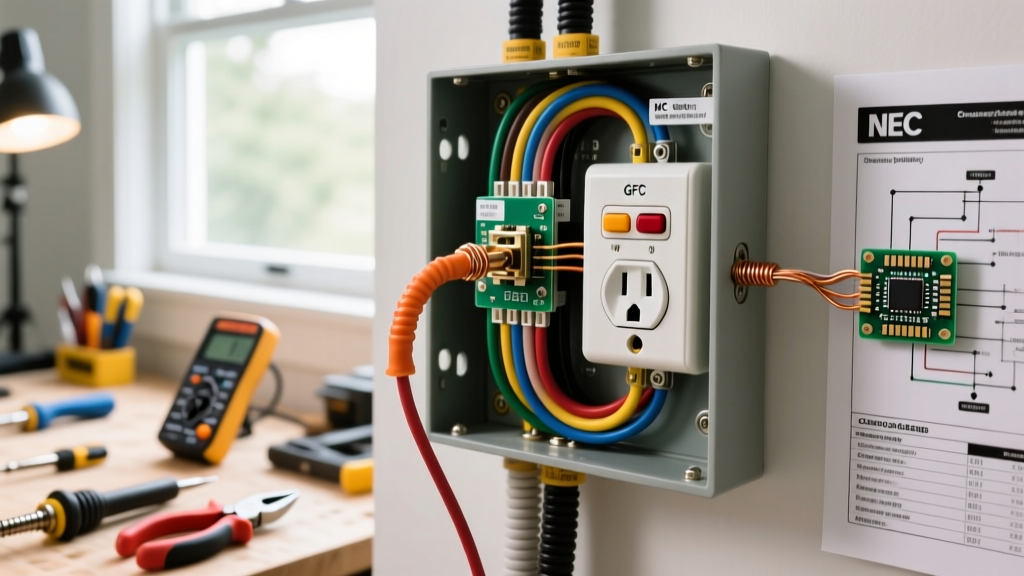
GFCI receptacles monitor the current balance between the hot and neutral conductors. If an imbalance as small as 4 to 6 mA is detected (indicating current is leaking to ground, potentially through a human body), the device trips in as little as 25 milliseconds.
| Location | NEC Article | Protection Type | Specific Code Notes |
|---|---|---|---|
| Bathrooms | 210.8(A)(1) | GFCI | All 125V, 15A and 20A receptacles must be GFCI protected. |
| Garages & Accessory Buildings | 210.8(A)(2) | GFCI | Includes all floor levels and areas with concrete floors at grade level. |
| Outdoors | 210.8(A)(3) | GFCI | Exceptions exist only for dedicated snow-melting equipment. |
| Crawlspaces | 210.8(A)(4) | GFCI | Added in recent cycles to address damp, high-risk environments. |
| Kitchens | 210.8(A)(6) | GFCI | Applies to all receptacles serving countertop surfaces. |
| Laundry Areas | 210.8(A)(10) | GFCI | Mandatory for all 125V/250V receptacles in laundry zones. |
NEC Article 406.12: Tamper-Resistant (TR) Receptacles
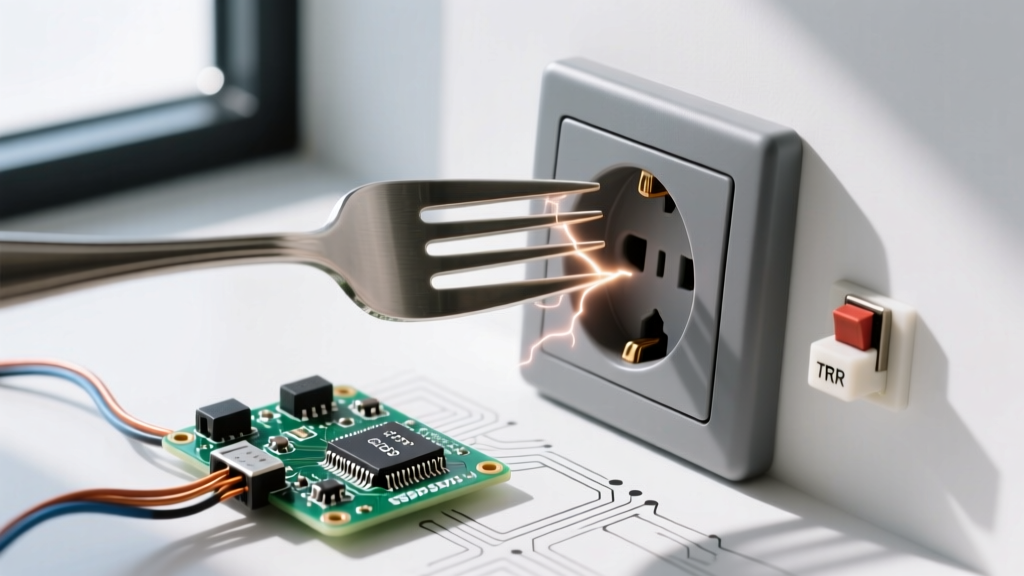
Beyond ground faults, physical contact with energized slots is a primary cause of pediatric outlet electric shock injuries. The NEC mandates that all 15A and 20A, 125V and 250V receptacles installed in dwelling units must be Tamper-Resistant (TR). These receptacles feature internal spring-loaded shutters that only open when equal pressure is applied to both slots simultaneously, preventing children from inserting single objects like paperclips or keys.
Upgrading to Code: Recommended GFCI and Dual-Function Receptacles
If your home was built before 1990, it likely lacks adequate shock protection. Upgrading to modern, code-compliant receptacles is a highly effective mitigation strategy. Below are industry-standard, contractor-grade products that meet 2026 safety benchmarks:
- Leviton SmartlockPro GFNT2-W (15A GFCI): Priced between $18 and $22, this is the benchmark for standard GFCI replacement. It features a self-testing mechanism that automatically checks for ground fault protection every 3 hours. If it fails, the LED indicator flashes red, alerting you to a compromised safety state.
- Eaton AFTR15 (15A Dual-Function AFCI/GFCI): Priced around $32 to $38, this device provides both shock protection (GFCI) and fire prevention (AFCI). It is essential for bedrooms and living areas where the NEC requires combination arc-fault protection alongside ground-fault protection for modified circuits.
- Klein Tools RT250 GFCI Receptacle Tester: Priced at approximately $35, this is not a receptacle but a mandatory diagnostic tool. It features a digital LCD screen that displays exact wiring faults (e.g., 'Hot/Neu Reverse', 'Open Ground') and includes a built-in solenoid to trip and verify GFCI circuits without relying on the receptacle's physical test button.
Step-by-Step Diagnostic Protocol for Suspect Outlets
If you have experienced a mild tingle or shock from an appliance or outlet, do not ignore it. Follow this diagnostic protocol to isolate the fault safely:
- De-energize the Circuit: Turn off the corresponding breaker at the main panel. Verify the power is off using a non-contact voltage tester (NCVT) like the Fluke 2AC-II.
- Inspect the Receptacle Face: Remove the cover plate. Look for signs of arcing, melted plastic, or corrosion. If the internal metal strap is exposed or the plastic housing is cracked, the receptacle must be replaced immediately.
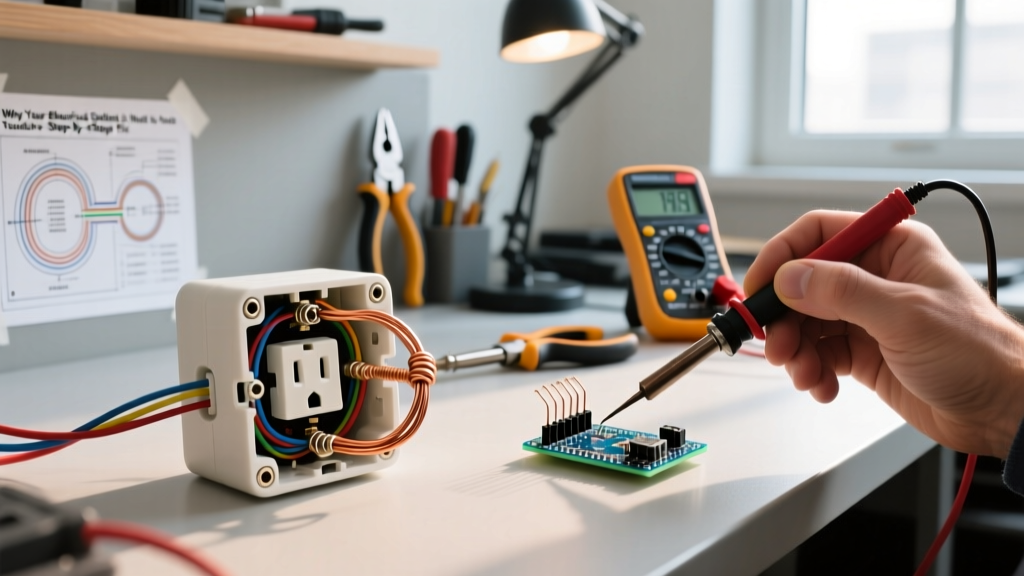
- Verify Wiring Integrity: Pull the receptacle from the junction box. Ensure the bare copper or green ground wire is securely fastened to the green grounding screw. Check that no bare hot wire is touching the metal junction box or the neutral terminal.
- Test the Appliance: Often, the outlet is perfectly wired, but the appliance itself has an internal short to its metal chassis. Plug the suspect appliance into a known, properly functioning GFCI outlet. If the GFCI trips immediately, the appliance is defective and must be repaired or discarded.
- Restore and Validate: Once wired correctly, restore power and use your Klein Tools RT250 to verify correct polarity and confirm the GFCI trips when the test button is actuated.
Safety Warning: If you discover an open ground (no ground wire in the box) in an older home, the NEC allows you to replace a two-prong outlet with a GFCI receptacle to provide shock protection, provided it is labeled 'No Equipment Ground'. However, this does not provide a true ground for surge protectors or sensitive electronics. For comprehensive safety and equipment protection, a licensed electrician must run a new equipment grounding conductor back to the panel.
Conclusion
An outlet electric shock is never a harmless anomaly; it is a measurable failure in your home's electrical safety net. By understanding the physiological thresholds of electrical current, adhering strictly to NEC Article 210.8 and 406.12, and upgrading to self-testing GFCI and TR receptacles, you effectively eliminate the risk of fatal electrocution in your home. Always prioritize contractor-grade hardware, validate your wiring with digital diagnostic tools, and consult a licensed professional when dealing with ungrounded legacy circuits.