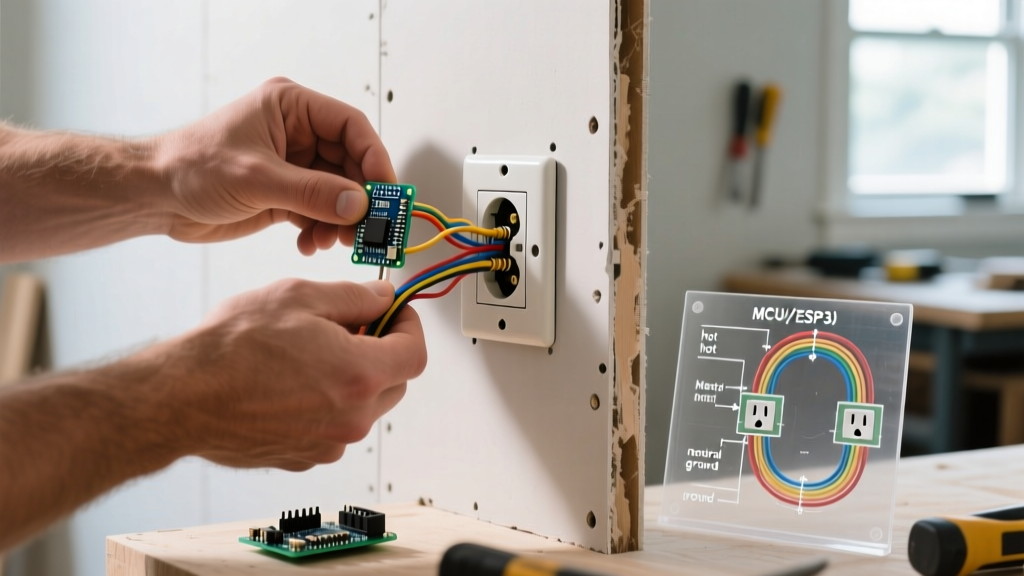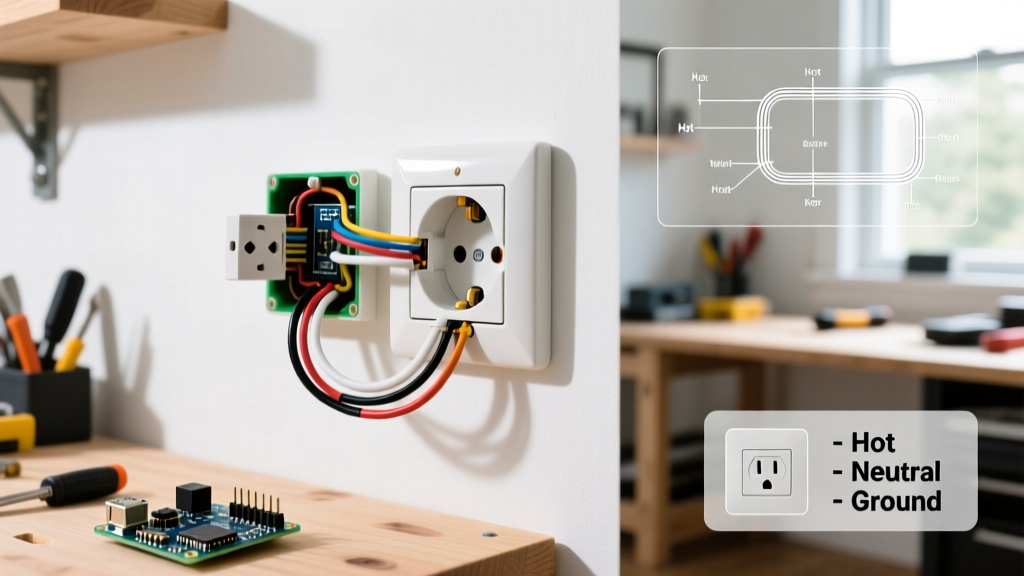

Initial Triage: Before You Touch a Wire
When you plug in a device and realize my electrical outlet does not work, the immediate reaction is often frustration. However, a dead receptacle is rarely a mystery; it is usually the result of one of five specific wiring scenarios or component failures. According to the National Fire Protection Association (NFPA), electrical failures or malfunctions are a leading cause of home fires, meaning a dead outlet should never be ignored or bypassed with makeshift extensions.
Safety Directive: Never remove a receptacle faceplate without first verifying the absence of voltage. Use a dual-range non-contact voltage tester (NCVT) like the Klein Tools NCVT-2 (approx. $25) to scan the top and bottom of the outlet plate before unscrewing it.
Before opening the electrical box, verify the scope of the outage. Is it just one outlet, a whole wall, or an entire room? This distinction immediately narrows down your troubleshooting path from a localized receptacle failure to a circuit-level issue.
Scenario 1: The Tripped GFCI or Miswired Load
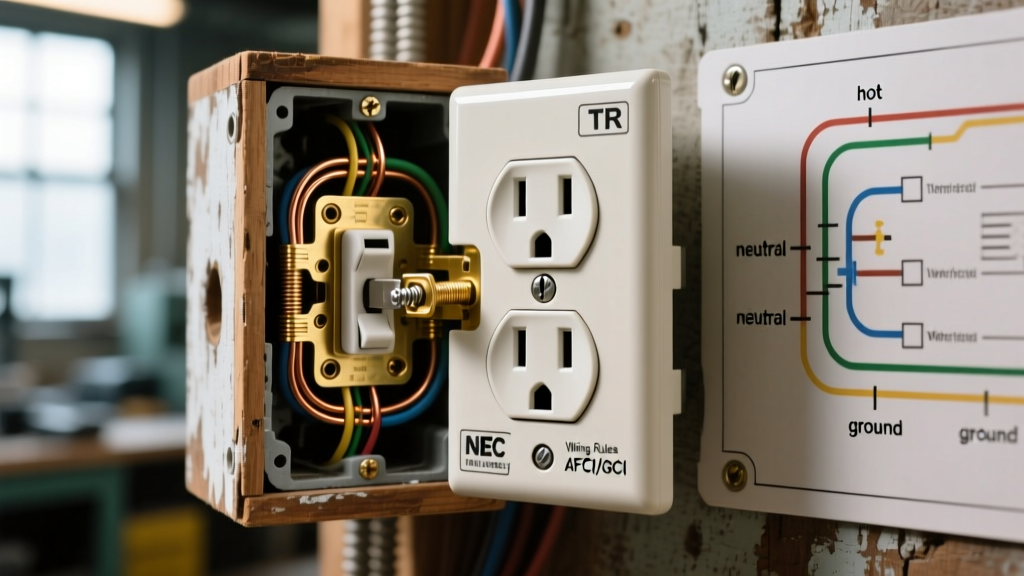
If the dead outlet is in a kitchen, bathroom, garage, or exterior wall, it is likely protected by a Ground Fault Circuit Interrupter (GFCI). The National Electrical Code (NEC) mandates GFCI protection in these wet or damp locations. However, a common wiring mistake occurs when a standard receptacle is wired to the LOAD terminals of a GFCI rather than the LINE terminals.
The Line vs. Load Reversal Failure
If an upstream GFCI (like the Eaton GFNT2-W, approx. $18) trips, it cuts power to all downstream outlets connected to its load terminals. If you reset the GFCI and the dead outlet still lacks power, the GFCI may have been wired backward during a previous renovation. A GFCI wired to the load side will still power its own receptacles, but it will fail to protect or power downstream devices, and it will nuisance-trip constantly. Use a receptacle tester with a GFCI test button (e.g., Gardner Bender GFI-3501) to verify correct wiring.
Scenario 2: Loose Backstab Connections (The Silent Killer)
If the outlet is in a bedroom or living room and is completely dead, the most common culprit is a failed 'backstab' push-in connection. Many DIYers and hasty contractors use the quick-insert holes on the back of 15A receptacles (like the Leviton T5262-E, approx. $3) instead of wrapping the wire around the terminal screws.
These push-in holes rely on a tiny internal brass spring to grip the wire. Over years of thermal cycling (heating up under load and cooling down), this spring loses tension. The connection loosens, creating high resistance, arcing, and eventually an open circuit. The Consumer Product Safety Commission (CPSC) frequently highlights loose connections as a primary ignition source for residential electrical fires.
Push-In vs. Side-Wiring: A Failure Rate Comparison
| Termination Method | Wire Gauge Accepted | Thermal Resilience | Estimated Failure Rate (10 Yrs) |
|---|---|---|---|
| Backstab (Push-In) | 14 AWG Solid Only | Poor (Spring Fatigue) | High (12-18%) |
| Side-Terminal Screw | 14 or 12 AWG Solid/Stranded | Excellent (Mechanical Compression) | Very Low (<1%) |
| Back-Wire Clamp | 14 or 12 AWG Solid/Stranded | Excellent (Screw-Driven Plate) | Negligible (<0.5%) |
The Fix: Pull the dead receptacle out, cut off the stripped ends that were pushed into the backstabs, strip 3/4 inch of fresh insulation using a wire stripper, and terminate the wires using the side terminal screws or the internal screw-driven clamp plates.
Scenario 3: The Open Neutral in a Daisy Chain
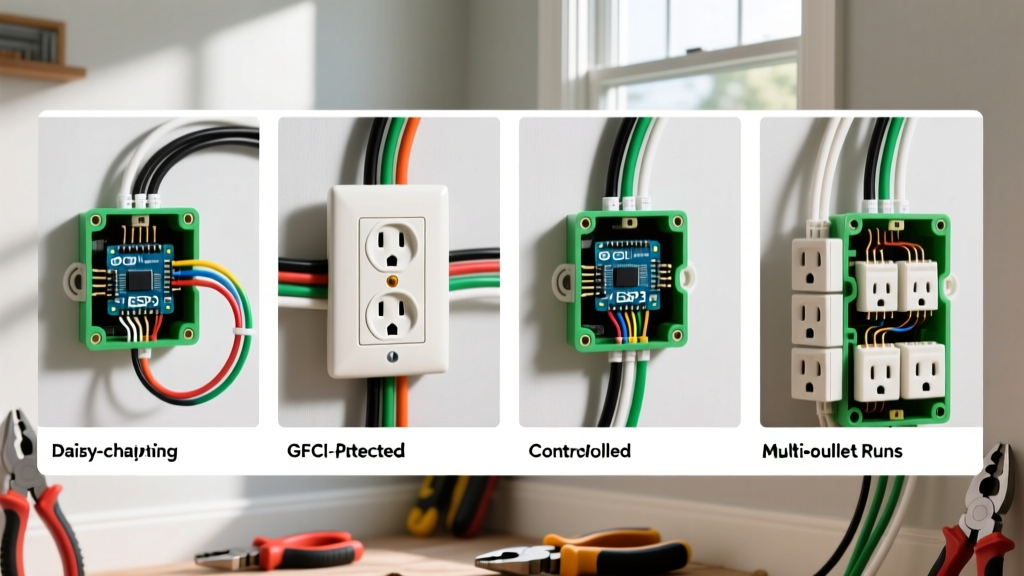
Standard room outlets are wired in parallel, but physically they are 'daisy-chained' from one box to the next. If the hot (black) wire is intact but the neutral (white) wire has disconnected at an upstream outlet, the downstream outlet will read 120V on a non-contact tester but will not power any device. This is known as an 'open neutral'.
Step-by-Step Multimeter Diagnostics
- Verify Hot: Set your multimeter (e.g., Fluke 117 True-RMS, approx. $200) to AC Voltage. Measure from the hot slot (shorter slot) to a known good ground. You should read 118V-122V.
- Verify Neutral Continuity: Measure from the hot slot to the neutral slot (longer slot). If you read 0V or a fluctuating low voltage (like 40V-80V phantom voltage), your neutral is open.
- Trace Upstream: Go to the outlet physically closest to the breaker panel relative to the dead one. Open it and check for a disconnected white wire or a failed backstab on the neutral side.
Scenario 4: Overloaded Circuit Breaker or Tripped AFCI
Sometimes the outlet is perfectly wired, but the circuit breaker in the main panel has tripped. Modern homes (built or renovated after 2014) are required by the NEC to have Arc Fault Circuit Interrupter (AFCI) breakers in almost all living spaces. AFCI breakers (like the Square D HOM120, approx. $35) are highly sensitive to arcing conditions, which can be caused by a damaged lamp cord, a failing vacuum motor, or even a loose wire nut in a junction box.
The 'Middle Trip' Confusion: When a standard breaker trips due to an overload, the toggle often stops in the middle 'neutral' position. It will look like it is ON, but it is internally tripped. You cannot simply push it to ON. You must firmly push the toggle to the full OFF position until it clicks, and then flip it back to ON. If it immediately snaps back to the middle or OFF, you have a dead short or a persistent arc fault that requires professional diagnosis.
Scenario 5: Reversed Polarity or Bootleg Ground
If your outlet tester shows 'Hot/Neutral Reversed' or 'Open Ground', the outlet may technically power a basic lamp, but it is a severe shock hazard. A common, highly dangerous scenario found in older homes with ungrounded (2-prong) wiring upgraded to 3-prong receptacles is the 'bootleg ground'. This occurs when a previous owner installed a jumper wire between the neutral terminal and the ground screw to trick a tester into reading 'correct'.
Under normal operation, this might seem fine. However, if the neutral wire ever becomes disconnected upstream, the metal chassis of any plugged-in appliance (like a microwave or refrigerator) will become energized with 120V, posing a lethal shock hazard. OSHA electrical safety guidelines strictly prohibit using the neutral conductor as an equipment grounding conductor. If you find a bootleg ground, remove the jumper immediately and either replace the receptacle with a GFCI (which provides shock protection without a ground wire) or run a new equipment grounding conductor back to the panel.
Cost Breakdown: DIY vs. Professional Electrician
Understanding the financial scope of your repair helps you decide whether to tackle the wiring scenario yourself or call a licensed professional. Always factor in local permit requirements if you are replacing a main panel breaker or adding new circuits.
| Repair Scenario | DIY Parts Cost | Professional Service Cost | Time Required |
|---|---|---|---|
| Replace Backstabbed Receptacle | $3 - $8 | $125 - $175 (Service Call) | 15 Minutes |
| Reset/Replace Upstream GFCI | $18 - $25 | $150 - $225 | 20 Minutes |
| Replace Standard AFCI Breaker | $35 - $55 | $250 - $400 | 30 Minutes |
| Trace and Repair Open Neutral | $2 (Wire Nuts/Tape) | $200 - $500 (Diagnostic Time) | 1 - 3 Hours |
Frequently Asked Questions
Why does my outlet have power but won't run my device?
This is almost always an open neutral scenario. A non-contact voltage tester detects the electromagnetic field of the hot wire, making it 'beep' even if the neutral path is broken. A digital multimeter measuring across hot and neutral will reveal the lack of a complete circuit.
Can I use a 20A receptacle on a 15A circuit?
Yes, the NEC allows a 20A-rated receptacle (which accepts both 15A and 20A plugs) to be installed on a 15A circuit, provided it is a single receptacle on that yoke. However, you cannot install a 15A receptacle on a 20A circuit, as the receptacle's internal contacts are not rated to handle a continuous 20A load, creating a fire hazard.
My outlet sparks when I plug something in. Is it broken?
A tiny, momentary blue spark when plugging in a high-draw device (like a laptop charger or vacuum) is normal inductive inrush current. However, if the spark is large, orange/yellow, accompanied by a popping sound, or leaves a burn mark on the faceplate, the internal brass contacts are worn out. Replace the receptacle immediately with a commercial-grade model like the Hubbell 5262 for superior contact tension.