
Beyond the Dictionary: Understanding the Electrical Outlet Definition
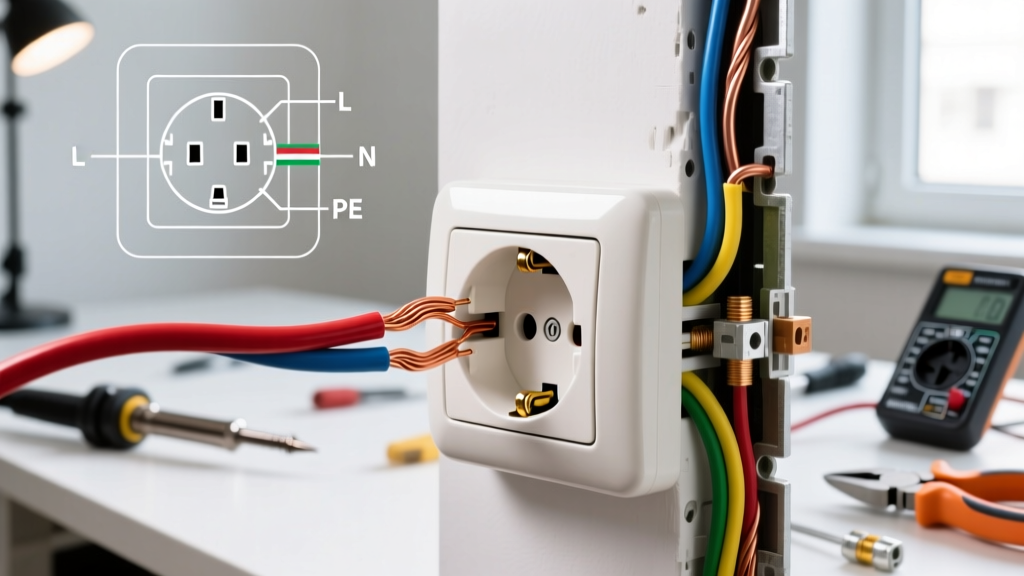
When most DIYers and homeowners search for an electrical outlet definition, they are looking for a simple explanation of the plastic faceplate on their wall where they plug in a lamp. However, in the professional electrical and engineering trades, understanding the precise technical definition is the foundation of safe material selection, code compliance, and system longevity. As a Tool & Material Guide, we must look past colloquialisms and examine the exact anatomical and material realities of the devices we install.
Colloquially, an "outlet" and a "receptacle" are used interchangeably. Technically, they are entirely distinct concepts under the National Electrical Code (NEC). Confusing the two can lead to improper material ordering and misunderstood inspection requirements. Let us break down the exact definitions, the material science behind modern receptacles, and the tools required to install them to factory specifications.
The Technical Electrical Outlet Definition vs. Receptacle
To wire a system correctly, you must speak the language of the code. According to Article 100 of the NEC, published by the National Fire Protection Association (NFPA), the definitions are strictly separated:
Outlet: A point on the wiring system at which current is taken to supply utilization equipment.
Receptacle: A contact device installed at the outlet for the connection of an attachment plug.
Therefore, a ceiling junction box powering a hardwired smoke detector is an outlet, but it does not contain a receptacle. The wall box powering your television contains both an outlet (the box itself) and a receptacle (the 15A duplex device). When sourcing materials for a project, you are purchasing receptacles to install at your outlets.
Anatomical Breakdown: Materials That Matter
Not all receptacles are created equal. A $1.20 residential receptacle and a $14.00 hospital-grade receptacle may look identical to the untrained eye, but their internal metallurgy and polymer chemistry dictate their lifespan and safety profile. Here is a deep dive into the materials used in modern NEMA 5-15R devices.
1. The Face and Body (Polymers)
- Thermoplastic Elastomer (TPE) / Polycarbonate: Standard in residential grades (e.g., Leviton 5320-WMP). These offer decent UV resistance and flexibility but can crack under high-torque screwdriver impacts or extreme temperature fluctuations.
- High-Impact Nylon: The standard for commercial "Spec Grade" devices (e.g., Hubbell HBL5262). Nylon provides superior tensile strength, resists shattering upon impact, and maintains structural integrity in high-heat environments up to 165°F (74°C).
- Urea-Formaldehyde: Found in vintage or ultra-cheap imported receptacles. Urea is highly brittle, degrades under UV light, and emits a distinct fishy odor when overheated. Avoid urea-based materials in all 2026 installations.
2. Internal Contacts and Grippers
The contact grippers are the most critical safety component. They must maintain constant tension on the male plug blades to prevent micro-arcing.
- Brass: Used in standard residential receptacles. Brass is highly conductive but suffers from "spring fatigue" over time, losing grip tension after repeated plug insertions.
- Phosphor Bronze: Used in commercial grades. The addition of phosphorus increases stiffness and fatigue resistance, ensuring a tight grip for decades.
- Beryllium Copper: Exclusive to Hospital Grade (HG) receptacles (e.g., Hubbell IG8300). Beryllium copper offers the ultimate combination of electrical conductivity and spring retention, mandated in critical care areas where a loose plug could mean life or death.
3. The Mounting Strap (Yoke)
The yoke secures the device to the electrical box. Residential straps are typically made of thin, galvanized steel that can bend during drywall cutout adjustments. Commercial straps utilize heavy-duty zinc-plated steel with integral plaster ears and break-off scoring lines, allowing for precise alignment without compromising the structural rigidity of the ground path.
Material Comparison Matrix
Use this matrix to select the correct receptacle material grade for your specific application. Pricing reflects average 2026 market rates per unit.
| Grade | Face Material | Contact Material | Yoke Material | Avg. Cost | Best Application |
|---|---|---|---|---|---|
| Residential (TR) | Polycarbonate | Brass | Light Galvanized Steel | $1.50 - $2.50 | Bedrooms, living areas, low-draw appliances |
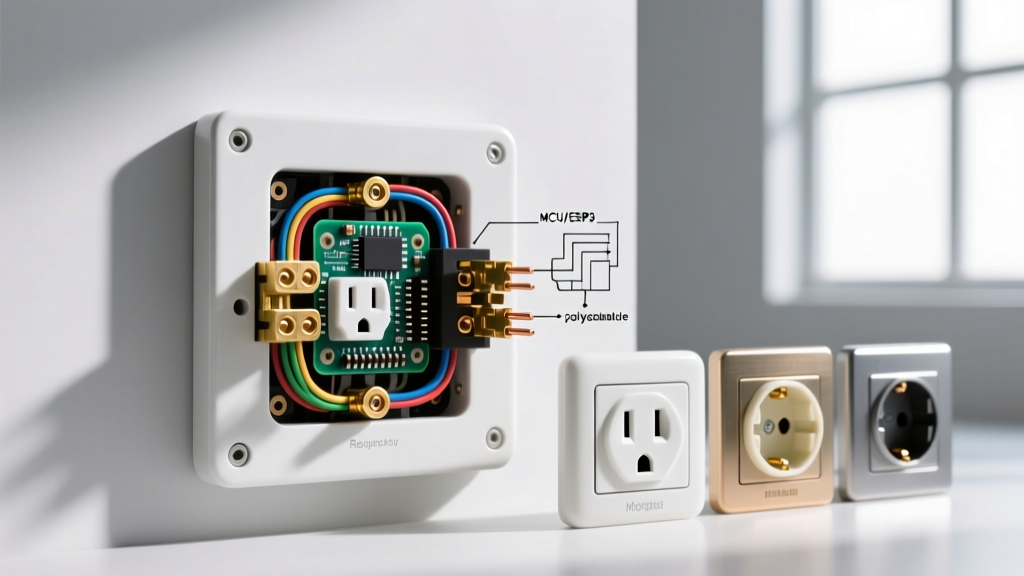
| Commercial (Spec) | High-Impact Nylon | Phosphor Bronze | Heavy Zinc-Plated Steel | $4.50 - $7.00 | Offices, retail, high-traffic residential (kitchens) |
| Hospital Grade (HG) | Thermoplastic/Nylon | Beryllium Copper | Reinforced Steel w/ Ground Rivet | $12.00 - $18.00 | Healthcare, data centers, heavy industrial machinery |
Common Material Failure Modes and Edge Cases
Understanding material limitations prevents catastrophic failures. Here are the most common edge cases encountered in the field:
The "Backstab" Push-In Terminal Failure
Many budget receptacles feature push-in (backstab) terminals that rely on a tiny internal brass spring to grip 14 AWG solid wire. Under heavy continuous loads (like a 1500W space heater drawing 12.5A), the brass spring heats up, loses its temper, and relaxes. This creates a high-resistance connection, leading to thermal runaway and melted polycarbonate faces. Always use side-wiring (terminal screws) or back-wiring (screw-clamp plates) found on commercial-grade devices.
Tamper-Resistant (TR) Shutter Binding
The U.S. Consumer Product Safety Commission (CPSC) and the NEC mandate Tamper-Resistant (TR) shutters in all dwelling units to prevent childhood electrocution. In high-humidity environments or coastal areas, cheap internal steel shutter springs can corrode and bind, making the outlet unusable. For damp locations, specify commercial-grade TR receptacles with nickel-plated internal shutter mechanisms.
Essential Tools for Outlet Installation
To properly install and terminate the materials listed above, you need precision tools. Relying on standard household screwdrivers leads to under-torqued connections and fire hazards.
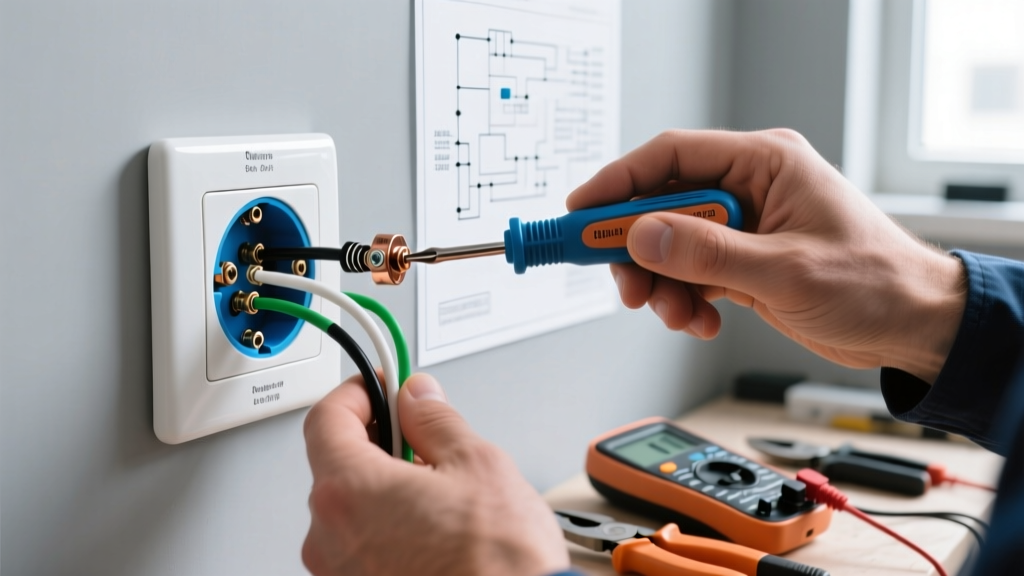
- Insulated Torque Screwdriver: The National Electrical Manufacturers Association (NEMA) and modern NEC updates emphasize proper termination torque. A standard 14 AWG copper wire on a brass terminal screw requires exactly 14 in-lbs of torque. 12 AWG requires 20 in-lbs. Use a calibrated torque driver like the Klein Tools 70905 to prevent stripping the screw head or leaving a loose connection.
- Precision Wire Strippers: Nicks in the copper conductor create stress fractures that snap under the terminal screw. Use self-adjusting strippers like the Knipex 12 42 180 to cleanly remove insulation without scoring the copper.
- Non-Contact Voltage Tester (NCVT) & Multimeter: Always verify the absence of voltage before touching the yoke. A dual-range NCVT (like the Fluke 2AC-II) paired with a standard digital multimeter ensures the circuit is truly dead and not suffering from phantom voltage or a shared neutral.
Final Thoughts on Material Selection
Mastering the true electrical outlet definition is about more than semantics; it is about recognizing that the receptacle is a complex electro-mechanical device. By upgrading from standard polycarbonate/brass residential models to nylon/phosphor-bronze commercial models, you eliminate the most common failure points in residential wiring. The slight increase in material cost is vastly offset by the elimination of thermal degradation, loose plug grip, and premature mechanical failure. Always match your material grade to the physical and electrical demands of the environment, and terminate every connection to exact torque specifications.