
Understanding the Norway Electrical Outlet Standard
When planning an electrical installation in Scandinavia, the norway electrical outlet presents a unique set of requirements governed by the NEK 400 standard. Unlike the rest of Europe, which predominantly relies on the 230/400V TN (Terra-Neutral) grid, approximately 70% of Norway's power distribution operates on a 230V IT (Isolated Terra) network. This fundamental difference dictates everything from the circuit breakers you select to the testing equipment required for final commissioning.
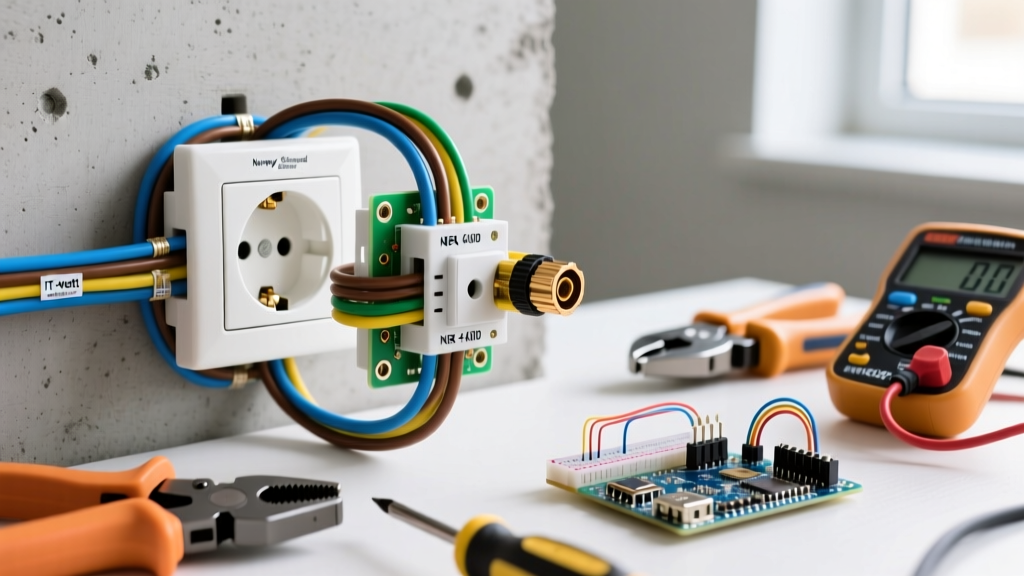
Norway utilizes the Type F (Schuko) socket standard (CEE 7/3), characterized by two round pins and dual earthing clips on the top and bottom edges. However, modern Norwegian installations must also accommodate the CEE 7/7 hybrid plug, meaning the socket must feature both the Schuko earthing clips and a protruding earth pin hole (Type E compatibility). Leading manufacturers like Schneider Electric (Elko series) and Gira produce specialized modules to meet these exact Norsk Elektroteknisk Komité (NEK) requirements.
The IT-Nett vs. TN-Nett Factor: Material Implications
The most critical mistake foreign electricians make in Norway is assuming a standard 230V single-phase TN-S wiring topology. In a Norwegian IT-nett (Delta system), there is no distributed neutral. The 230V is derived phase-to-phase (L1 and L2), with a separate local earth (PE) established at the building's grounding electrode.
RCD Selection (Jordfeilbryter)
Because the IT-nett does not provide a direct path to the transformer's neutral, a first earth fault simply shifts the system's reference potential without tripping a standard breaker. Therefore, Residual Current Devices (RCDs) must be specifically rated for IT networks. According to the Norwegian Directorate for Civil Protection (DSB), Type A or Type B RCDs with IT-nett compatibility are mandatory for socket circuits to prevent nuisance tripping and ensure safety during a secondary fault.
Essential Tools for Norwegian Outlet Installation
Working with Norwegian halogen-free cabling and strict NEK 400 testing protocols requires specialized, VDE-certified tools. Below is the 2026 professional toolkit for outlet installation.
| Tool Category | Recommended Model | Est. Cost (2026) | Specific Application |
|---|---|---|---|
| Multifunction Tester | Fluke 1654B | $1,250 | Loop impedance, RCD trip time, and IT-nett phase rotation testing. |
| Insulated Screwdrivers | Wera Kraftform VDE Set | $75 | 1000V rated termination for Elko Plus socket terminals. |
| Cable Stripper | Jokari 20050 | $45 | Precision stripping of tough PFXP halogen-free outer jackets. |
| Diagonal Cutters | Knipex TwinForce | $85 | Flush cutting of 2.5mm² solid copper conductors. |
Material Checklist: Sockets, Wiring, and Connectors
- Sockets: Elko Plus System 15A/250V Schuko (approx. $18-$25 per module). Ensure the part number specifies 'Jording' (Earthing) and IT/TN compatibility.
- Cabling: PFXP (Halogen-free, cross-linked polyethylene) 3G2.5mm². Standard PVC cables are heavily restricted in Norwegian commercial and multi-family residential builds due to fire-toxicity regulations. Expect to pay around $1.20 per meter.
- Connectors: Wago 221 Lever-Nuts (3-conductor). While push-in Wago 273s were common in the past, the 221 series is the 2026 standard for inspectable junction boxes.
- Junction Boxes: Elko RF (Flush Mount) or UP boxes, featuring integrated cable clamps to meet IP20/IP44 strain relief requirements.
Mandatory Surge Protection (Overspenningsvern)
As of the latest NEK 400 revisions, Type 2 Surge Protective Devices (SPDs) are mandatory for all new residential installations and major renovations in Norway. Because the IT-nett is highly susceptible to transient overvoltages from lightning and grid switching, installing an outlet without upstream SPD protection is a code violation.
- Recommended SPD: Eaton xPole Home or Schneider iPRD. Cost: $120-$180 per 3-pole module.
- Installation Rule: The SPD must be installed in the main distribution board, upstream of the RCD, to prevent transient surges from destroying the RCD's internal toroid.
Step-by-Step: Wiring a Type F Socket in an IT-Nett System
- Verify Grid Topology: Use your Fluke 1654B to measure voltage between L1, L2, and PE. In an IT-nett, you will read ~230V between L1 and L2, and ~0V (or floating voltage) between phases and PE before the system is grounded locally.
- Prepare the PFXP Cable: Use the Jokari stripper to remove 40mm of the outer halogen-free sheath. Strip 12mm of insulation from the three 2.5mm² solid copper cores.
- Terminate in Wago 221: If extending from a junction box, use Wago 221 lever connectors. Ensure the PE (Green/Yellow) is routed continuously to the socket's earth terminal.
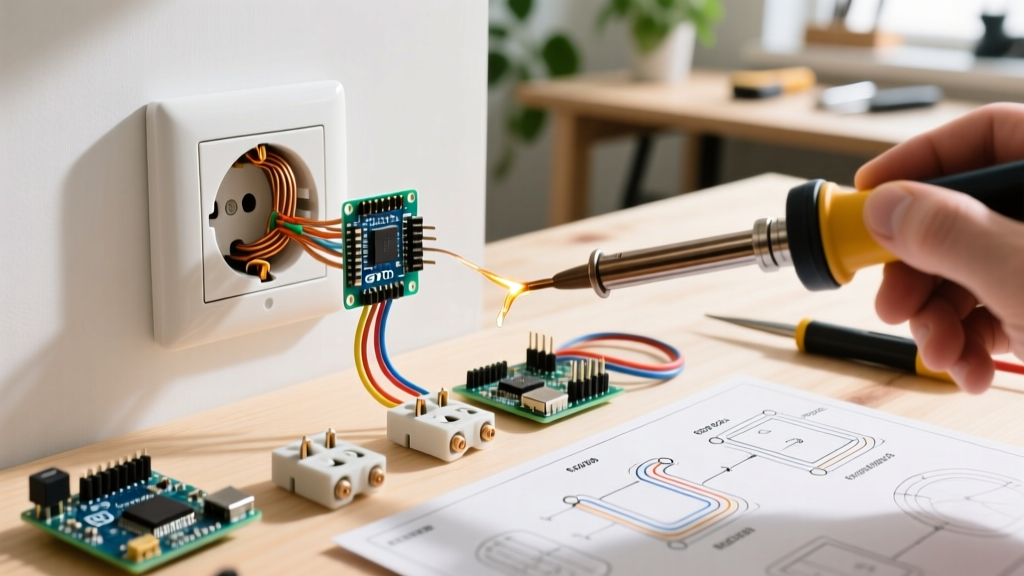
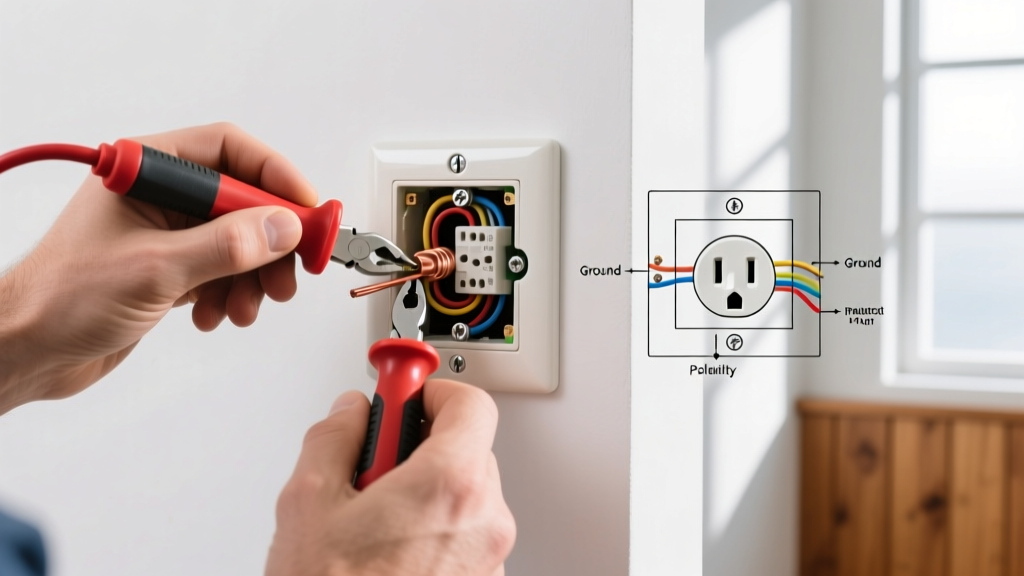
- Wire the Socket Terminals: Connect L1 to the left pin terminal, L2 to the right pin terminal. Crucial Note: In an IT-nett, neither L1 nor L2 is a 'Neutral'. Both are live phases. The socket will still function perfectly for 230V appliances, but the RCD upstream must be a 2-pole breaker that disconnects both phases simultaneously.
- Secure Earth Clips: Ensure the top and bottom Schuko earth clips are firmly seated in the Elko socket housing to guarantee a low-impedance fault path.
- Commissioning Test: Perform an RCD injection test. For a 30mA Type A RCD on an IT-nett, the trip time must be under 200ms at 1x IΔn and under 40ms at 5x IΔn.
Common Mistakes and Edge Cases
Expert Warning: Never install a standard 4-pole TN-S RCD on a Norwegian IT-nett without verifying its IT compatibility matrix. Standard RCDs may fail to detect the first earth fault or may nuisance-trip due to the inherent capacitive leakage currents present in isolated delta networks.
Another frequent issue involves older Norwegian properties built before the 1990s. These homes may still feature the obsolete Type K (Danish/Norwegian standard) or ungrounded Type C sockets. Upgrading to a modern Type F Schuko socket in these scenarios legally requires pulling a new PE (Protective Earth) conductor back to the main distribution board, as per the IEC World Plugs Guide and local NEK 400 retrofit mandates. You cannot simply bridge the neutral and earth terminals to create a false ground.
Frequently Asked Questions
Can I use standard European PVC cables in Norway?
While technically permitted in some single-family detached homes, halogen-free PFXP or PRK cables are the industry standard and often mandated by local fire codes, especially in escape routes and multi-dwelling units. Always default to PFXP for future-proofing.
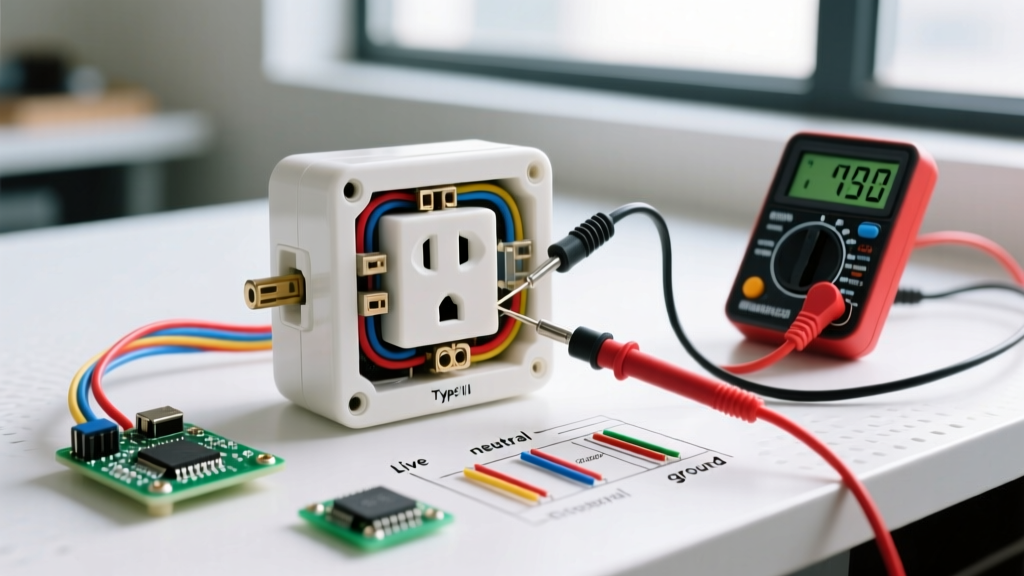
Why does my multimeter show 130V to earth on both pins?
This is the hallmark of a floating IT-nett system with balanced capacitive coupling to earth. Because the transformer secondary is isolated from earth, the system 'floats' at roughly half the phase-to-phase voltage (230V / 2 = ~115-130V) relative to ground until a fault occurs.
Are smart sockets compatible with Norwegian IT-nett?
Most Wi-Fi and Zigbee smart sockets (like Shelly or Aqara) are rated for 230V and will work across L1 and L2. However, smart sockets that require a dedicated Neutral (N) to power their internal radios will fail or behave erratically if wired to an IT-nett where no true neutral exists. Always source 'No-Neutral' smart modules for Norwegian installations.