
The Anatomy of an England Electrical Outlet: BS 1363 Explained
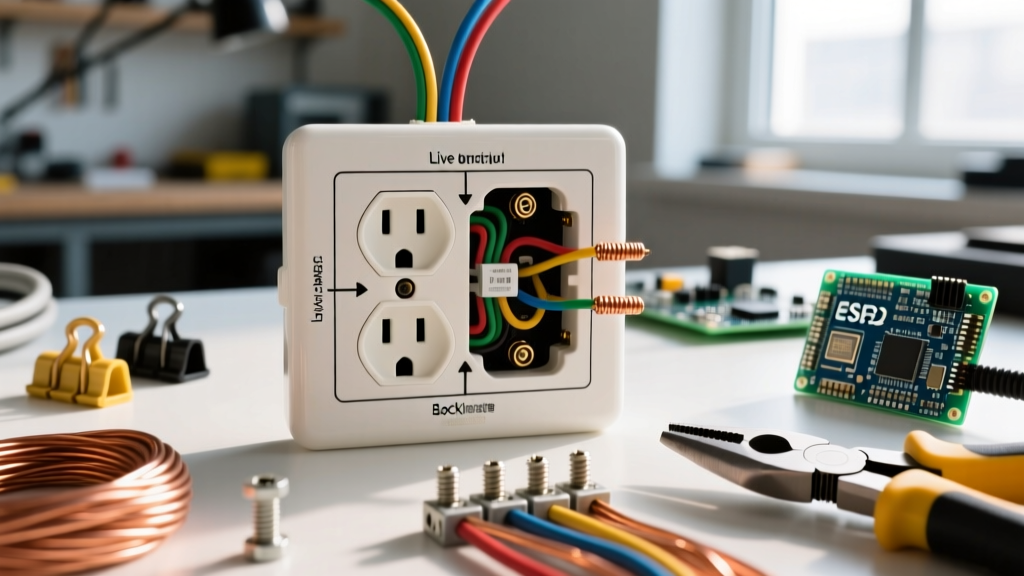
When international DIYers, expats, or electrical engineers first encounter an england electrical outlet, the sheer robustness of the design is immediately apparent. Unlike the NEMA 1-15 or 5-15 receptacles common in North America, the standard UK socket is governed by the BS 1363 standard. This mandates a 13-amp rated socket with integral safety shutters on the line and neutral apertures, which are only mechanically released when the longer earth pin of a matching plug is inserted.
From a code perspective, the most critical distinction in the English system is that the fuse is located inside the plug (rated at 3A or 13A to protect the appliance flex), not in the socket or the consumer unit. The socket itself is part of a circuit protected by a 32A Miniature Circuit Breaker (MCB) at the distribution board. This unique topology requires strict adherence to the IET Wiring Regulations (BS 7671) to prevent thermal overload at the socket terminals.
⚠️ Legal Warning: Part P Building Regulations
In England, domestic electrical work is governed by Part P of the Building Regulations. Installing a new socket circuit, or adding sockets in 'special locations' like bathrooms or kitchens, is notifiable to Local Authority Building Control (LABC) unless performed by a registered Competent Person (e.g., NICEIC, NAPIT). Failure to comply can result in enforcement notices and invalidated home insurance. Always consult the UK Government Part P Guidelines before beginning work.
Ring Final vs. Radial Circuits: Code Mandates
To wire an England electrical outlet correctly, you must understand the circuit topology. The UK is unique in its widespread use of the Ring Final Circuit (RFC), a post-war innovation designed to save copper. In an RFC, the circuit cable starts at the consumer unit, loops through every socket on the floor, and returns to the same 32A breaker.
As of the 2026 enforcement landscape of BS 7671 18th Edition (Amendment 2 and upcoming Amendment 3), both Ring and Radial circuits are fully compliant, but they require different cable sizing and protective devices.
| Feature | Ring Final Circuit (RFC) | Radial Circuit |
|---|---|---|
| Cable Size | 2.5mm² Twin & Earth (BS 6004) | 4.0mm² (32A) or 2.5mm² (20A) |
| MCB Rating | 32A Type B | 32A or 20A Type B |
| Max Floor Area | 100m² per circuit | 50m² (32A) or 20m² (20A) |
| Spurring Rules | Max 1 unfused spur per socket | Unlimited branching (radial tree) |
Edge Case: Loose Terminals and Thermal Runaway
Because an RFC allows up to 32A to flow through the 2.5mm² cable (relying on the ring path to split the load), a loose terminal screw at a single socket can force the entire 32A load through one 2.5mm² conductor. This causes rapid thermal degradation and melting of the BS 1363 socket faceplate. Code best practice in 2026 mandates the use of a calibrated torque screwdriver (typically set to 0.5 Nm to 0.8 Nm, depending on the accessory manufacturer like MK or Schneider Electric) to ensure terminal integrity.
18th Edition Wiring Regulations: RCD and AFDD Protection
The IET Wiring Regulations (BS 7671) have drastically tightened safety requirements for socket outlets. If you are installing or upgrading an England electrical outlet today, standard MCB protection is no longer sufficient.
- RCD Protection (Regulation 411.3.3): All socket outlets rated up to 32A intended for general use by ordinary persons must be protected by a Residual Current Device (RCD) with a maximum residual operating current of 30mA. For modern domestic installations, Type A RCDs are the minimum requirement to handle pulsating DC from appliance inverters, though Type F is increasingly specified for circuits with variable speed drives (like modern washing machines).
- AFDD Requirements (Regulation 421.1.7): Arc Fault Detection Devices are now strongly mandated for socket circuits in Higher-Risk Residential Buildings (HRRBs), care homes, and student accommodation to mitigate series arc faults caused by damaged flex cables. While not yet strictly forced in standard single-family homes, top-tier electricians are specifying AFDDs on all 32A ring finals as a 2026 best practice.
Socket Placement and Accessibility Codes
Where you place the outlet is just as regulated as how you wire it. Under Approved Document M (Access to and use of buildings), new dwellings in England must position socket outlets between 450mm and 1200mm from the finished floor level. This ensures accessibility for wheelchair users and those with limited mobility. Furthermore, sockets should be placed at least 100mm away from internal corners to allow easy plug insertion.
Integrated USB Sockets: Compliance and Heat Dissipation
Integrated USB-C and USB-A wall sockets are highly sought after in modern renovations. However, cheap imports often fail UK code requirements. To be legally installed in England, the USB module must be tested to BS EN 62368-1 (Audio/video, information and communication technology equipment safety).
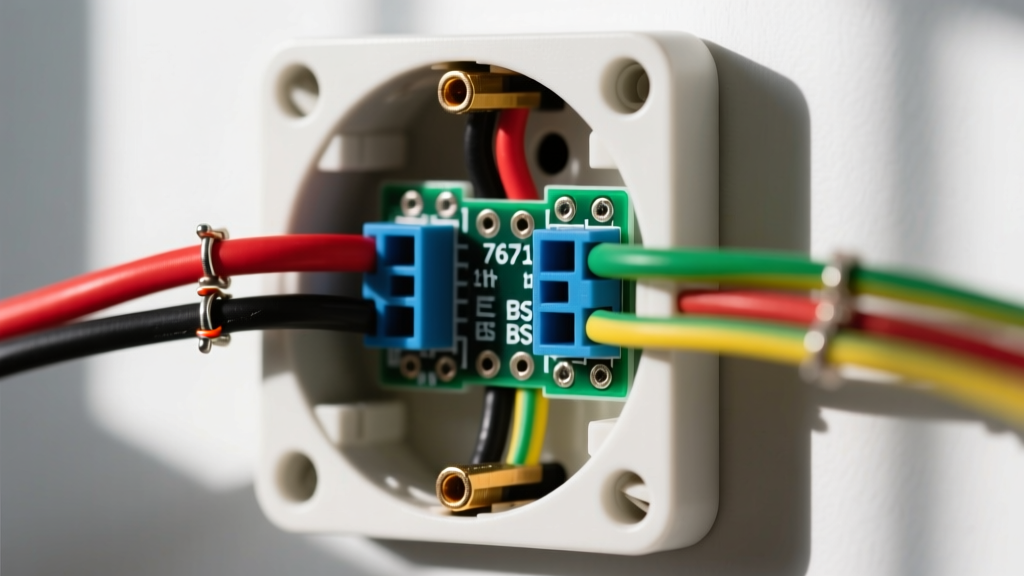
Crucially, the internal switch-mode power supply generates significant heat. Code requires that these sockets are installed in backboxes with a minimum depth of 35mm (preferably 47mm) to allow for heat dissipation and to maintain the required cable bending radius for the 2.5mm² T&E cables. Never install a USB socket in a shallow 25mm dry-liner box.
FAQ: Troubleshooting and Legalities
Can I legally replace a damaged England electrical outlet myself?
Yes. Under Part P, replacing a like-for-like socket outlet in a standard room (e.g., swapping a broken white BS 1363 socket for a new one in the exact same location) is considered non-notifiable minor works. However, you must still test the circuit's earth loop impedance (Ze and Zs) and RCD trip times to ensure compliance with BS 7671. If you are adding a new socket to an existing circuit in a kitchen or outdoors, notification or a Competent Person certificate is required.
Why do my smart sockets keep overheating in the backbox?
Smart sockets (Zigbee, Z-Wave, or Wi-Fi enabled) contain internal relays and wireless transmitters that generate ambient heat. When placed on a heavily loaded ring final circuit (e.g., powering a 3kW heater and a PC simultaneously), the combined thermal output can trigger the smart socket's internal thermal cutoff. To resolve this, ensure the backbox is 47mm deep, avoid daisy-chaining smart sockets directly next to each other, and verify the terminal torque is exact to prevent localized resistance heating.
What is the difference between Type G and other European outlets?
While mainland Europe largely uses the Schuko (Type F) or Europlug (Type C) standards, England, Wales, Scotland, and Northern Ireland strictly enforce the BS 1363 (Type G) standard. Adapters are not a substitute for code-compliant hardwiring. For international DIYers bringing European appliances to England, the legal and safe route is to cut the Europlug and wire a compliant, fused BS 1363 plug top, ensuring the correct 3A or 13A fuse is fitted based on the appliance's wattage rating.
For further reading on domestic electrical safety standards and finding certified contractors, consult resources provided by Electrical Safety First, the UK's leading charity dedicated to reducing electrical accidents.