
Understanding the Malta Electrical Outlet Standard
Malta's electrical infrastructure operates on a 230V, 50Hz system, utilizing the British-standard Type G (BS 1363) electrical outlet. While the physical footprint of the Malta electrical outlet mirrors that of the United Kingdom, local installation practices, environmental factors (such as high coastal humidity), and modern load demands necessitate a specialized approach to upgrades and replacements. Whether you are retrofitting a 1980s apartment in Sliema or upgrading a modern villa in Mellieha, replacing aging sockets is critical for fire prevention and smart-home integration.
In this comprehensive upgrade and replacement guide, we detail the exact specifications, wiring topologies, and 2026 regulatory standards required to safely replace a Malta electrical outlet. We will cover ring main circuit identification, backbox depth requirements for modern USB-C integrated sockets, and the specific torque settings needed to prevent thermal degradation.
When to Replace Your Malta Electrical Outlet
Outlets do not last forever. The internal phosphor-bronze contacts in a standard 13A socket lose their tension over time, leading to arcing and localized heating. You should immediately schedule a replacement if you observe any of the following failure modes:
- Thermal Browning: Yellow or brown scorch marks around the live (right) or neutral (left) pin entry points.
- Loss of Grip: Plugs slide into the socket with minimal resistance, indicating worn internal earth and live shutters.
- Cracked Faceplates: Urea-formaldehyde or PVC faceplates become brittle under UV exposure and heat, compromising the IP2X finger-protection rating.
- Lack of Modern Surge Protection: Older Maltese installations rarely feature localized surge protection, leaving sensitive 2026 electronics vulnerable to grid transients from the Enemalta network.
Step-by-Step Type G Socket Replacement
Replacing a standard 13A switched socket requires precision. Below is the professional workflow adhering to BS 7671 (IET Wiring Regulations), which forms the basis of Maltese electrical codes.
1. Isolation and Verification
Locate your consumer unit (distribution board). Identify the 32A MCB labeled 'Ring Main' or 'Sockets'. Switch it to the OFF position. Insert your two-pole voltage tester into the top pins of the existing socket to confirm 0V. Test the tester on a known live source before and after to prove functionality.
2. Ring Main vs. Radial Wiring Identification
Once the faceplate is unscrewed, pull the socket gently from the wall. You will typically see two 2.5mm² twin and earth (T&E) cables entering the backbox. This confirms a ring final circuit. If you only see one cable, you are either at the end of the ring, or the socket is wired as a radial circuit or an unfused spur. Note: Under Maltese regulations, an unfused spur may only supply one single or one double socket.
3. Preparing the Conductors
Strip back the outer grey PVC sheath to within 5mm of the backbox entry. Ensure the bare earth wires are fully sleeved with green/yellow PVC tubing. Cut the live (brown) and neutral (blue) conductors to 12mm of exposed copper. Do not over-strip; exposed copper outside the terminal brass is a primary cause of short circuits.
4. Terminating the New BS 1363 Socket
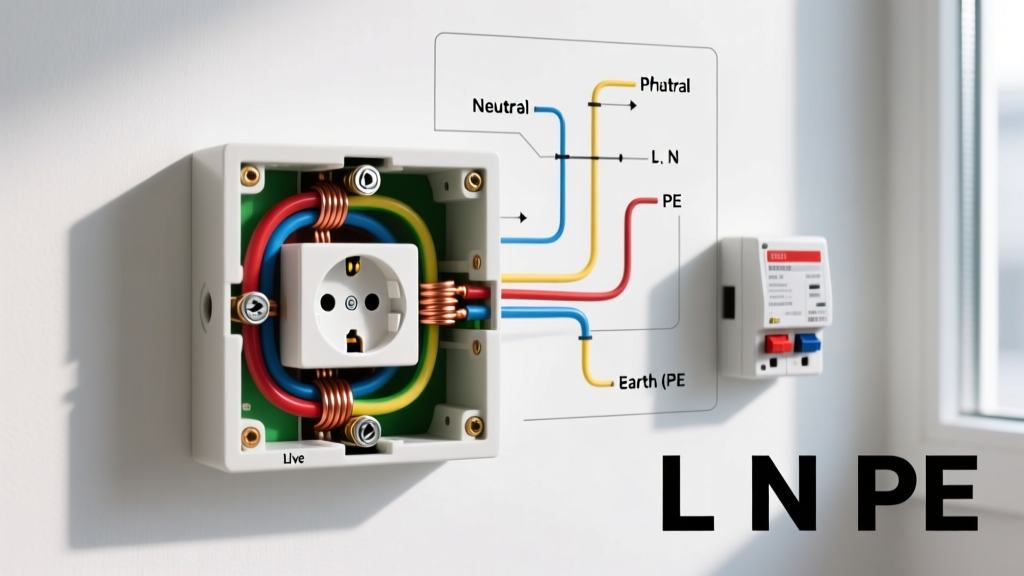
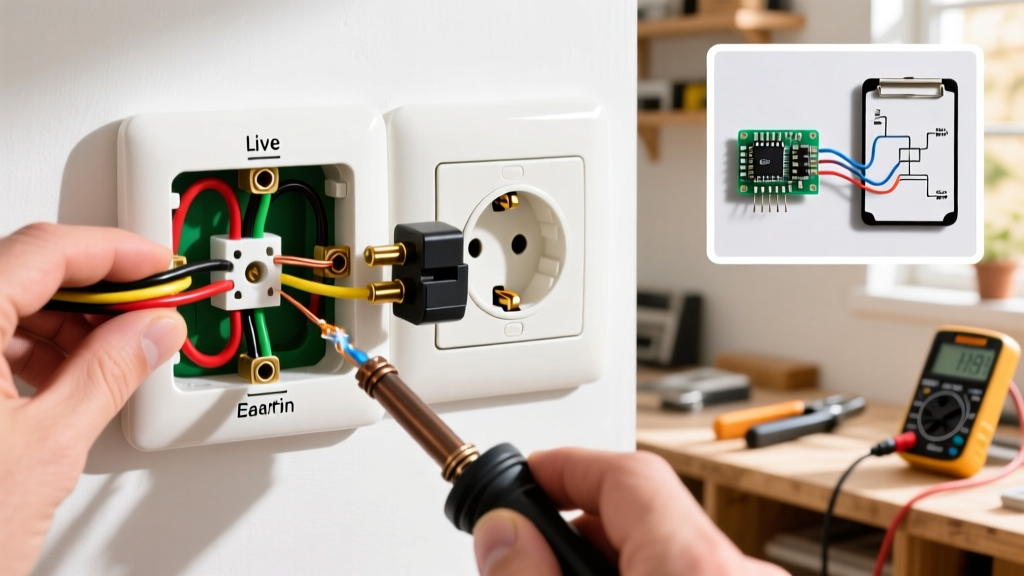
Connect the wires to the new socket terminals. The earth (E) goes to the top center, neutral (N) to the bottom left, and live (L) to the bottom right. If on a ring main, you will be terminating two brown wires into the L terminal, two blue into N, and two earths into E. Use a calibrated torque screwdriver set to 1.5Nm - 2.0Nm (check manufacturer specs) to secure the terminal screws. Under-tightening causes high-resistance joints; over-tightening shears the brass screw or crushes the copper strands.
2026 Outlet Upgrade Options: Comparison Matrix
When upgrading your Malta electrical outlet, you are no longer limited to standard white plastic switches. The table below compares the top-tier upgrade paths available in the Maltese market today.
| Outlet Type | Recommended Model | Backbox Depth Req. | Best Use Case | Approx. Cost (€) |
|---|---|---|---|---|
| Standard Premium | MK Logic Plus 13A Switched | 25mm | General living areas, high durability, clean aesthetics. | €6.50 - €9.00 |
| USB-C Integrated | Schneider Electric Outline (Type C + A) | 35mm (Mandatory) | Bedside tables, kitchen islands for direct device charging. | €22.00 - €28.00 |
| Smart Wi-Fi | Shelly Plus Plug UK/Malta | N/A (Plug-in) | Retrofitting smart home control without rewiring the wall. | €16.00 - €19.00 |
| Weatherproof (IP66) | Crabtree Stormflor 13A | 45mm+ Surface | Outdoor terraces, garages, and EV charging zones. | €14.00 - €18.00 |
Pro-Tip for USB Outlets: Always ensure you purchase USB-C sockets that support Power Delivery (PD) at a minimum of 18W. Cheaper models found in local hardware stores often step down to 5W, which will not fast-charge modern smartphones or tablets.
Navigating Maltese Wiring Regulations and Certification
Electrical installations in Malta are strictly governed by local adaptations of the IET Wiring Regulations (BS 7671) and overseen by the Regulator for Energy and Water Services (REWS). While a homeowner can physically swap a like-for-like socket faceplate, any alteration to the circuit topology (e.g., adding a new spur, extending a ring, or upgrading the consumer unit to include AFDDs) requires formal certification.
'All electrical installation work in Malta must be carried out or supervised by a licensed wireman. For single-phase domestic properties, a Wireman License A is required. Upon completion, an Electrical Compliance Certificate must be submitted to the relevant authorities and Enemalta if the load profile changes.' — Malta Standards Authority (MSA) Guidelines.
Furthermore, as of the latest updates to the IET Wiring Regulations, which Malta closely follows, the installation of Arc Fault Detection Devices (AFDDs) is highly recommended on socket outlet circuits to mitigate the risk of electrical fires caused by degraded wiring or loose connections.
Cost Breakdown for Outlet Upgrades in Malta
Budgeting for an electrical upgrade requires understanding both material and labor costs. Below is a realistic 2026 pricing guide for the Maltese market.
- Standard Socket Replacement (Like-for-Like): €15 - €25 per point (includes standard socket and 15 mins labor).
- USB-C / Smart Socket Upgrade: €35 - €55 per point (includes premium socket, potential backbox deepening, and termination).
- Backbox Replacement (Masonry): €40 - €60 per point (requires chasing the limestone/concrete wall, dust extraction, and making good with plaster).
- Licensed Wireman Call-Out Fee: €35 - €50 (usually covers the first hour of diagnostic work).
Frequently Asked Questions (FAQ)
Can I use a UK-purchased socket in Malta?
Yes. Because Malta uses the exact same BS 1363 Type G standard as the UK, sockets purchased from UK retailers (like Screwfix or Toolstation) are fully compliant and physically compatible. However, ensure the socket carries a valid BSI or ASTA kitemark to satisfy Maltese insurance requirements.
Why do my Malta electrical outlets have switches on them?
The BS 1363 standard mandates that sockets be switched. In Malta, it is common practice to leave the wall switch in the 'ON' position and use the appliance's own switch. However, for high-draw appliances like washing machines or dishwashers, utilizing the wall switch to isolate the load reduces wear on the appliance's internal relays and prevents standby power consumption.
Do I need a 35mm backbox for all modern sockets?
While standard 13A switched sockets will fit into a shallow 25mm backbox, any socket featuring integrated USB transformers, Wi-Fi smart relays, or neon indicators requires the extra volume of a 35mm (or deeper) backbox. Attempting to force the internal electronics into a 25mm box causes cable crushing, which can damage the insulation of the 2.5mm² T&E conductors and lead to earth faults.