
Understanding the London Electric Outlet: The BS 1363 Standard
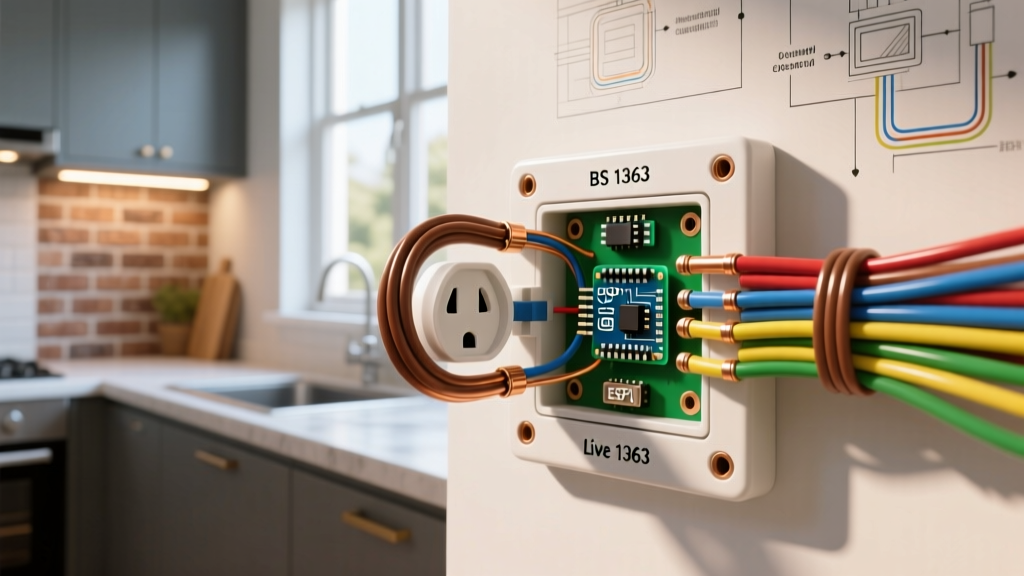
When discussing a London electric outlet, we are referring to the standard United Kingdom BS 1363 13-amp switched socket. While London follows the same national wiring regulations (BS 7671) as the rest of the UK, the city's unique housing stock—ranging from Victorian terraces to modern high-rises—creates specific wiring scenarios that DIYers and apprentice electricians must navigate. Unlike North American 120V radial branch circuits, UK 230V socket circuits heavily utilize the Ring Final Circuit (RFC) topology, alongside traditional radial layouts.
Whether you are retrofitting a 19th-century property in Islington or upgrading a modern flat in Canary Wharf, understanding the mechanical and topological requirements of the BS 1363 outlet is critical for safety and compliance with the 18th Edition Wiring Regulations.
The Great Divide: Ring Final vs. Radial Circuits
The most common point of confusion for international electricians or DIYers working in London is the Ring Final Circuit. In a ring circuit, the cable starts at the consumer unit (breaker panel), loops through every socket on the floor, and returns to the same breaker. This allows the use of smaller cable (2.5mm²) protected by a larger breaker (32A), because the current is theoretically split across two paths.
Radial circuits, conversely, operate like standard US branch circuits: the cable leaves the breaker and ends at the final socket. Below is a technical comparison to help you identify and plan your wiring scenario.
| Feature | Ring Final Circuit (RFC) | Radial Circuit |
|---|---|---|
| Topology | Continuous loop returning to MCB | Linear run ending at final outlet |
| Standard Cable Size | 2.5mm² Twin & Earth (T&E) | 4.0mm² T&E (or 2.5mm² for 20A) |
| MCB Rating | 32A (Type B or C) | 32A (4.0mm²) or 20A (2.5mm²) |
| Max Floor Area | 100 square meters | 50m² (20A) or 75m² (32A) |
| Spurs Allowed? | Yes (Max 1 single/double per socket) | No (Unlimited sockets on main run) |
Step-by-Step: Terminating a 13A Switched Socket
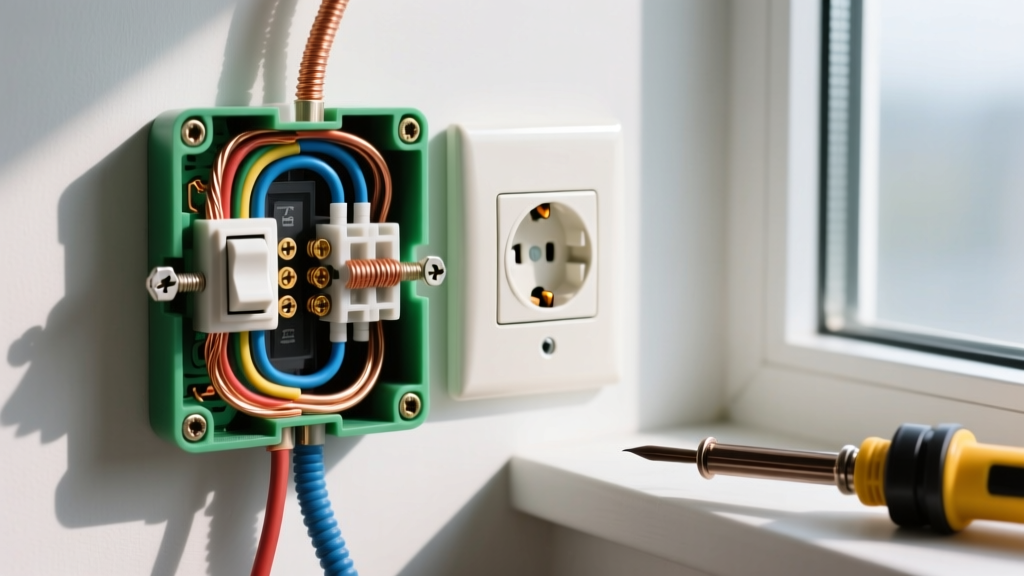
For this guide, we will use the industry-standard MK Logic Plus 13A Switched Socket (Model K9372WHI), widely favored in London for its robust brass terminals and deep wiring chambers, which are essential when dealing with the stiff 2.5mm² solid copper conductors used in ring circuits.
1. Preparation and Stripping
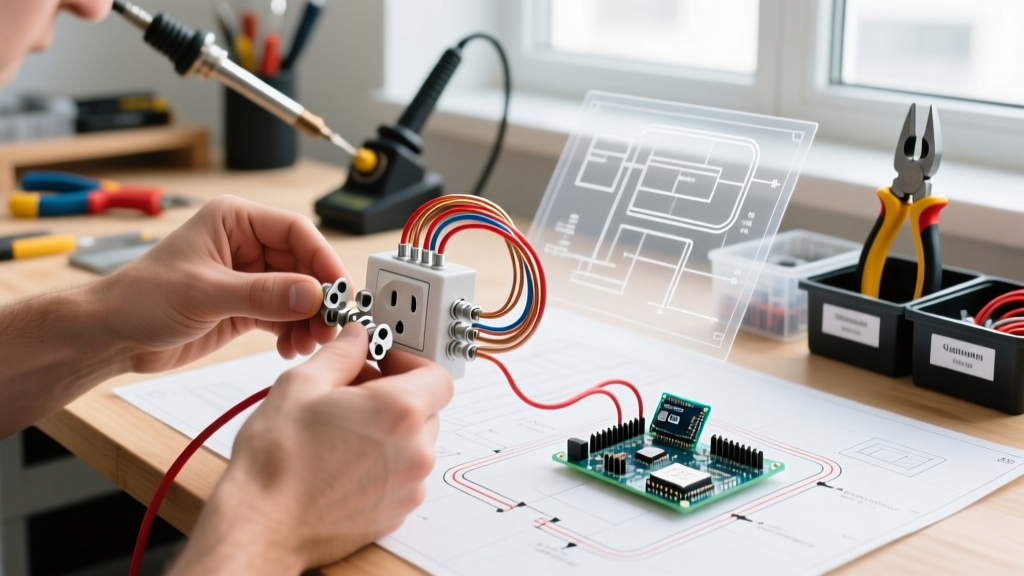
Using a calibrated wire stripper, remove exactly 25mm of the grey PVC outer sheath from the 2.5mm² Twin & Earth cable. Strip exactly 8mm to 9mm of insulation from the brown (live), blue (neutral), and green/yellow (earth) conductors. Over-stripping leaves exposed copper outside the terminal, creating a severe shock and short-circuit hazard.
2. Earth Sleeve Application
The bare copper earth wire must be covered with green/yellow PVC sleeving. In tight London backboxes (often only 25mm deep in older masonry walls), use 3mm diameter sleeving. Push the sleeving all the way down to the outer sheath to prevent the bare earth wire from accidentally touching the live terminal screw.
3. Terminal Termination
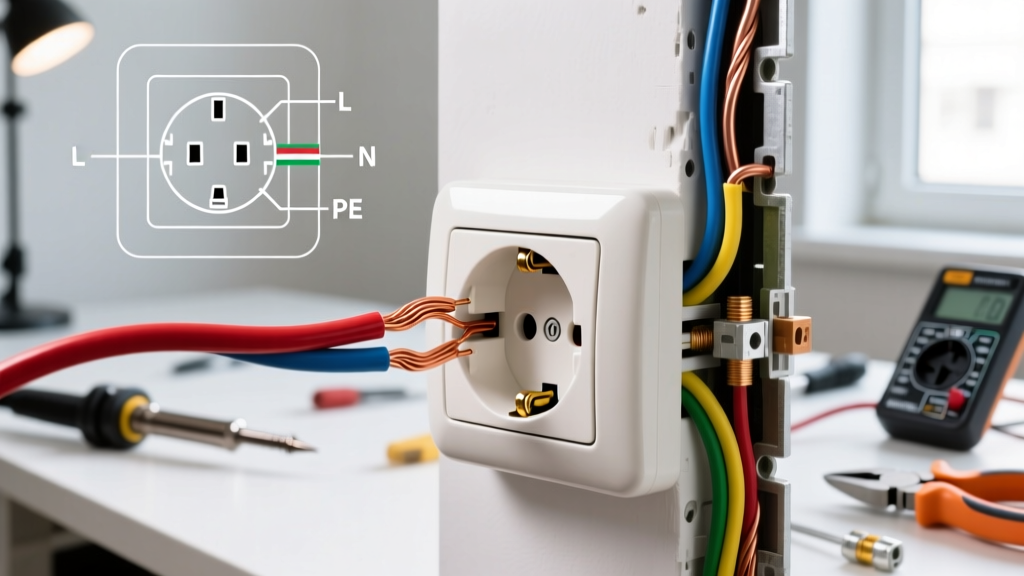
Insert the conductors into the brass terminals. The standard UK wiring color code dictates:
- Brown (Live): Connect to the terminal marked 'L' or the right-hand side when facing the front of the socket.
- Blue (Neutral): Connect to the terminal marked 'N' or the left-hand side.
- Green/Yellow (Earth): Connect to the center terminal marked 'E' or the earth symbol.
Pro Tip: The 18th Edition of BS 7671 emphasizes verified torque settings. While most DIYers use standard screwdrivers, professional London electricians use torque screwdrivers set to 0.4Nm to 0.5Nm (check the manufacturer's stamp on the socket back) to ensure the brass terminal screws do not loosen over time due to thermal cycling.
Retrofitting Older London Properties: Pre-2004 Color Codes
London is filled with Victorian, Edwardian, and mid-century properties. If you are opening up an existing outlet in a home wired before April 2006 (when UK harmonized colors became mandatory), you will likely encounter the old color scheme. Mixing old and new cables in the same backbox requires extreme caution and proper labeling.
CRITICAL WARNING: Never assume the old black wire is neutral without testing. In older London switch drops, the black wire was often used as a switched live. Always use a calibrated voltage indicator (VI) and a proving unit to verify dead circuits before touching any conductors. For more on safe isolation, refer to Electrical Safety First guidelines.
| Function | Post-2004 (Harmonized) | Pre-2004 (Old UK) |
|---|---|---|
| Live (Line) | Brown | Red |
| Neutral | Blue | Black |
| Earth | Green/Yellow | Bare Copper (Green/Yellow) |
Adding a Spur: The Wago 221 Solution
A common scenario in London flats is adding a new outlet for a wall-mounted TV or a home office desk. If you are on a Ring Final Circuit, you can add a spur (a branch off the ring) provided the new socket is not drawing more than 13A and you do not exceed the number of allowed spurs.
Historically, electricians would cram two 2.5mm² cables into the socket's brass terminal. In 2026, best practice dictates using Wago 221-413 lever nuts inside the backbox or a dedicated junction box. Strip the wires, lift the orange levers, insert one wire per slot, and snap them down. This reduces strain on the socket terminals, prevents the faceplate from bulging out of the wall, and ensures a gas-tight connection that won't degrade over decades.
Common Failure Modes in London Installations
When troubleshooting an existing London electric outlet, look out for these specific regional and systemic failure modes:
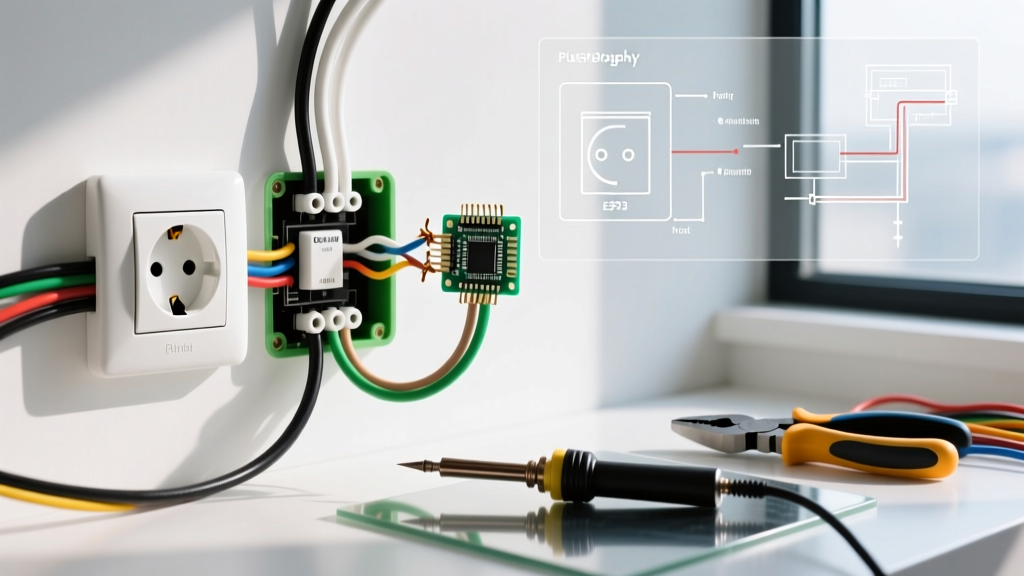
- Melted Earth Sleeving: Often caused by an electrician using a heat gun too close to the cables when shrinking other components, or resting a soldering iron on the T&E cable. This exposes bare earth, risking a phase-to-earth fault.
- Open Circuit Ring: If a previous DIYer removed a socket and failed to reconnect the looping cables, the ring becomes a radial. The 2.5mm² cable is now being protected by a 32A breaker, which will not trip before the cable melts under heavy load. Always perform a continuity ring test (End-to-End and Figure-8 tests) as outlined by the IET Wiring Regulations.
- Crushed Cables in 25mm Backboxes: In solid brick London walls, chiseling deep enough for 35mm or 47mm backboxes is difficult. Installers often force 35mm backboxes, crushing the 2.5mm² T&E cables behind the socket. This damages the PVC insulation and causes intermittent neutral faults.
2026 Upgrades: USB-C Integrated and Smart Sockets
The standard BS 1363 socket is evolving. In 2026, replacing standard faceplates with integrated USB-C PD (Power Delivery) sockets is highly popular in London renovations. Models like the Crabtree Eclipse USB-C 13A Socket provide up to 30W of fast charging directly from the wall, eliminating bulky adapter bricks.
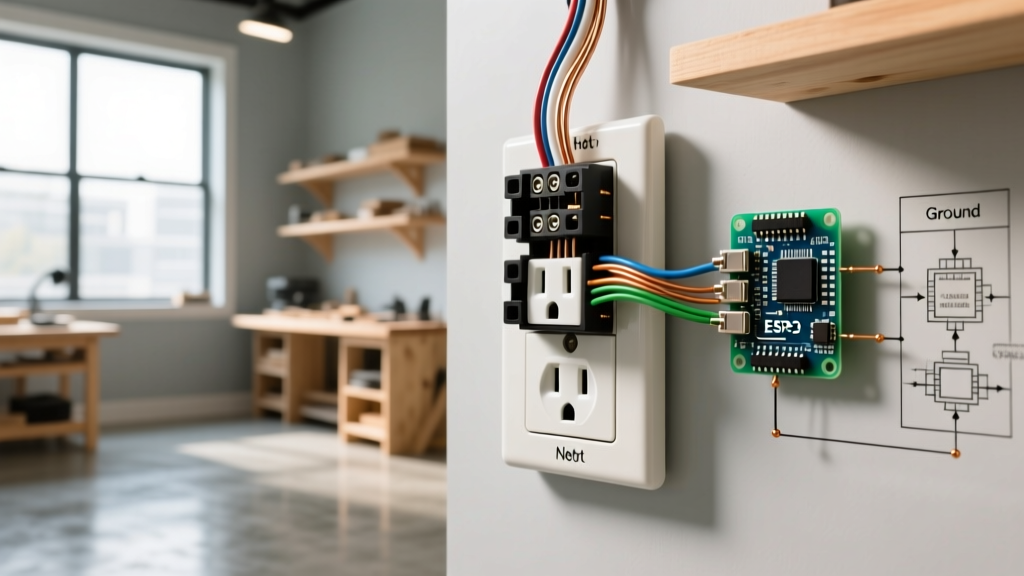
When installing smart sockets (like the TP-Link Tapo P110 or hardwired smart relays behind standard MK sockets), be aware that many smart devices require a neutral wire to function. Fortunately, UK backboxes always contain a neutral wire at the socket, unlike US switch loops, making London outlets prime candidates for smart home energy monitoring integrations.
Frequently Asked Questions
Do I need to notify building control to change a London electric outlet?
Under Part P of the UK Building Regulations, like-for-like replacement of a socket outlet is non-notifiable. You can legally swap a damaged white socket for a new one without informing local authorities. However, adding a new circuit or installing sockets in 'special locations' (like specific zones in a bathroom) requires notification or sign-off by a competent person registered with a scheme like NICEIC or NAPIT.
Why are London outlets switched?
The BS 1363 standard includes a single-pole switch on the faceplate. This allows users to isolate appliances without unplugging them, reducing wear on the physical plug pins and providing an immediate local isolation point for safety.
Can I use a 16A MCB on a 2.5mm radial circuit?
Yes, a 16A Type B MCB is perfectly safe for a 2.5mm² radial circuit, though 20A is the more standard maximum limit for this cable size when clipped direct or surrounded by insulation. Always verify the installation method and apply correction factors for thermal insulation.