
Decoding the Italian Grid: Voltage, Frequency, and Standards
When relocating to Italy, renovating a historic villa, or simply trying to power heavy appliances, understanding the local electrical infrastructure is non-negotiable. Italy operates on a 230V supply voltage and 50Hz frequency. However, the physical receptacles and wiring conventions differ significantly from North American (NEMA) or British (BS 1363) standards. If you are asking what type of electrical outlet in Italy is required for your home or project, the answer involves navigating a mix of legacy installations and modern hybrid solutions governed by the CEI (Comitato Elettrotecnico Italiano).
The Core Question: What Type of Electrical Outlet in Italy is Standard?
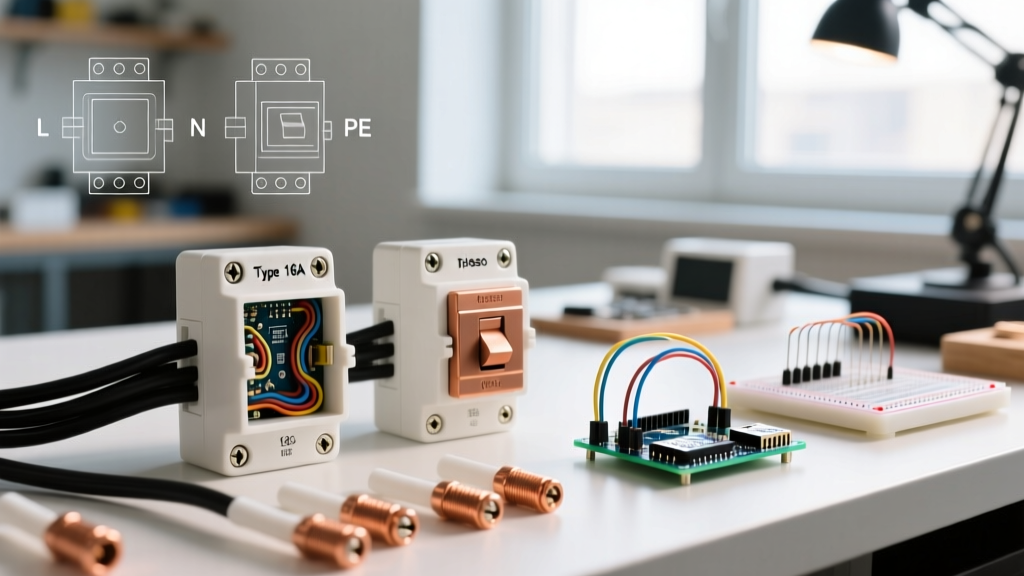
The official Italian standard is Type L (CEI 23-50). Unlike the standardized rectangular pins of the UK or the flat blades of the US, Type L features three round pins arranged in a straight, horizontal line. The central pin is dedicated to earth (ground). However, the complexity arises because Type L is split into two distinct, physically incompatible amperage variants:
1. The 10A Variant (Piccolo)
Historically used for lighting circuits and low-draw appliances (lamps, phone chargers, small TVs). The pins are 4mm in diameter, with a 19mm spacing between the center of the phase/neutral pins and the ground pin. The maximum safe continuous load is roughly 2200W.
2. The 16A Variant (Grande)
Designed for heavy-draw appliances like washing machines, dishwashers, and space heaters. The pins are thicker (5mm diameter) and spaced wider apart (26mm spacing). This receptacle supports up to 3500W. Attempting to force a 16A plug into a 10A socket will fail physically, preventing dangerous circuit overloads.
Authoritative Reference: According to the International Electrotechnical Commission (IEC), Type L is uniquely prevalent in Italy and Chile, making universal travel adapters a mandatory purchase for expats and tourists. For deeper technical specifications on Italian plug geometries, the World Standards Type L database provides exact millimeter tolerances.
The Modern Solution: Bipasso and Schuko Hybrids
If you are wiring a modern Italian home in 2026, you will rarely install dedicated 10A or 16A-only sockets. The industry has shifted toward universal hybrid receptacles to solve the compatibility headache. The two dominant configurations are:
- Bipasso (Dual-Pass): A cleverly engineered socket with figure-eight shaped slots that accept both the narrow 10A pins and the wider 16A pins, while maintaining a central ground.
- Schuko/Italian Hybrid (Tipo F/L Combo): A recessed circular socket that accepts the German/European Schuko (Type F) plug, but features an integrated central grounding clip to also accept the Italian Type L 10A and 16A plugs. Brands like Bticino (Living Now series) and Vimar (Arké series) dominate this market, with hybrid modules costing between €8 and €14 per unit in 2026.
Italian Receptacle Specifications Matrix
| Outlet Type | Pin Diameter | Pin Spacing | Max Load (230V) | Wire Gauge Requirement (CEI 64-8) |
|---|---|---|---|---|
| Type L (10A) | 4.0 mm | 19.0 mm | ~2200W | 1.5 mm² (Minimum) |
| Type L (16A) | 5.0 mm | 26.0 mm | ~3500W | 2.5 mm² (Minimum) |
| Bipasso (10A/16A) | Accepts Both | Variable | ~3500W | 2.5 mm² (Recommended) |
| Schuko Hybrid | Accepts Type F/L | N/A | ~3680W | 2.5 mm² (Minimum) |
Common Wiring Scenarios for Italian Outlets
Scenario 1: Upgrading a Legacy 10A Socket to a 16A Bipasso
The Problem: You are renovating a 1980s apartment in Rome. The kitchen has a legacy 10A outlet where you want to plug in a modern 3000W induction cooktop or heavy dishwasher. You want to swap the faceplate to a Bipasso socket.
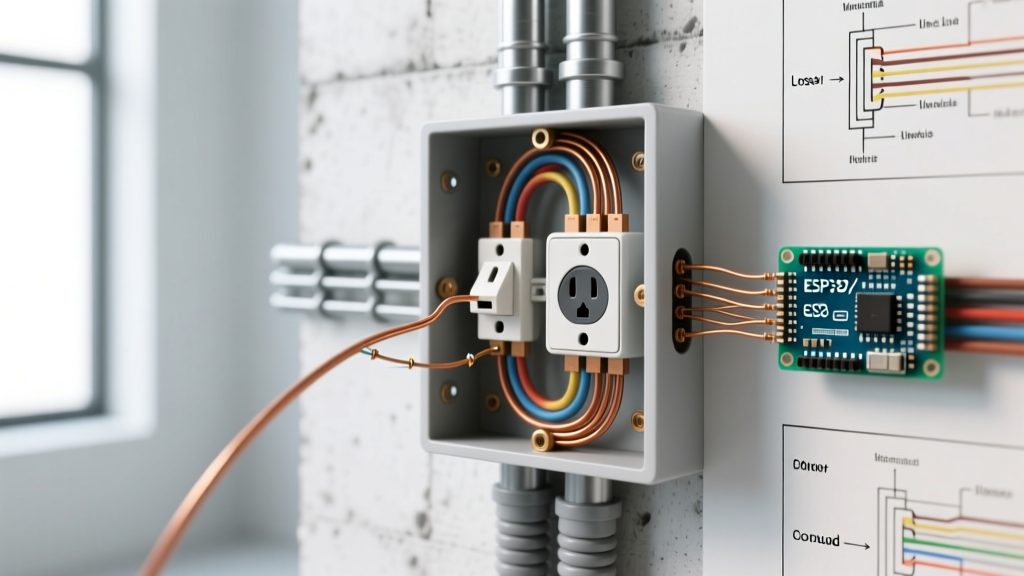
The Wiring Reality: Under the current CEI 64-8 standard (Italy's equivalent to the NEC), standard receptacle circuits must be wired with a minimum of 2.5 mm² copper wire and protected by a 16A magnetic-thermal breaker. Older Italian homes frequently wired entire rooms, including sockets, with 1.5 mm² wire protected by a 10A breaker. Actionable Step: Before installing a Bipasso socket, you must open the junction box and verify the wire gauge. If the wire is 1.5 mm², you cannot safely upgrade to a 16A load without pulling new 2.5 mm² wire back to the distribution board. Upgrading the socket without upgrading the wire and breaker creates a severe fire hazard.
Scenario 2: Decoding Legacy Italian Wire Colors
The Problem: You are replacing a broken Vimar outlet in a home built before 1995. You pull off the faceplate and are greeted by chaotic wire colors.
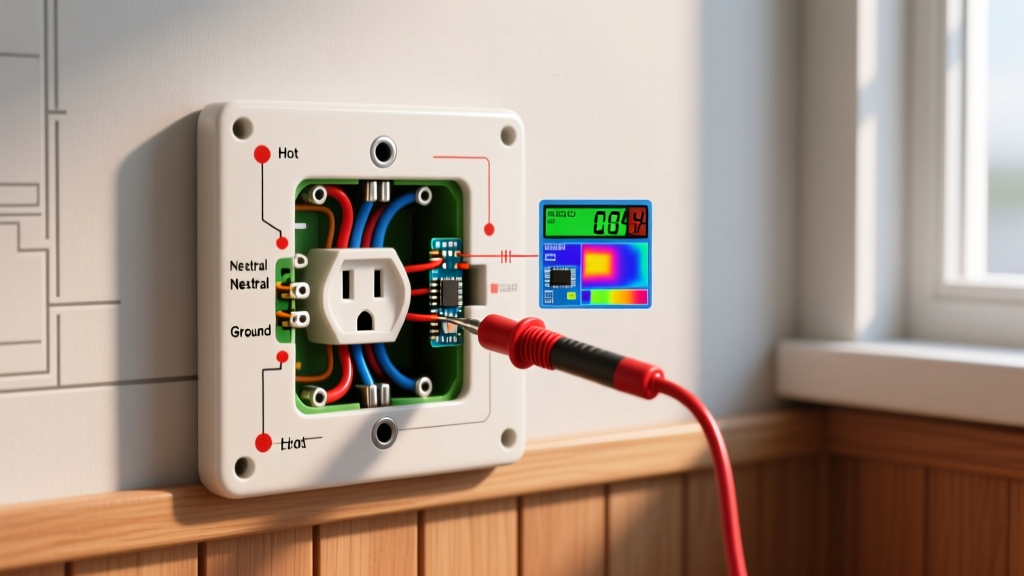
The Wiring Reality: Modern CEI 64-8 mandates strict color codes: Brown (Phase/Line), Blue (Neutral), and Green/Yellow (Earth). However, pre-1990s Italian wiring was notoriously unregulated. You might encounter Red, Black, or even White for Phase; Grey or Light Blue for Neutral; and bare copper or solid Green for Ground. Actionable Step: Never trust legacy wire colors. Always use a CAT III-rated non-contact voltage tester or a digital multimeter to identify the live conductor before termination. Assume any wire could be live until proven otherwise.
Step-by-Step: Wiring a Modern Bticino Bipasso Receptacle
- Isolate the Circuit: Turn off the main breaker and the specific 16A branch breaker. In Italy, verify the absence of voltage using a two-pole voltage tester (cercfase) across the phase and neutral terminals.
- Prepare the Conductors: Strip exactly 12mm of insulation from your 2.5 mm² wires. Do not over-strip, as exposed copper outside the terminal block violates CEI safety norms and risks short-circuiting in the tight confines of an Italian 503 or 502 flush-mounted backbox.
- Terminate the Connections: Insert the Brown (Phase) wire into the terminal marked L or F (Fase). Insert the Blue (Neutral) wire into the terminal marked N. Insert the Green/Yellow (Ground) wire into the central terminal marked with the earth symbol or T (Terra).
- Secure and Mount: Tighten the terminal screws to the manufacturer's specified torque (usually 0.5 Nm for standard modular sockets). Push the wires neatly into the backbox, ensuring no pinch points, and snap the Bticino module into the mounting frame.
Critical Safety: The 'Salvavita' (RCD) Requirement
In Italy, the Residual Current Device (RCD) is universally known as the salvavita (lifesaver). Under CEI 64-8, all socket outlets must be protected by a 30mA RCD to prevent lethal electric shocks. If you are wiring a new outlet circuit and the distribution board lacks a 30mA RCD, the installation is illegal and fundamentally unsafe. Modern Italian panels often use combined RCBOs (Residual Current Breaker with Overcurrent), which provide both 30mA earth-leakage protection and 16A thermal/magnetic overload protection in a single DIN-rail module.
Frequently Asked Questions (FAQ)
Can I use a US 120V appliance in an Italian outlet?
No. Italy operates at 230V. Plugging a 120V North American appliance into an Italian Type L or Bipasso socket using only a physical pin adapter will instantly destroy the appliance and may cause a fire. You must use a heavy-duty step-down voltage transformer rated for the appliance's wattage.
Do Italian outlets have a dedicated ground?
Yes, modern Type L and Bipasso outlets feature a central grounding pin. However, in buildings constructed before the 1970s, you may find two-prong ungrounded outlets, or worse, outlets where the ground pin was illegally jumpered to the neutral wire. Always test for a true earth ground using a receptacle tester or multimeter.
What size backbox do I need for Italian switches and outlets?
Italy uses standardized rectangular flush-mounted backboxes. The most common is the 503 box (designed to hold 3 modular switch/outlet units) and the 502 box (designed for 2 units). When roughing in new walls, ensure you use 503 boxes for standard receptacle placements to allow room for smart home modules or USB-charging outlets, which require deeper cavities.