
Understanding the Round Electrical Box Outlet Configuration
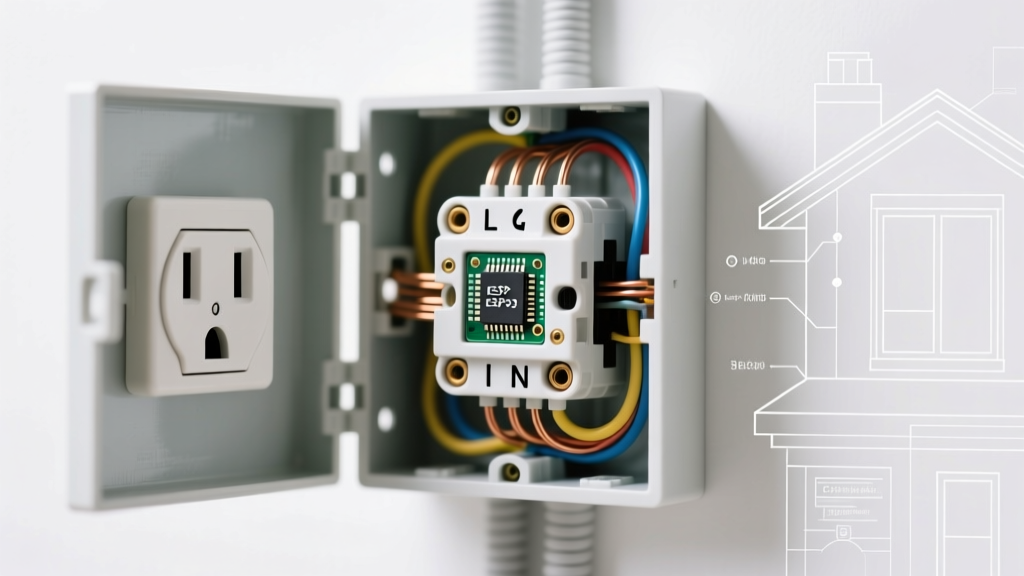
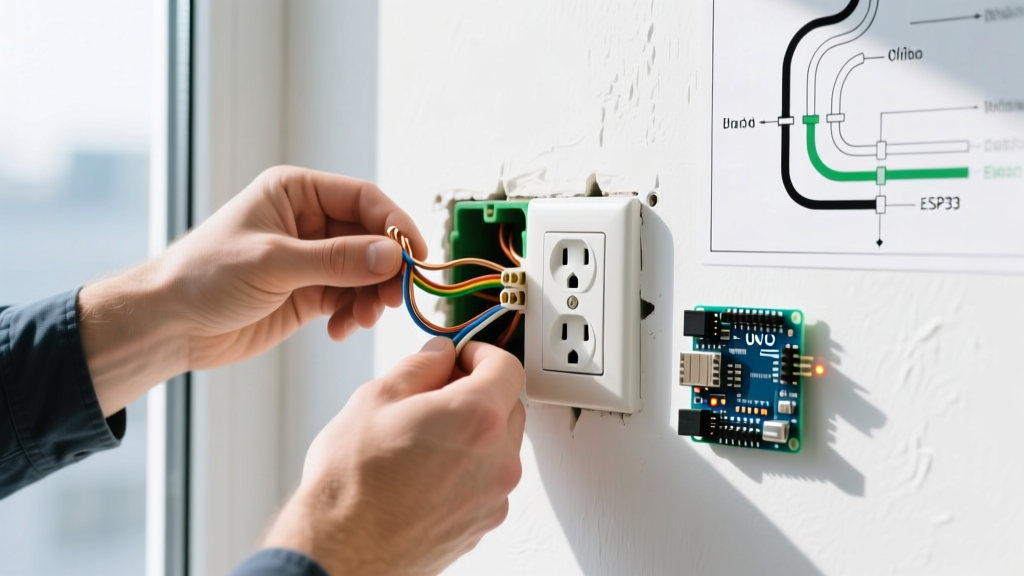
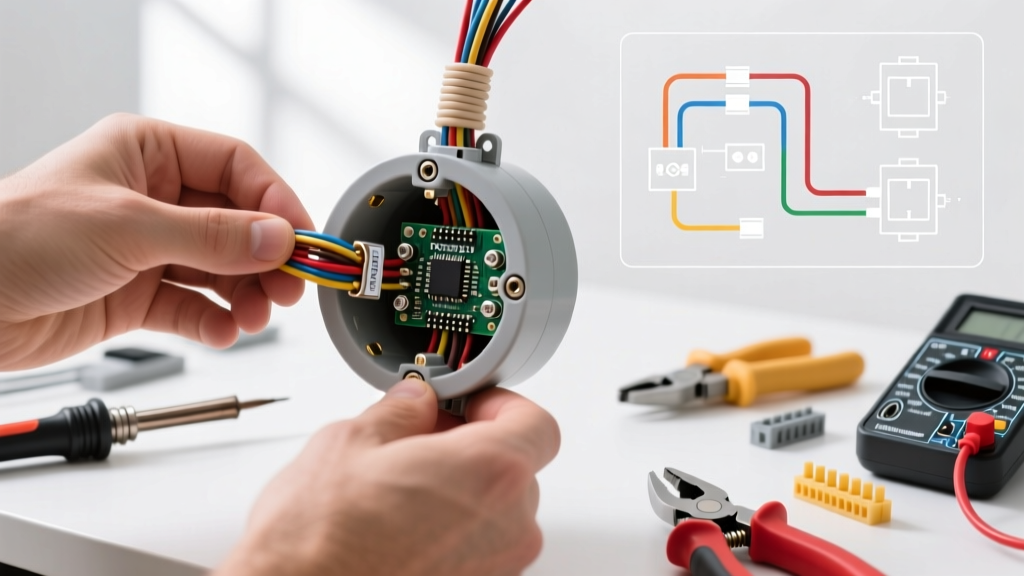
While rectangular junction boxes are the standard for wall receptacles, you will frequently encounter scenarios requiring a round electrical box outlet installation. Round boxes—typically 4-inch diameter metallic or PVC junction boxes—are primarily designed for ceiling fixtures, wall sconces, or surface-mounted conduit runs. Adapting a 4-inch round box to house a standard NEMA 5-15R duplex receptacle requires specific adapter plates, precise box fill calculations, and strict adherence to grounding protocols.
Whether you are retrofitting an older home, running surface-mounted EMT conduit in a garage, or installing an outdoor weatherproof receptacle, this guide provides the exact technical specifications and step-by-step procedures required for a safe, code-compliant installation in 2026.
Essential Tools and Materials
Using the correct components prevents overcrowding and ensures the device sits flush against the adapter plate. Below is the recommended bill of materials for a standard 15-amp indoor/outdoor round box setup.
| Category | Product / Specification | Estimated Cost (2026) |
|---|---|---|
| Junction Box | Raco 883 (4-Inch Round, 2-1/8" Deep, 21.0 cu in) | $4.50 - $6.00 |
| Adapter Plate | Raco 882 (4-Inch Round to Single Duplex Receptacle) | $1.20 - $2.00 |
| Receptacle | Leviton 5320-WMP (15A Duplex, Commercial Grade) | $3.50 - $5.00 |
| Grounding | Green 10-32 Grounding Screws & 12 AWG Pigtails | $0.50 |
| Connectors | Ideal 34-174 Wire Nuts (Tan) or Wago 221-413 | $0.25 / $0.80 |
Pre-Installation: NEC Box Fill Calculations
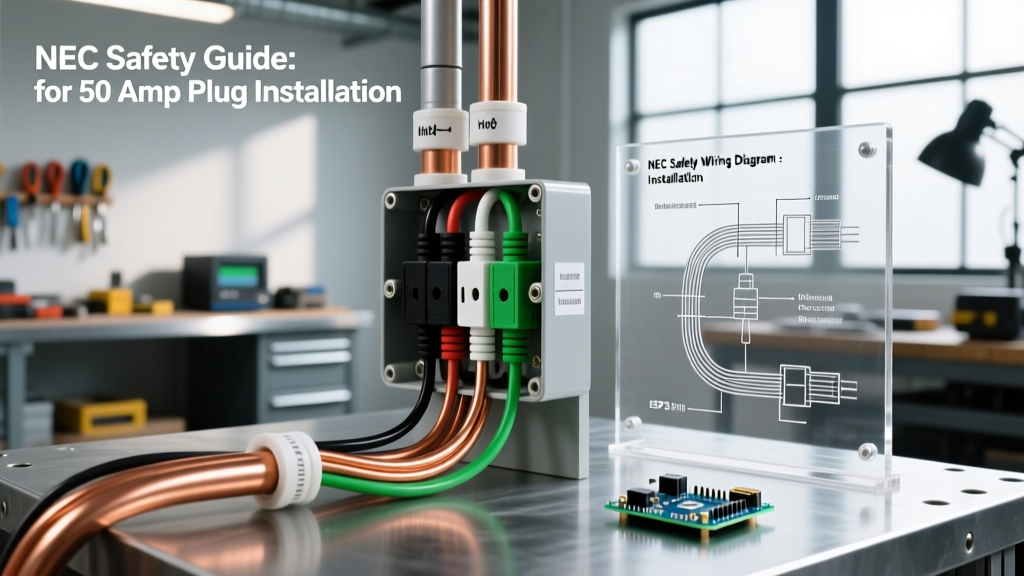
Before pulling any wire, you must calculate the box fill to comply with NFPA 70 (National Electrical Code) Article 314.16. Overcrowding a round box causes wire insulation damage and creates severe fire hazards.
NEC Box Fill Rule of Thumb (14 AWG Wire):
Each current-carrying wire counts as 2.0 cubic inches. All equipment grounding conductors combined count as 2.0 cubic inches. The receptacle device itself counts as 4.0 cubic inches (2 x 2.0).
Total for 1 cable (1 hot, 1 neutral, 1 ground) + 1 device = 12.0 cubic inches minimum.
A standard shallow 4-inch round box (1.5 inches deep) only offers 12.5 cubic inches of space. This leaves virtually zero margin for error. Always use a 2-1/8 inch deep round box (21.0 cubic inches) when installing a round electrical box outlet to accommodate the bulk of the receptacle yoke and wire bends.
Step-by-Step Installation Guide
Step 1: Power Isolation and Cable Entry
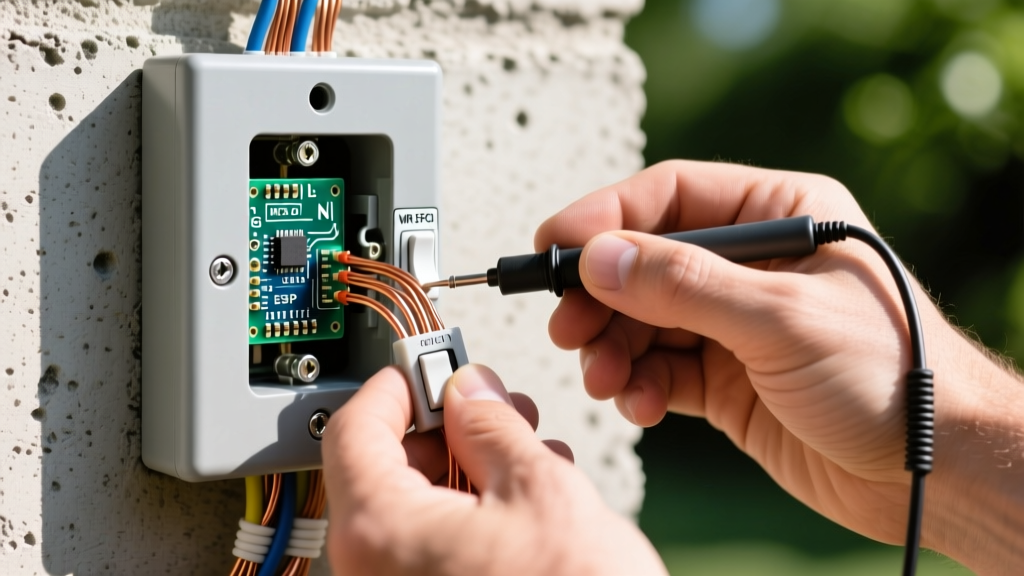
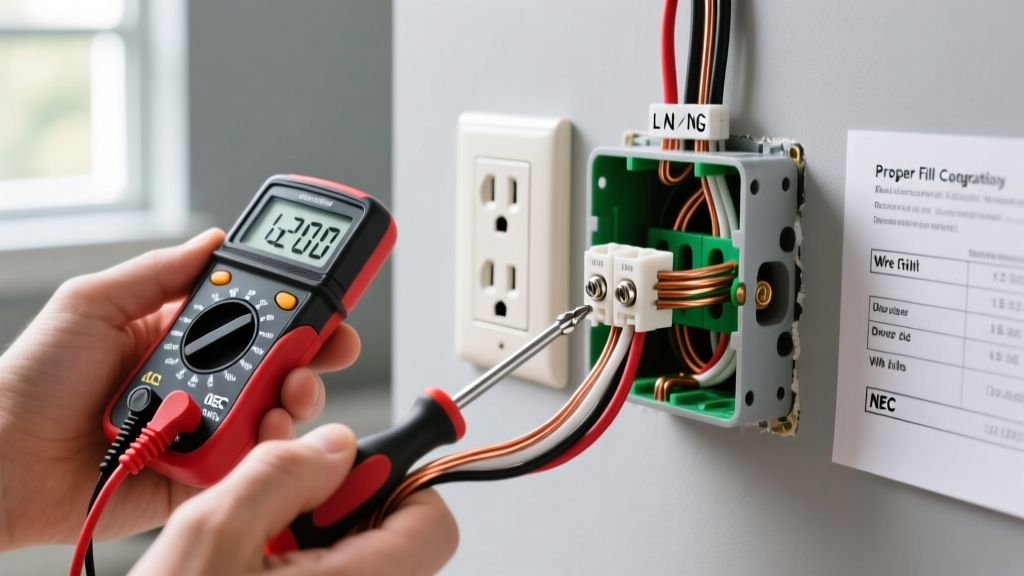
- Turn off the circuit breaker and verify zero voltage using a non-contact voltage tester and a digital multimeter (testing Hot-to-Neutral and Hot-to-Ground).
- Route your 14/2 or 12/2 NM-B cable (or EMT conduit) into the knockout hole of the round box.
- If using NM-B cable, secure it with a 3/8-inch Romex cable clamp. If using EMT conduit, ensure the conduit is bonded and secured with a set-screw connector.
Step 2: Grounding the Metal Box
If you are using a metallic round box, the box itself must be grounded independently of the receptacle. Strip 6 inches of bare 12 AWG copper wire. Loop it around the green 10-32 grounding screw and thread it into the pre-tapped grounding hole at the back of the Raco 883 box. Torque to 12 in-lbs. You will pigtail this ground wire to the incoming bare copper ground and the receptacle's green grounding screw later.
Step 3: Wire Preparation and Pigtailing
- Strip Length: Strip exactly 3/4 inch of insulation from the black (hot) and white (neutral) wires for side-wiring, or 5/8 inch for back-wiring.
- Pigtailing: Never use the receptacle's internal jumper tabs to pass power to downstream devices in a confined round box; the heat dissipation is poor and the wire bending radius will be compromised. Use Wago 221-413 lever nuts or Ideal wire nuts to create 6-inch pigtails for the hot, neutral, and ground wires.
Step 4: Mounting the Adapter Plate and Receptacle
Because a standard duplex receptacle is rectangular, it will not mount directly to the circular screw holes of a 4-inch round box. You must use the Raco 882 adapter plate.
- Feed the pigtails through the center rectangular cutout of the adapter plate.
- Secure the adapter plate to the 4-inch round box using the provided 6-32 mounting screws.
- Connect the black pigtail to the brass (hot) terminal, the white pigtail to the silver (neutral) terminal, and the bare pigtail to the green (ground) terminal.
- Push the wires neatly into the back of the box, folding them in a clockwise 'Z' pattern to prevent pinching behind the device yoke.
- Mount the Leviton 5320-WMP receptacle to the adapter plate using the 6-32 device screws.
Step 5: Torque Verification and Final Testing
As of the 2026 NEC adoption cycle, torque verification is heavily emphasized by inspectors. Use a calibrated torque screwdriver to tighten the receptacle terminal screws to 14 in-lbs (the standard specification for Leviton 15A commercial devices). Loose connections cause arc faults; overtightened connections strip the yoke threads. Snap on a round-to-duplex cover plate, restore power, and test with a GFCI/receptacle tester.
Edge Case: Installing a GFCI in a Round Box
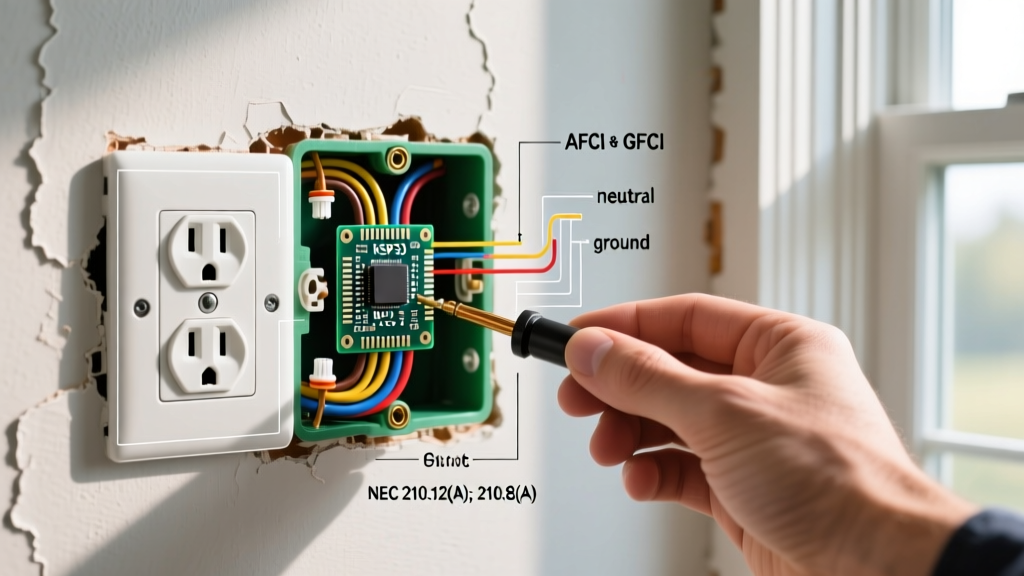
Installing a Ground Fault Circuit Interrupter (GFCI) in a round electrical box outlet configuration presents a unique spatial challenge. Standard GFCI devices (like the Leviton 9125-W) have a chassis depth of 1.35 inches. In 2026, combination AFCI/GFCI devices are even more common but feature deeper chassis profiles (up to 1.45 inches).
If you attempt to force a GFCI into a standard 1.5-inch deep round box, the internal electronics will crush against the incoming wires, leading to immediate failure or a short circuit. Solution: You must use an extra-deep 4-inch round box (2.125 inches) or add a 1-inch metallic box extension ring (Raco 885) to achieve the necessary 31.5 cubic inches of volume required for the device and the extra line/load wires.
Frequently Asked Questions
Can I use a weatherproof round box for an outdoor outlet?
Yes, but you must use a cast aluminum weatherproof round box (such as the Bell 5401-0) paired with an 'in-use' weatherproof cover that accommodates the round-to-duplex adapter. Ensure all unused knockouts are sealed with threaded metal plugs and silicone sealant to meet OSHA and NEC wet location requirements.
Why are my outlet screws not aligning with the round box holes?
Standard duplex receptacles are designed for rectangular boxes with screw holes spaced 3.281 inches apart (center-to-center). A 4-inch round box has mounting holes spaced differently for circular fixtures. This is exactly why the round-to-duplex adapter plate (mud ring) is mandatory—it bridges the circular mounting points to the standard rectangular NEMA spacing.
Do I need to bond the ground wire to a PVC round box?
No. PVC (non-metallic) round boxes are non-conductive and do not require an equipment bonding jumper to the box itself. However, you must still pigtail the incoming bare copper ground wire directly to the receptacle's green grounding screw to ensure the outlet is properly grounded.