
Why Upgrade Your Floor Electrical Outlet?
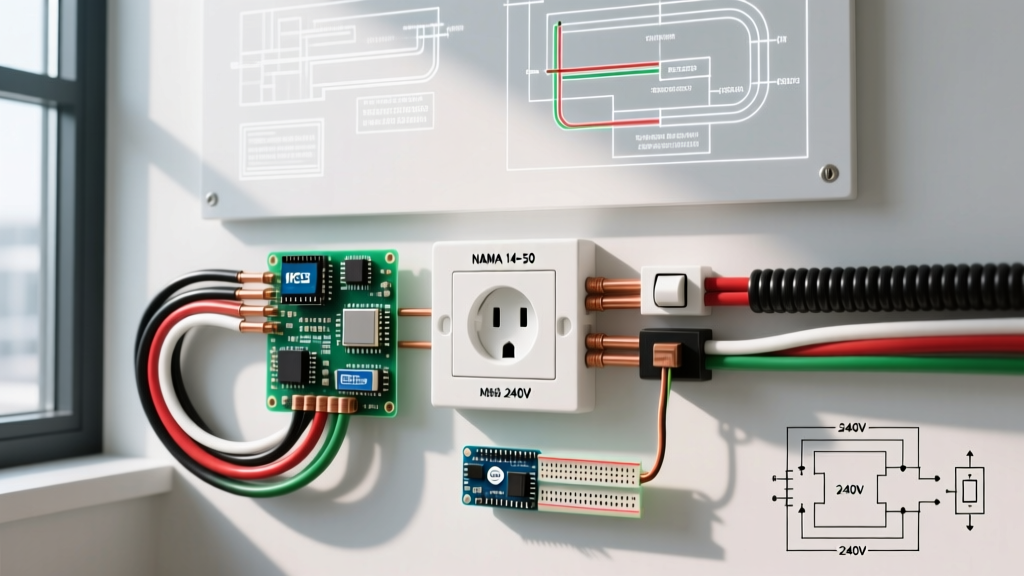
Open-concept living rooms, modern home offices, and commercial spaces frequently rely on a floor electrical outlet to deliver power and data to center-of-room furniture. However, legacy flush-mount brass plates are notorious for trapping dust, failing to accommodate modern bulky power bricks, and presenting a tripping hazard when the cover plates warp or lift. Upgrading to a modern pop-up floor box solves these ergonomic and aesthetic issues while significantly increasing your power and data capacity.
This comprehensive upgrade and replacement guide walks you through transitioning from an outdated flush-mount receptacle to a high-capacity pop-up floor box. We will cover subfloor constraints, 2026 model recommendations, and the precise wiring techniques required to meet current safety codes.
Wood Subfloor vs. Concrete Slab: The Depth Dilemma
The most critical failure point in a floor electrical outlet replacement is ignoring the subfloor cavity depth. Pop-up mechanisms require significantly more vertical clearance than flush plates. Before purchasing a replacement kit, you must identify your subfloor type and measure the available depth.
| Subfloor Type | Typical Cavity Depth | Recommended Box Style | Installation Challenge |
|---|---|---|---|
| Wood Joist (Suspended) | 1.5" to 2.5" (limited by joist height) | Shallow-profile die-cast aluminum | Avoiding structural joist notching; routing flexible metal conduit (FMC). |
| Concrete Slab (On-Grade) | 3.0" to 6.0"+ (core drilled) | Heavy-duty cast iron with deep pan | Dust management; moisture sealing; requiring a diamond core drill. |
| Access Floor (Raised) | 6.0" to 24.0" | Multi-gang modular floor boxes | Securing the box to the pedestal grid without compromising tile stability. |
Top Replacement Kits for Open-Concept Spaces
When sourcing a replacement floor electrical outlet, avoid generic hardware store kits that lack proper gasketing. Commercial-grade kits from established manufacturers ensure UL listing and proper sealing against mop water. Here are the top three models dominating the market in 2026:
1. Hubbell S1FloorBox (Pop-Up Series)
- Best For: Concrete slab installations requiring heavy-duty durability.
- Estimated Price: $285 - $320
- Specs: Cast iron base, solid brass cover plate. Requires a minimum cavity depth of 2.75 inches. Includes integrated gaskets for wet-location mop resistance.
- Expert Note: Hubbell's S1 series features a unique slide-in modular design, allowing you to swap data and power modules without removing the entire base plate.
2. Legrand Wiremold 6200 Series
- Best For: Wood subfloors with tight joist bays.
- Estimated Price: $195 - $230
- Specs: Die-cast aluminum construction. Ultra-shallow profile requiring only 2.25 inches of depth.
- Expert Note: The 6200 series utilizes a low-profile hinge mechanism that maximizes internal volume for wire bending space, a common bottleneck in shallow wood-floor boxes.
3. Thomas & Betts PFM Series (Multi-Gang)
- Best For: Conference tables and home theater centers needing simultaneous power, HDMI, and Cat6A data.
- Estimated Price: $340 - $410
- Specs: 8-inch round or rectangular multi-gang base. Requires 3.5 inches of depth.
Step-by-Step Replacement Procedure
Replacing a floor electrical outlet requires precision. A sloppy extraction can crack surrounding tile or compromise the concrete integrity.
Step 1: Isolate and Verify Power
Turn off the circuit breaker supplying the floor box. Because floor outlets are often daisy-chained to feed downstream wall receptacles, use a non-contact voltage tester and a digital multimeter at the box to confirm zero voltage. Follow OSHA Electrical Safety Guidelines for proper lockout/tagout procedures if working in a commercial environment.
Step 2: Extract the Legacy Box
- Wood Floors: Remove the cover plate and unscrew the mounting brackets. If the box is nailed to a joist, use a reciprocating saw with a bi-metal blade to carefully cut the nails. Do not pry the box out with a screwdriver, as this will splinter the surrounding hardwood.
- Concrete Floors: Use a masonry chisel and a 3-lb hammer to chip away the grout or concrete sealant around the perimeter. If the old box is embedded in a poured concrete floor box ring, you may need to unbolt the inner device ring and leave the outer concrete ring in place if it matches the new kit's dimensions.
Step 3: Enlarge the Cavity (If Necessary)
Most legacy flush boxes are 4-inch round. Modern pop-up kits often require a 5-inch octagonal or 5.5-inch round cavity. For concrete, rent a rotary hammer drill with a 5.5-inch diamond core bit. Use a wet-vacuum attachment to control silica dust. For wood floors, use a 5.5-inch hole saw, ensuring you do not cut into structural floor joists.
Step 4: Wire and Terminate
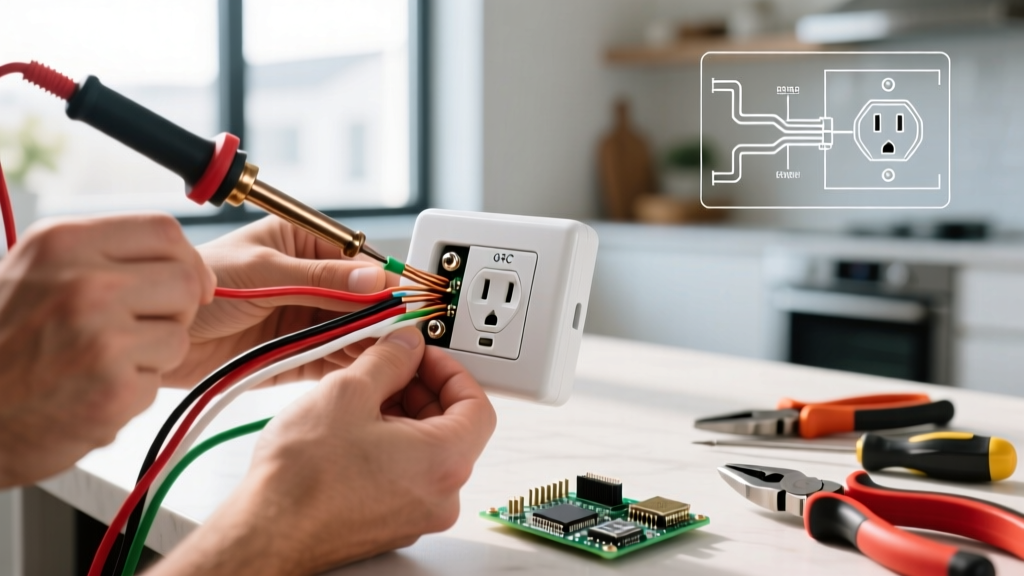
Feed the incoming 12 AWG THHN (for 20A circuits) or 14 AWG (for 15A circuits) into the new base plate. Critical Code Requirement: You must use a Weather-Resistant (WR) and Tamper-Resistant (TR) receptacle inside a floor box. Standard indoor receptacles will fail prematurely due to ambient floor moisture and mopping. Terminate the wires using a torque screwdriver set to 14 in-lbs (the standard for commercial-grade 12 AWG terminations) to prevent thermal arcing.
Step 5: Seal, Level, and Finish
Apply a bead of 100% silicone caulk under the flange of the new cover plate before setting it into the floor. This creates a hydrophobic barrier against mop water. If installing over carpet, use the adjustable carpet flange extensions included in the kit to ensure the pop-up lid sits flush with the carpet pile height.
Edge Cases: Moisture, Carpet, and Code Compliance
When upgrading a floor electrical outlet, installers frequently encounter three specific edge cases that cause post-installation failures:
NEC Code Compliance: According to the NFPA 70 National Electrical Code (NEC) Article 314.27(B), floor boxes must be listed for the purpose and approved by the Authority Having Jurisdiction (AHJ). They must be equipped with covers designed to withstand expected foot traffic and prevent water ingress. Using a standard wall outlet cover plate adapted for the floor is a direct code violation and an immediate fail on any commercial inspection.
Failure Mode 1: Mop Water Ingress and GFCI Tripping
The Problem: Janitorial staff or homeowners use wet mops, forcing water past the cover plate seams, causing the upstream GFCI breaker to trip. The Fix: Ensure your replacement kit includes a closed-cell neoprene gasket between the device ring and the cover plate. Furthermore, verify that the conduit fittings entering the base of the floor box are sealed with duct seal compound to prevent water from migrating through the conduit into adjacent junction boxes.
Failure Mode 2: Carpet Interference with Pop-Up Hinge
The Problem: Thick plush carpet (over 0.75 inches) bunches up against the pop-up hinge, preventing the lid from closing fully and leaving live contacts exposed. The Fix: Use a carpet-cutting template (provided by Hubbell Wiring Device-Kellems and Legrand) to cut a precise relief hole in the carpet pad and backing. The adjustable flange must rest on the hard subfloor, not on top of the carpet padding.
Failure Mode 3: Concrete Dust Jamming the Slider
The Problem: During installation on a concrete slab, silica dust falls into the pop-up slider tracks, causing the mechanism to bind and snap the plastic release tabs. The Fix: Keep the protective plastic cap on the pop-up mechanism until the very last step of the installation. After the cover is secured, remove the cap and apply a dry PTFE (Teflon) lubricant to the brass slider tracks. Never use wet WD-40 or grease, as these will attract dust and create an abrasive paste over time.
Final Thoughts on Floor Box Upgrades
Upgrading your floor electrical outlet from a flush mount to a pop-up configuration is a high-impact improvement for modern open-plan spaces. By respecting subfloor depth limitations, selecting commercial-grade WR receptacles, and adhering strictly to NEC Article 314.27(B), you ensure a safe, durable, and highly functional power delivery system that will serve your space for decades.