
Diagnosing the Open Ground Fault
An open ground occurs when the equipment grounding conductor (EGC) is either missing, disconnected, or broken between the receptacle and the main service panel. In a standard 120V residential circuit, the ground wire provides a critical low-impedance path for fault currents, ensuring the breaker trips instantly during a short circuit. Without it, a fault could energize the metal chassis of an appliance, posing a lethal shock hazard. According to the Consumer Product Safety Commission (CPSC), ungrounded or improperly grounded outlets are a leading contributor to residential electrical shocks and surge-related equipment damage.
If your receptacle tester lights up with the "Open Ground" indicator, you must address the fault to bring the circuit up to modern safety standards. This comprehensive 2026 tool and material guide will walk you through the exact hardware, diagnostic equipment, and NEC-compliant methods required to fix open ground electrical outlet configurations.
Essential Diagnostic Tools (2026 Pricing & Specs)
Before purchasing wire or receptacles, you must verify the true nature of the fault. A simple neon tester is insufficient for identifying high-resistance grounds or bootleg grounds.
- Gardner Bender GFI-3501 Receptacle Tester ($11 - $14): The baseline tool for identifying open grounds, open neutrals, and reversed polarity. It features a standard 3-light LED matrix and a built-in GFCI trip button.
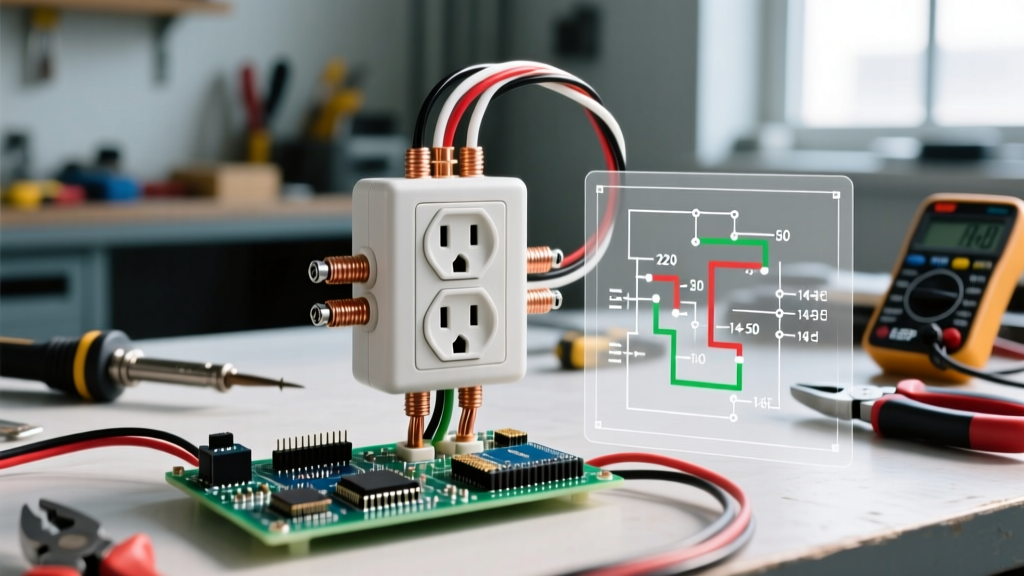
- Fluke 117 True-RMS Multimeter ($195 - $210): Essential for measuring the exact voltage drop between the hot slot and the grounding screw. A true ground will read ~120V. A reading between 90V and 110V often indicates a high-resistance ground path (like loose metal conduit), while 0V confirms a true open ground.
- Klein Tools NCVT-3 Non-Contact Voltage Tester ($25 - $30): Dual-range (12V to 1000V) tester to confirm the circuit is dead before removing the receptacle yoke from the junction box.
- Klein Tools ET310 AC Circuit Finder ($35 - $40): If you need to trace the circuit back to the panel to pull a new ground wire, this tool maps the exact breaker through drywall and insulation without cutting power.
Materials & Hardware for Grounding Solutions
The materials you need depend entirely on the remediation strategy you choose. The National Electrical Code (NEC) provides two primary paths for addressing ungrounded receptacles in existing dwellings.
Scenario A: Pulling a New Equipment Grounding Conductor (EGC)
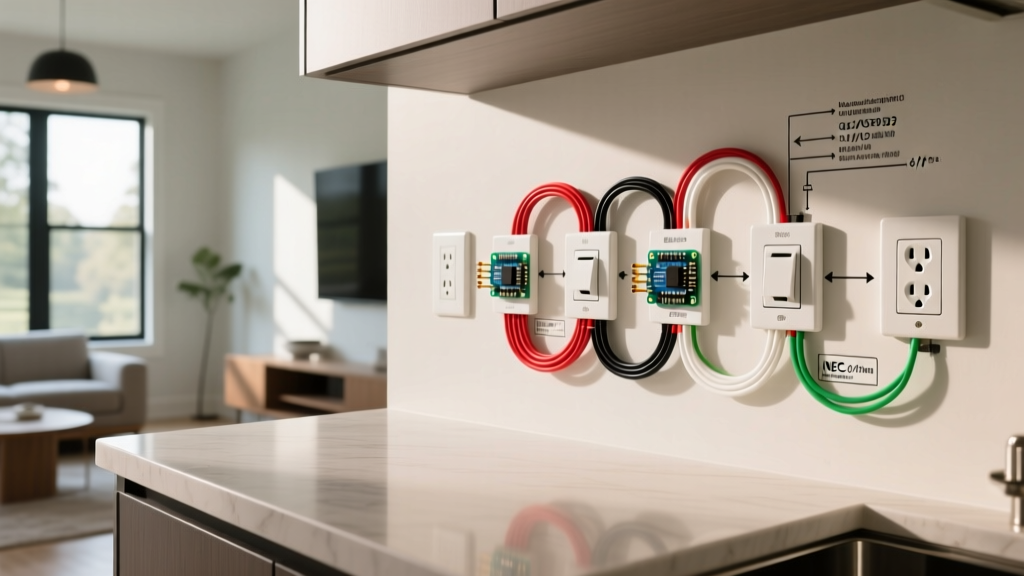
Per NEC 250.130(C), you are permitted to run a new ground wire back to the panel, to a grounding electrode conductor, or to any accessible point on the main service equipment.
- Southwire 14 AWG or 12 AWG Bare Copper Wire ($18 - $25 per 250ft spool): Use 14 AWG for 15-amp circuits and 12 AWG for 20-amp circuits. Do not mix gauges; the EGC must match or exceed the circuit conductor ampacity.
- Green 10-32 Hex Head Grounding Screws ($4 per 10-pack): Required for bonding the bare copper wire to the metal junction box. Standard drywall or wood screws are strictly prohibited by code.
- Greenie Wire Nuts or Ideal SureConnect Push-In Connectors ($6 - $9): For splicing the new EGC to the existing ground pigtail.
Scenario B: The GFCI Workaround (NEC 406.4 Compliance)
If pulling a new ground wire is physically impossible (e.g., finished walls, concrete block), NEC 406.4(D)(2)(b) allows you to replace the ungrounded receptacle with a GFCI. This provides personnel protection from shock, though it does not provide equipment grounding for surge protectors.
- Leviton GFNT1-W (15A) or GFNT2-W (20A) Tamper-Resistant GFCI ($22 - $28): Features a slim-profile design that fits easily into older, shallow junction boxes (typically 12 to 14 cubic inches).
- "No Equipment Ground" U-Face Labels ($3 per sheet): Legally required to be applied to the faceplate of any GFCI protecting an ungrounded circuit. Leviton and Legrand include these in the box.
Material & Method Comparison Matrix
| Feature | True Ground (New EGC) | GFCI Replacement (No Ground) |
|---|---|---|
| NEC Reference | 250.130(C) | 406.4(D)(2)(b) |
| Material Cost | $15 - $40 (wire + hardware) | $22 - $28 (GFCI receptacle) |
| Labor Intensity | High (fishing wire through walls) | Low (direct swap) |
| Surge Protector Safe? | Yes | No (will void surge warranty) |
| Shock Protection | Yes (via breaker trip) | Yes (via GFCI trip < 5mA) |
Step-by-Step Execution: Installing the GFCI Workaround
Because pulling a new EGC requires advanced drywall fishing techniques, the GFCI workaround is the most common remediation for existing homes. Follow these exact steps to ensure a code-compliant installation.
- Kill the Power: Turn off the breaker and verify with the Klein NCVT-3. Test a known live circuit first to confirm the tester's battery is functional.
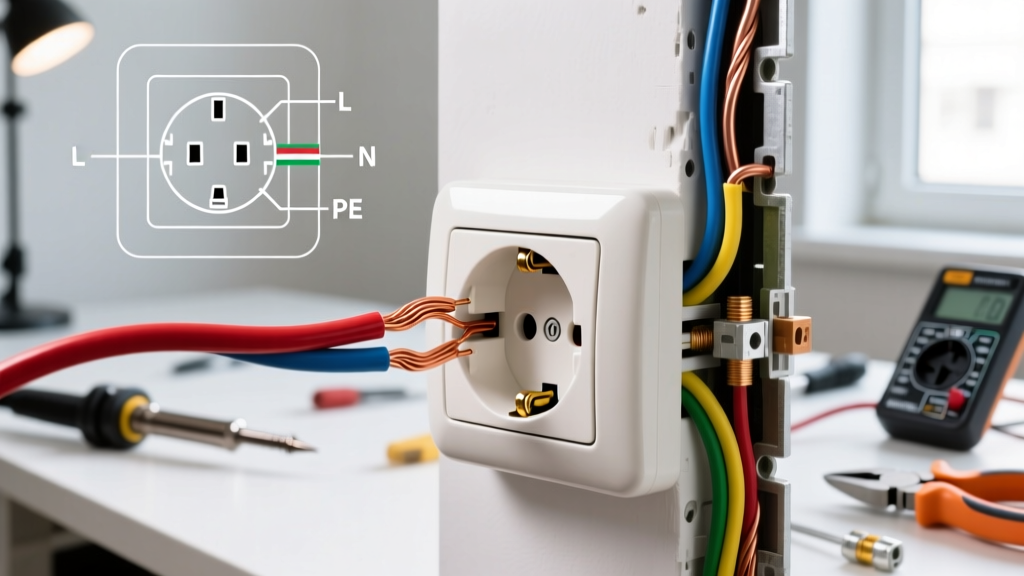
- Extract and Inspect: Remove the old receptacle. Look inside the box. If you see a bare copper wire folded back and not connected, you may just have a disconnected ground. If there is only a black (hot) and white (neutral) wire, proceed with the GFCI swap.
- Identify Line vs. Load: On the back of the Leviton GFCI, the "LINE" terminals are for incoming power. The "LOAD" terminals are for downstream protection. If you only have one cable entering the box, use the LINE terminals only.
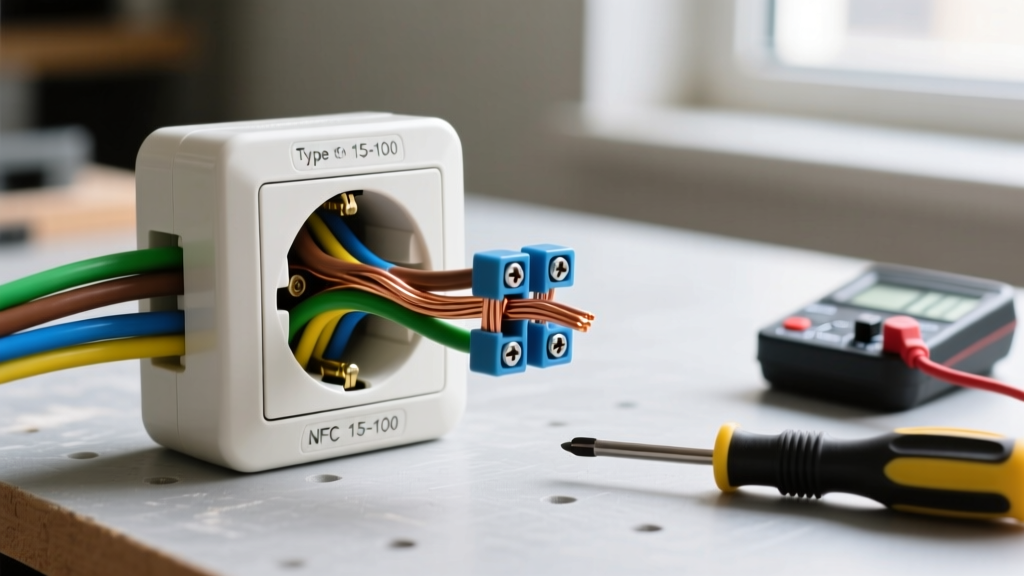
- Terminate Wires: Strip 5/8-inch of insulation. Use the screw terminals rather than the push-in backstabs for maximum reliability. Torque the terminal screws to the manufacturer's specification (typically 14 in-lbs for Leviton 15A/20A devices).
- Apply the Label: Affix the "No Equipment Ground" sticker to the center of the wall plate. This is a critical inspection requirement.
Pro-Tip for Shallow Boxes: Older homes often feature 12-cubic-inch metal or Bakelite boxes. A standard GFCI is over 1.1 inches deep and may crush the wires. Use a Leviton 15A GFCI (which has a shallower chassis than 20A models) or install a 1-gang surface raceway box extender to gain an extra 1.5 inches of depth.
Edge Cases & Troubleshooting
The "Bootleg Ground" Hazard
Sometimes, a receptacle tester shows a "Correct" wiring configuration, but the outlet is actually ungrounded. This happens when a previous DIYer or unscrupulous seller installed a jumper wire between the neutral (silver) terminal and the ground (green) screw. This is called a bootleg ground. It is incredibly dangerous: if the neutral wire ever disconnects upstream, the metal chassis of any plugged-in appliance will become energized at 120V. Always remove the receptacle from the box to visually verify that a bare copper or green wire is attached to the ground screw, independent of the neutral.
Metal Conduit as an Equipment Ground
In many mid-century homes and commercial buildings, wires are run through EMT (Electrical Metallic Tubing) or Rigid Metal Conduit. Per OSHA standard 1910.304 and NEC Article 250.118, properly assembled metal conduit is approved as an Equipment Grounding Conductor. If your tester shows an open ground on a metal box, the issue is usually a loose setscrew coupling or a missing grounding bushing. Tighten all couplings with a screwdriver and apply a bonding jumper around any flex connections.
Frequently Asked Questions
Can I just connect the ground wire to the neutral in the outlet box?
Absolutely not. Connecting ground to neutral anywhere other than the main service disconnect creates a parallel neutral path. This causes neutral return current to flow over the grounding system, which can create stray voltages, interfere with sensitive electronics, and pose a severe shock risk. The NFPA 70 (National Electrical Code) strictly prohibits bonding neutral and ground on the load side of the service disconnect.
Will a surge protector work if I use the GFCI workaround?
No. Surge protectors require a true equipment ground to divert transient voltage spikes (from lightning or grid switching) away from your electronics. On a GFCI-protected ungrounded circuit, the surge protector cannot divert the spike to ground, and the excess voltage may damage the GFCI's internal electronics or pass through to your devices. For expensive electronics, you must run a true EGC.
Do I need a permit to fix an open ground?
Jurisisdictional rules vary, but replacing an existing receptacle with a GFCI (like-for-like safety upgrade) generally does not require a permit in most municipalities. However, pulling new wire through walls and adding a new Equipment Grounding Conductor to the main panel usually requires an electrical permit and a final inspection to ensure compliance with NEC 250.130(C).