
The Great Debate: Outlet vs. Receptacle in Electrical Inspections
If you have ever read a professional electrical inspection report or debated a wiring issue with a licensed contractor, you have likely encountered a frustrating linguistic hurdle. Homeowners universally ask, "What do you call an electrical outlet?" and expect a simple answer. However, in the professional electrical and inspection community, terminology is not just about semantics—it is a matter of legal code, safety standards, and precise diagnostic testing.
To pass a municipal inspection or accurately troubleshoot a circuit, you must understand the strict definitions established by the National Electrical Code (NEC). Using the wrong term on an inspection ticket can lead to misdiagnosed faults, failed rough-in inspections, and costly rework.
NEC Article 100: The Legal Definitions
According to the National Fire Protection Association (NFPA), which publishes the NEC, the terms "outlet" and "receptacle" are fundamentally different:
Outlet: A point on the wiring system at which current is taken to supply utilization equipment.
Receptacle: A contact device installed at the outlet for the connection of an attachment plug.
The Inspector's Translation: Every receptacle is installed at an outlet, but not every outlet is a receptacle. A hardwired ceiling fan, a direct-wired lighting fixture, and a built-in dishwasher all connect to an "outlet." Only the wall devices that accept a plug are "receptacles." When an inspector notes a "failed lighting outlet," they are referring to a junction box or fixture canopy, not the plug-in wall device.
Global and Regional Terminology Matrix
When sourcing international testing equipment or reading global engineering schematics, the answer to "what do you call an electrical outlet" changes drastically based on geography. Inspectors working on multinational commercial projects must be familiar with these variations:
| Region | Common Term | Technical / Code Term | Standard Voltage / Frequency |
|---|---|---|---|
| United States | Outlet / Plug | Receptacle | 120V / 60Hz |
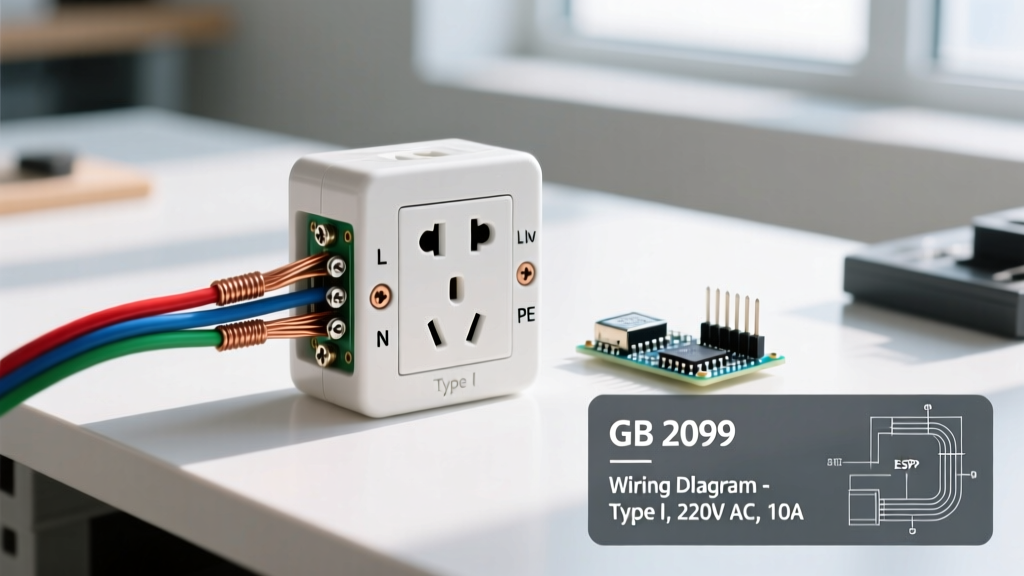
| United Kingdom | Socket / Point | Socket-Outlet | 230V / 50Hz |
| Australia / NZ | Power Point / GPO | Socket-Outlet | 230V / 50Hz |
| European Union | Socket / Wall Plug | Schuko / Socket-Outlet | 230V / 50Hz |
Why Terminology Matters in Electrical Testing
Misidentifying the device type leads to using the wrong testing equipment. For instance, a standard 3-prong plug-in circuit analyzer (often mistakenly called an "outlet tester") can only test receptacles. It cannot test a hardwired lighting outlet. If an inspection report flags "reverse polarity at the kitchen outlet," the electrician must know whether to pull a hardwired under-cabinet LED driver (lighting outlet) or replace a 20A tamper-resistant duplex device (receptacle).
2026 Code Updates: USB and Smart Receptacles
As of the 2026 inspection cycle, the proliferation of integrated USB-A and USB-C receptacles has added a new layer to testing. Inspectors must now verify not only the 120V AC line-to-neutral integrity but also the DC output safety of the integrated charger, ensuring compliance with UL 62368-1 standards for audio/video, information, and communication technology equipment. A standard plug tester will not flag a faulty 5V/3A USB-C charging module; a multimeter is required.
Essential Testing Tools for Receptacles and Outlets
Professional inspectors rely on calibrated, industry-specific tools to verify wiring integrity. Here is the 2026 standard toolkit for receptacle inspection:
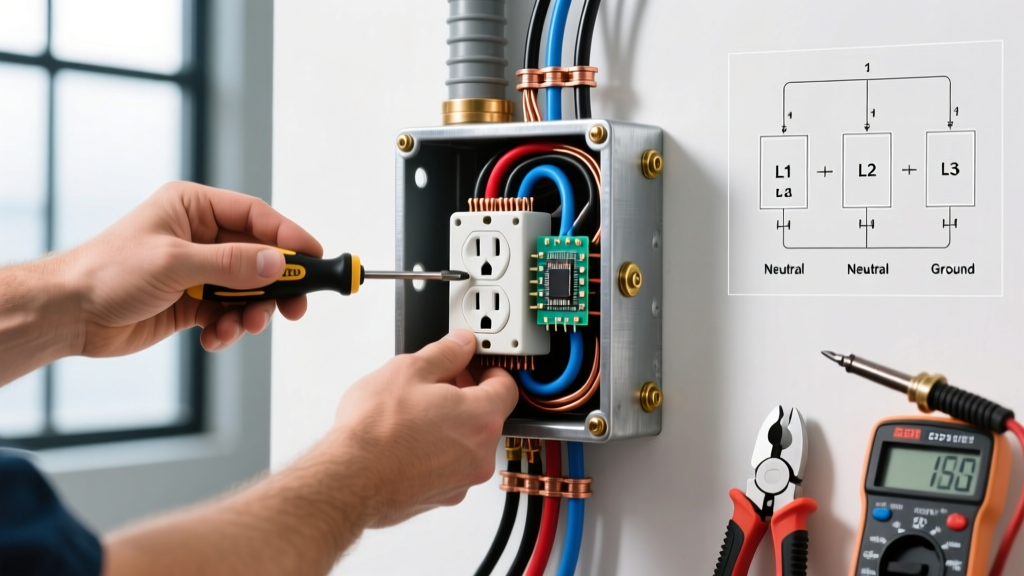
- Klein Tools RT250 GFCI Receptacle Tester (~$28): The baseline tool for standard 120V receptacles. It verifies wiring polarity, open grounds, and features a dedicated button to trip GFCI circuits without relying on the device's internal test button.
- Fluke 117 True RMS Multimeter (~$220): Essential for hardwired lighting outlets and verifying exact voltage drops. The non-contact voltage (NCV) feature and low-impedance (LoZ) mode prevent false readings from ghost voltages in long wire runs.
- Klein Tools QTT110 Torque Screwdriver (~$110): NEC 110.14(D) mandates that terminal screws be tightened to the manufacturer's specified torque. Inspectors frequently fail receptacles that are "hand-tight" but do not meet the 12-14 in-lb torque requirement for standard 15A/20A devices.
- Amprobe AT-3500 Advanced Circuit Tracer (~$140): Used when an inspector finds a receptacle on the wrong circuit breaker panel, a common failure in multi-wire branch circuits (MWBCs).
Step-by-Step Receptacle Inspection Protocol
When conducting a comprehensive inspection of 15A and 20A residential receptacles, follow this rigorous field protocol to ensure compliance with OSHA safety guidelines and NEC standards.
Phase 1: Visual and Mechanical Inspection
- Verify Tamper-Resistant (TR) Markings: Per NEC 406.12, all 15A and 20A receptacles in residential dwellings must be TR-rated. Look for the "TR" stamp on the face of the device. Standard shutters must require simultaneous, equal pressure on both blades to open.
- Check for Backstab Wiring: Remove the receptacle from the box. Push-in (backstab) connections are notorious for high-resistance failures and thermal degradation. Inspectors heavily prefer terminal-loop or screw-terminated connections.
- Inspect Box Fill and Pigtailing: Ensure the junction box is not overfilled (NEC Article 314). Verify that neutrals and grounds are properly pigtailed rather than daisy-chained through the device yoke, which breaks the ground path if the receptacle is removed.
Phase 2: Electrical and Functional Testing
- Verify Polarity and Grounding: Insert the RT250 tester. Confirm two solid amber lights (correct wiring). Any other combination indicates open ground, hot/neutral reverse, or hot/ground reverse.
- Test GFCI Trip Thresholds: For GFCI receptacles, the internal test button only checks the mechanical relay. An inspector must use a tester that injects a 6mA fault current to verify the electronic sensing circuit trips within the required 20 milliseconds. Refer to the Consumer Product Safety Commission (CPSC) guidelines on GFCI shock prevention for detailed trip-time mandates.
- Measure Voltage Under Load: Use a True-RMS multimeter to measure line-to-neutral voltage. It should read between 114V and 126V. A reading below 110V indicates excessive voltage drop, often caused by undersized wire on a long run (exceeding the recommended 3% branch circuit drop).
Common Inspection Failures and Edge Cases
Experienced inspectors look beyond basic wiring errors. The following edge cases frequently cause inspection failures in older homes and DIY renovations:
The "Bootleg Ground" (False Ground)
A bootleg ground occurs when a DIYer installs a 3-prong receptacle on an older 2-wire (ungrounded) system and places a jumper wire between the neutral terminal and the ground screw. A standard 3-light tester will read this as "Correct Wiring." However, if the neutral wire ever becomes disconnected upstream, the metal casing of any plugged-in appliance will become energized at 120V. Inspectors catch this by using a multimeter to measure the impedance between the ground and neutral slots; a reading of near-zero ohms with no voltage drop under load is a primary indicator of a bootleg ground.
Multi-Wire Branch Circuits (MWBC) Miswiring
In kitchens and bathrooms, inspectors frequently find receptacles fed by an MWBC (two hot wires sharing one neutral). If the two hot wires are placed on the same phase (e.g., both on Phase A instead of Phase A and Phase B), the shared neutral will carry the additive current of both circuits, leading to a melted neutral bus bar or a fire. Inspectors verify this by measuring the current on the neutral wire with a clamp meter while both hot legs are under load; the neutral current should be near zero, not the sum of the hots.
Frequently Asked Questions (FAQ)
Is a socket the same thing as an outlet?
In casual American English, people use them interchangeably. However, in the NEC, a "socket" usually refers to a lampholder (like an Edison screw base for a lightbulb), whereas an "outlet" is the general point where power is drawn, and a "receptacle" is the specific device that accepts a plug.
Can I test a 240V receptacle with a standard plug tester?
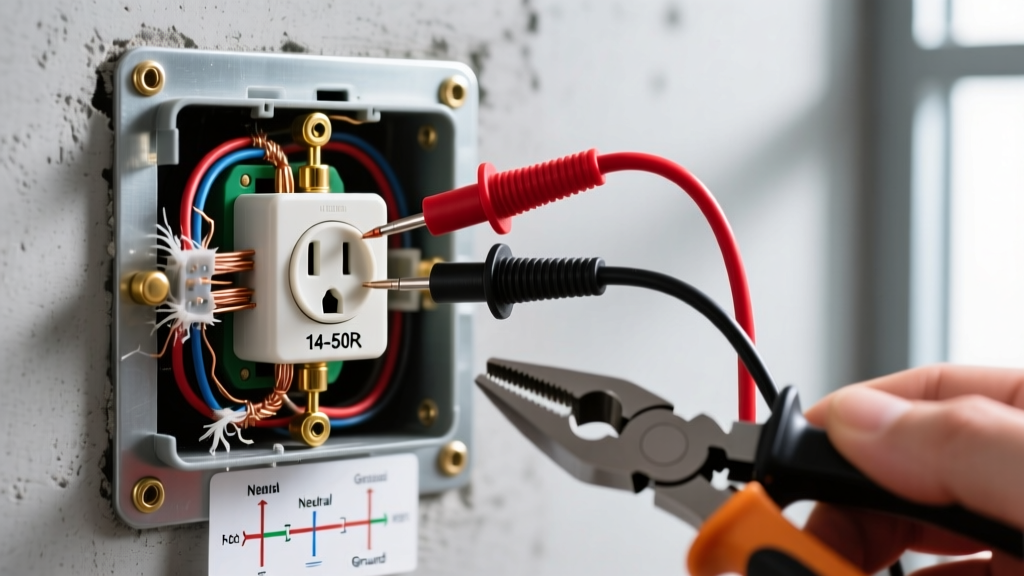
No. Standard 3-prong testers are strictly for 120V NEMA 1-15 or 5-15/5-20 receptacles. Testing 240V receptacles (like NEMA 14-50 for EV chargers or dryers) requires a True-RMS multimeter to verify 240V across the two hot legs, and 120V from each hot leg to the neutral and ground.
What is a "convenience outlet"?
"Convenience outlet" is an older, legacy term used in mid-century architectural blueprints to describe a standard wall receptacle, distinguishing it from dedicated, hardwired appliance outlets or lighting outlets. Modern NEC code simply refers to these as "receptacle outlets."