
Understanding the Electrical Outlet With Reset Button
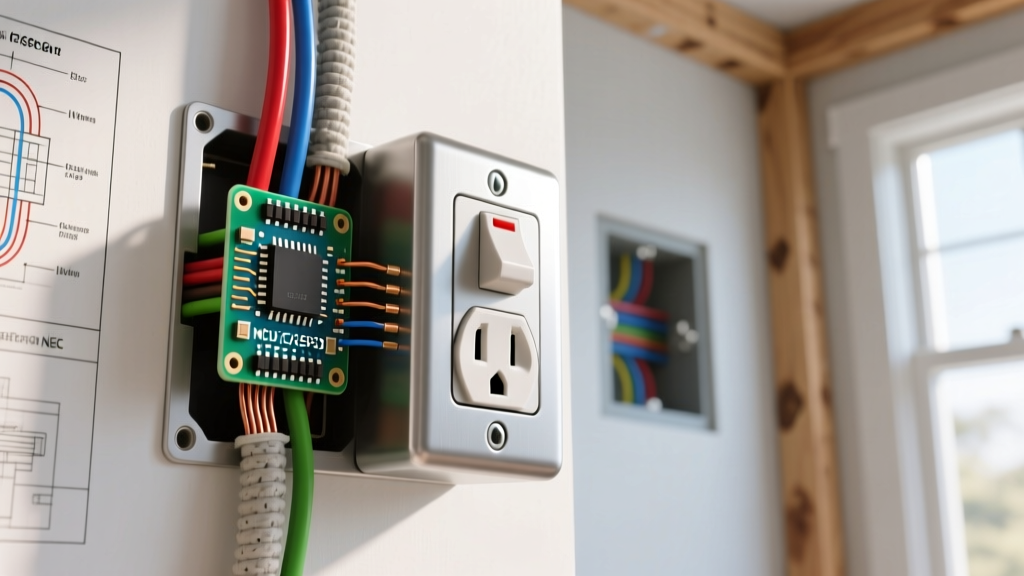
When homeowners, inspectors, and DIYers refer to an electrical outlet with reset button, they are almost exclusively talking about a Ground Fault Circuit Interrupter (GFCI) receptacle. These specialized devices are not merely a convenience; they are a critical life-safety mandate enforced by the National Electrical Code (NEC). Unlike standard duplex receptacles that simply pass current through to your appliances, a GFCI continuously monitors the electrical current flowing through the hot and neutral conductors. If it detects an imbalance as minuscule as 4 to 6 milliamperes (mA)—indicating that current is leaking to ground, potentially through a human body—it trips the internal solenoid in under 25 milliseconds, cutting power before ventricular fibrillation can occur.
According to the Consumer Product Safety Commission (CPSC), GFCIs have prevented thousands of electrocutions since their widespread adoption in the 1970s. However, simply having them in the house is not enough; the NEC strictly dictates where these devices must be installed. This guide breaks down the exact code requirements, edge-case wiring failures, and modern technological upgrades for GFCI receptacles.
The Anatomy of the Reset and Test Buttons
Every compliant Class A GFCI receptacle features two distinct buttons on its face: a TEST button and a RESET button. These are not decorative. Under NEC Article 110.3(B), listed equipment must be installed in accordance with the manufacturer's instructions, which universally mandate monthly testing using these physical buttons.
- The TEST Button: Pressing this injects a calibrated, microscopic fault current into the internal sensing toroid. This simulates a ground fault and forces the internal contacts to open. If the reset button pops out and power is cut, the device is functioning.
- The RESET Button: This manually recloses the internal contacts, restoring power to the receptacle and any downstream outlets wired to its 'LOAD' terminals.
Expert Insight: If you press the TEST button and the reset button does not pop out, or if the outlet still has power, the internal sensing circuitry has failed. The outlet must be replaced immediately. Do not rely on a GFCI that fails its own test sequence.
NEC Article 210.8: Mandatory GFCI Protection Zones
The NEC has progressively expanded the zones requiring GFCI protection over successive code cycles (including the 2023 and upcoming 2026 standards). Under NEC Article 210.8(A) for Dwelling Units, an electrical outlet with reset button (or a GFCI-protected circuit breaker) is legally required in the following specific locations:
| Location Zone | Specific Code Trigger / Measurement | Exceptions / Notes |
|---|---|---|
| Bathrooms | All 125V, 15A and 20A receptacles. | No exceptions. Dedicated bathroom circuits are required. |
| Garages & Grade-Level Accessory Buildings | All 125V-250V receptacles up to 50A (updated in recent cycles). | Excludes dedicated outlets for snow-melting equipment or specific fixed appliances. |
| Outdoors | All outdoor receptacles, including balconies and decks. | Must be in weatherproof enclosures (in-use covers if exposed to rain). |
| Crawl Spaces | At or below grade level. | Includes lighting outlets and receptacles. |
| Unfinished Basements | All areas not intended as habitable rooms. | Excludes dedicated fire alarm or sump pump circuits (though sump pump GFCI is highly recommended). |
| Kitchens | All receptacles serving countertop surfaces. | Does not apply to wall outlets behind the fridge or microwave unless within 6 feet of the sink. |
| Near Sinks (Indoor) | Within 6 feet of the outside edge of the sink basin. | Applies to wet bars, laundry sinks, and utility sinks. |
| Laundry Areas | All 125V, 15A and 20A receptacles in the laundry zone. | Electric dryer receptacles (240V/30A) are excluded from this specific clause. |
| Bathtubs & Shower Stalls | Within 6 feet of the outside edge of the tub/shower. | Prevents use of radios or hairdryers near water sources. |
The Electrical Safety Foundation International (ESFI) emphasizes that while older homes may be 'grandfathered' in under the code version at the time of construction, any renovation, replacement of an existing receptacle, or addition of a new circuit in these zones legally triggers the requirement for modern GFCI protection.
Modern Evolution: The 'Smartlock' Reset Mechanism
If you are purchasing an electrical outlet with reset button today, you will encounter 'Smartlock' or 'Self-Test' technology. In older GFCI models, a dangerous installation error known as Line/Load Reversal could occur. If an electrician wired the incoming power to the 'LOAD' terminals and the downstream outlets to the 'LINE' terminals, the GFCI would still power devices, and pressing the 'TEST' button would even trip the local outlet. However, the downstream outlets would have zero ground fault protection, creating a hidden, lethal hazard.
Modern devices, such as the Leviton SmartlockPro GFNT2-W or the Eaton GF15W, feature an internal microprocessor that checks wiring orientation upon installation. If the line and load wires are reversed, the device physically blocks the reset button from depressing. You cannot restore power until the wiring is corrected. This engineering safeguard has virtually eliminated line/load reversal hazards in the field.
Advanced Edge Case: Multi-Wire Branch Circuits (MWBC)
One of the most common reasons an electrical outlet with reset button fails immediately upon installation—or nuisance-trips constantly—is its interaction with a Multi-Wire Branch Circuit (MWBC). An MWBC uses two hot wires (on opposite phases) sharing a single neutral wire to supply two standard circuits.
The Shared Neutral Problem
A standard single-pole GFCI receptacle monitors the current differential between its specific hot and neutral wires. If you install a standard GFCI on an MWBC and share the neutral downstream, the return current from the second hot phase will travel back through the shared neutral, bypassing the GFCI's internal toroidal sensor. The GFCI will interpret this missing current as a ground fault and instantly trip.
The Compliant Solution
You cannot use a standard receptacle-style GFCI to protect a shared-neutral MWBC downstream. To achieve code compliance and functional stability, you must either:
- Install a 2-Pole GFCI Circuit Breaker in the main panel, which monitors both hot legs and the shared neutral simultaneously.
- Completely separate the neutral wires in the junction box so the GFCI only monitors its own dedicated hot/neutral pair (effectively breaking the MWBC into two standard circuits, provided the panel has capacity).
Dual-Function Outlets: AFCI/GFCI Combinations
In areas like kitchens and laundry rooms, the NEC now frequently requires both Ground Fault (GFCI) and Arc Fault (AFCI) protection. Instead of buying an AFCI breaker and a GFCI receptacle, manufacturers now produce Dual-Function Receptacles. These feature the standard reset button but house advanced arc-sensing microchips alongside the ground-fault toroid.
| Receptacle Type | Example Model | Average Cost (2026) | Primary Application |
|---|---|---|---|
| Standard 15A GFCI | Leviton GFNT2-W | $16.00 - $22.00 | Bathrooms, Garages, Outdoors |
| 20A Commercial GFCI | Eaton GF20W | $24.00 - $31.00 | Kitchen countertops, Commercial sites |
| 15A Dual-Function (AFCI/GFCI) | Leviton AGFTR2-W | $38.00 - $46.00 | Kitchens/Laundry where panel is inaccessible |
| Weather-Resistant (WR) GFCI | Leviton GFNT2-WR | $20.00 - $28.00 | Outdoor patios, pool equipment zones |
Step-by-Step Testing and Maintenance Protocol
To ensure your electrical outlet with reset button remains compliant and safe, follow this monthly testing protocol:
- Plug in a Verification Tool: Plug a lamp or a dedicated GFCI tester into the receptacle. Turn the lamp on.
- Press TEST: Push the 'TEST' button firmly. You should hear an audible 'click'. The lamp must turn off, and the 'RESET' button should pop outward.
- Press RESET: Push the 'RESET' button back in until it clicks and sits flush with the housing. The lamp should turn back on.
- Check Downstream: If you have other outlets wired to the 'LOAD' terminals of this GFCI, verify that they also lost power during the test and regained it after the reset.
If the reset button feels mushy, fails to latch, or the outlet trips under normal appliance loads (like a vacuum cleaner), the internal contacts are likely pitted or the sensing coil has degraded. GFCIs typically have a lifespan of 10 to 15 years. If your home's reset buttons are older than a decade, proactive replacement with modern Smartlock models is a highly recommended safety upgrade.