
The Modern Standard: Wiring an Electric Range Oven Outlet
Installing or upgrading an electric range oven outlet is one of the most high-stakes DIY electrical projects in a residential setting. Unlike standard 15A or 20A receptacles, a range circuit operates at 240 volts and draws up to 50 amps of continuous current. In 2026, with the proliferation of smart ranges featuring Wi-Fi diagnostics, convection fans, and induction cooktops, the demand for stable, properly grounded 4-wire power has never been higher.
This comprehensive tool and material guide cuts through the guesswork. We will detail the exact wire gauges, breaker types, NEMA configurations, and specialized hand tools required to execute a safe, code-compliant installation that passes inspection on the first try.
Core Electrical Materials: The Heavy Lifters
The foundation of a safe 240V circuit lies in selecting components rated for high-temperature and high-amperage environments. Do not substitute residential-grade materials where industrial-grade is specified.
1. The Receptacle: NEMA 14-50R (50 Amp, 125/250V)
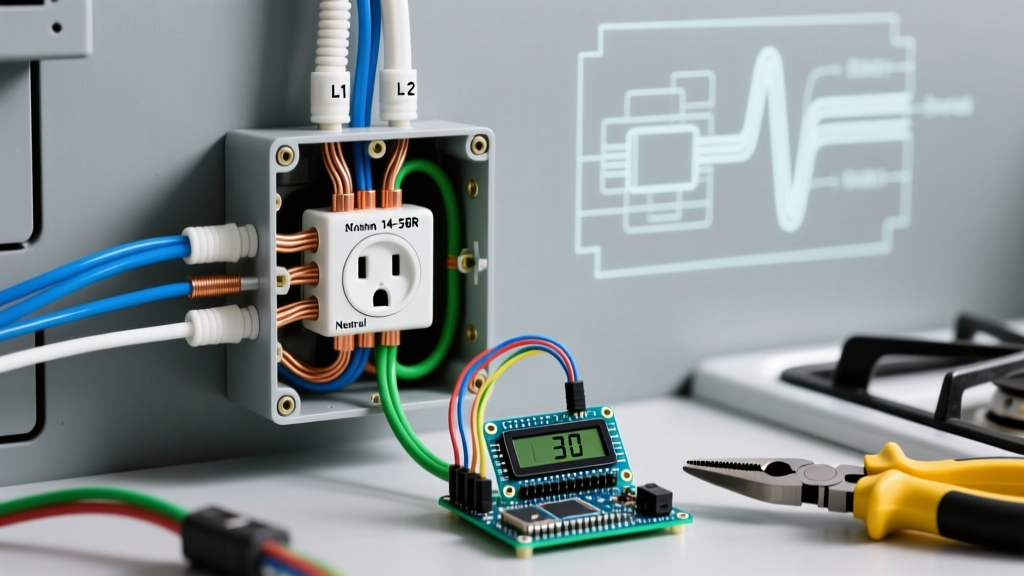
The industry standard for an electric range oven outlet is the NEMA 14-50R. This 4-prong configuration provides two hot legs (120V each), a dedicated neutral, and a dedicated equipment grounding conductor.
- Leviton 279-S00 (Residential Grade): Priced around $15–$20. Features standard brass and silver terminal screws. Adequate for standard coil-element ranges.
- Hubbell 9450A (Industrial/Commercial Grade): Priced around $35–$45. Features massive contact surfaces, glass-reinforced nylon faces, and superior heat dissipation. Highly recommended for modern induction ranges that draw near-continuous 40A+ loads.
2. The Conductor: 6 AWG Copper Wire
For a 50-amp circuit, the National Electrical Code (NEC) requires a minimum of 6 AWG copper wire. You have two primary routing options:
| Wire Type | Best Application | 2026 Est. Cost | Pros & Cons |
|---|---|---|---|
| 6/3 NM-B (Romex) | Running through unfinished basements, joist bays, and drywall. | $3.50 - $4.50 / ft | Easy to staple and route; includes bare ground. Jacket can be difficult to strip cleanly. |
| 6 AWG THHN/THWN-2 | Pulling through 3/4" or 1" EMT metal conduit. | $1.80 - $2.50 / ft (per wire) | Superior heat dissipation and physical protection. Requires purchasing separate conduit and a green ground wire. |
Expert Warning: Never use 6/2 NM-B cable for a new install. Older homes often utilized this for obsolete 3-prong NEMA 10-50 setups. Modern code mandates a 4-wire setup to separate the neutral (current-carrying) from the ground (fault-clearing).
3. The Circuit Breaker: 50-Amp Double-Pole
Your breaker must match your panel's brand and bus bar specification to prevent arc faults. A 50A breaker protects the #6 AWG wire from thermal overload.
- Square D HOM250: For Homeline panels (~$15).
- Siemens Q250: For Siemens/Murray panels (~$15).
- Eaton BR250: For Eaton/Cutler-Hammer BR panels (~$15).
- GFCI Requirement Note: Under recent NEC adoptions (2020/2023/2026), 250V receptacles installed in kitchens may require Ground Fault Circuit Interrupter (GFCI) protection. If your local jurisdiction enforces this, you must purchase a 50A GFCI breaker (e.g., Square D HOM250GFI, approx. $110–$140) and wire the neutral pigtail directly to the panel's neutral bar.
Specialized Tools for High-Amperage Terminations
Standard electrical tools are insufficient for the physical demands of 6 AWG wire and the strict torque requirements of modern electrical codes.
Wire Preparation & Stripping
Stripping 6 AWG NM-B jacket and the thick insulation off the inner conductors without nicking the copper is critical. A nicked wire creates a hot spot that can melt the receptacle.
- Klein Tools 11055 Wire Stripper: Specifically sized for 6-10 AWG solid and stranded wire.
- Klein 44110 NM-B Cable Ripper: Slits the outer sheath of Romex without damaging the inner 6 AWG insulation.
Fastening & Torque Verification
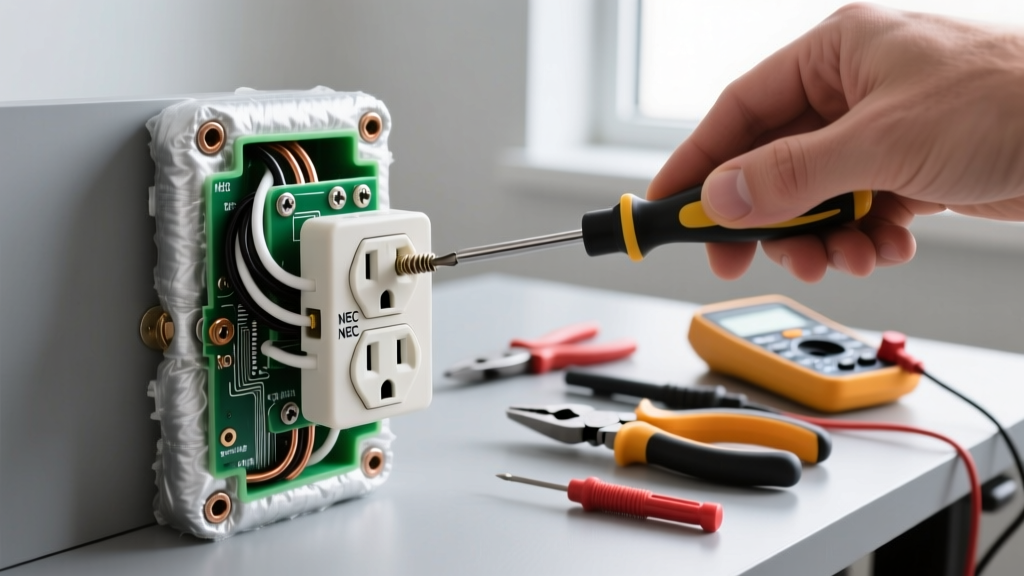
NEC 110.14(D) strictly requires that all electrical connections be tightened to the manufacturer's specified torque using a calibrated instrument. Hand-tightening a 50A receptacle with a standard screwdriver is a leading cause of residential electrical fires due to thermal expansion and contraction loosening the lugs over time.
- CDI 401SM Torque Screwdriver (10-50 in-lbs): Essential for tightening the Leviton or Hubbell terminal screws to the exact specification (typically 14 to 20 in-lbs for #6 AWG, but always verify the manufacturer's insert).
- Wera Kraftform Insulated Screwdrivers: VDE-rated for 1000V, featuring laser-tip grips to prevent cam-out on soft brass terminal screws.
Testing & Verification
Before plugging in a $2,000+ smart range, you must verify the wiring topology.
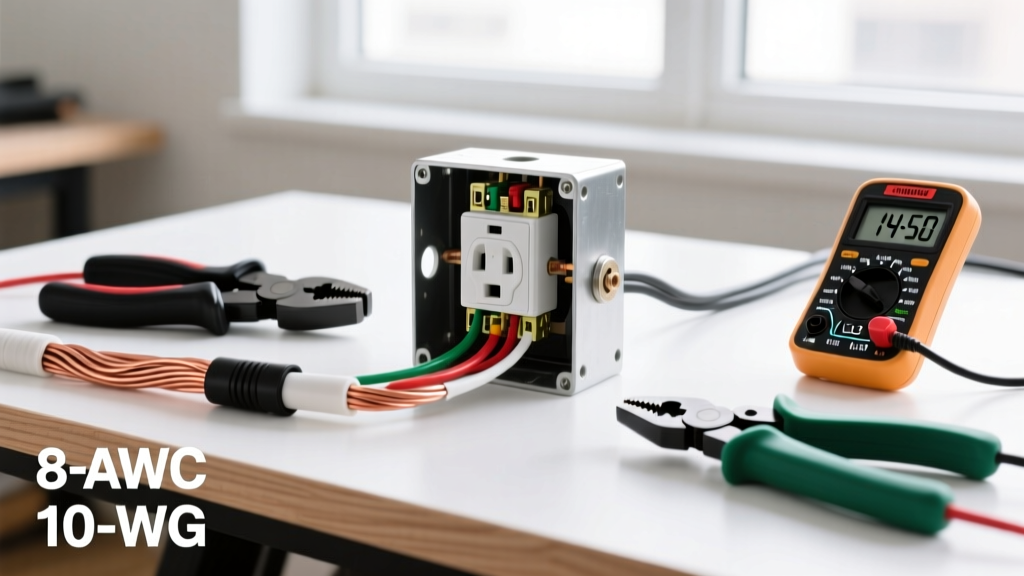
- Fluke 117 True-RMS Multimeter: Used to verify 240V across the two hot legs, 120V from each hot to neutral, and 0V from neutral to ground.
Installation Nuances & Code Compliance
When terminating the electric range oven outlet, the physical orientation and box mounting matter just as much as the wire gauge.
Pro-Tip: The Orientation Debate
The NEC does not mandate a specific orientation for a NEMA 14-50R (ground pin up vs. ground pin down). However, in 2026, many local inspectors and the RV industry standard prefer the ground pin up orientation. If a heavy range cord is pulled downward, or if a metal object falls behind a partially plugged-in cord, a ground-up orientation prevents the object from shorting across the exposed hot prongs. Always check your local municipal amendments.
Box Sizing and Fill Capacity
6/3 NM-B is incredibly stiff and difficult to fold into a standard single-gang box. You must use an extra-deep single-gang metal or heavy-duty PVC box (minimum 2.5 inches deep, 22.5 cubic inches) to accommodate the bending radius of the wire without stressing the receptacle terminals. Use a Steel City 52171-2 extra-deep welded metal box for maximum durability and grounding continuity.
Edge Cases & Troubleshooting
Voltage Drop Over Long Distances
If your electrical panel is more than 100 feet away from the kitchen, 6 AWG copper may experience a voltage drop exceeding the recommended 3% threshold when the oven and induction elements fire simultaneously. In this scenario, you must upgrade to 4 AWG copper to maintain 240V at the receptacle under full load.
Testing the Receptacle Post-Install
Use your multimeter to perform a 4-point check before energizing the range:
- Hot 1 to Hot 2: Should read 2408V in some commercial/multi-family buildings).
- Hot 1 to Neutral: Should read 120V.
- < and neutral are crossed or the neutral is disconnected upstream—a critical fire hazard that will destroy the range's control board.
Frequently Asked Questions (FAQ)
Can I use a 3-prong cord on a new 4-prong electric range oven outlet?
No. If you are installing a new receptacle, the NEC strictly requires a 4-wire setup. You must purchase a 4-prong range cord (NEMA 14-50P) for your appliance and remove the bonding strap on the back of the range that connects the neutral to the chassis ground.
Why does my 50-amp breaker trip when the oven and stove are used together?
Electric ranges can draw up to 40-48 amps when all burners and the oven are on high simultaneously. If your breaker is tripping, it may be a standard 40A breaker mislabeled as 50A, the wire is undersized causing heat buildup at the breaker, or the breaker itself is fatigued and needs replacement. Never simply swap to a larger breaker without verifying the wire gauge.
Is it safe to use aluminum wire for a range receptacle?
While 4 AWG aluminum SER cable is rated for 55A and is legal for hardwired connections or specific AL/CU rated lugs, most standard NEMA 14-50R receptacles are rated for copper only. Using aluminum wire directly into a copper-only receptacle lug will cause galvanic corrosion, high resistance, and eventually a fire. Stick to copper NM-B or THHN for receptacle installations.