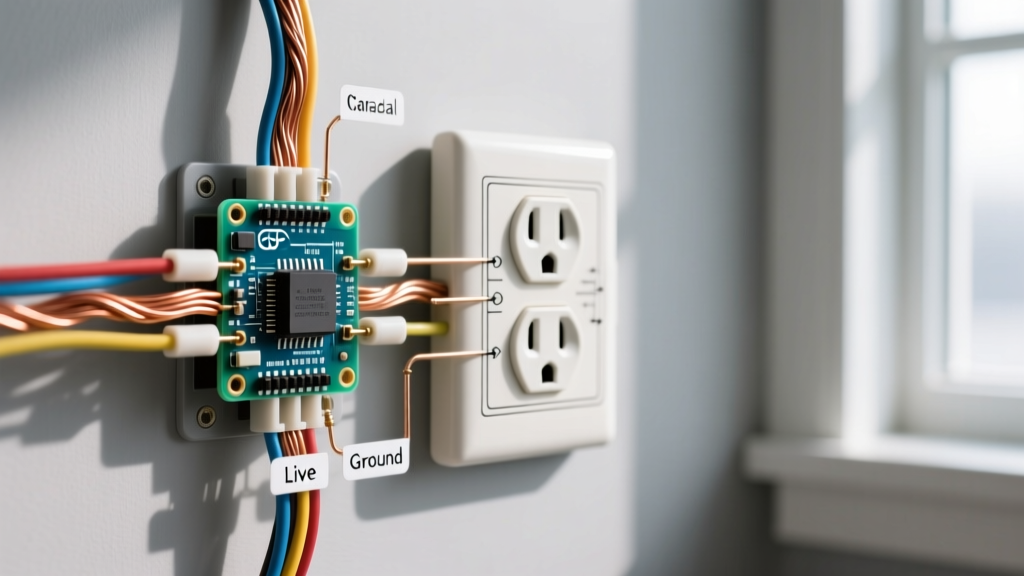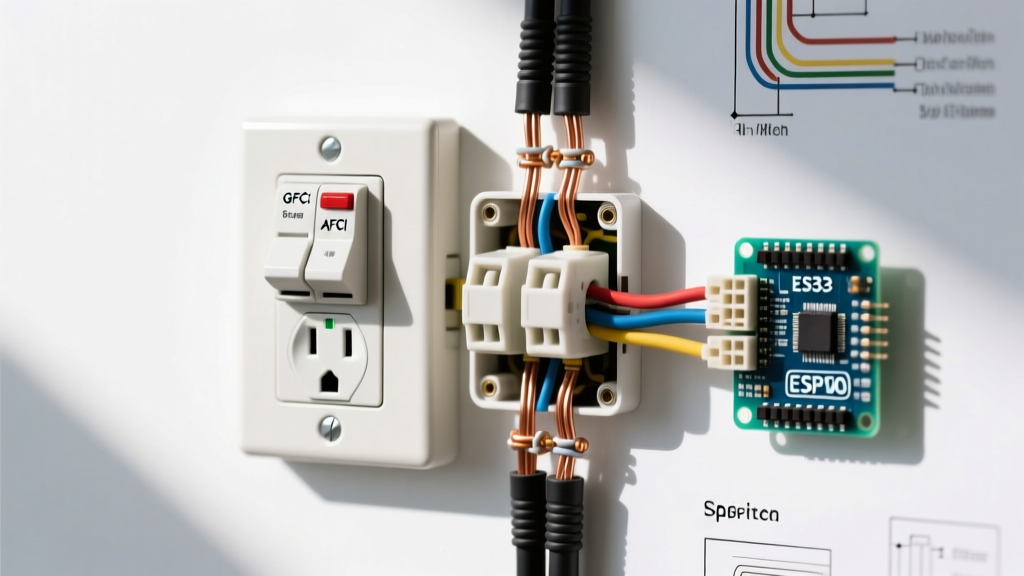

When DIYers and contractors search for an electric outlet with breaker, they are typically looking for one of two distinct electrical solutions. The first is a wall-mounted receptacle with integrated fault protection (GFCI or AFCI), which acts as a localized breaker for shock or fire prevention. The second is a portable temporary power center—commonly known as a spider box—featuring a built-in thermal-magnetic circuit breaker for job site safety.
Understanding the technical differences, current 2026 market pricing, and specific failure modes of these devices is critical for code compliance and operational safety. According to NEC Article 100, an outlet is the point in the wiring system where current is taken to supply equipment, while a receptacle is the specific contact device installed at the outlet. In this guide, we will cover both interpretations to ensure you select the exact hardware your project demands.
Understanding the Two Main Types of Outlets with Breakers
Selecting the correct hardware depends entirely on your environment. Residential and commercial indoor wiring relies on integrated receptacle breakers, while outdoor construction and remodeling sites require portable breaker boxes.
GFCI and AFCI Receptacles (Permanent Installations)
These devices replace standard duplex receptacles and feature internal solid-state circuitry that monitors current flow. If an imbalance or arcing signature is detected, the internal mechanism trips, cutting power in milliseconds. They are mandated by the National Fire Protection Association (NFPA 70) in specific zones like kitchens, bathrooms, and bedrooms.
Temporary Power Outlet Boxes (Job Site Spider Boxes)
These are heavy-duty, portable enclosures containing standard duplex receptacles protected by a physical, resettable thermal-magnetic circuit breaker and a GFCI module. They are designed to withstand physical abuse, moisture, and continuous high-draw loads from power tools.
Material Comparison Matrix: Which Outlet Do You Need?
| Device Type | Best Application | Avg. Cost (2026) | Trip Mechanism | Governing Standard |
|---|---|---|---|---|
| GFCI Receptacle | Kitchens, bathrooms, outdoors, garages | $18 - $28 | Solid-state ground fault (4-6mA) | NEC 210.8 |
| AFCI Receptacle | Bedrooms, living rooms, hallways | $28 - $42 | Microprocessor arc detection | NEC 210.12 |
| Dual-Function (DF) | Laundry rooms, kitchens (new builds) | $35 - $50 | Combined GFCI + AFCI | NEC 210.8 / 210.12 |
| Temporary Spider Box | Construction sites, outdoor remodeling | $160 - $280 | Thermal-magnetic breaker + GFCI | OSHA 1926.405 |
Deep Dive: GFCI and AFCI Receptacle Selection
When wiring a permanent electric outlet with breaker capabilities, you must choose between Ground Fault Circuit Interrupters (GFCI) and Arc Fault Circuit Interrupters (AFCI). The Consumer Product Safety Commission (CPSC) notes that GFCIs have prevented thousands of electrocutions by tripping when current leaks to ground, while AFCIs prevent electrical fires by detecting dangerous arcing.
Top GFCI Pick: Leviton SmartlockPro GFNT1
Priced around $22, the Leviton GFNT1 is a 15-amp, 125-volt tamper-resistant GFCI. It features an auto-monitoring function that periodically tests its own ground-fault protection circuitry. If the internal breaker mechanism fails, the device physically prevents the reset button from engaging, a crucial safety upgrade over older generations that could fail silently.
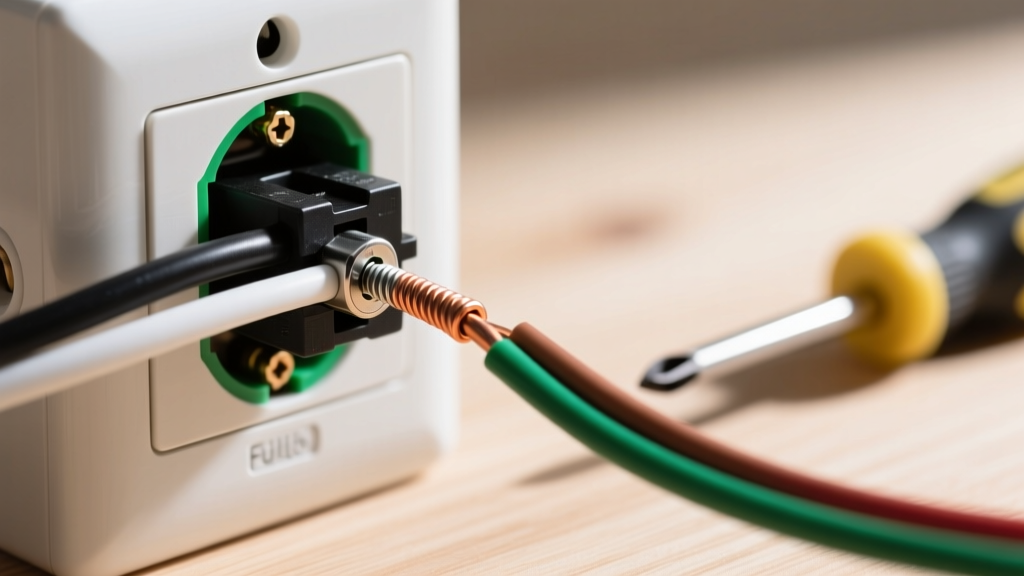
- Wiring Nuance: Always connect the incoming power to the LINE terminals. The LOAD terminals are strictly for extending protection to downstream standard receptacles. Reversing these will leave downstream outlets unprotected while the GFCI itself remains functional, creating a hidden hazard.
- Torque Specification: Use a calibrated torque screwdriver set to 14 in-lbs for the terminal screws to prevent cold-flow loosening over time.
Top AFCI Pick: Eaton AFTR15
Retailing for approximately $32, the Eaton AFTR provides branch/feeder and combination arc-fault protection. It uses advanced digital signal processing (DSP) to distinguish between normal arcing (like a vacuum cleaner motor starting) and dangerous parallel or series arcing (like a pierced nail in a wall cable).
Deep Dive: Temporary Spider Boxes with Built-In Breakers
For temporary power, an electric outlet with breaker must meet rigorous physical and electrical standards. According to OSHA Standard 1926.405, all 120V, single-phase, 15- and 20-ampere receptacle outlets on construction sites must have approved GFCI protection, and the power feed must be protected by an overcurrent device (breaker).
Top Pick: Milwaukee M18 Rocket / Spider Box (42-22-0060)
At roughly $190, this portable power center features a built-in 20-amp GFCI breaker. Unlike cheap plastic alternatives, it utilizes a rugged, impact-resistant polymer housing with a heavy-duty steel handle.
- Breaker Type: It utilizes a 20A thermal-magnetic breaker. The thermal element protects against sustained overloads (e.g., pulling 25A continuously), while the magnetic element trips instantaneously on short circuits.
- Cord Gauge Requirement: To prevent voltage drop that could cause the internal breaker to nuisance-trip during motor startups, always feed this box with a minimum 10 AWG extension cord if the run exceeds 50 feet.
Common Failure Modes and Troubleshooting
Understanding why your electric outlet with breaker trips is the difference between a quick fix and a dangerous misdiagnosis.
1. AFCI Nuisance Tripping on Multi-Wire Branch Circuits (MWBC)
The Problem: You install an AFCI receptacle, but it trips immediately when a load on an adjacent circuit is turned on.
The Cause: AFCI receptacles cannot handle shared neutrals. If your home uses a MWBC (two hot wires sharing one neutral), the AFCI microprocessor will interpret the returning neutral current from the other hot leg as a ground fault or arc fault.
The Fix: You must use an AFCI circuit breaker in the main panel designed specifically for MWBCs (a 2-pole AFCI breaker), or separate the neutrals and abandon the MWBC configuration at the receptacle level.
2. GFCI Tripping from Downstream Moisture Ingress
The Problem: A newly installed indoor GFCI trips randomly, even when nothing is plugged into it.
The Cause: The GFCI is wired to protect downstream outdoor or garage outlets via the LOAD terminals. Moisture or degraded weatherproof gaskets on the downstream outlets are causing micro-leakages to ground.
The Fix: Disconnect the LOAD wires. Test the GFCI. If it holds, the fault is downstream. Replace downstream outdoor covers with in-use (bubble) covers and inspect for wire nut corrosion.
3. Spider Box Thermal Breaker Degradation
The Problem: A job site spider box trips at 12 amps, well below its 20-amp rating.
The Cause: The bimetallic strip inside the thermal breaker has fatigued from repeated overloads and harsh temperature cycles, altering its trip curve.
The Fix: Thermal-magnetic breakers in portable boxes are not typically serviceable. If the breaker trips below 80% of its rated continuous load (16A for a 20A breaker) under normal ambient temperatures, the entire spider box must be replaced.
Installation Best Practices for 2026
When installing any electric outlet with breaker capabilities, adhere to these professional standards:
- Back-Wiring vs. Side-Wiring: For 15A and 20A GFCI/AFCI receptacles, utilize the internal pressure clamp back-wiring holes rather than wrapping the wire around the terminal screw. Back-wiring provides a larger surface area contact and resists pull-out forces up to 40 lbs.
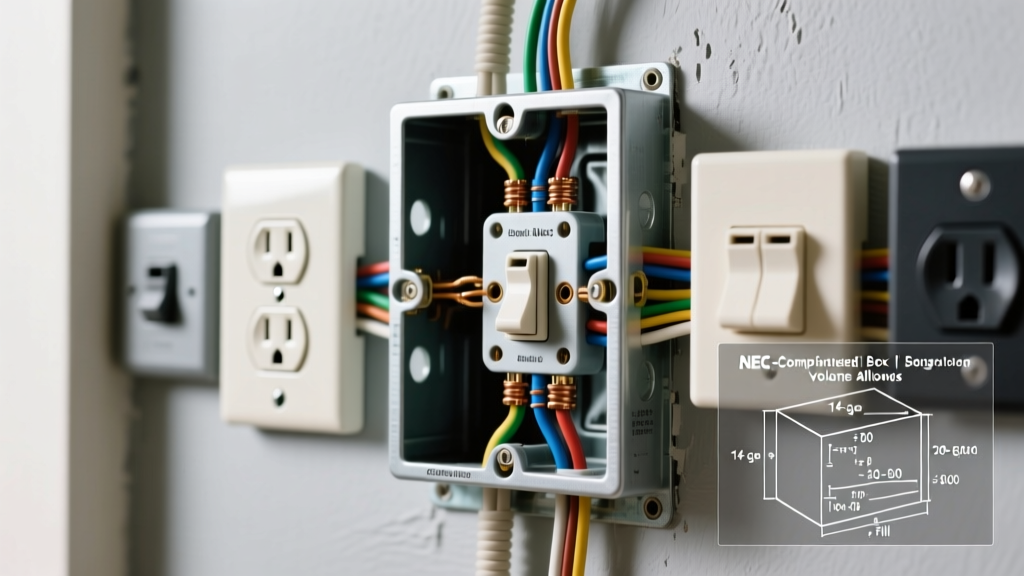
- Box Fill Calculations: GFCI and AFCI receptacles have significantly deeper bodies than standard duplex receptacles. Ensure your electrical box has adequate cubic inch capacity. A standard single-gang box (18 cubic inches) is often too shallow for modern smart AFCIs; upgrade to a 22.5 cubic inch deep box to prevent crushing the internal microprocessors against the back of the box.
- Weatherproofing: If installing a GFCI outdoors, use an extra-duty while-in-use cover. Standard flat covers compromise the seal the moment a cord is plugged in, leading to internal corrosion of the GFCI test/trip solenoids within 12 to 18 months.
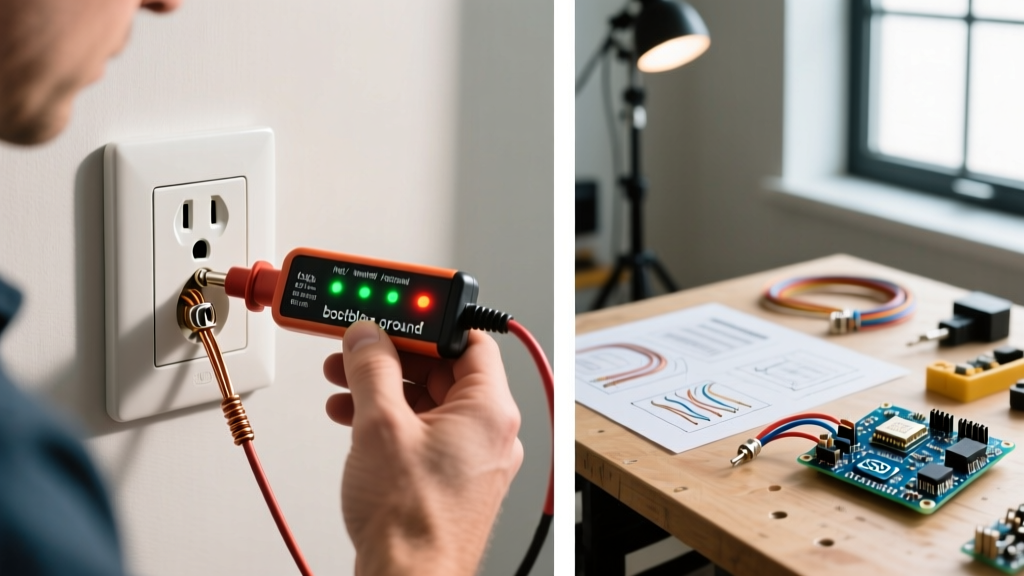
Expert Insight: Never use the 'TEST' button on a GFCI receptacle as a substitute for a dedicated plug-in GFCI tester. The receptacle's test button only verifies the internal trip mechanism; a plug-in tester (like the Klein Tools RT210) actively verifies that the equipment grounding conductor is properly bonded and that the line/load wiring is correct.