
The Hidden Dangers of DIY Electric Car Outlet Installation
As electric vehicle (EV) adoption accelerates through 2026, the demand for home charging infrastructure has never been higher. However, treating an electric car outlet installation like a standard dryer or oven circuit is a critical mistake that leads to melted receptacles, tripped breakers, and severe fire hazards. Electric Vehicle Supply Equipment (EVSE) draws maximum current for hours on end, pushing residential electrical components to their absolute thermal limits.
This comprehensive safety and code compliance guide breaks down the National Electrical Code (NEC) requirements for EV charging, specifically focusing on Article 625. Whether you are installing a NEMA 14-50 receptacle for a Tesla Mobile Connector or a Level 2 ChargePoint Home Flex, understanding continuous load calculations, GFCI mandates, and termination torque is non-negotiable for a safe installation.
Decoding NEC Article 625: The Foundation of EV Safety
The National Fire Protection Association (NFPA) governs EV charging under NEC Article 625. This article explicitly classifies EV charging as a continuous load, which fundamentally changes how you size your breakers and conductors compared to standard household appliances.
The 125% Continuous Load Mandate
A continuous load is defined as any load where the maximum current is expected to continue for three hours or more. Because EV charging routinely takes 6 to 12 hours, NEC Section 210.20(A) and 625.41 require the circuit rating to be at least 125% of the EVSE's maximum continuous draw.
- 32-Amp EVSE: Requires a minimum 40-Amp circuit (32 x 1.25 = 40).
- 40-Amp EVSE: Requires a minimum 50-Amp circuit (40 x 1.25 = 50).
- 48-Amp EVSE: Requires a minimum 60-Amp circuit (48 x 1.25 = 60). Note: Receptacles are generally not rated for 60A continuous EV loads; hardwiring is required here.
Receptacle Selection: Why Hardware Store Specials Fail
One of the most common failure modes in residential electric car outlet installation is the use of standard, residential-grade NEMA 14-50R receptacles found in big-box stores. Under continuous 40-amp loads, the internal brass contacts of cheap receptacles lose their tension, leading to arcing, thermal runaway, and melted faceplates.
For a 50-amp EV circuit, you must specify industrial-grade or EV-specific receptacles. The Hubbell 9450A (industrial grade) and the Bryant 9450FR (EV-specific residential grade) are the industry gold standards. They feature massive copper-alloy contacts and high-temperature thermoset bodies designed to dissipate heat during 10-hour charging sessions.
| Configuration | Max Amperage | Voltage | Neutral Required? | Best Use Case |
|---|---|---|---|---|
| NEMA 14-50R | 50A | 125/250V | Yes | Universal EVSEs, RVs, future-proofing |
| NEMA 6-50R | 50A | 250V | No | Dedicated EVSEs that do not require 120V logic |
| Hardwired | Up to 100A+ | 240V | No | High-speed 48A+ chargers, avoids GFCI receptacle rules |
The GFCI Mandate and Nuisance Tripping
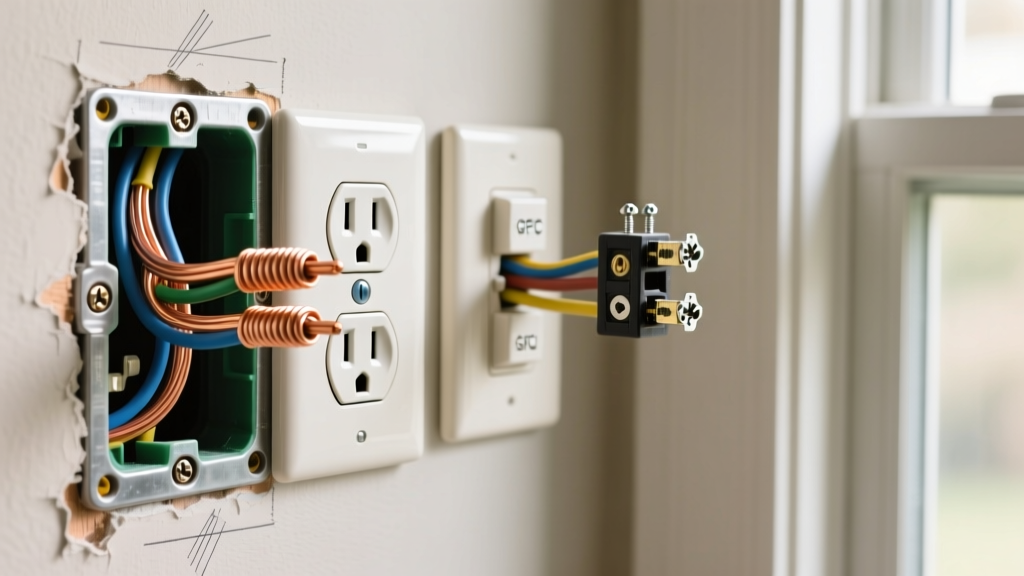
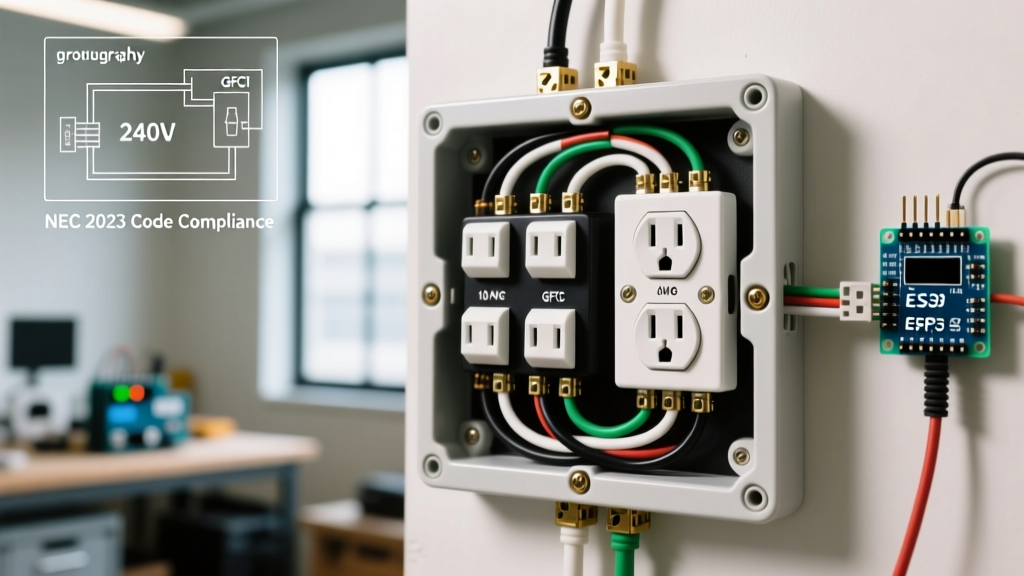
Recent NEC cycles (including the 2023 and 2026 adoptions) introduced strict Ground Fault Circuit Interrupter (GFCI) requirements for EV receptacles. Under NEC 625.40, all receptacles installed for EV charging must have GFCI protection.
The Problem: Most modern EVSEs (like the Tesla Wall Connector or Emporia Vue) have internal CCID (Charging Circuit Interrupting Device) sensors that monitor for ground faults. Stacking a Class A GFCI breaker (which trips at 5mA) on top of an EVSE's internal sensor often results in nuisance tripping due to capacitive leakage or minor induced currents over long cable runs.
The Solution: If your local jurisdiction enforces the GFCI receptacle rule, use a high-quality EV-rated GFCI breaker, such as the Eaton BR250GFI or Square D HOM250GFI. Alternatively, many jurisdictions allow hardwired EVSE installations to bypass the breaker-level GFCI requirement because the EVSE's internal CCID provides equivalent or superior personnel protection. Always consult your local Authority Having Jurisdiction (AHJ) before pulling a permit.
Wire Sizing, Conduit, and Voltage Drop Math
Sizing your wire correctly goes beyond simply matching the breaker ampacity. You must account for the 75°C or 90°C column in NEC Table 310.16, terminal temperature limits, and voltage drop.
Standard Sizing vs. Voltage Drop Compensation
For a standard 50-amp circuit using THHN copper wire in conduit, 6 AWG is the minimum code-compliant size (rated for 65A at 75°C). However, the NEC recommends keeping voltage drop under 3% for branch circuits (Informational Note to 210.19(A)).
If your electrical panel is 80 feet away from the garage outlet, a 6 AWG wire will experience a voltage drop of roughly 4.1%, which can cause the EVSE to throttle charging speeds or overheat the conductors. For an 80-foot run, you must upsize to 4 AWG copper THHN to maintain optimal efficiency and safety.
Expert Warning: Never use Aluminum wire for NEMA 14-50 receptacles unless the receptacle terminals are explicitly rated for AL/CU and you apply anti-oxidant paste (like Noalox). Most standard 50A receptacles are copper-only. Using aluminum on copper-only lugs will cause galvanic corrosion and eventual thermal failure.
Termination Torque: The Hidden Fire Hazard
The vast majority of electrical fires in EV charging setups do not start at the breaker; they start at the receptacle terminals due to loose connections. When high current flows through a loose connection, resistance increases, generating immense heat.
To prevent this, the NEC (Section 110.14(D)) requires that terminations be tightened to the manufacturer's specified torque. For a Hubbell 9450A or Bryant 9450FR, the required torque is typically 45 to 50 inch-pounds.
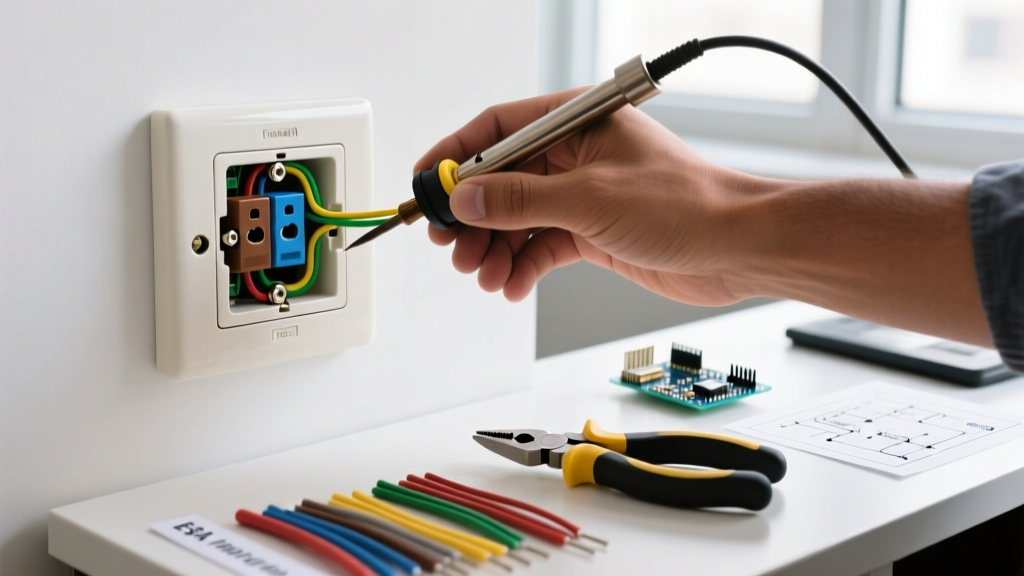
You cannot achieve this by "tightening until it feels snug" with a standard screwdriver. You must use a calibrated torque screwdriver, such as the CDI 401SMV or a Wiha insulated torque driver. Strip the wire to the exact length specified by the manufacturer, ensure no stray copper strands are outside the terminal cage, and torque to spec.
Load Calculation and Panel Capacity
Before installing a 50-amp EV circuit, you must perform an NEC Article 220 Standard Load Calculation on your home's electrical service. Adding a 12,000-watt continuous load to an older 100-amp or 150-amp panel that is already running electric heat, an electric oven, and a dryer will likely overload the main breaker.
According to data from the Alternative Fuels Data Center, upgrading a residential panel from 100A to 200A typically costs between $1,500 and $3,000 in 2026. If a panel upgrade is cost-prohibitive, consider installing a smart EVSE with automatic load shedding (like the Emporia V2 with current transformers). These devices monitor your home's real-time power usage and dynamically throttle the EV charging speed to prevent the main breaker from tripping, allowing you to safely install an EV charger on a smaller existing panel.
Inspection & Permitting Checklist
Do not skip the permitting process. Unpermitted EV installations can void your home insurance policy in the event of a fire. When the AHJ inspector arrives, they will be checking for the following specific criteria:
- Receptacle Rating: Verification that the receptacle is industrial/EV-rated (e.g., Hubbell/Bryant) and not a standard residential grade unit.
- GFCI Protection: Testing the GFCI breaker or verifying the hardwired exemption based on local amendments.
- Conductor Sizing: Checking that the wire gauge matches the breaker size and accounts for the 125% continuous load rule.
- Strain Relief: Ensuring the heavy EVSE cable has proper physical support or strain relief so the weight of the cord does not pull on the receptacle terminals.
- Labeling: Some jurisdictions require a permanent label at the panel identifying the breaker as "EV CHARGING CIRCUIT - CONTINUOUS LOAD."
Final Thoughts on Code Compliance
An electric car outlet installation is not a place to cut corners or rely on outdated wiring practices. The combination of high amperage, continuous duty cycles, and sensitive onboard vehicle electronics demands strict adherence to NEC Article 625. By investing in heavy-duty receptacles, calculating voltage drop accurately, utilizing a torque screwdriver, and respecting the GFCI mandates, you ensure a charging setup that is safe, efficient, and fully compliant for years to come.