
Why Extending Outdoor Circuits Triggers Hidden Failures
Extending an outdoor outlet to power a new patio feature, shed workshop, or landscape lighting system seems like a straightforward weekend project. However, when you extend outdoor electrical outlet circuits, you introduce complex variables that frequently result in GFCI nuisance tripping, severe voltage drop, or hidden ground faults. According to the National Fire Protection Association (NFPA), outdoor receptacles must be GFCI protected, but the physics of long wire runs often conflict with the sensitive electronics inside standard GFCI devices.
This guide bypasses generic DIY advice and dives deep into the electrical engineering and field diagnostics required to troubleshoot a failing outdoor outlet extension. We will cover exact multimeter testing protocols, wire sizing matrices, and the specific failure modes of weatherproof enclosures in 2026's extreme weather cycles.
Diagnosing the 'Nuisance Trip': Capacitive Leakage vs. Ground Faults
The most common complaint after an extension is the GFCI tripping randomly, often at night or during heavy dew, with no load connected. To diagnose this, you must understand the 5mA (milliamp) trip threshold of modern GFCI receptacles like the Leviton 2091-W2T (20A).
Failure Mode 1: Cumulative Capacitive Leakage
When you extend outdoor electrical outlet runs using long lengths of UF-B (Underground Feeder) or THWN-2 conductors inside PVC conduit, the wire insulation and the surrounding earth/conduit act as a capacitor. Over distances exceeding 100 feet, the cumulative capacitive leakage current to ground can approach 2mA to 4mA. Add a slight moisture ingress or a plugged-in LED transformer, and you easily breach the 5mA threshold, causing a nuisance trip.
Failure Mode 2: Downstream Neutral-Ground Bonding
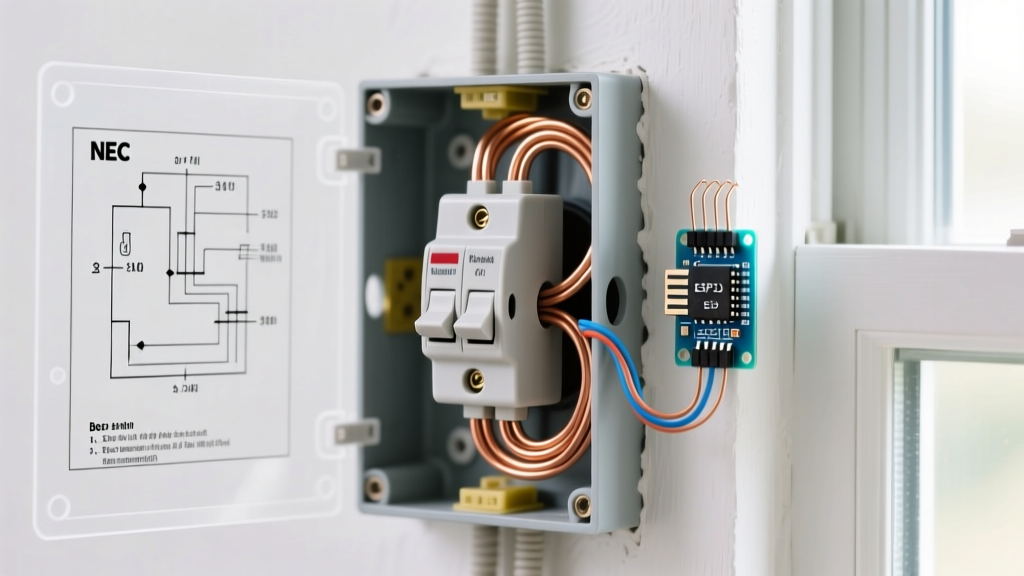
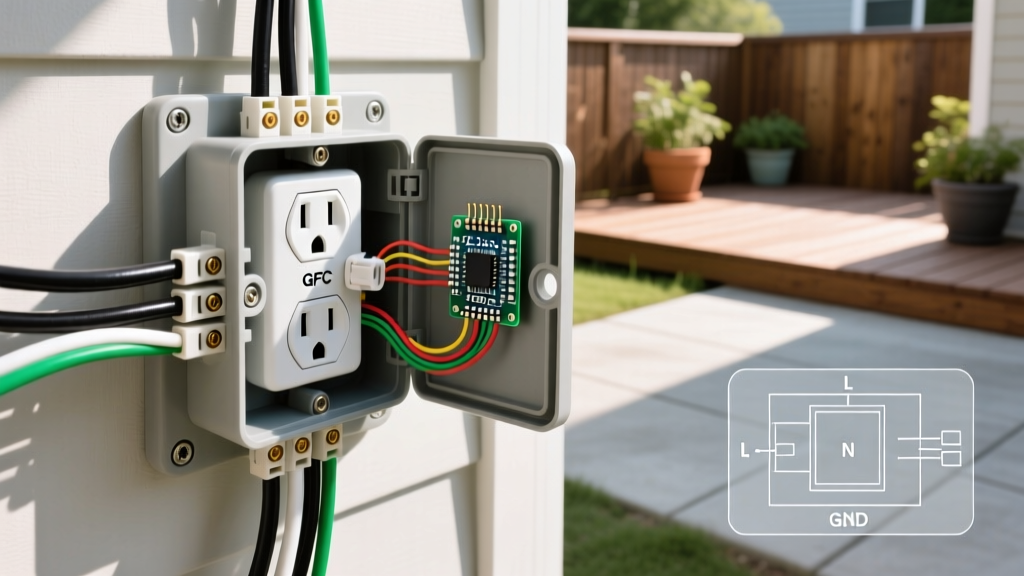
A classic wiring error occurs when extending from a subpanel or miswiring the LOAD side of the GFCI. If the neutral and ground wires make contact anywhere downstream of the GFCI's LOAD terminals, the return current will split. The GFCI's internal toroidal transformer will detect this imbalance and trip immediately. Electrical Technology outlines that neutral-ground faults are responsible for over 60% of unexplained GFCI trips in extended circuits.
Expert Diagnostic Tip: To isolate capacitive leakage from a hard ground fault, disconnect the LOAD side wires at the GFCI. If the GFCI holds, plug a known resistive load (like a 1500W heat gun) into the extended outlet. If it trips under load but not without load, you likely have a voltage drop issue causing the GFCI's internal logic board to brown out and reset, rather than a true ground fault.
Voltage Drop Matrix: Sizing Your Extension Correctly
Voltage drop is the silent killer of extended outdoor circuits. The Copper Development Association recommends keeping voltage drop under 3% for branch circuits. A 120V circuit dropping 5% leaves you with 114V, which can cause motors in pond pumps or shed compressors to overheat and fail.
Below is a diagnostic matrix for extending a 20-Amp outdoor circuit. Current pricing for 2026 places 12/2 UF-B cable at approximately $0.85 per foot, while 10/2 UF-B hovers around $1.35 per foot.
| One-Way Distance | Wire Gauge (Copper) | Max Continuous Load (80%) | Est. Voltage Drop (at Max Load) | Verdict |
|---|---|---|---|---|
| 50 ft | 12 AWG | 16 Amps | 1.6% (1.9V) | Pass |
| 100 ft | 12 AWG | 16 Amps | 3.2% (3.8V) | Fail (Marginal) |
| 100 ft | 10 AWG | 16 Amps | 2.0% (2.4V) | Pass |
| 150 ft | 10 AWG | 16 Amps | 3.0% (3.6V) | Pass |
| 200 ft | 8 AWG (THWN-2 in PVC) | 16 Amps | 2.5% (3.0V) | Pass (Required) |
Note: UF-B cable is rated for direct burial at 24 inches deep, but its 60°C temperature rating limits its ampacity compared to THWN-2 in conduit (75°C/90°C ratings). Always upsize when using UF-B for long runs.
Physical Failure Modes: Moisture Ingress and Enclosure Breakdown
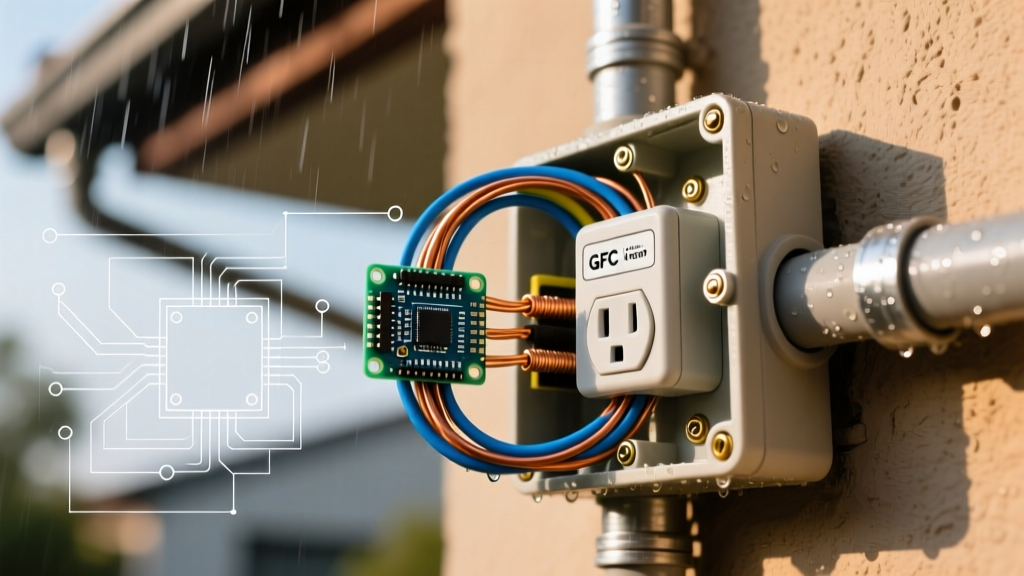
If your multimeter shows no dead shorts, but the outlet trips during rain or high humidity, your weatherproof enclosure has failed.
The 'Bubble Cover' Trap
Standard deep-weatherproof bubble covers are notorious for trapping condensation. When the sun heats the cover, air expands and escapes past the gasket. At night, the enclosure cools, creating a vacuum that pulls moisture-laden air directly into the outlet box through microscopic gaps in the conduit fittings.
The Arlington UI5010 Solution
For troubleshooting persistent moisture faults, replace the enclosure with an Arlington Industries UI5010 Non-Metallic In-Use Cover (retailing around $18-$22). Unlike bubble covers, the UI5010 mounts directly to the siding and features a downward-facing cord exit with a built-in sliding gate. More importantly, it allows you to drill a 1/8-inch weep hole at the absolute lowest point of the backing plate, allowing any condensation to drain out rather than pooling around the GFCI's internal test buttons.
Step-by-Step Diagnostic Protocol for Extended Outdoor Outlets
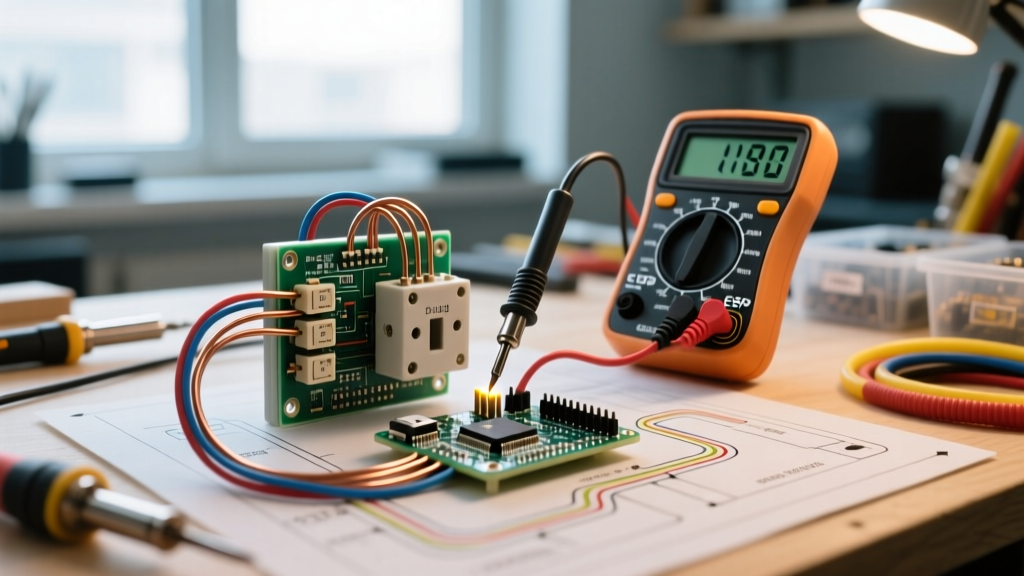
When called to troubleshoot a failing outdoor extension, professional electricians follow a strict isolation protocol. You will need a True-RMS multimeter (like the Fluke 117, ~$210) and ideally an insulation resistance tester (Megger).
- Step 1: Isolate the Extension at the Source. Turn off the breaker. Disconnect the extended wires from the LOAD terminals of the origin GFCI. Cap them safely. Reset the GFCI. If it trips with no load wires attached, the origin GFCI is dead and must be replaced.
- Step 2: The Continuity and Short Test. With the breaker OFF and the extension disconnected from BOTH ends, use your multimeter's continuity setting. Test between the extension's Hot and Ground, and Neutral and Ground. Any reading below infinite (OL) indicates a crushed cable underground or a nail driven through the conduit.
- Step 3: Insulation Resistance (Megger) Testing. A standard multimeter uses 3V to 9V for continuity checks, which won't reveal micro-fractures in wire insulation. An insulation tester like the Megger MIT230 applies 250V to 500V to the conductors. A healthy outdoor extension should read >50 Megohms. A reading between 1 and 10 Megohms indicates degrading insulation that will eventually cause a hard ground fault.
- Step 4: Verify Neutral Isolation. Ensure the extended neutral wire is connected ONLY to the LOAD neutral terminal, and the extended ground is bonded to the metal box (if applicable) and the ground bus. A neutral-ground bond downstream is the #1 cause of immediate tripping upon reset.
Summary: When to Call a Professional
Extending an outdoor electrical outlet requires more than just burying a cable and wiring a receptacle. It demands an understanding of capacitive leakage, strict adherence to voltage drop limits, and the installation of condensation-managing enclosures. If your Megger test reveals insulation breakdown, or if you are extending a multi-wire branch circuit (MWBC) to a detached structure requiring a new grounding electrode system, it is time to hire a licensed electrical contractor. Troubleshooting is about isolating variables; by following this matrix, you will pinpoint the exact failure mode of your outdoor circuit.