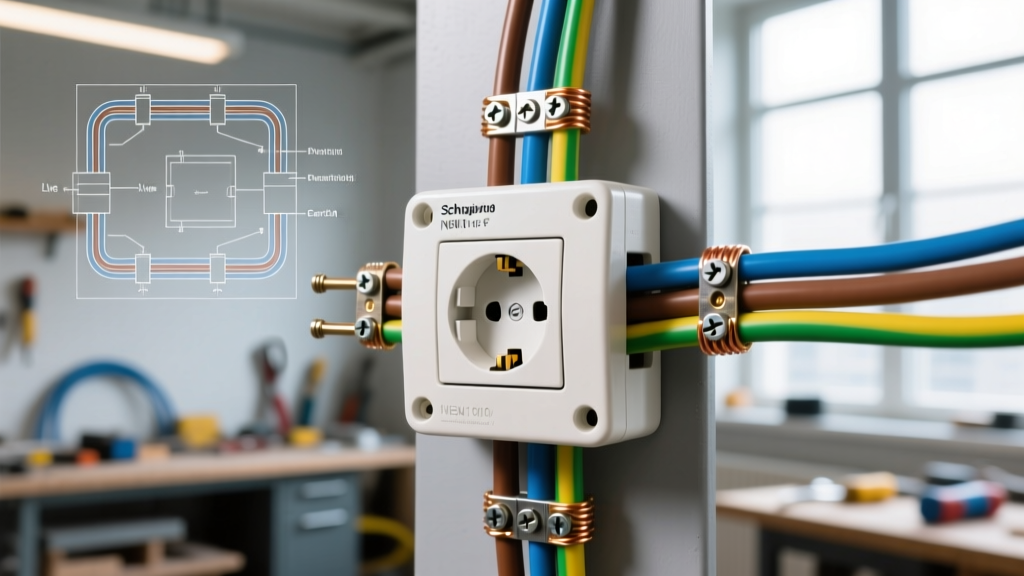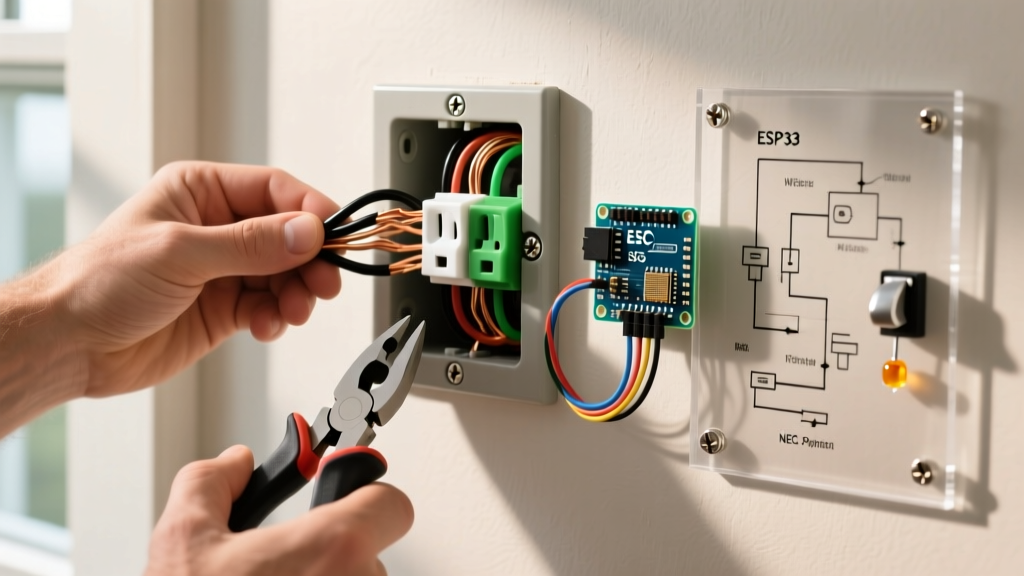

The True Cost to Install an Electrical Outlet: Beyond the Price Tag
When homeowners research the cost to install an electrical outlet, they often find misleading averages that fail to account for modern safety codes and material grades. As of 2026, the national average to replace an existing standard 120V receptacle ranges from $125 to $200, while running a completely new circuit to add an outlet costs between $275 and $850. However, electrical work is not just about connecting wires; it is about strict adherence to the National Electrical Code (NEC). Ignoring code compliance to save money is a leading cause of residential electrical fires. According to the Electrical Safety Foundation International (ESFI), electrical receptacles are involved in over 5,000 home fires annually. This guide breaks down the exact pricing, material specifications, and NEC mandates that dictate the final invoice for your outlet installation.
2026 Outlet Installation Cost Breakdown Matrix
The complexity of the job, the type of receptacle required, and local labor rates (averaging $85 to $150 per hour for licensed electricians) heavily influence the final price. Below is a detailed cost matrix for common residential outlet installations.
| Outlet Type & Scenario | Material Cost | Labor Cost | Total Estimated Cost | Primary NEC Reference |
|---|---|---|---|---|
| Standard 15A/20A (Like-for-Like Swap) | $3 - $12 | $120 - $180 | $123 - $192 | 406.4(D) |
| GFCI Receptacle (Kitchen/Bath/Outdoor) | $18 - $35 | $150 - $225 | $168 - $260 | 210.8(A) |
| AFCI/GFCI Combo (Living Room/Bedroom) | $35 - $55 | $175 - $250 | $210 - $305 | 210.12 / 210.8 |
| New 120V Circuit (Adding an Outlet) | $45 - $120 | $250 - $500 | $295 - $620 | 210.52 (Spacing) |
| 240V 50A Receptacle (EV Charger/Dryer) | $80 - $250 | $450 - $900 | $530 - $1,150 | 210.23 / 625 (EV) |
The "Hidden" Costs of NEC Code Compliance
The most common reason a seemingly simple outlet installation exceeds initial estimates is code compliance. The NEC is updated every three years, and local municipalities adopt these cycles at different times. By 2026, the vast majority of US jurisdictions are enforcing the 2023 NEC or the newly adopted 2026 NEC, which feature stringent safety expansions.
1. AFCI and GFCI Expansion Mandates
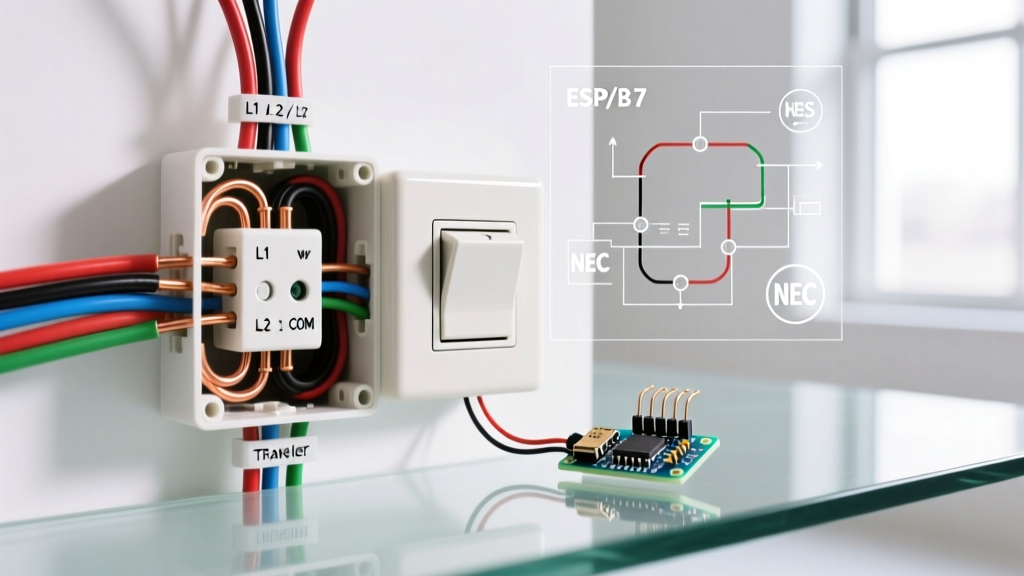
If you are replacing an old, ungrounded two-prong outlet or adding a new outlet to an existing legacy circuit, the NEC requires you to bring the installation up to current safety standards. Under NFPA 70 (National Electrical Code), Arc-Fault Circuit Interrupter (AFCI) protection is now mandated in almost all living spaces, including kitchens and laundry rooms. If your electrical panel lacks an AFCI breaker (such as an Eaton BR120AF, costing ~$55), the electrician must either install an AFCI breaker or use a dual-function AFCI/GFCI receptacle (like the Leviton SmartlockPro AGFTR1-0W, costing ~$42) as the first outlet in the circuit to protect downstream devices.
2. Tamper-Resistant (TR) Requirements
NEC Article 406.12 mandates that all 15A and 20A, 125V and 250V non-locking receptacles installed in dwelling units must be Tamper-Resistant (TR). TR receptacles feature internal spring-loaded shutters that prevent children from inserting foreign objects. While a standard builder-grade receptacle costs about $1.20, a TR-compliant spec-grade receptacle costs between $3.50 and $6.00. This material upgrade is non-negotiable for legal compliance.
3. Permit and Inspection Fees
Swapping an existing broken outlet does not require a permit. However, installing a new outlet that requires running new wire, extending a circuit, or adding a breaker mandates a local electrical permit. Permit fees typically range from $50 to $150 depending on your municipality. Skipping the permit to save money can result in fines, voided home insurance claims, and failed home inspections during a future sale.
Material Grades: Where Cheap Components Fail
Not all outlets are manufactured equally. The Consumer Product Safety Commission (CPSC) warns against the use of substandard electrical components that can lead to thermal runaway. Understanding material grades is crucial when evaluating an electrician's quote.
- Builder Grade (Residential Standard): Priced at $1.50 - $2.50. These use thin brass contacts and rely on "push-in" back-wiring (stab-in connections). Under continuous 12A+ loads, the internal spring contacts experience thermal creep, leading to arcing, melting, and eventual failure. Verdict: Avoid for high-draw appliances.
- Spec Grade (Commercial/Pro Residential): Priced at $3.50 - $6.00 (e.g., Leviton ProGrade 5262 or Hubbell 5262). These feature thicker internal brass straps, higher impact-resistant nylon faces, and allow for "back-wiring with clamps" where a screw tightens a plate over the inserted wire. This provides a gas-tight connection rivaling side-wiring. Verdict: The optimal choice for modern homes.
- Hospital Grade: Priced at $12.00 - $25.00 (e.g., Pass & Seymour 20IGTR). Identified by a green dot, these undergo extreme pull-test and crush-test certifications. They feature redundant grounding paths. Verdict: Overkill for standard residential, but excellent for home workshops or medical equipment areas.
Scenario Walkthroughs: What to Expect on the Job
Scenario A: The Simple Swap (Like-for-Like)
Timeframe: 30 - 45 minutes.
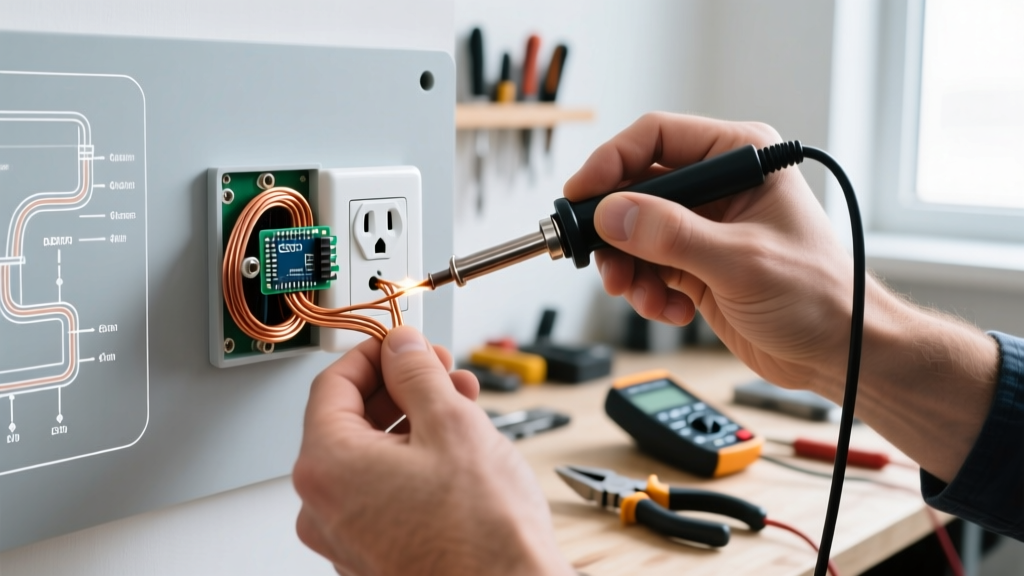
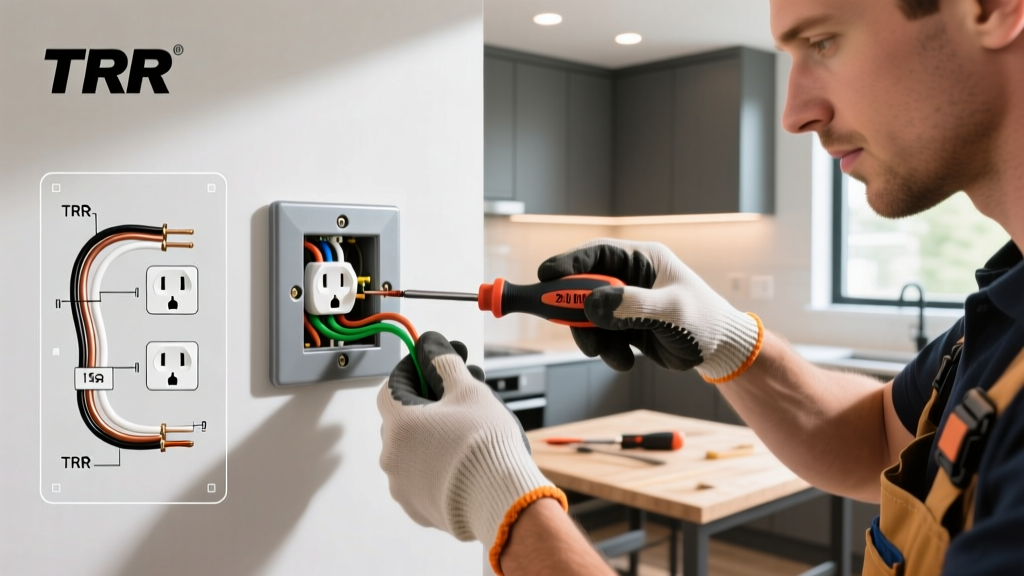
Process: The electrician verifies power is off using a non-contact voltage tester and a multimeter. They remove the old receptacle, inspect the wire insulation for heat damage, and terminate the new TR receptacle using the side-screw terminals. They torque the terminals to the manufacturer's specification (usually 14 in-lbs) using a calibrated torque screwdriver—a 2026 NEC best practice to prevent loose connections.
Scenario B: Adding a New Outlet to an Existing Wall
Timeframe: 2 - 4 hours.
Process: This requires "fishing" wires through finished drywall. The electrician cuts a precise hole for the old-work bracket box, drills through wall plates and studs using flexible auger bits, and pulls 12/2 or 14/2 NM-B (Romex) cable from an existing accessible junction box or attic space. If the existing circuit is already near its 80% continuous load capacity (e.g., 14.4A on a 15A breaker), the electrician will refuse to tap into it, necessitating a new circuit run from the panel.
Scenario C: 240V EV Charger Outlet Installation
Timeframe: 4 - 8 hours.
Process: Installing a NEMA 14-50 receptacle for an Electric Vehicle requires a dedicated 50A, 240V circuit. The electrician must install a new double-pole 50A breaker, run 6 AWG copper THHN wire through 3/4-inch EMT conduit (or 6/3 NM-B cable if local code allows and it's concealed), and terminate it into a heavy-duty, industrial-grade NEMA 14-50R receptacle (e.g., Hubbell 9450A, which features superior grip and thermal dissipation compared to cheaper $40 alternatives). Because EV charging is considered a continuous load (over 3 hours), the circuit must be rated for 125% of the load, making the 50A breaker and 6 AWG wire mandatory for a 40A continuous draw.
Real-World Failure Modes & Edge Cases
Even experienced DIYers make critical errors that licensed professionals are trained to avoid. Two common failure modes include:
- The "Bootleg Ground" or Neutral-Ground Bond Error: In older homes, an amateur might bond the neutral and ground wires at the receptacle to trick a tester into showing a "correct" wiring status. This is incredibly dangerous. If a neutral wire breaks upstream, the metal casing of any plugged-in appliance becomes energized at 120V, posing a lethal shock hazard. A professional will install a GFCI and label it "No Equipment Ground" per NEC 406.4(D)(2) if a true ground path is unavailable.
- Aluminum Wiring Incompatibility: Homes built between 1965 and 1973 often have single-strand aluminum branch wiring. Standard copper-rated receptacles will cause galvanic corrosion and thermal expansion mismatches when connected directly to aluminum wire. The outlet must be CO/ALR rated, or the wires must be pigtailed to copper using special AlumiConn connectors or COPALUM crimps before terminating at the receptacle.
Frequently Asked Questions
Can I install an electrical outlet myself to save money?
While swapping an existing, code-compliant receptacle is a manageable DIY task for those with electrical knowledge, adding new circuits, upgrading panels, or working in wet locations should be left to licensed professionals. Mistakes can lead to fatal shocks or voided homeowner's insurance policies in the event of a fire.
Why did my electrician quote me $400 to move an outlet just two feet?
Moving an outlet in a finished wall is rarely as simple as stretching a wire. NEC code forbids concealing junction boxes behind drywall. The electrician must either access the wall from behind, cut and patch drywall to install accessible junction boxes, or re-run the entire cable from the source to the new location, which involves significant labor and finishing work.
Do USB outlets cost more to install?
USB-equipped receptacles (like the Leviton USB Charger Duplex) cost between $20 and $35 for the part alone. Because they require a deeper electrical box to house the internal power supply circuitry, retrofitting them into shallow older homes may require replacing the existing wall box, adding $50 to $100 in labor to the overall cost.