
The Hidden Danger of Black Residue on Electrical Outlets
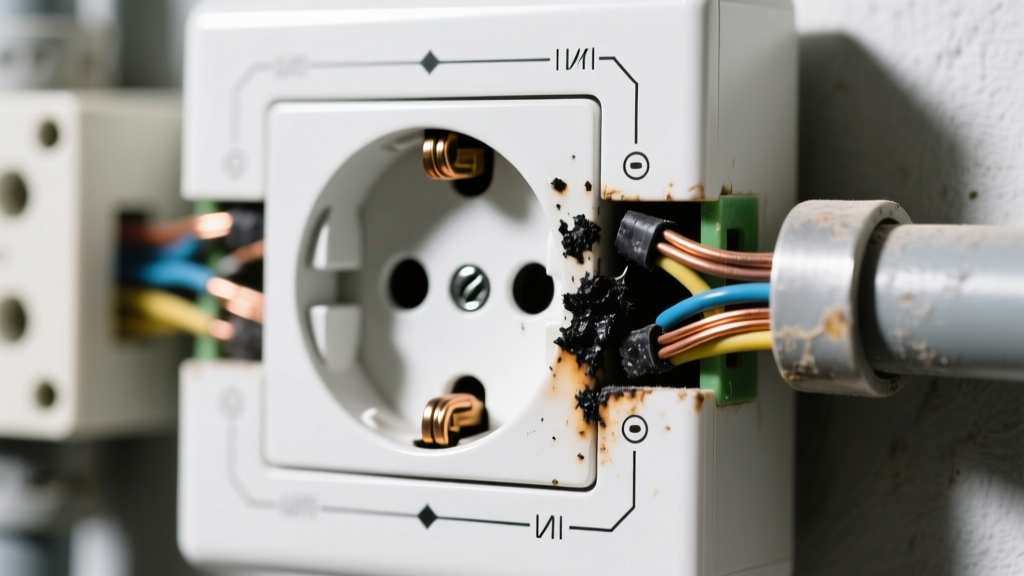
Finding black residue on an electrical outlet is never just a cosmetic issue; it is a critical thermal and electrical warning sign. This dark, soot-like buildup is typically carbon tracking—the physical manifestation of micro-arcing, excessive resistance, or localized overheating at the terminal connections. When current flows through a compromised junction, the resulting heat ionizes the surrounding air and degrades the polycarbonate or nylon face of the receptacle, leaving behind a conductive carbon path.
According to the National Fire Protection Association (NFPA), electrical distribution and lighting equipment remains one of the leading causes of home structural fires. Ignoring carbon buildup or melted plastic around the hot (brass) or neutral (silver) terminals can lead to a complete dielectric breakdown, resulting in a phase-to-ground fault or an electrical fire inside the wall cavity. As a wiring diagram reference hub, we must emphasize that this residue almost always points to a physical wiring fault or a misinterpretation of the circuit's schematic during installation.
Diagnostic Matrix: Identifying the Type of Residue
Not all dark marks on a receptacle are created equal. Before pulling out the wiring diagram and reaching for your multimeter, visually classify the residue to determine the severity of the fault.
| Residue Type | Visual Characteristics | Primary Cause | Severity & Action |
|---|---|---|---|
| Dry Carbon Soot | Powdery, matte black, wipes away easily with a dry cloth. | Micro-arcing from loose terminal screws or backstabbed connections. | High. Re-terminate wires and torque to spec. |
| Melted/Burnt Plastic | Glossy, warped, brown/black, fused to the receptacle face. | Sustained high-resistance fault, overloading, or severe short circuit. | Critical. Replace receptacle immediately; inspect wire insulation. |
| Green/Black Corrosion | Crusty, dark green/black, often near the ground screw or damp areas. | Galvanic corrosion, moisture intrusion, or dissimilar metal reactions (e.g., aluminum to copper). | Moderate to High. Clean, apply anti-oxidant, or upgrade to GFCI. |
Wiring Diagram Faults That Cause Arcing and Carbon Buildup
When reviewing a standard NEMA 5-15R or 5-20R wiring diagram, the neutral (white) and hot (black) terminals must maintain equal and opposite current flow. If the physical installation deviates from the intended diagram, the resulting electrical stress manifests as heat and residue.
1. The 'Backstab' Push-In Connection Failure
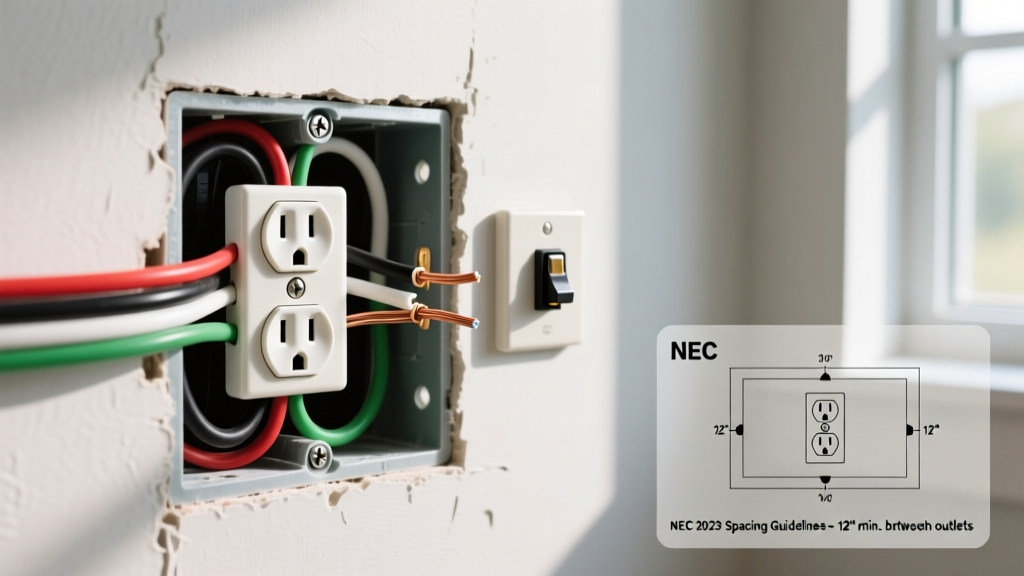
Many modern wiring diagrams for residential duplex receptacles show two wiring methods: side-wiring (terminal screws) and back-wiring (push-in holes). The push-in holes rely on an internal spring clip to grip the 14 AWG wire. Over time, thermal cycling (expansion and contraction from normal load currents) causes these springs to lose tension. This creates a high-resistance joint. As current pushes through this microscopic gap, it arcs, vaporizing small amounts of copper and plastic, which deposits as black soot on the outlet face. Expert rule: Never use push-in backstab connections for 12 AWG wire, and avoid them entirely for 14 AWG in favor of side-wiring or screw-clamp back-wiring.
2. Multi-Wire Branch Circuit (MWBC) Neutral Errors
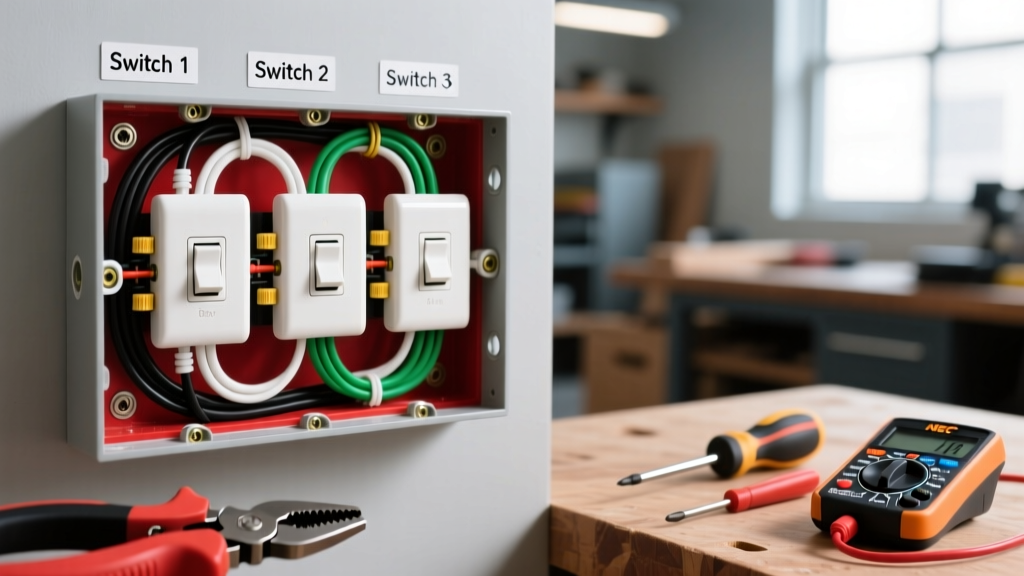
In an MWBC wiring diagram, two hot wires (typically black and red) share a single neutral (white) wire. If the two hot wires are accidentally placed on the same phase (both 120V from the same leg) instead of opposite phases, the neutral wire will carry the sum of the currents rather than the difference. This overloads the neutral terminal at the receptacle, causing severe overheating, melted insulation, and thick black carbon residue around the silver neutral screw. Always verify a 240V reading between the two hot wires to ensure correct MWBC phasing.
3. Pigtail Splice Degradation
When daisy-chaining outlets, the NEC requires pigtailing if the receptacle is removed to maintain circuit continuity. If the wire nut or push-in connector (like a Wago 221) holding the neutral pigtails is loose, the arcing occurs inside the junction box. However, the voltage drop and localized heating can travel down the pigtail, causing the receptacle's neutral terminal to overheat and leave residue on the faceplate.
Step-by-Step Remediation and Rewiring Guide
To safely eliminate the black residue and restore the circuit to match its intended wiring diagram, follow this precise remediation protocol.
WARNING: Never attempt to clean or test a receptacle showing melted plastic or heavy soot while the circuit is energized. Carbon is conductive and can cause a lethal shock or short circuit.
Required Tools for 2026 Code Compliance
- Non-Contact Voltage Tester (NCVT): Klein Tools NCVT-2 or similar dual-range tester.
- Torque Screwdriver: Wiha 61600 or Klein 70306, adjustable to inch-pounds.
- Wire Strippers: Capable of stripping 12 AWG and 14 AWG to exactly 5/8 inch.
- Replacement Receptacle: Leviton T5280 (Tamper Resistant) or an AFCI/GFCI combo device if required by local amendments.
Execution Steps
- De-energize and Verify: Turn off the breaker. Test the outlet with a multimeter (Hot to Neutral, Hot to Ground) to confirm 0.0V. An NCVT is not sufficient for verifying a dead circuit on a multi-wire setup.
- Extract and Inspect: Remove the receptacle. Inspect the wire insulation. If the insulation is brittle, cracked, or shows heat shrinkage past the 5/8 inch strip line, cut the damaged wire back to healthy copper.
- Re-strip and Form the Hook: Strip exactly 5/8 inch of insulation (check the strip gauge on the back of the new receptacle). Use needle-nose pliers to form a tight, clockwise hook. The clockwise loop ensures the screw pulls the wire tighter as it is torqued.
- Terminate and Torque: Loop the wire around the terminal screw. The 2023 NEC (Section 110.14(D)) and continued 2026 standards mandate that terminal connections be torqued to the manufacturer's specifications. For standard 15A and 20A receptacles, this is typically 12 to 14 inch-pounds. Use your calibrated torque screwdriver until it clicks.
- Upgrade Protection (If Applicable): If the black residue was caused by a downstream fault that the standard breaker missed, the Electrical Safety Foundation International (ESFI) strongly recommends upgrading the branch circuit protection to an Arc Fault Circuit Interrupter (AFCI) to detect the exact high-frequency signatures of micro-arcing before carbon tracking begins.
Cost Breakdown: Materials and Upgrades
Replacing a compromised outlet is inexpensive, but upgrading the protection level adds cost. Here is the 2026 pricing landscape for residential receptacle remediation.
| Component / Upgrade | Average Cost (USD) | When to Use |
|---|---|---|
| Standard 15A TR Duplex (e.g., Leviton T5280) | $2.50 - $4.00 | Standard replacement in living rooms/hallways where no arcing history exists. |
| Commercial Grade 20A Spec (e.g., Hubbell 5262) | $8.00 - $12.00 | Kitchens, workshops, or areas with high-draw appliances causing thermal cycling. |
| Dual Function (AFCI/GFCI) Receptacle | $35.00 - $48.00 | Bedrooms, kitchens, or circuits where the breaker panel cannot support AFCI retrofitting. |
| Calibrated Torque Screwdriver (10-40 in-lbs) | $45.00 - $85.00 | Mandatory for all terminations to prevent future loose-connection arcing. |
Frequently Asked Questions
Can I just wipe the black residue off and keep using the outlet?
No. Wiping away the carbon soot only removes the visual symptom, not the underlying electrical fault. The carbon has likely already pitted the brass or silver terminal, and the internal spring tension (if backstabbed) is permanently compromised. The receptacle must be replaced, and the wires must be re-terminated and torqued to prevent a future fire hazard.
Why is the residue only on the neutral (silver) side of the outlet?
The neutral wire carries the exact same return current as the hot wire. If the residue is isolated to the neutral terminal, it indicates a loose neutral connection. This is incredibly dangerous because a failing neutral in a multi-wire branch circuit can cause voltage imbalances, sending up to 240V to 120V appliances on the shared leg. The Consumer Product Safety Commission (CPSC) notes that neutral faults are a primary driver of appliance destruction and electrical fires.
Does aluminum wiring cause more black residue than copper?
Yes, if not properly managed. Aluminum wire expands and contracts at a different rate than copper and is prone to 'cold creep' under terminal screws, leading to loose connections and arcing. If you have aluminum wiring, you must use CO/ALR rated receptacles and apply a specialized anti-oxidant compound (like Noalox) to prevent the black/green corrosion and carbon tracking associated with aluminum oxidation.