
The Dual Threat: Biological and Electrical Hazards
Discovering black mold around electrical outlet faces is an alarming event that signals two distinct but intersecting hazards: a biological health risk and a severe electrical fire hazard. While most homeowners immediately recognize the respiratory dangers of Stachybotrys chartarum (toxic black mold), few understand the catastrophic effect that mold colonies and their underlying moisture matrix have on electrical components. According to the Centers for Disease Control and Prevention (CDC), black mold requires constant moisture to thrive. In the context of an electrical wall box, that moisture is actively degrading insulation, promoting galvanic corrosion on terminal screws, and creating conductive pathways that can lead to arc faults.
This comprehensive safety and code compliance guide explores the physics of mold-induced electrical failures, relevant National Electrical Code (NEC) mandates, and the exact step-by-step remediation process required to restore safety to your home's wiring system.
Why Black Mold Grows on Electrical Receptacles
Electrical outlets on exterior walls or in high-humidity zones (like bathrooms and kitchens) are prime candidates for mold growth due to a phenomenon known as thermal bridging. Metal outlet boxes and the steel mounting yokes of receptacles act as heat sinks. During winter, the cold exterior temperature transfers through the wall cavity to the metal box. When warm, moisture-laden interior air meets the cold surface of the outlet box and receptacle, condensation forms.
This micro-climate of condensation inside the wall cavity and behind the faceplate provides the exact environment black mold needs to colonize. Furthermore, standard cutouts in drywall for electrical boxes often compromise the wall's vapor barrier, allowing humid air to continuously feed the mold colony growing on the paper backing of the drywall and the PVC face of the receptacle.
Hidden Electrical Hazards: Tracking and Corrosion
CRITICAL SAFETY WARNING: Never attempt to clean mold off an energized receptacle. Mold hyphae retain moisture, and the biological matrix can become mildly conductive, leading to leakage currents across the face of the outlet.
1. Dielectric Breakdown and Surface Tracking
The face of a standard receptacle is made of thermoplastic materials like Nylon or PVC, which are excellent insulators when dry. However, when colonized by mold and the moisture required to sustain it, the surface dielectric strength drops significantly. This allows surface tracking—a phenomenon where a microscopic conductive path forms across the plastic between the hot and neutral slots. Over time, this tracking generates localized heat, carbonizes the plastic, and can ignite a fire without ever tripping a standard circuit breaker.
2. Galvanic Corrosion on Terminals
The moisture trapped inside a mold-infested wall box accelerates the oxidation of the brass terminal screws and the copper wiring. When dissimilar metals (like a copper wire and a steel mounting yoke) are exposed to constant moisture, galvanic corrosion occurs. This increases the electrical resistance at the termination point. Higher resistance leads to voltage drops and excessive heat generation under load, which is a primary cause of melted receptacle faces and electrical fires.
NEC Code Compliance & Inspection Failures
If you are selling a home or undergoing an electrical inspection, black mold around electrical outlet installations will result in an immediate failure. The National Fire Protection Association (NFPA) outlines strict guidelines regarding moisture and electrical integrity in the National Electrical Code (NEC). Below are the specific code articles violated by mold-compromised outlets:
| NEC Article | Description | Application to Mold/Moisture |
|---|---|---|
| 110.12 | Mechanical Execution of Work | Requires electrical equipment to be installed in a neat and workmanlike manner. Mold and moisture damage violate the baseline safety integrity of the installation. |
| 406.4(G) | Damp or Wet Locations | Mandates that receptacles in damp locations (e.g., exterior walls prone to condensation) must be Weather-Resistant (WR) and Tamper-Resistant (TR). |
| 314.23 | Supports for Boxes | If mold has caused the surrounding drywall to rot and crumble, the electrical box may no longer be securely supported, violating structural mounting codes. |
Step-by-Step Remediation and Electrical Replacement
Remediating black mold around electrical outlet boxes requires a hybrid approach: biological cleanup and electrical component replacement. The Environmental Protection Agency (EPA) recommends professional remediation for mold patches larger than 10 square feet, but localized outlet mold can often be addressed safely by a knowledgeable DIYer or licensed electrician using the following protocol.
Phase 1: Safety and Power Isolation
- Don PPE: Wear an N95 or P100 respirator, nitrile gloves, and safety goggles to prevent inhalation of mycotoxins.
- Kill the Power: Turn off the circuit breaker supplying the outlet.
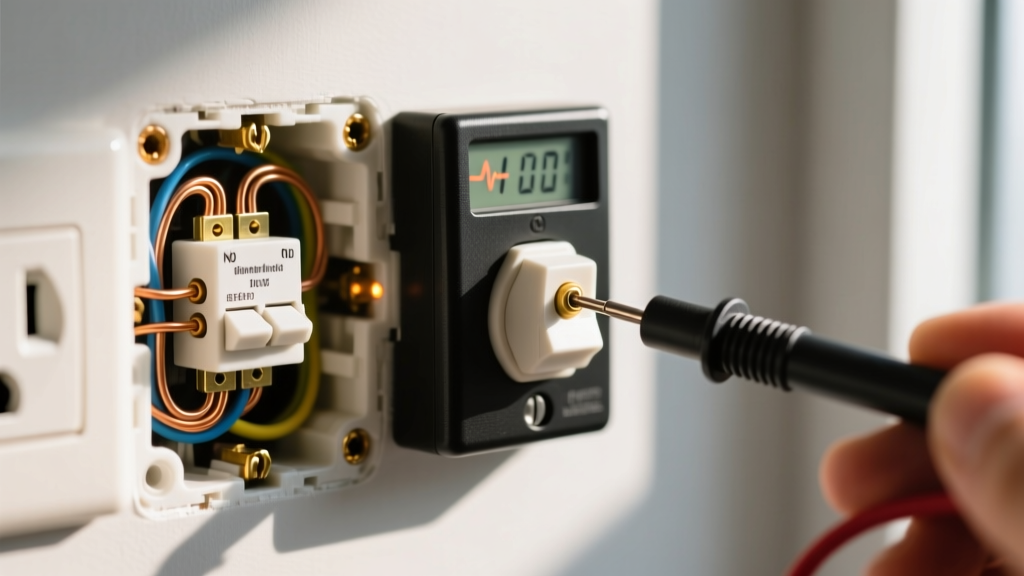
- Verify Zero Voltage: Use a non-contact voltage tester (such as the Klein Tools NCVT-3) and a digital multimeter (like the Fluke 117) to confirm the hot-to-neutral and hot-to-ground readings are exactly 0.0V.
Phase 2: Extraction and Biological Treatment
- Remove the Faceplate and Receptacle: Unscrew the device and gently pull it from the box. Do not disconnect the wires yet.
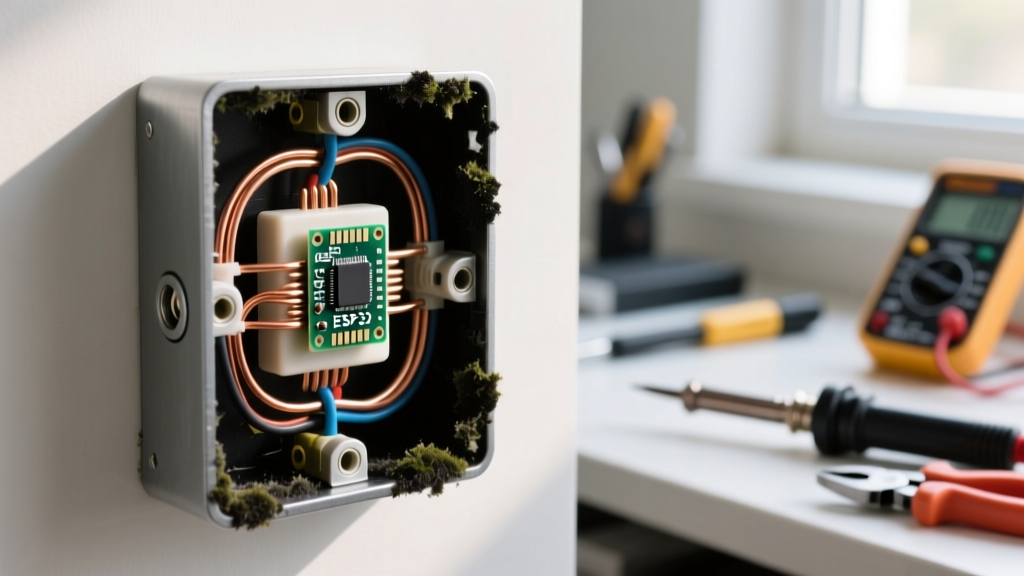
- Inspect the Box: Use a flashlight to look deep into the gang box. If the back of the drywall is black and crumbling, you must cut away the compromised drywall.
- Apply Fungicidal Encapsulant: Spray the interior of the metal/plastic box and the surrounding wall cavity with an EPA-registered mold treatment like Concrobium Mold Control. Avoid spraying liquid directly onto exposed wire nuts or bare copper. Allow it to dry completely (usually 24 hours).
Phase 3: Electrical Component Upgrade
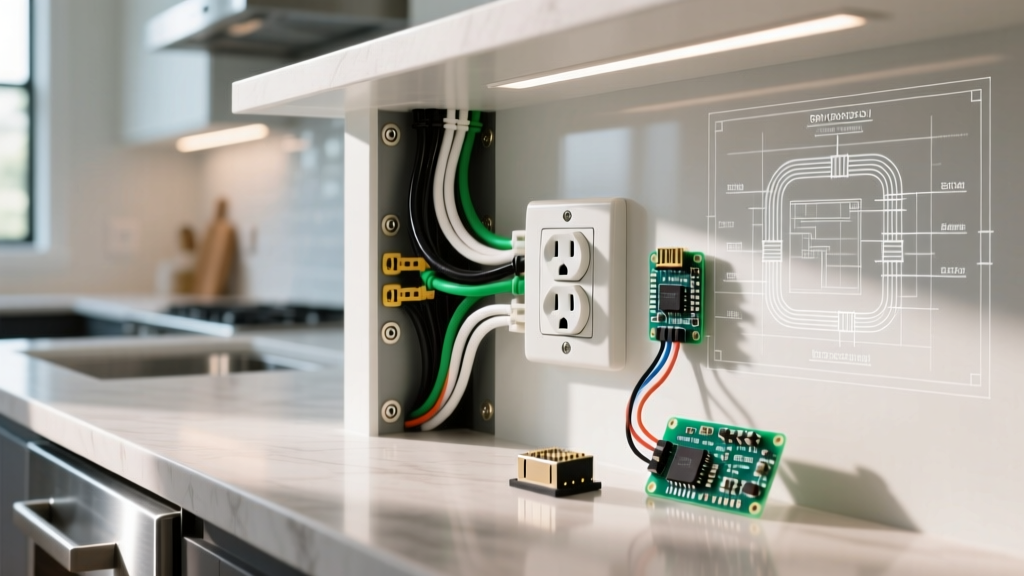
Never reinstall a mold-stained receptacle. The plastic is permanently compromised. Replace the device with a Weather-Resistant (WR) Tamper-Resistant (TR) Receptacle. Models like the Leviton 5362-W or Hubbell WR Duplex feature UV-stabilized, cold-impact-resistant thermoplastics and nickel-plated brass terminal screws that actively resist the galvanic corrosion caused by moisture.
- Disconnect the old receptacle.
- Strip back any oxidized or blackened copper wire to expose fresh, shiny metal (ensure you leave at least 3/4 inch of insulation stripped).
- Terminate the wires using the screw terminals (avoid push-in back-wire holes, which are more susceptible to moisture ingress and arcing).
- Install a foam outlet gasket (e.g., Frost King PR1) behind the faceplate to seal the thermal bridge and prevent future interior condensation.
Cost Breakdown: Remediation vs. Electrical Repair
Understanding the financial scope of repairing black mold around electrical outlet installations helps homeowners budget accurately and avoid contractor upselling. Below is a 2026 market estimate for localized remediation.
| Service / Material | Estimated Cost (USD) | Notes |
|---|---|---|
| WR/TR Receptacle (Leviton/Hubbell) | $4.50 - $8.00 | Must be marked 'WR' on the face for code compliance in damp zones. |
| Foam Insulating Gasket | $0.50 - $1.00 | Critical for stopping thermal bridging on exterior walls. |
| Licensed Electrician (Per Outlet) | $125 - $225 | Includes diagnosis, wire trimming, and WR device installation. |
| Localized Mold Remediation (Pro) | $350 - $600 | Required if mold extends beyond the immediate box into the wall cavity. |
Preventative Measures for High-Risk Zones
To ensure black mold does not return to your electrical boxes, implement these structural and electrical defenses:
- Vapor Barrier Repair: If the wall is opened during remediation, ensure a continuous 6-mil polyethylene vapor barrier is sealed around the electrical box using acoustic sealant or specialized vapor barrier putty pads.
- Seal Penetrations: Use fire-rated expanding foam (like Great Stuff Fireblock) to seal the gap between the drywall cutout and the electrical box, preventing humid room air from entering the cold wall cavity.
- Upgrade to GFCI/AFCI: If the mold was caused by a slow plumbing leak that also compromised wire insulation, upgrade the circuit breaker to a Dual-Function (AFCI/GFCI) breaker to provide immediate trip protection against both arc faults and ground faults caused by moisture.
Frequently Asked Questions (FAQ)
Can I just wipe the mold off the outlet face and keep using it?
No. Wiping the surface only removes the visible fruiting bodies of the mold. The moisture matrix and microscopic hyphae have likely already penetrated the microscopic pores of the thermoplastic face and degraded the dielectric strength. Furthermore, it does not address the corrosion occurring on the terminal screws inside the wall. The receptacle must be replaced.
Does homeowners insurance cover mold around electrical outlets?
Generally, homeowners insurance covers mold only if it is the direct result of a sudden, covered peril (e.g., a burst pipe inside the wall). If the mold is the result of long-term condensation, thermal bridging, or deferred maintenance (like failing exterior caulking), the claim will almost certainly be denied.
Is black mold around an outlet a sign of a water leak?
Not always. While a plumbing leak is a common culprit, mold on exterior wall outlets is frequently caused by condensation due to missing insulation, thermal bridging, or a compromised exterior vapor barrier. A moisture meter reading of the surrounding drywall will help differentiate between a slow leak and ambient condensation.