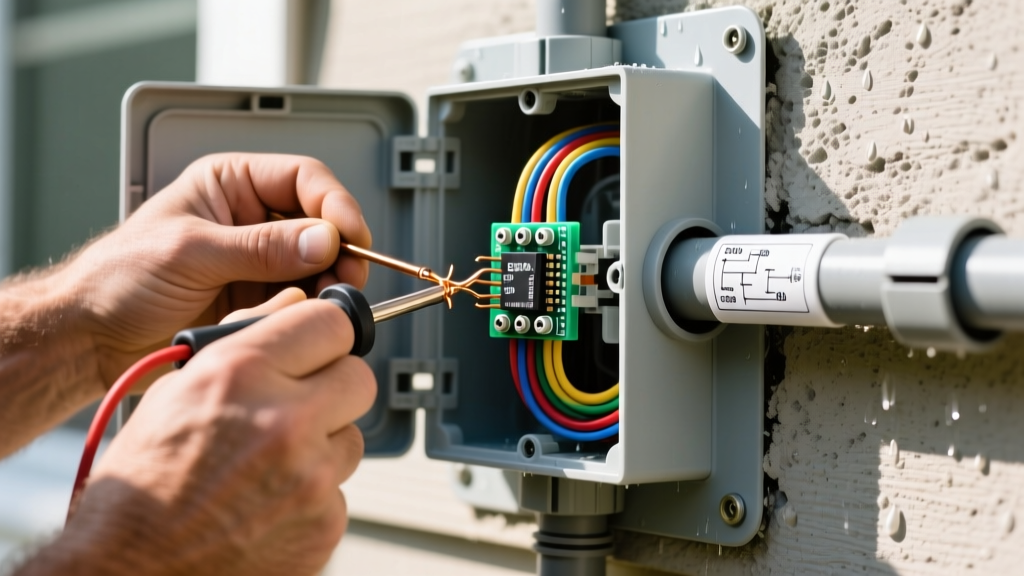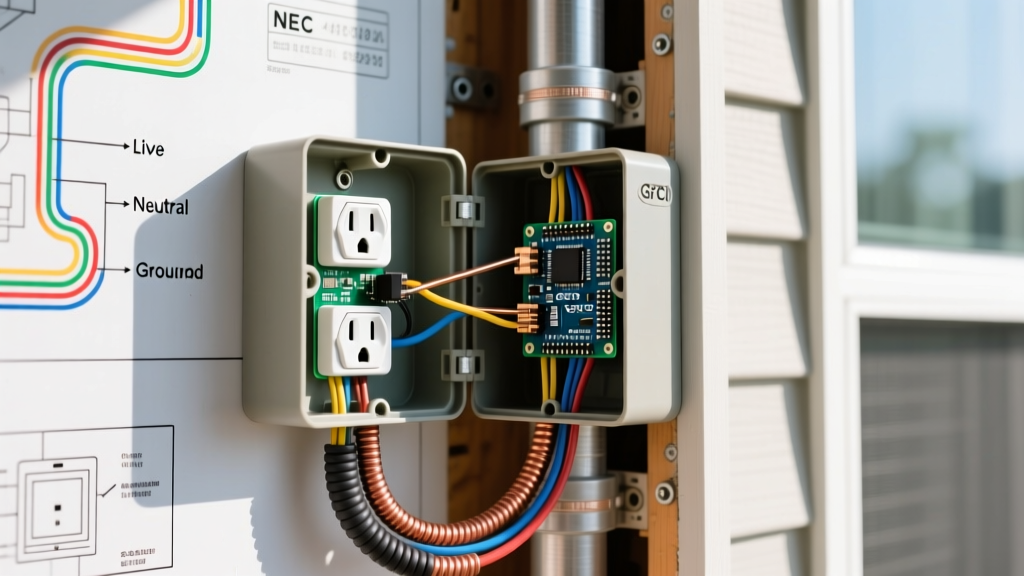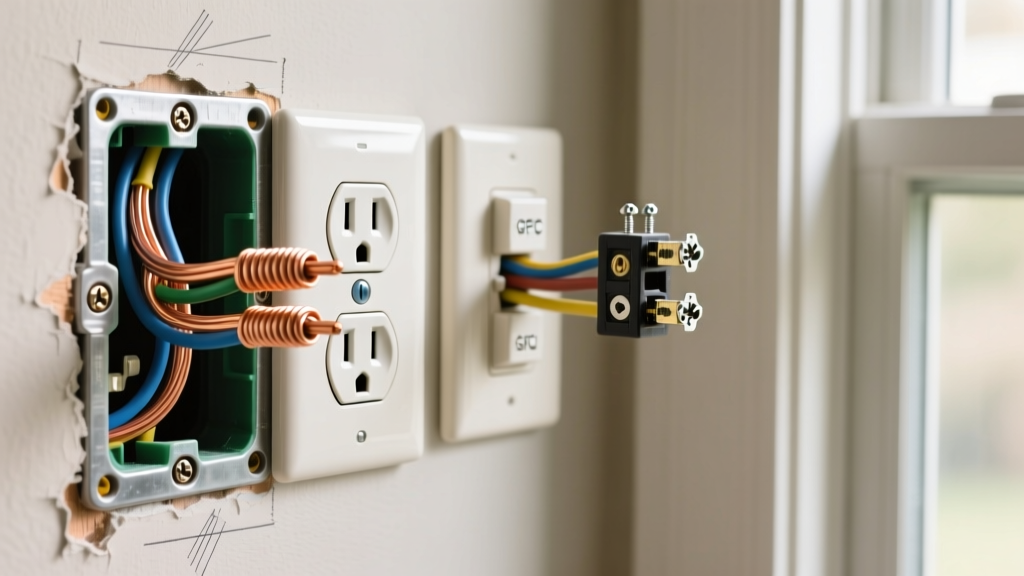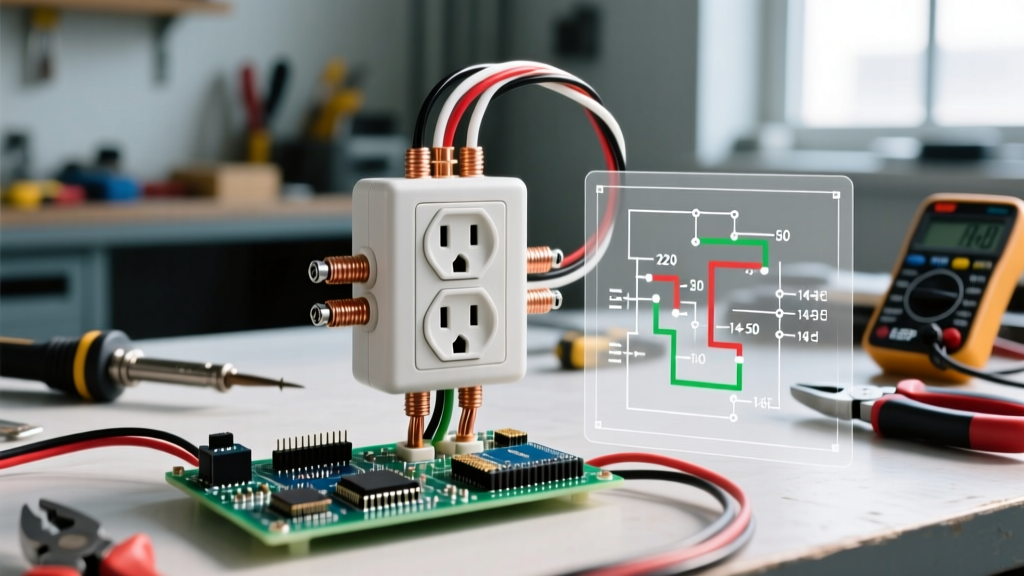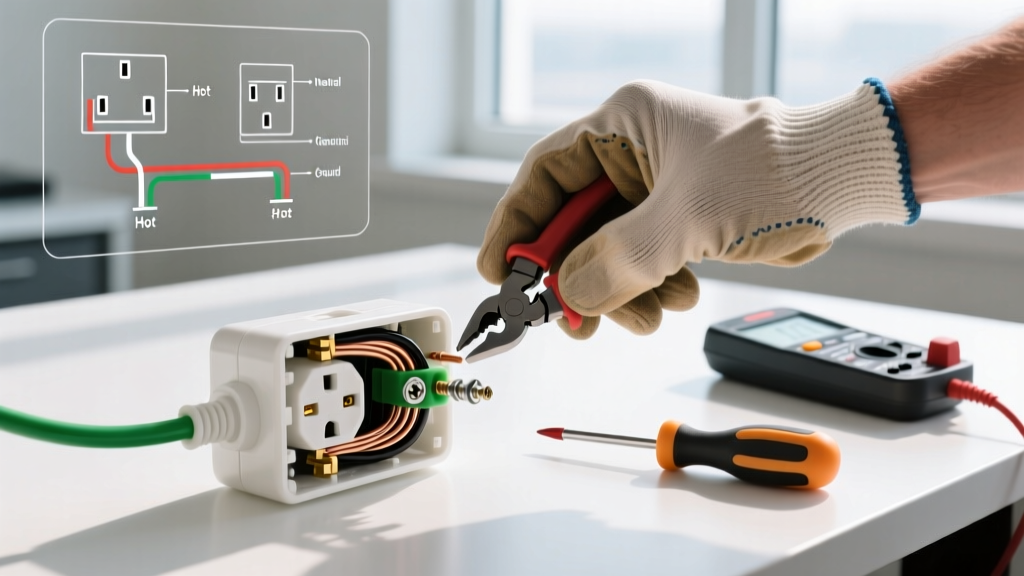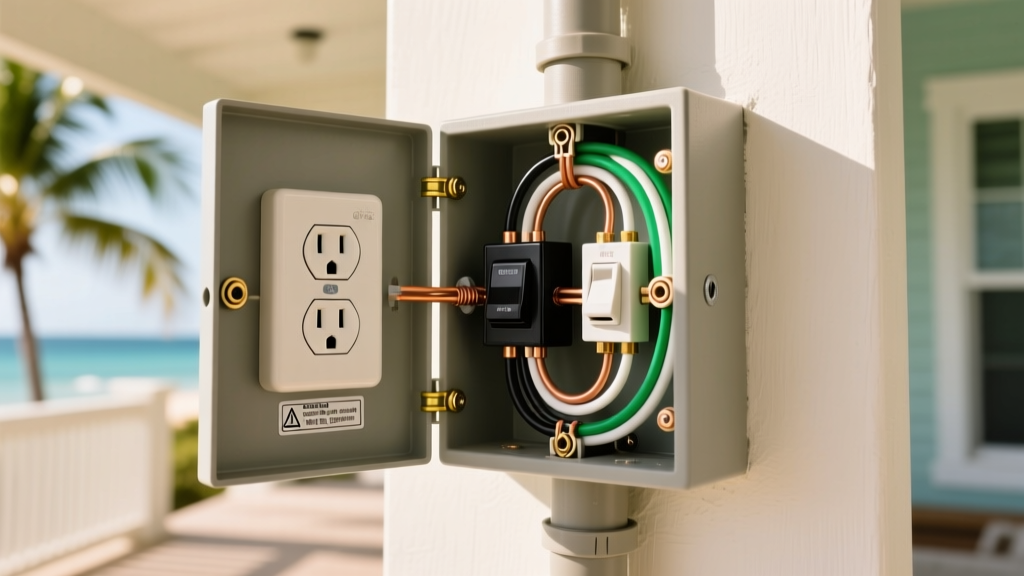

Wiring a property in the Caribbean requires more than just adapting to a different voltage; it demands a rigorous approach to environmental hazards, grid instability, and strict local building codes. While the physical dimensions of a Bahamas electrical outlet mirror those in North America, the installation methodologies, material requirements, and safety inspections are uniquely shaped by the island's tropical climate and hurricane exposure.
Whether you are a licensed contractor working in Nassau, a DIY homeowner renovating a family island property, or an expat upgrading a coastal villa, understanding the intersection of the Bahamas Electricity Corporation (BEC) standards and the National Electrical Code (NEC) is critical. This comprehensive 2026 safety and code compliance guide breaks down everything you need to know about receptacle selection, salt-air corrosion prevention, and mandatory ground-fault protection.
The Bahamas Electrical Grid: Voltage, Frequency, and Plug Types
Unlike many European or Asian destinations that require step-down transformers, the Bahamas operates on the same fundamental electrical parameters as the United States and Canada. According to the IEC World Plugs Database, the Bahamas utilizes Type A (ungrounded) and Type B (grounded) receptacles.
| Parameter | Bahamas Standard | US/Canada Standard | Compliance Note |
|---|---|---|---|
| Voltage | 120V | 120V | Appliances are directly compatible. |
| Frequency | 60Hz | 60Hz | Motorized appliances will run at correct RPMs. |
| Plug Types | Type A (NEMA 1-15) & Type B (NEMA 5-15) | Type A & Type B | Type A is obsolete for new installations; Type B is mandated. |
| Grounding | Mandatory (BEC Code) | Mandatory (NEC) | All new 15A/20A circuits require an equipment grounding conductor. |
While Type A (two-prong) outlets still exist in older Bahamian properties, the Bahamas Building Code strictly prohibits their installation in new construction or major renovations. All new Bahamas electrical outlet installations must be NEMA 5-15R (15-Amp grounded) or NEMA 5-20R (20-Amp grounded) configurations.
Bahamas Building Code & NEC Alignment
The Bahamas does not publish an entirely independent, ground-up electrical code. Instead, local building inspectors and the Bahamas Electricity Corporation (BEC) heavily adopt and enforce the US National Fire Protection Association (NFPA) 70: National Electrical Code (NEC). As of 2026, most Bahamian jurisdictions enforce standards aligned with the 2023 NEC cycle, with specific local amendments addressing wind-borne debris and water intrusion.
Inspector Insight: Bahamian building inspectors frequently reference Miami-Dade County Notice of Acceptance (NOA) standards for exterior electrical enclosures and faceplates. If a receptacle cover is not rated for high-velocity hurricane zones (HVHZ), it will likely fail inspection in coastal areas like Exuma or Eleuthera.
GFCI and AFCI Mandates for Coastal Properties
Water and electricity are a lethal combination, a risk magnified by the high humidity and driving rain of the Bahamas. NEC Article 210.8 requires Ground-Fault Circuit Interrupter (GFCI) protection for all 125V through 250V receptacles installed in damp or wet locations.
- Outdoor Receptacles: Must be GFCI protected and housed in extra-duty, in-use weatherproof covers.
- Lanais and Covered Porches: Even if fully enclosed by screens, the high humidity and wind-driven rain classify these as 'damp locations,' mandating GFCI protection.
- Kitchens and Bathrooms: Standard NEC rules apply; all countertop and basin receptacles require GFCI protection.
- AFCI Protection: Arc-Fault Circuit Interrupters are required for all 120V, single-phase, 15- and 20-ampere branch circuits supplying bedrooms, living rooms, and family areas to prevent electrical fires.
Combating Salt-Air Corrosion in Outlet Wiring
The single greatest point of failure for electrical systems in the Bahamas is galvanic and salt-air corrosion. Standard residential-grade receptacles with brass terminal screws and nickel-plated steel faceplates will degrade, pit, and fail within 3 to 5 years in a coastal Bahamian environment. This corrosion increases electrical resistance, leading to localized heating, voltage drops, and eventual arc faults.
Material Selection for Coastal Environments
To ensure longevity and pass BEC inspections, you must specify commercial-grade or weather-resistant (WR) components.
- WR-Rated Receptacles: Look for the 'WR' stamp on the yoke. Models like the Leviton 8300-W or Hubbell WR series feature nickel-plated brass contacts and corrosion-resistant yokes designed to withstand salt spray.
- Polycarbonate or Stainless Steel Faceplates: Avoid standard painted or plated steel. 316-grade stainless steel or UV-stabilized polycarbonate covers are mandatory for long-term survival.
- THWN-2 Wire Insulation: Standard THHN wire is not rated for continuous moisture exposure. THWN-2 (Thermoplastic Heat and Water-resistant Nylon-coated) is required for any conduit runs that may condense moisture or be exposed to dampness.
Step-by-Step: Wiring a Weather-Resistant Type B Receptacle
When replacing or installing a Bahamas electrical outlet in a damp location, precision and material compatibility are non-negotiable. Follow this procedure to ensure a safe, code-compliant termination.
- De-energize and Verify: Shut off the breaker at the main BEC-approved distribution panel. Use a non-contact voltage tester and a digital multimeter to verify 0V across line, neutral, and ground.
- Prepare the Conductors: Strip exactly 3/4 inch of insulation from 12 AWG THWN-2 solid copper conductors (standard for 20A circuits). Do not nick the copper.
- Address Aluminum Wiring (If Applicable): Many older Bahamian homes from the 1970s and 80s utilized aluminum branch wiring. Never terminate aluminum wire directly to a standard copper-rated receptacle. Use CO/ALR rated receptacles or pigtail the aluminum to copper using AlumiConn lug connectors and Ideal Noalox antioxidant paste to prevent galvanic oxidation.
- Terminate Using the Screw Terminals: Wrap the copper wire clockwise around the brass (line/hot) and silver (neutral) screws. Avoid using the back-stab (push-in) connections, which are prone to failure in high-humidity environments due to micro-arcing.
- Apply Torque Specifications: Use a calibrated torque screwdriver set to the manufacturer's specification (typically 12 to 16 in-lbs for standard 15A/20A receptacles). Loose connections cause thermal expansion and contraction, leading to fires.
- Secure the Yoke and Seal: Mount the WR receptacle to the box. Apply a bead of exterior-grade silicone caulk behind the top edge of the weatherproof faceplate to prevent wind-driven rain from entering the junction box.
Surge Protection & Grid Instability on the Islands
Island power grids are inherently less stable than mainland continental grids. The Bahamas Electricity Corporation (BEC) manages a complex network of diesel generators and, increasingly, solar microgrids. Voltage sags, brownouts, and transient spikes are common, particularly during the afternoon peak load or tropical storm events.
Relying solely on a $20 power strip is insufficient for protecting expensive appliances and smart home systems in the Bahamas. A layered approach to surge protection is required by modern safety best practices:
| Protection Layer | Device Type | Recommended Spec for Bahamas | Installation Point |
|---|---|---|---|
| Service Entrance | Type 1 or Type 2 SPD | 80kA to 100kA per phase | Main BEC Meter / Main Breaker Panel |
| Branch Panel | Type 2 SPD | 40kA to 50kA | Sub-panels (e.g., Guest house, AC units) |
| Point-of-Use | Type 3 Receptacle SPD | 2000+ Joules, < 15V clamping | Specific high-value appliance outlets |
Common Code Violations & Safety Failures in Island Homes
During property inspections across New Providence and the Out Islands, electrical inspectors frequently cite the following violations. Avoiding these will save you from costly rework and potential hazards.
- Missing Tamper-Resistant (TR) Receptacles: NEC 406.12 mandates that all non-locking 15A and 20A, 125V and 250V receptacles in dwelling units must be tamper-resistant. Standard open-slot receptacles are illegal in new residential builds.
- Improper Bootleg Grounds: In older properties, ungrounded two-prong outlets are sometimes illegally replaced with three-prong outlets without running a new equipment grounding conductor or installing a GFCI. This creates a lethal shock hazard.
- Overloaded 15A Circuits: Modern Bahamian villas feature high-draw appliances (multiple AC units, desalination pumps, electric ranges). Inspectors frequently find 12 AWG wire mistakenly paired with 15A breakers, or 14 AWG wire dangerously paired with 20A breakers. Always match wire gauge to breaker size (14 AWG = 15A max; 12 AWG = 20A max).
- Unsealed Conduit Runs: PVC conduit runs on exterior walls must be sealed with duct seal at the entry points to prevent salt air and moisture from migrating into the main electrical panel.
Frequently Asked Questions (FAQ)
Can I use US-purchased receptacles in the Bahamas?
Yes, physically they are identical (NEMA 5-15R). However, you must ensure you purchase commercial-grade, Weather-Resistant (WR) models. Standard residential-grade receptacles bought from big-box stores will corrode rapidly in the Bahamian salt-air environment.
Do I need a permit to replace an outlet in the Bahamas?
Like-for-like replacement of a single damaged receptacle by a homeowner generally does not require a permit. However, adding new circuits, upgrading a panel, or wiring a new addition requires a permit and a final inspection by the local building authority and BEC.
Why do my lights flicker when the AC kicks on?
This is a symptom of voltage sag, common on island grids with long feeder lines or undersized service drops. Have an electrician check the terminal torque at your main panel and consider installing a whole-home voltage regulator or Type 2 Surge Protective Device (SPD) with voltage monitoring.
For further technical specifications on receptacle dimensions and testing protocols, refer to the NEMA WD 6 Wiring Devices Standards. Always consult with a licensed Bahamian electrical contractor to ensure your specific project meets all local parish and BEC requirements.