
The Hidden Danger: Why NEC Article 680 Exists
Water and electricity are an unforgiving combination. When installing an above ground pool electrical outlet, you are not just running a standard exterior circuit; you are building a lifeline. The National Electrical Code (NEC) dedicates an entire section—Article 680—to swimming pools, fountains, and hot tubs because the risk of fatal electrocution is exponentially higher in wet environments. According to data tracked by the U.S. Consumer Product Safety Commission (CPSC), faulty pool wiring and improper grounding remain leading causes of pool-related electrical shocks.
As of the 2026 NEC adoption cycle, local inspectors are strictly enforcing GFCI (Ground Fault Circuit Interrupter) mandates and equipotential bonding grids for above-ground installations. This guide breaks down the exact code requirements, material specifications, and installation steps to ensure your pool pump and accessories are powered safely and legally.
NEC Distance Rules: The 10-Foot and 5-Foot Mandates
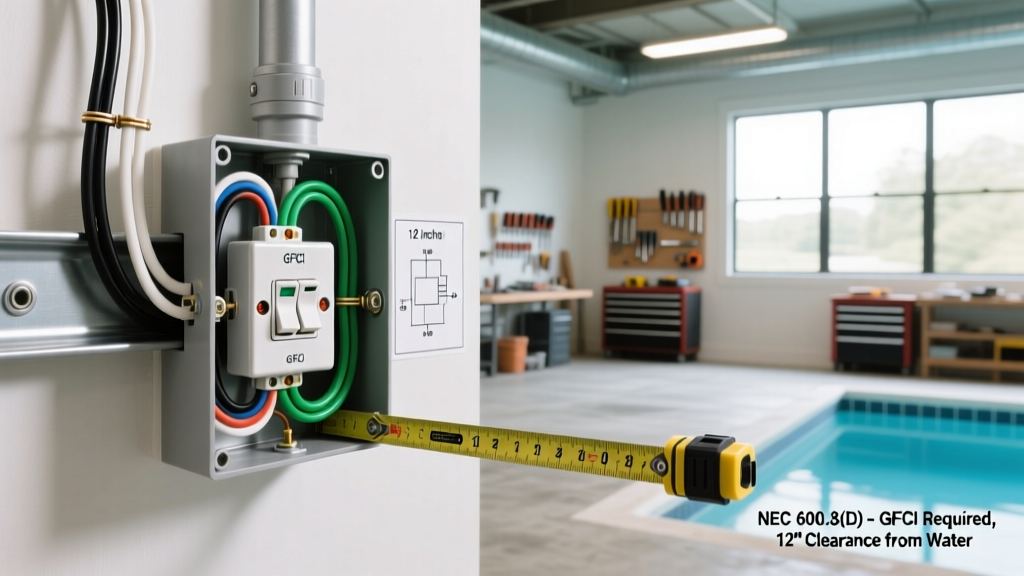
The most common reason DIY pool installations fail inspection is improper receptacle placement. The NEC strictly dictates how far an outlet must be from the water's edge. The measurement is taken horizontally from the inside wall of the pool, not the outside frame or support legs.
| Receptacle Type | Minimum Distance from Inside Pool Wall | GFCI Protection Required? | NEC Reference (2026) |
|---|---|---|---|
| General Purpose (Lights, radios, chargers) | At least 10 feet | Yes, if within 20 feet of the pool | 680.22(A)(3) |
| Pool Pump Motor (Dedicated single receptacle) | Between 5 feet and 10 feet | Yes, mandatory Class A GFCI | 680.21(A)(3) |
| Maintenance/Service (For pool vacuums/tools) | At least 10 feet | Yes, mandatory Class A GFCI | 680.22(A)(4) |
Inspector's Note: You cannot install a general-purpose outlet closer than 10 feet to the pool under any circumstances. If your yard lacks the space for a 10-foot setback, you must route the power to a distant structure or use a cord-and-plug connected pump with a GFCI-protected inline cord, though a hardwired or properly placed dedicated receptacle is always the code-preferred method.
2026 Bill of Materials (BOM) for a Code-Compliant Installation
To pass inspection, you must use outdoor-rated, corrosion-resistant components. Standard indoor receptacles and covers will fail immediately due to UV degradation and moisture ingress. Below is a professional-grade BOM for a standard 120V, 20-Amp above ground pool pump circuit.
| Component | Recommended Specification / Model | Est. 2026 Cost |
|---|---|---|
| GFCI Breaker | Square D HOM220GFIC (20A) or Siemens QF220 | $65 - $85 |
| Conduit (Buried) | 1/2-inch Schedule 40 PVC (Gray electrical grade) | $3.50 / 10ft stick |
| Conduit (Above Grade) | 1/2-inch Schedule 80 PVC (Required within 8ft of pool) | $5.00 / 10ft stick |
| Conductors | 12 AWG THWN-2 (Black, White, Green) pulled in conduit | $0.45 / ft per wire |
| Receptacle | Hubbell GF5262 (20A TR WR GFCI) or Leviton 8370-W | $35 - $45 |
| Weatherproof Cover | TayMac MX1000 Extra-Duty 'In-Use' Cover | $18 - $25 |
| Bonding Wire | #8 AWG Solid Bare Copper Wire | $1.10 / ft |
Trenching, Conduit, and Wiring Specifications
Running power from your main panel or a subpanel to the pool equipment pad requires strict adherence to burial depths and conduit fill ratios. While many DIYers attempt to use direct-burial UF-B cable, professional electricians overwhelmingly prefer individual THWN-2 conductors pulled through PVC conduit. Conduit allows for future upgrades, easier fault-finding, and superior physical protection.
Step-by-Step Wiring Sequence
- Dig the Trench: For PVC conduit containing THWN-2 wires, the NEC mandates a minimum burial depth of 18 inches. If you cross under a driveway or concrete pad, you must use rigid metal conduit (RMC) or intermediate metal conduit (IMC) buried at least 6 inches deep, or schedule 80 PVC buried at 18 inches.
- Lay the Conduit: Use sweep elbows (not sharp 90-degree plumbing elbows) to allow for easy wire pulling. Glue all underground joints with PVC cement to prevent water and root intrusion.
- Transition to Schedule 80: As the conduit emerges from the ground and approaches the pool equipment, you must transition to Schedule 80 PVC for any section that is exposed and within 8 feet of the pool edge or subject to physical damage from lawnmowers or foot traffic.
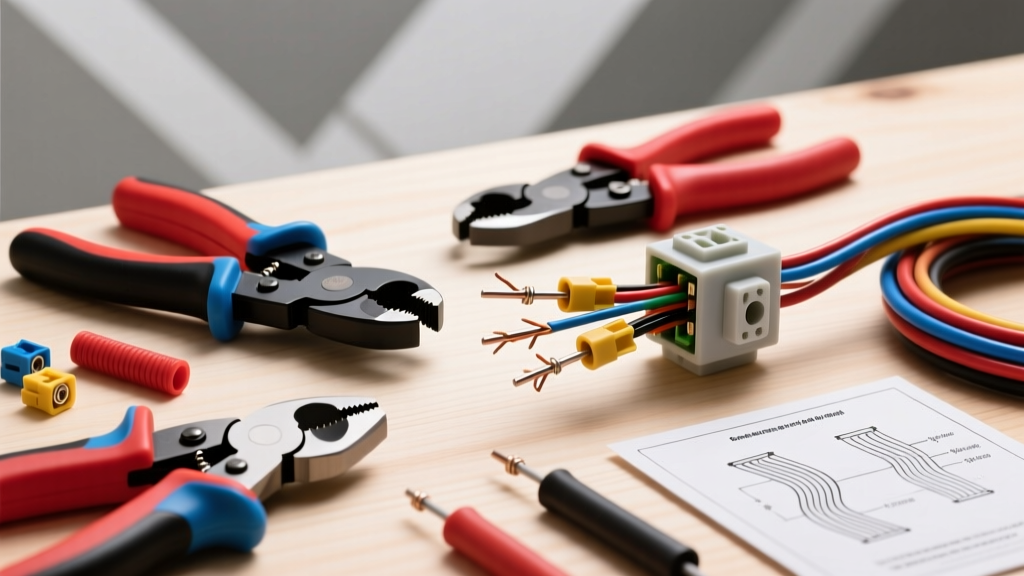
- Pull the Conductors: Use a fish tape to pull three 12 AWG THWN-2 wires (Black for Hot, White for Neutral, Green for Equipment Ground). Never use underground splices; the wire must run continuously from the panel to the receptacle.
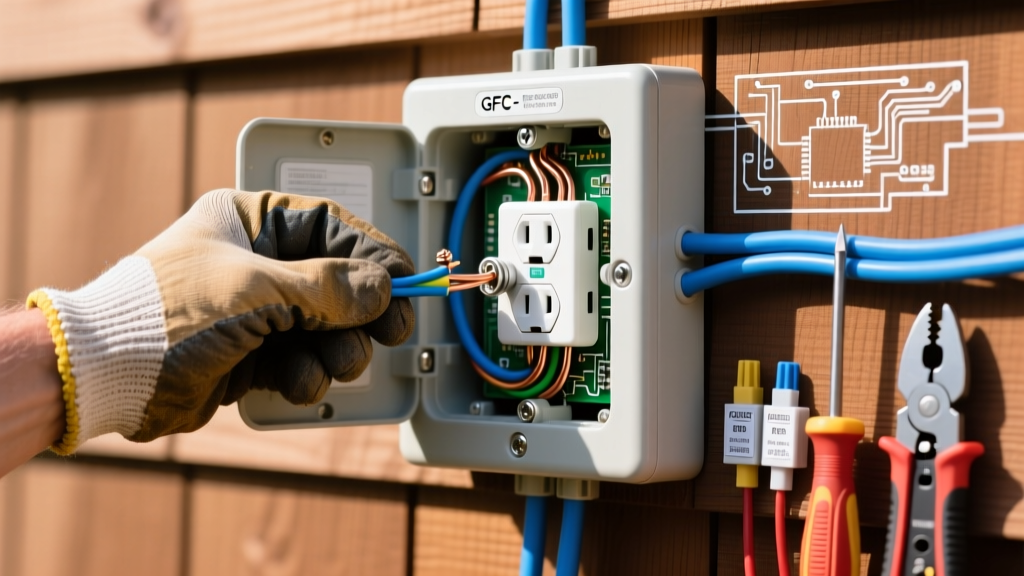
- Terminate at the Receptacle: Mount a weatherproof box to a rigid post or the equipment pad. Connect the wires to the 20A GFCI receptacle. Install the extra-duty 'in-use' cover so the pool pump plug can remain connected while fully enclosed.
The Critical Difference Between Grounding and Bonding
The most misunderstood concept in pool electrical work is the difference between grounding and equipotential bonding. Failing to bond an above-ground pool is a massive safety hazard and an automatic inspection failure.
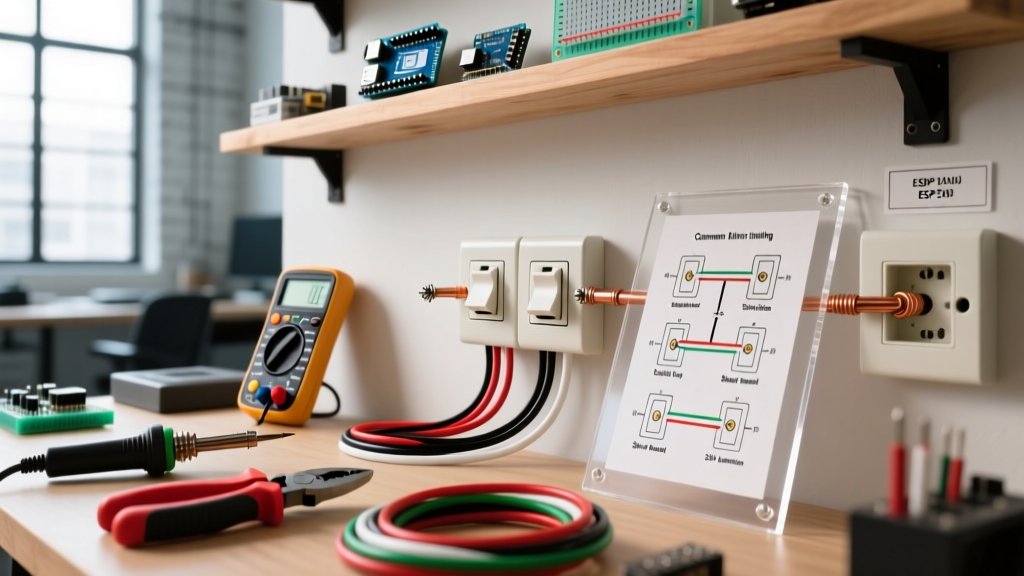
- Grounding (Equipment Grounding Conductor): This is the green wire inside your conduit. Its job is to provide a low-impedance path back to the panel to trip the breaker if a live wire touches the metal casing of the pool pump.
- Bonding (Equipotential Bonding Grid): This is the #8 AWG solid bare copper wire that connects all conductive metal parts together. This includes the metal wall of the above-ground pool, the pump motor housing, the metal ladder, and any metal fences or awnings within 3 feet of the pool. Bonding does not trip breakers; it ensures that if a voltage gradient occurs in the earth, a person touching the pool wall and the ladder simultaneously will not become the path of least resistance.
According to guidelines published by the National Fire Protection Association (NFPA), the bonding conductor must be attached to the pool wall using a listed bonding lug (such as the Polar Bond lug) and to the pump motor using the external bonding screw provided on the motor casing.
Top 5 Code Violations That Fail Inspection
Electrical inspectors see the same mistakes repeatedly during pool season. Avoid these critical violations:
- Using Indoor 'Flip' Covers: Standard weatherproof covers that only seal when the receptacle is empty are illegal for pool equipment. An 'in-use' bubble cover is mandatory.
- Extension Cords for Pumps: Running a 50-foot extension cord from a garage to a pool pump is a severe violation of NEC 400.8. Pool pumps must be plugged directly into a dedicated, properly placed receptacle.
- Missing GFCI on Lighting: Any 120V landscape lighting or low-voltage transformer located within 10 feet of the pool must also be GFCI protected.
- Improper Conduit Fill: Stuffing more than three 12 AWG wires into a 1/2-inch conduit without calculating derating factors can cause wires to overheat and melt.
- Omitting the Bonding Wire: Assuming the green ground wire inside the conduit is sufficient. The external #8 AWG solid copper bonding wire connecting the pool wall to the pump is non-negotiable.
Frequently Asked Questions
Can I use a 15-Amp receptacle for my above-ground pool pump?
Most modern above-ground pool pumps (like Hayward or Intex models) draw between 10 and 14 amps. While a 15-Amp GFCI receptacle might technically handle the load, the NEC requires that a single receptacle on an individual branch circuit must have an ampere rating not less than that of the branch circuit. Since pool equipment circuits should be 20-Amp dedicated circuits to handle motor startup surges, you must install a 20-Amp GFCI receptacle (NEMA 5-20R) and use a 20-Amp breaker.
Do I need to bond a resin or plastic above-ground pool?
If your pool is entirely made of non-conductive materials (resin walls, plastic top rails, and no metal components within 3 feet), the NEC does not strictly require an equipotential bonding grid. However, if the pool has a metal wall, a metal frame, or a stainless steel ladder that touches the water, the #8 AWG bonding wire is absolutely mandatory. When in doubt, bond it.
Is it legal to wire a pool light to the same circuit as the pump?
No. NEC Article 680 requires that underwater pool lighting fixtures be on a separate, dedicated branch circuit from the pool pump motor receptacle. This prevents a scenario where a fault in the pool light trips the GFCI, inadvertently shutting off the pool pump's filtration and chemical circulation system while swimmers are still in the water.