
The Engineering Behind 90-Degree Electrical Outlets
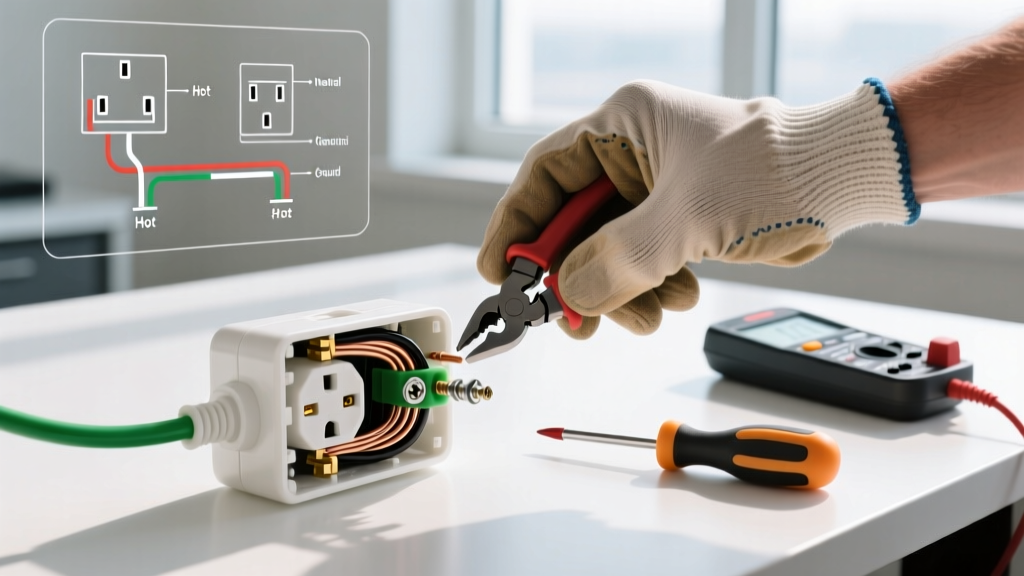
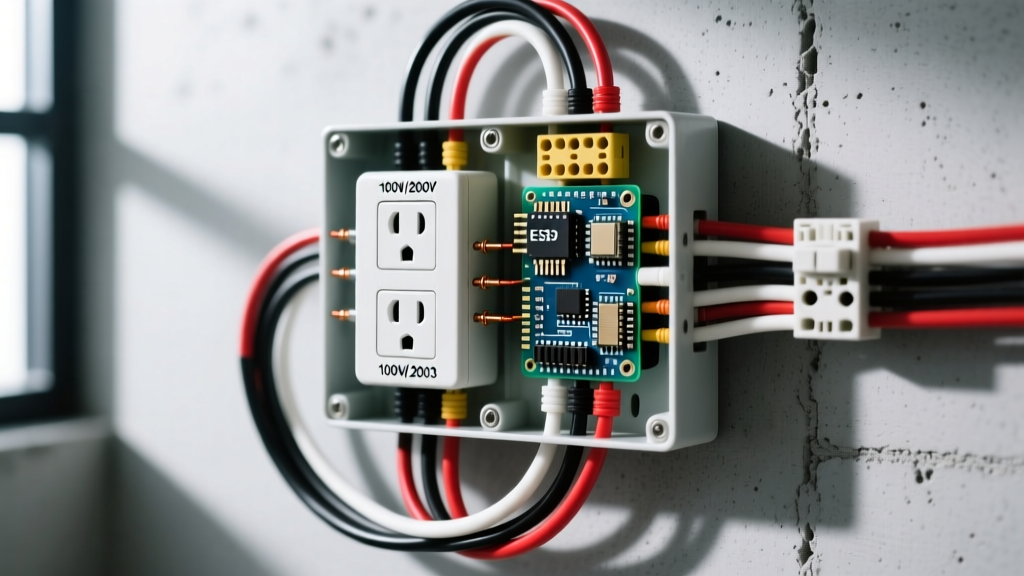
Routing power in tight, confined spaces—such as behind heavy entertainment centers, inside shallow cabinetry, or along baseboards—often requires a departure from standard straight-blade plug configurations. A 90 degree electrical outlet setup typically involves either a rotating duplex receptacle, a specialized right-angle cord cap mated to a standard NEMA 5-15R, or a dedicated right-angle industrial receptacle. While these configurations solve immediate spatial problems, they introduce unique mechanical stresses and thermal dynamics that must be managed in strict accordance with the National Electrical Code (NEC).
As of the 2023 and upcoming 2026 NEC cycles, inspectors are increasingly scrutinizing box fill calculations and torque specifications in tight-space installations. This guide provides a deep-dive, code-compliant framework for selecting, wiring, and troubleshooting 90-degree and right-angle outlet configurations safely.
Hardware Selection: Rotating vs. Right-Angle Configurations
Before pulling wire, you must distinguish between the two primary methods for achieving a 90-degree cord exit. Choosing the wrong hardware is the leading cause of premature receptacle failure in shallow box applications.
1. Rotating Duplex Receptacles (e.g., Leviton 5262-R)
Rotating receptacles feature a central faceplate that spins 360 degrees, allowing you to plug in a standard straight-blade cord and rotate the entire plug body to a 90-degree or 180-degree angle. Priced between $6.00 and $9.00, these are ideal for residential furniture clearance. However, the internal slip-ring contacts can degrade over time if subjected to heavy continuous loads (e.g., space heaters drawing 12A+), making them strictly suited for lighting, AV equipment, and low-draw electronics.
2. Right-Angle Cord Caps & Molded Plugs
For heavy appliances, medical equipment, or shop tools, utilizing a standard receptacle with a 90-degree molded right-angle plug (like the Hubbell 5266-R right-angle attachment plug) is mandatory. These maintain a solid, continuous brass blade-to-wiper contact without the mechanical vulnerability of a rotating faceplate. Industrial-grade right-angle receptacles (e.g., Hubbell 8300 series) cost upwards of $25.00 but provide the necessary strain relief for 15A and 20A continuous loads.
NEC Code Compliance: Box Fill & Shallow Box Hazards
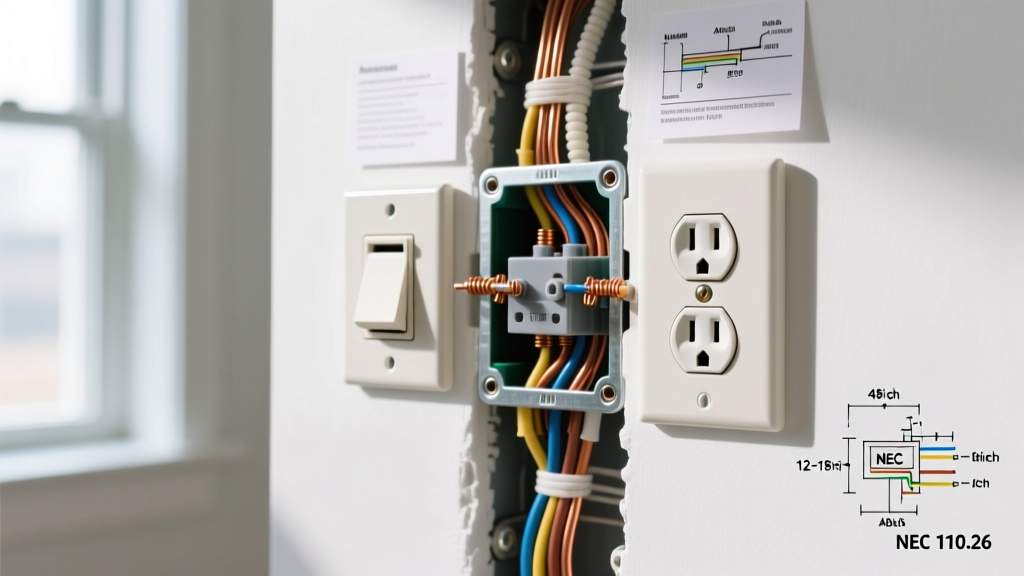
The most frequent code violation involving 90-degree outlets occurs in shallow electrical boxes. A standard right-angle plug body is exceptionally bulky, often occupying 3.5 to 5.0 cubic inches of internal box volume. If installed in a standard 18 cubic-inch single-gang box alongside multiple 12 AWG conductors, the box becomes dangerously overcrowded.
NEC Article 314.16(B) Warning: Overcrowded boxes trap heat. When a 90-degree plug forces wire insulation against sharp box edges or crimps the grounding conductor, it creates a high-resistance fault path. Always calculate box fill before installing right-angle hardware.
Box Fill Calculation Matrix (12 AWG Copper)
Under NEC Table 314.16(B), each 12 AWG wire requires 2.25 cubic inches of volume. Here is how a 90-degree plug setup impacts a standard single-gang box:
| Component | NEC Volume Allowance | Cubic Inches (12 AWG) |
|---|---|---|
| 4 Conductors (2 Line, 2 Load) | 4 x 2.25 cu in | 9.0 cu in |
| 1 Device (Receptacle) | 2 x 2.25 cu in | 4.5 cu in |
| Internal Clamps | 1 x 2.25 cu in | 2.25 cu in |
| Grounding Wires (Bonded) | 1 x 2.25 cu in | 2.25 cu in |
| Bulky 90-Degree Plug Body | Physical displacement (Est.) | ~4.0 cu in |
| Total Required Volume | ~22.0 cu in |
Expert Solution: If your existing box is only 18.0 cubic inches, you must install a box extension ring (NEC 314.22) or upgrade to a deep 22.5 cubic-inch box (e.g., Carlon B618R-UPC) to safely accommodate the physical mass of the 90-degree plug without crushing the Romex sheathing.
The "Ground Pin Up" Orientation Rule for 90-Degree Setups
When electricians rotate a standard NEMA 5-15R receptacle 90 degrees to accommodate a specific horizontal right-angle cord cap (common in hospital-grade and stage-lighting applications), a critical safety debate arises: Should the ground pin face up or down?
According to safety guidelines endorsed by the Electrical Safety Foundation International (ESFI) and standard industry best practices, when a receptacle is oriented horizontally (slots at 90 degrees), the ground pin MUST face UP.
- The Physics of Failure: If a heavy metallic object (like a fallen tool or picture frame) slides down the wall and strikes a partially exposed plug, a "ground-down" orientation allows the object to bridge the hot and neutral blades first, causing a catastrophic short circuit and arc flash.
- The Safe Path: With the ground pin facing UP, the falling object strikes the grounded prong first, safely deflecting the object or grounding any induced current before it can bridge the energized slots.
Step-by-Step Installation & Torque Compliance
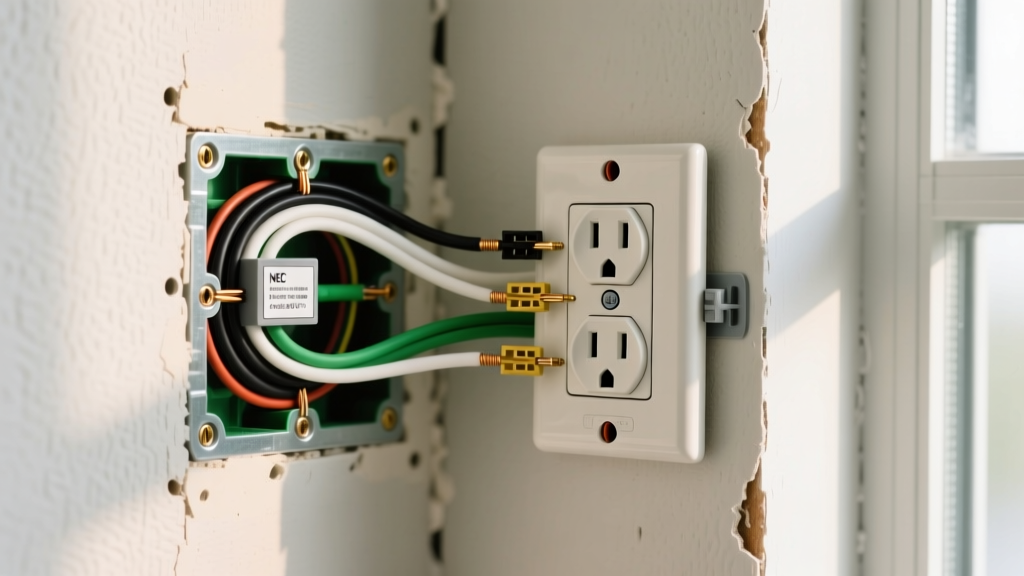
Installing a 90-degree outlet requires meticulous wire management to ensure the bulky plug can seat fully without binding the terminal screws.
- Prepare the Box: Verify your box volume exceeds 22.0 cubic inches for 12 AWG circuits with right-angle plugs. If using a metallic box, ensure the internal clamps are pushed flush to save volume.
- Strip and Pigtail: Because space is at a premium, do not loop wires directly onto the receptacle screws if it creates excessive bulk. Use Wago 221 lever nuts or short 12 AWG pigtails to keep the wire bundle compact and pushed deep into the rear corners of the box.
- Apply Anti-Oxidant Compound: For aluminum branch wiring (rare but present in older homes), apply Noalox before terminating. For copper, ensure wires are straight.
- Torque to Specification (NEC 110.14(D)): The NEC now strictly mandates that terminations be torqued to the manufacturer's specifications using a calibrated torque screwdriver. For a standard Leviton 15A/20A receptacle, this is typically 12 to 14 in-lbs. Under-torquing combined with the lateral strain of a 90-degree plug will cause micro-arcing and eventual thermal failure.
- Seat the Device: Carefully fold the wires in an accordion pattern. Push the receptacle in, ensuring no bare ground wires are touching the brass terminal screws. Secure with 6-32 machine screws, alternating top and bottom to keep the yoke level.
Common Failure Modes & Troubleshooting
Even with perfect installation, 90-degree setups are subject to unique mechanical stresses. Monitor for these specific failure modes:
1. Blade Contact Fatigue (Wiper Spread)
Because 90-degree plugs are often used in tight spaces where furniture is pushed against them, constant lateral pressure can cause the internal brass wipers of the receptacle to spread. This reduces the contact surface area, increasing electrical resistance. Diagnostic: Use an infrared thermometer after 1 hour of load; a temperature delta of more than 15°F above ambient indicates wiper fatigue. Replace with a hospital-grade receptacle (e.g., Hubbell 8300) which features high-tension nickel-plated brass contacts.
2. Cord Jacket Shearing
OSHA regulations regarding flexible cords (29 CFR 1910.305) strictly prohibit using the cord as a means of strain relief. If a 90-degree plug is jammed against a wall, the PVC jacket can shear against the sharp plastic housing of the plug cap, exposing the internal stranded copper. Always utilize right-angle plugs with integrated strain-relief grips or flexible rubber cord boots.
3. Shallow Box Grounding Faults
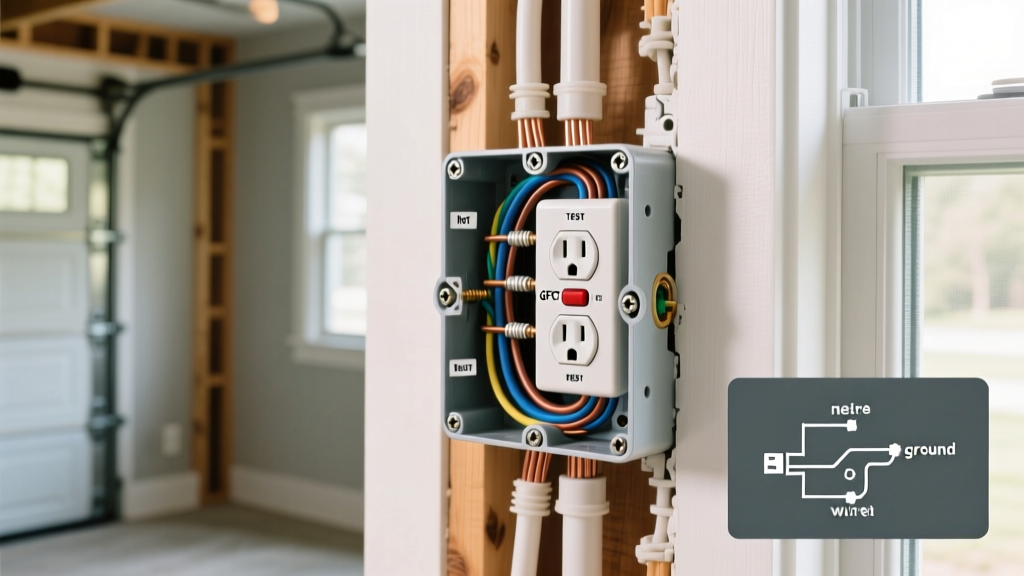
In shallow 1.5-inch pancake boxes, the bulky ground wire of a 90-degree plug is often crushed against the metal box wall. If the wire is nicked during installation, it can trip the GFCI/AFCI breaker intermittently whenever the cord is wiggled. Fix: Use a thin layer of electrical tape over the grounding screw and wire nut bundle to insulate it from the metallic box walls in tight enclosures.
Final Code Verification
Before energizing the circuit, verify compliance with the latest National Electrical Code standards published by the NFPA. Ensure that if the 90-degree outlet is within 6 feet of a water source (kitchen counters, utility sinks), it is protected by a Class A GFCI device. Furthermore, if the outlet is installed in a bedroom or living area feeding lighting or AV equipment, verify that the branch circuit is protected by a Combination Type AFCI breaker at the panel. By respecting the spatial and thermal demands of 90-degree hardware, you ensure a safe, long-lasting installation that passes inspection on the first attempt.