
The Reality of Wiring Lifespans: Metal vs. Insulation
When homeowners and real estate investors ask, 'how long does electrical wiring last?', the answer requires separating the conductor from its jacket. The copper or aluminum metal inside a wall can conduct electricity for centuries without degrading. However, the insulation and sheathing that prevent short circuits, arcing, and fires have a finite chemical lifespan. From an inspection and compliance standpoint, a wire is only as good as its insulation.
In 2026, electrical inspectors and insurance underwriters do not simply look at the age of a home; they evaluate the specific generation of wiring, its thermal rating, and how it interacts with modern high-draw appliances. According to the National Fire Protection Association (NFPA), outdated or degraded wiring remains a leading cause of residential electrical fires, prompting strict enforcement of NEC (National Electrical Code) Article 300 regarding wiring methods.
Inspector's Note on 'Grandfathered' Wiring: Many homeowners believe that if wiring was installed legally in 1960, it is 'grandfathered' and immune to code violations. While you are not forced to rewire a home simply because it is old, the moment you modify a circuit, add a receptacle, or upgrade a panel, the local Authority Having Jurisdiction (AHJ) can mandate that the entire affected circuit be brought up to current 2026 NEC standards. Furthermore, private home insurance companies can legally drop your coverage if an inspection reveals active knob-and-tube or unmitigated 1970s aluminum wiring.
Wiring Material Lifespans and Degradation Profiles
Not all wiring ages equally. The chemical composition of the insulation dictates its functional lifespan. Below is a compliance matrix used by senior inspectors to evaluate risk during 4-point insurance inspections and real estate transactions.
| Wiring Type | Era of Installation | Expected Insulation Lifespan | 2026 NEC Compliance Status |
|---|---|---|---|
| Knob-and-Tube (K&T) | 1880s – 1940s | 50-70 years (Expired) | Non-compliant for new/modified; immediate insurance flag |
| Cloth-Sheathed (BX/Romex) | 1930s – 1960s | 60-80 years | Grandfathered if perfectly intact; fails if brittle or frayed |
| Solid Aluminum (1350 Alloy) | 1965 – 1973 | 30-40 years | Hazardous; requires COPALUM or AlumiConn pigtailing |
| Copper NM-B (Modern Romex) | 1970s – Present | 70-100+ years | Fully compliant (90°C rated THHN/THWN-2) |
| THHN/THWN-2 in Conduit | 1970s – Present | 100+ years | Fully compliant; standard for commercial and remodels |
Critical Failure Modes That Trigger Inspection Red Flags
During a rough-in or final inspection, we are not just looking for code violations; we are looking for the physical symptoms of insulation failure. Here are the primary degradation mechanisms that dictate when wiring must be replaced.
1. Insulation Embrittlement and Plasticizer Loss
Early rubber and cloth-insulated wires relied on chemical plasticizers to remain flexible. Over 60 to 80 years, these plasticizers evaporate. The insulation turns brittle and literally flakes off when the wire is bent inside a junction box. If an inspector opens a panel and sees cracked, blackened cloth sheathing crumbling at the knockouts, the circuit will fail inspection. The only remedy is a complete circuit rewire, which costs between $15 and $25 per linear foot in 2026.
2. The Aluminum Creep and Oxidation Crisis
Between 1965 and 1973, a nationwide copper shortage led builders to use solid 1350-series aluminum wire for 15A and 20A branch circuits. According to the U.S. Consumer Product Safety Commission (CPSC), this older alloy expands and contracts at a different rate than brass or copper terminals. This causes 'thermal creep,' leading to loose connections, oxidation, and intense heat at receptacles.
The Compliance Fix: You do not necessarily have to tear out the walls. Inspectors will approve two specific remediation methods:
- COPALUM Crimping: A proprietary Tyco/TE Connectivity tool that cold-welds a copper pigtail to the aluminum wire. Requires a certified specialist.
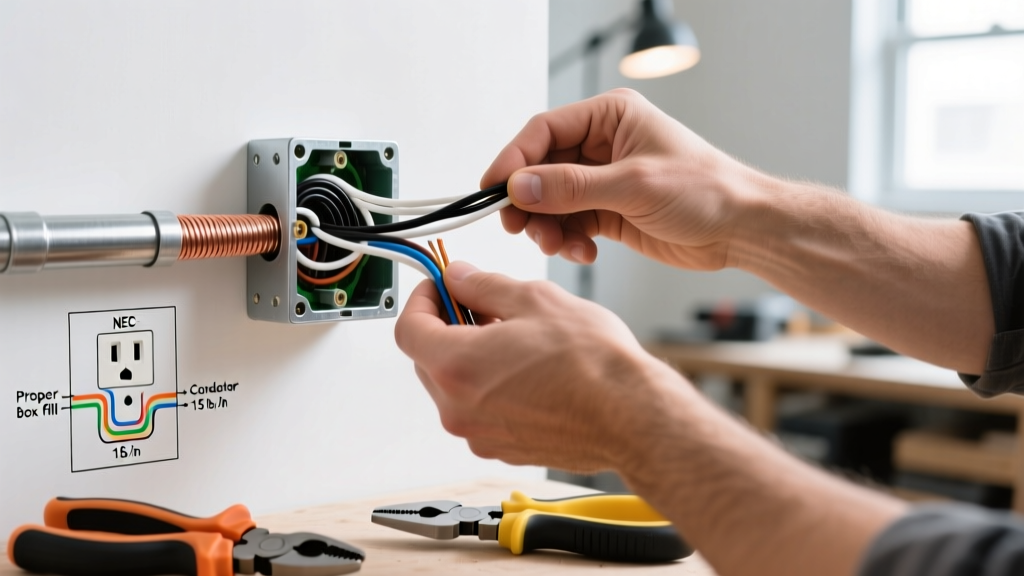
- AlumiConn Connectors: A lug-style, setscrew connector approved for DIY and standard electrician use, provided torque screwdrivers are used to exact manufacturer specifications (typically 15-20 in-lbs).
3. Thermal Overload Degradation on Modern NM-B
Modern Copper NM-B (commonly known by the brand name Romex) features a 90°C rated THHN/THWN-2 inner insulation. While the copper will outlive the house, the 90°C jacket can degrade prematurely if subjected to chronic overloading or if routed too close to high-heat sources (like uninsulated recessed lighting cans or HVAC flues). If an inspector uses a thermal imaging camera and detects junction boxes operating above 65°C under normal load, it indicates undersized wiring or loose neutrals, both of which are immediate fail conditions.
When Insurance and Code Demand a Full Rewire
Understanding how long electrical wiring lasts is only half the battle; knowing when the financial and legal risk demands replacement is crucial for compliance. In 2026, you must plan for a full or partial rewire under the following conditions:
- Active Knob-and-Tube: Most major insurers (e.g., State Farm, Allstate) will refuse to underwrite a new policy on a home with active K&T wiring. It lacks a grounding conductor and its insulation is universally past its expiration date.
- Ungrounded 2-Prong Circuits: While the NEC allows existing ungrounded circuits to remain if untouched, replacing a single receptacle on that circuit requires you to either run a new ground wire back to the panel or install a GFCI breaker/receptacle with a 'No Equipment Ground' sticker. For high-value electronics or home offices, inspectors highly recommend pulling new grounded NM-B.
- Federal Pacific (FPE) or Zinsco Panels: While this is a panel issue rather than a wire issue, replacing these notoriously dangerous panels often reveals that the existing wire insulation has been heat-damaged by decades of breaker failures, necessitating circuit replacements.
2026 Cost Expectations for Wiring Remediation
Compliance comes at a price. If your inspection reveals that your wiring has exceeded its safe lifespan, here is what you can expect to pay licensed, bonded electricians in the current market:
- Whole-House Rewire (2,000 sq ft): $12,000 to $22,000 (Includes drywall cutting, fishing, and patching prep).
- Aluminum Pigtailing (Per Device): $85 to $150 per receptacle/switch using AlumiConn or COPALUM.
- Knob-and-Tube Abatement (Per Circuit): $800 to $1,500 per dedicated circuit run.
- 200-Amp Panel Upgrade: $2,800 to $4,500 (Often required when updating old wiring to handle modern AFCI/GFCI breaker requirements).
Frequently Asked Questions (FAQ)
Does the NEC require me to replace wiring just because it is old?
No. The NEC is generally not retroactive. If your 1950s cloth-sheathed wiring is intact, unmodified, and properly fused, it is legally permitted to remain. However, local AHJs and private insurance companies can impose stricter rules, often requiring replacement during a sale or major renovation.
How can I tell if my NM-B wiring is nearing the end of its lifespan?
Modern NM-B installed after 1984 rarely fails due to age alone. It fails due to physical damage (nail punctures, rodent chewing) or thermal damage. If the outer PVC jacket is discolored (brownish-yellow) near the panel or junction boxes, it has been subjected to excessive heat and should be evaluated by a licensed electrician.
Is exposed wiring in a basement or attic safe over the long term?
Only if installed correctly. According to the Electrical Safety Foundation International (ESFI), NM-B cable is not rated for wet locations or physical damage. In unfinished basements, wiring must be run through bored holes in joists or protected by running boards. Exposed cables stapled to the face of studs are a code violation and highly susceptible to mechanical degradation over time.