
The Commercial Standard: Why Copper Is Used in Electrical Wiring
When electrical engineers and commercial contractors design power distribution systems for office complexes, manufacturing facilities, and retail spaces, material selection is paramount. While alternative conductors exist for specific high-voltage transmission applications, copper is used in electrical wiring for over 85% of commercial branch circuits and feeder installations. This preference is not merely a matter of tradition; it is driven by copper’s superior metallurgical properties, long-term reliability, and strict compliance with the National Electrical Code (NEC).
In commercial environments, electrical systems are subjected to continuous heavy loads, harmonic distortions from Variable Frequency Drives (VFDs), and stringent uptime requirements. A failure in a commercial feeder can result in tens of thousands of dollars in lost productivity. This guide explores the technical, financial, and code-compliant reasons why copper remains the undisputed king of commercial electrical infrastructure in 2026.
The Metallurgical Baseline: Conductivity and Thermal Stability
To understand why copper is used in electrical wiring, one must look at the International Annealed Copper Standard (IACS). Copper is the baseline reference for electrical conductivity, rated at 100% IACS. By comparison, the most common alternative, aluminum, sits at approximately 61% IACS. This fundamental difference dictates the physical footprint of commercial raceways.
Expert Insight: Because aluminum has lower conductivity, an aluminum conductor must be sized roughly two AWG (American Wire Gauge) sizes larger than a copper conductor to carry the exact same ampacity. In commercial conduit runs where space is at a premium, upsizing to aluminum often requires larger conduit diameters, offsetting the initial material savings.
Beyond raw conductivity, copper exhibits exceptional thermal stability and tensile strength. According to the Copper Development Association, copper's high melting point (1,984°F / 1,085°C) and low coefficient of thermal expansion mean it withstands the extreme heat cycles generated by commercial HVAC systems and heavy machinery without degrading or loosening at termination points.
Stranded vs. Solid Copper in Commercial Raceways
While solid copper wire (typically 12 AWG and 10 AWG) is common in residential and light commercial branch circuits, larger commercial feeders rely heavily on stranded copper. Stranded copper offers superior flexibility, reducing pull tension during installation. The NEC limits pull tension to 0.008 pounds per circular mil of conductor cross-section. Stranded copper navigates the sweeping bends of commercial EMT (Electrical Metallic Tubing) and rigid metal conduit far more easily than solid wire, reducing the risk of insulation damage during pulls.
Commercial Insulation Types: THHN/THWN-2 vs. XHHW-2
Knowing that copper is used in electrical wiring is only half the battle; selecting the correct insulation for the commercial environment is equally critical. The two dominant copper wire types in commercial construction are THHN/THWN-2 and XHHW-2.
| Property | THHN/THWN-2 | XHHW-2 |
|---|---|---|
| Insulation Material | PVC with Nylon Jacket | Cross-Linked Polyethylene (XLPE) |
| Max Temperature | 90°C (Dry & Wet) | 90°C (Dry & Wet) |
| Outer Diameter | Larger (due to nylon jacket) | Smaller (allows more wires per conduit) |
| Best Commercial Use | Standard dry indoor conduit runs | Wet locations, tight bends, VFD cables |
| Abrasion Resistance | Excellent (Nylon jacket) | Very Good (XLPE is tough but less slick) |
Pro-Tip for 2026: Many commercial contractors are shifting toward XHHW-2 copper for main feeders. Because XHHW-2 lacks the bulky nylon outer jacket of THHN, it has a smaller overall diameter. This allows electricians to pull more conductors into the same size conduit, maximizing conduit fill capacities outlined in NEC Chapter 9, Table 1.
Navigating NEC Codes for Commercial Copper Installations
The National Fire Protection Association (NFPA) outlines strict guidelines for conductor sizing and termination. When working with copper, commercial electricians must adhere to two critical NEC articles:
- NEC Article 310 (Conductors for General Wiring): Dictates ampacity tables. While copper wire insulation is rated for 90°C, the ampacity used for sizing overcurrent protection is often limited by the termination temperature ratings of the equipment.
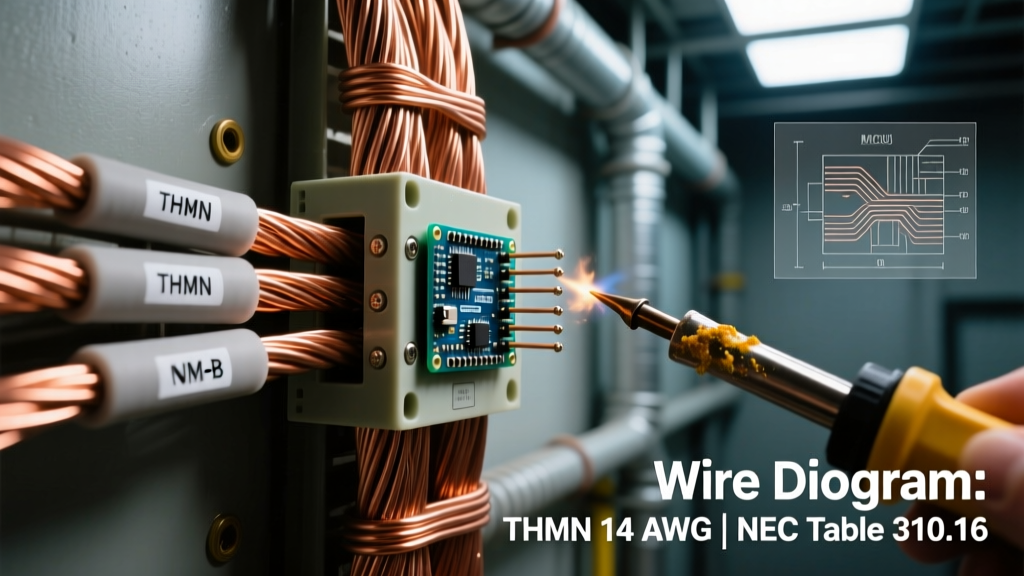
- NEC Article 110.14(C) (Temperature Limitations): Most commercial breakers, panelboards, and disconnect switches are rated for 75°C terminations. Therefore, even if you pull 90°C rated copper THHN, you must size the wire based on the 75°C column of NEC Table 310.16 to ensure the termination point does not overheat.
- NEC Article 110.14(D) (Tightening Torque): Commercial copper terminations must be tightened to the manufacturer’s specified inch-pound torque values using a calibrated torque screwdriver or torque wrench. Hand-tightening is a code violation and a primary cause of commercial electrical fires.
Termination Failures: Where Commercial Jobs Fail
One of the primary reasons copper is used in electrical wiring over aluminum in commercial branch circuits is its resistance to thermal creep and galvanic corrosion.
Thermal Creep and Cold Flow
When electrical loads cycle on and off, conductors heat up and cool down. Aluminum expands and contracts at a significantly higher rate than copper and is prone to "creep"—a slow, permanent deformation under pressure. Over time, aluminum wires can creep away from the mechanical pressure of a lug, creating a high-resistance connection that generates immense heat. Copper, by contrast, maintains its structural integrity under lug pressure, ensuring a permanent, low-resistance connection that complies with NEMA termination standards.
Galvanic Corrosion
If copper conductors are landed on aluminum busbars or lugs without proper preparation, galvanic corrosion occurs. The dissimilar metals, combined with ambient moisture, create a weak battery effect that oxidizes the connection. In commercial panels, copper conductors must be terminated on tinned copper busbars or use specifically rated Al/Cu bimetallic lugs coated with an antioxidant compound (such as Noalox) to prevent this degradation.
Real-World Commercial Pricing (2026 Market Estimates)
While copper is more expensive upfront than aluminum, the total installed cost (factoring in labor, conduit sizing, and termination hardware) often narrows the gap. Below are estimated 2026 market prices for bare copper wire per 1,000-foot spool from major manufacturers like Southwire and Cerrowire:
- 12 AWG THHN/THWN-2 (Solid): $115 - $135 per 1,000 ft
- 10 AWG THHN/THWN-2 (Solid): $180 - $210 per 1,000 ft
- 4 AWG XHHW-2 (Stranded): $1,950 - $2,200 per 1,000 ft
- 2 AWG XHHW-2 (Stranded): $3,100 - $3,500 per 1,000 ft
- 500 kcmil THHN (Stranded): $14,500 - $16,200 per 1,000 ft
Note: Prices fluctuate based on the London Metal Exchange (LME) copper spot market and regional distributor markups.
Frequently Asked Questions
-
Can I use copper wire in a commercial building with aluminum busbars?
Yes, but you must use lugs specifically rated for both Aluminum and Copper (Al/Cu rated). Additionally, applying an oxide-inhibiting compound to the copper conductor before termination is highly recommended to prevent galvanic corrosion over the lifespan of the commercial facility.
-
Why is stranded copper preferred for commercial VFD (Variable Frequency Drive) cables?
VFDs generate high-frequency harmonic currents that travel along the outer surface of the conductor—a phenomenon known as the "skin effect." Stranded copper provides a vastly larger combined surface area than solid copper, reducing impedance and minimizing the heat generated by these high-frequency harmonics in commercial HVAC systems.
-
Does the NEC require copper for all commercial branch circuits?
No, the NEC does not mandate copper exclusively. However, NEC Article 310.106(A) generally restricts solid aluminum conductors smaller than 8 AWG. Because most commercial branch circuits are 12 AWG or 10 AWG, copper is practically mandated by default for these smaller circuits, while aluminum becomes an option only for larger feeders (typically 1/0 AWG and above).
Final Thoughts for Commercial Contractors
Understanding exactly why copper is used in electrical wiring allows commercial electricians and project managers to make informed decisions that prioritize safety, longevity, and code compliance. While the initial material cost of copper is higher, its unmatched conductivity, resistance to thermal creep, and ease of termination make it the most cost-effective and reliable choice for commercial electrical infrastructure over a 40-year building lifecycle.