
Understanding the Core Kinds of Electrical Wiring for Residential Use
When planning a home remodel, basement finish, or outdoor addition, selecting the correct wire type is the most critical decision you will make. The National Electrical Code (NEC) mandates specific insulation types, jackets, and installation methods based on environmental conditions like moisture, physical damage, and temperature. Using the wrong cable can lead to degraded insulation, short circuits, or catastrophic electrical fires. According to the National Fire Protection Association (NFPA), electrical failures or malfunctions are a leading cause of home fires, making code-compliant material selection non-negotiable.
As a DIYer or homeowner managing a contractor, you must understand the practical differences between the most common residential cables. This guide breaks down the specific kinds of electrical wiring used in modern home projects, complete with 2026 pricing benchmarks, installation parameters, and NEC code traps to avoid.
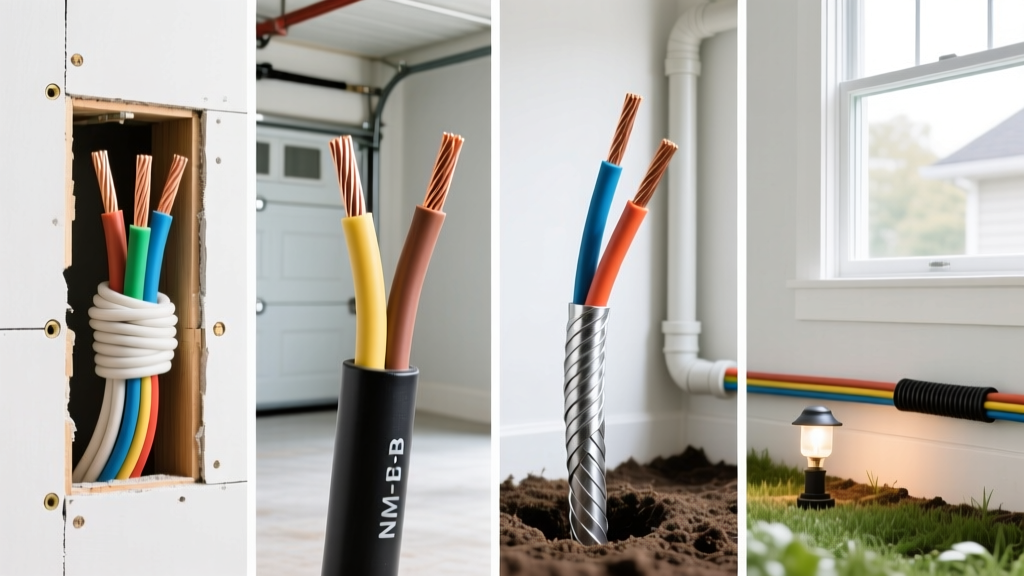
Quick Comparison Matrix: Residential Wire Types
| Wire Type | Jacket / Insulation | Primary Application | Avg. Cost (12 AWG, 2026) |
|---|---|---|---|
| NM-B (Romex) | PVC Jacket, Paper wrap, THHN inner | Interior drywall, standard branch circuits | $0.65 - $0.85 / ft |
| THHN / THWN-2 | Nylon-coated PVC (Individual conductors) | Inside conduit (EMT, PVC), long pulls | $0.30 - $0.45 / ft |
| UF-B | Solid, moisture-resistant PVC (No paper) | Direct burial, outdoor damp locations | $1.10 - $1.40 / ft |
| MC (Metal-Clad) | Interlocked aluminum armor, THHN inner | Exposed basement walls, physical protection | $1.50 - $1.90 / ft |
NM-B Cable: The Indoor Workhorse
Non-Metallic Sheathed Cable, universally known by the brand name Romex, is the standard for interior residential wiring. It consists of two or more insulated conductors, a bare copper ground wire, and a paper slip-sheet wrapped in an outer PVC jacket. The paper reduces friction, allowing the wires to be pulled easily through the jacket during manufacturing and making it easier to strip.
Gauge, Color Coding, and Circuit Limits
NM-B is color-coded by gauge for quick visual inspection on the job site:
- White Jacket (14 AWG): Rated for 15-amp circuits. Used primarily for lighting circuits and low-draw receptacles in living rooms and bedrooms.
- Yellow Jacket (12 AWG): Rated for 20-amp circuits. The mandatory standard for kitchen, bathroom, and garage receptacles, as well as high-draw appliances.
- Orange Jacket (10 AWG): Rated for 30-amp circuits. Typically used for dedicated 240V appliances like electric dryers or heavy-duty window AC units.
Installation Specifics: NEC Article 334.30 requires NM-B cable to be secured within 8 inches of every electrical box and at intervals not exceeding 4.5 feet. When drilling through framing lumber, maintain a minimum 1.25-inch clearance from the edge of the stud to prevent drywall screws from piercing the cable. If this clearance cannot be met, you must install a steel nail plate over the stud.
THHN / THWN-2: Conduit and Custom Runs
THHN (Thermoplastic High Heat-resistant Nylon-coated) and THWN-2 (Thermoplastic Heat and Water-resistant Nylon-coated) are individual conductors rather than pre-assembled cables. Almost all modern wire manufactured is dual-rated THHN/THWN-2. These wires must be installed inside a raceway, such as EMT (Electrical Metallic Tubing), Schedule 40 PVC, or flexible metal conduit. They are never permitted to be run exposed or stapled directly to framing.
When to Choose THHN Over NM-B
While NM-B is faster for standard wall cavities, THHN is superior for complex routing. If you are running power to a detached garage or a subpanel where local code mandates exterior conduit, THHN is your only option. Furthermore, pulling individual THHN wires through conduit generates significantly less heat than bundling NM-B cables, which is critical for high-amperage subpanel feeds.
Conduit Fill and Derating Factors
A common DIY mistake is overstuffing conduit. According to NEC Chapter 9, Table 1, conduit fill is limited to 40% when installing three or more conductors. For example, a standard 3/4-inch EMT conduit can safely hold a maximum of nine 12 AWG THHN wires. If you exceed three current-carrying conductors in a single raceway, you must apply ampacity derating factors (NEC Table 310.15(C)(1)). If you bundle four to six 12 AWG wires (normally rated for 25A at 90°C), their allowable ampacity drops to 80%, meaning they can only safely carry 20A. Always calculate derating before pulling long, multi-circuit conduit runs.
UF-B Cable: Moisture and Earth Protection
Underground Feeder (UF-B) cable looks similar to NM-B but features a solid, UV-resistant, and moisture-proof PVC jacket that encapsulates the conductors entirely. There is no paper slip-sheet inside UF-B. This solid jacket allows the cable to withstand direct soil contact and continuous dampness without degrading.
Burial Depths and Trenching Requirements
UF-B is heavily regulated by NEC Table 300.5 regarding burial depths to prevent accidental severing from shovels or landscaping equipment:
- Standard Direct Burial: Requires a minimum trench depth of 24 inches.
- GFCI-Protected Residential Branch Circuits (120V, 20A or less): Minimum depth reduced to 12 inches.
- Under Concrete Slabs: Minimum depth of 4 inches.
Pro Tip: Always lay brightly colored, non-adhesive "Caution: Buried Electric Line Below" warning tape exactly 12 inches above the UF-B cable in the trench. When someone digs in the future, they will hit the warning tape before their shovel strikes the live cable. The U.S. Department of Energy strongly recommends mapping and marking all underground utilities before backfilling trenches.
MC Cable: Armor for Physical Protection
Metal-Clad (MC) cable features an interlocked aluminum or steel armor jacket surrounding standard THHN conductors and a ground wire. In residential settings, MC cable is primarily used in unfinished basements, garages, or utility rooms where cables might be run along the surface of masonry walls or exposed framing where physical damage is a risk.
Grounding and Connector Nuances
Standard residential MC cable includes an insulated green grounding conductor alongside the bare aluminum armor. While the armor itself is listed as a grounding path by the manufacturer, the NEC requires you to use the internal green wire for equipment grounding. When terminating MC cable, you must use specific MC anti-short bushings (often called "redheads") to protect the wire insulation from the sharp, cut edges of the metal armor. Furthermore, only use connectors specifically listed and UL-rated for MC cable; standard NM-B Romex connectors will not securely grip the metal armor and will fail inspection.
Critical Edge Cases and Code Traps for DIYers
Understanding the kinds of electrical wiring is only half the battle; knowing how modern code interacts with these materials is where DIYers often fail inspections.
AFCI and GFCI Integration
Modern NEC editions require Arc-Fault Circuit Interrupter (AFCI) protection for nearly all 120V, 15A and 20A interior living spaces, and Ground-Fault Circuit Interrupter (GFCI) protection for all damp locations, kitchens, bathrooms, and garages. When running NM-B or MC cable to these areas, ensure your panel has adequate neutral bar space, as AFCI/GFCI breakers require a direct connection to the panel's neutral bus via a pigtail wire. Crowded neutral bars are a primary cause of failed rough-in inspections.
Temperature Ratings at Termination Points
While THHN wire inside NM-B or MC cable is rated for 90°C, NEC 110.14(C) dictates that the final ampacity of the circuit is limited by the lowest temperature rating of any connected terminal. Most standard residential breakers and receptacles are rated for 75°C, and some older devices are only rated for 60°C. Therefore, even though 12 AWG THHN has a 90°C ampacity of 30A, you must size the overcurrent protection based on its 60°C/75°C rating, which caps it at 20A. Never upsell a breaker based on the 90°C column of NEC Table 310.16.
Safety Warning: The Electrical Safety Foundation International (ESFI) advises that while DIY wiring is legal in many jurisdictions for primary residences, all work must be permitted and inspected. Never attempt to upgrade a main service panel or alter utility-owned metering equipment; these tasks require licensed professionals and carry lethal arc-flash risks.
Final Thoughts on Material Selection
Choosing the right kind of electrical wiring dictates the longevity, safety, and inspectability of your home project. Stick to NM-B for standard interior framing, utilize THHN in conduit for exterior and subpanel feeds, rely on UF-B for direct burial landscaping circuits, and deploy MC cable wherever physical abrasion is a threat. Always verify your local municipality's amendments to the NEC, as some local inspectors have strict preferences regarding staple types, conduit fill limits, and specific manufacturer approvals.