
The Hidden Hazard: Why Asbestos Was Used in Electrical Wiring
When troubleshooting electrical faults in homes and commercial buildings constructed before the 1980s, electricians and DIYers frequently encounter legacy wiring materials that pose severe health risks. Asbestos was heavily utilized in electrical wiring insulation due to its exceptional dielectric strength, thermal resistance, and fire-retardant properties. Unlike modern thermoplastic insulations (such as THHN or XHHW), asbestos does not melt or degrade easily under high-heat conditions, making it the premier choice for high-amperage circuits, service entrance cables, and appliance wiring from the 1920s through the late 1970s.
However, when this insulation ages, dries out, or is disturbed during panel upgrades or circuit troubleshooting, it can release microscopic fibrils into the air. Inhalation of these fibers is directly linked to mesothelioma, asbestosis, and lung cancer. According to the Environmental Protection Agency (EPA), asbestos-containing materials (ACMs) in homes are generally safe if left undisturbed, but electrical troubleshooting inherently involves pulling, bending, and stripping wires—actions that immediately compromise the material's integrity.
Visual Troubleshooting: How to Spot Asbestos Wire Insulation
Identifying asbestos in electrical wiring requires a careful, non-invasive visual inspection. Because asbestos fibers are microscopic, you cannot confirm its presence with the naked eye, but you can identify the carrier materials that historically contained it. When opening a legacy junction box or main service panel, look for the following visual and tactile indicators:
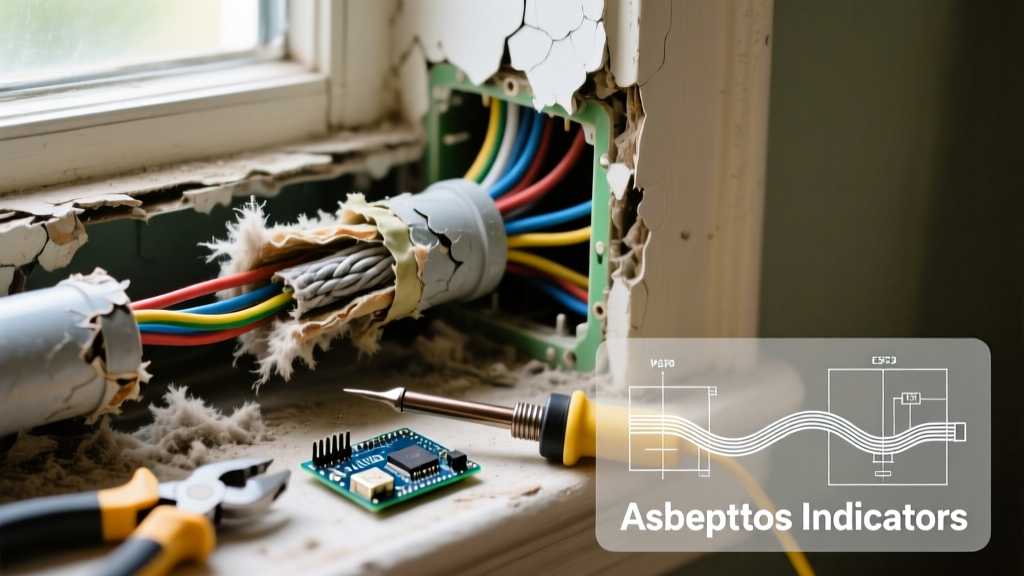
- Woven Fabric Braids: Unlike smooth modern vinyl, asbestos wire often features a tightly woven, cloth-like outer braid. This braid may be white, grey, black (if treated with tar or asphalt), or even dyed in faded primary colors for phase identification.
- Stiffness and Brittleness: While modern cloth-covered wire (like modern fabric-covered fixture wire) is flexible, vintage asbestos-insulated wire becomes extremely stiff and brittle over time. Bending it often results in a distinct cracking sound or visible flaking.
- Chalky Residue: If the wire has been rubbed against a wooden joist or the inside of a metal conduit, it may leave a white, chalky dust. This is a massive red flag for friable asbestos degradation.
- Varnished Cambric Layers: Beneath the outer braid, you may find layers of varnished cambric (a cotton fabric coated in insulating varnish) interleaved with thin, paper-like asbestos wraps used as thermal barriers.
CRITICAL SAFETY DIRECTIVE: Never use a wire stripper, abrasive pad, or even your fingernail to test the brittleness of suspected asbestos wiring. The Occupational Safety and Health Administration (OSHA) mandates that any material suspected of containing asbestos must be treated as Presumed Asbestos Containing Material (PACM) until laboratory testing proves otherwise.
Common Asbestos Wiring Configurations in Pre-1980 Homes
To effectively troubleshoot a legacy electrical system, you must understand the specific wire types that were manufactured with asbestos. Below is a diagnostic matrix comparing historical asbestos wiring with its modern equivalent.
| Legacy Wire Type | Era of Use | Visual Characteristics | Modern Equivalent (2026 Standard) |
|---|---|---|---|
| AIAC (Asbestos Insulated Asbestos Covered) | 1930s - 1970s | Heavy, thick woven grey/white braid; extremely stiff; used in high-heat zones. | THHN/THWN-2 (90°C rated) in metal conduit |
| AAA (Asbestos, Asbestos, Asbestos) | 1920s - 1950s | Triple-layered asbestos paper and braid; often found in early knob-and-tube upgrades. | NM-B (Romex) or XHHW-2 |
| VCL (Varnished Cambric Loomed) | 1940s - 1970s | Black or colored tarred braid over varnished cotton; often contains an inner asbestos wrap. | MTW (Machine Tool Wire) or THHN |
| Service Entrance (SE) Cable | Pre-1980 | Large, flat, grey/black braided outer jacket; inner phase wires wrapped in asbestos paper. | Modern SER (Service Entrance Round) cable |
The Friability Factor: Assessing Immediate Risk
In asbestos troubleshooting, the most critical concept is friability. Friable ACMs can be crumbled, pulverized, or reduced to powder by hand pressure, releasing fibers into the ambient air. Non-friable ACMs have the asbestos tightly bound in a matrix (like vinyl asbestos floor tiles) and only pose a risk if aggressively sanded, cut, or burned.
Electrical wiring insulation occupies a dangerous middle ground. While the tar-impregnated outer braids of some SE cables are initially non-friable, decades of thermal cycling (heating and cooling from electrical loads) cause the binding agents to evaporate and degrade. By 2026, almost all original asbestos wire insulation found in residential panels has transitioned to a highly friable state. If you observe spalling (flaking off of the outer layer) or exposed inner paper wraps at the point where the wire enters a circuit breaker, the wire is actively shedding fibers and requires immediate containment.
Step-by-Step Testing and Verification Protocol
If you are troubleshooting a dead circuit and suspect the wiring contains asbestos, halt all physical manipulation of the wire immediately. Follow this standardized verification protocol:
- Isolate the Area: Turn off the main breaker if it is safe to do so without disturbing the suspected wire. Close all doors to the room and shut off any HVAC systems to prevent cross-contamination of airborne fibers.
- Engage an AHERA-Certified Inspector: Do not attempt DIY sampling. Hire an inspector accredited under the Asbestos Hazard Emergency Response Act (AHERA). In 2026, a standard residential asbestos inspection and sampling visit typically costs between $350 and $600.
- Laboratory Analysis (PLM/TEM): The inspector will safely extract a micro-sample using HEPA-filtered vacuum containment and wetting agents. The sample is sent to an NVLAP-accredited laboratory for Polarized Light Microscopy (PLM) or Transmission Electron Microscopy (TEM) analysis. PLM testing usually costs $40 to $80 per sample and yields results in 24 to 48 hours.
- Review the Bulk Sample Report: The lab report will specify the exact percentage of chrysotile, amosite, or crocidolite asbestos present. Under EPA regulations, any material containing >1% asbestos is classified as regulated ACM.
Remediation Strategies: Encapsulation vs. Full Abatement
Once asbestos in electrical wiring is confirmed, you must decide how to proceed with your electrical upgrade or repair. The Consumer Product Safety Commission (CPSC) strongly advises against DIY removal. You have two professional remediation pathways:
1. Encapsulation (The Cost-Effective Route)
If the wiring is intact but you need to secure it within a panel or junction box, licensed abatement professionals can apply a penetrating or bridging encapsulant. This is a specialized, fire-rated polymeric mastic that binds the friable fibers together and creates a flexible, non-permeable shell.
2026 Cost Estimate: $8 to $15 per linear foot. This is ideal for service entrance cables that are difficult to replace without upgrading the entire utility drop.
2. Full Abatement and Rewiring (The Permanent Solution)
If the wiring is heavily degraded, or if you are upgrading a 60-amp legacy panel to a modern 200-amp service, the asbestos wire must be completely removed. This requires a licensed abatement crew to build a negative-air polyethylene containment chamber around the work area. Electricians can only enter the chamber to disconnect and remove the wires while wearing full Tyvek suits and P100 respirators.
2026 Cost Estimate: $2,500 to $6,500+ for a standard residential panel and branch circuit abatement, excluding the cost of the new electrical materials and labor.
Critical Safety Directives for DIYers and Electricians
Troubleshooting electrical systems is inherently dangerous; adding an invisible carcinogen to the mix requires a paradigm shift in safety protocols. Standard dust masks, surgical masks, and even N95 respirators are completely ineffective against asbestos fibers, which are small enough to bypass the filtration media and lodge deep in the lung tissue.
If you are an electrician working in pre-1980 construction, your firm must maintain an OSHA-compliant asbestos awareness program. Always carry a pump sprayer filled with amended water (water mixed with a few drops of surfactant/dish soap) to lightly mist suspected ACMs if they are accidentally disturbed, which suppresses airborne dust. Never use a standard shop-vac to clean up wire clippings or insulation dust; only HEPA-certified vacuums designed for hazardous materials are legally permitted for this task. By respecting the material and relying on certified testing and abatement, you can safely navigate the hidden hazards of legacy electrical systems.