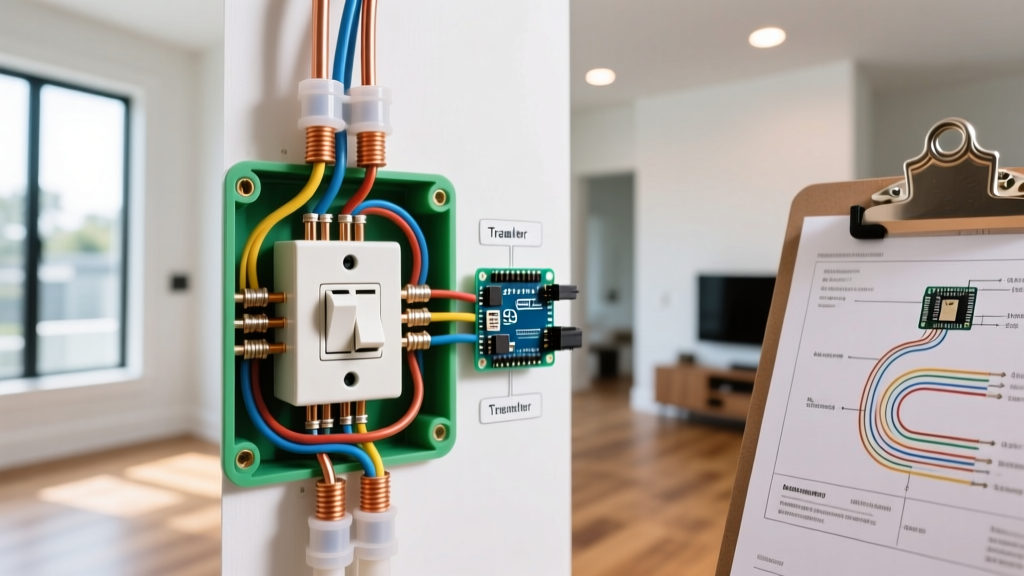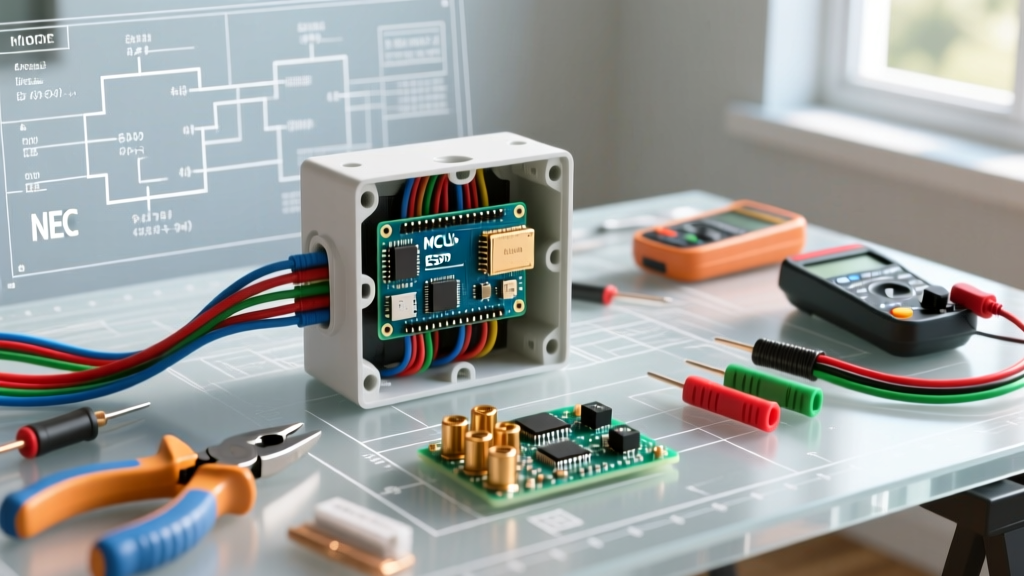

The Scope of 70 Electrical Wiring Types in Modern Diagnostics
While the National Electrical Code (NEC) categorizes wiring methods by specific articles, field technicians, estimators, and master electricians often refer to the '70 electrical wiring types' as a comprehensive shorthand for the vast matrix of UL-listed power, data, fire alarm, and specialty conductors available in modern supply houses. From standard 14 AWG NM-B (Romex) to specialized 500 kcmil Mineral-Insulated (MI) cables, troubleshooting this massive spectrum requires moving beyond simple continuity checks with a basic multimeter.
In 2026, with the integration of higher-density Power over Ethernet (PoE Type 4), increased harmonic loads from EV chargers, and stricter arc-fault requirements, diagnosing faults across these 70 electrical wiring types demands a systematic approach. This guide provides a deep-dive diagnostic framework, exact testing thresholds, and equipment recommendations to isolate failures across the primary wire families.
Diagnostic Framework: Categorizing the 70 Types
To troubleshoot effectively, we must group the 70 electrical wiring types into five primary families based on their dielectric properties, physical shielding, and intended voltage classes. Each family exhibits unique failure modes.
| Wire Family | Common Types Included | Primary Failure Mode | Diagnostic Tool | Pass/Fail Threshold |
|---|---|---|---|---|
| Thermoplastic Single | THHN, THWN-2, TW | Insulation abrasion, chemical breakdown | Insulation Resistance Tester (Megger) | >100 MΩ at 500V DC |
| Thermoset Single | XHHW-2, RHW, USE-2 | Heat degradation, neutral overloading | Infrared Camera / Clamp Meter | <15°C delta vs. ambient |
| Armored / Metal-Clad | MC, AC (BX), TECK90 | Ground fault, armor fatigue/break | Low-Z Micro-Ohmmeter | <0.5 Ω end-to-end |
| Nonmetallic Sheathed | NM-B, UF-B, NMC | Rodent damage, moisture ingress (UF) | TDR (Time Domain Reflectometer) | Impedance spike locates fault |
| Data / Low-Voltage | Cat6A, FPL, Fiber, Coax | Alien Crosstalk (AXT), attenuation | Certifier (e.g., Fluke DSX-8000) | Pass TIA-568.2-D Limits |
Deep-Dive Troubleshooting by Wire Family
1. Single Conductors: THHN vs. XHHW-2
Single conductors make up a massive portion of the 70 electrical wiring types found in commercial conduit runs. A common troubleshooting scenario involves a 480V 3-phase feeder tripping a ground-fault protection (GFPE) breaker.
- THHN/THWN-2: The nylon outer jacket of THHN is highly susceptible to chemical degradation when exposed to certain solvents or prolonged wet environments if the 'W' rating is compromised. If you are troubleshooting a tripped feeder in a damp location, isolate the phase and apply 500V DC using a Megger MIT485/2. A reading that drops below 50 MΩ over a 60-second period indicates moisture ingress or carbon tracking through the degraded nylon.
- XHHW-2: This cross-linked polyethylene (XLPE) thermoset wire lacks the nylon jacket but offers superior heat resistance. However, in 2026, with the proliferation of non-linear loads (like Level 3 DC fast chargers), XHHW-2 neutrals often overheat due to triplen harmonics. If an XHHW-2 neutral is melting while phase conductors are cool, use a Fluke 435-II Power Quality Analyzer to measure Total Harmonic Distortion (THD). If neutral current exceeds 100% of phase current, the wiring method is inadequate for the harmonic load, requiring upsizing per NFPA 70 (NEC) Article 310.15.
2. Armored and Metal-Clad Cables (MC and AC)
Troubleshooting ground faults in armored cables requires understanding the physical differences between MC and AC, which represent two distinct categories among the 70 electrical wiring types.
The AC Cable Armor Grounding Fallacy: Type AC cable relies on the spiral steel armor and an internal aluminum bonding strip to serve as the equipment grounding conductor (EGC). A common mistake is using a standard digital multimeter (DMM) to check armor continuity. A standard DMM might show continuity due to capacitive coupling or surface oxidation, even if the mechanical connection is broken.
Actionable Fix: Use a low-resistance ohmmeter or the low-Z function on a Fluke 87V Industrial Multimeter. The resistance from the furthest outlet box back to the panelboard must read less than 0.5 ohms. If it reads higher, the internal bonding strip has separated, or the anti-short bushings were installed improperly, cutting into the bonding strip. You must pull the cable and replace it, or install a supplemental green EGC wire if local AHJ (Authority Having Jurisdiction) permits.
3. Mineral-Insulated (MI) Cable & High-Temp Specialty
MI cable is the gold standard for critical life safety circuits (fire pumps, emergency egress lighting). The copper sheath is impervious to fire, but the termination seals are a notorious failure point. If a fire alarm control panel (FACP) shows a ground fault on an MI circuit, 95% of the time, the fault is at the termination pot.
Expert Diagnostic Tip: When troubleshooting MI cable, never use a standard high-voltage megger (e.g., 1000V) on a newly potted termination. The potting compound requires 24 to 48 hours to fully cure. Applying high voltage too early will puncture the uncured seal, permanently destroying the termination and forcing a complete rebuild of the pot.
4. Low-Voltage and Data (Cat6A, FPL, Fiber)
The data and fire alarm categories account for nearly 25 of the 70 electrical wiring types. In modern smart buildings, troubleshooting Cat6A cables running 100W PoE (Type 4) requires addressing thermal issues. When bundled tightly, the center conductors heat up, increasing insertion loss and causing packet drops.
Troubleshooting Alien Crosstalk (AXT): If a network link fails to negotiate 10GBASE-T, standard wire-mapping won't show the issue. You must test for Alien Crosstalk—interference from adjacent cables in the same tray. Using a certifier like the Fluke DSX-8000 (which retails around $13,500 in 2026), run an AX Talk test. If it fails, the physical remedy is to unbundled the cables, maintain a 2-inch separation from parallel power runs, or replace the shielded F/UTP cable if the shield drain wire was improperly terminated at the keystone jack.
For fire alarm circuits (FPL, FPLR, FPLP), a ground fault is often caused by a staple driven too deeply into the drywall, piercing the PVC jacket and touching the copper. A TDR (Time Domain Reflectometer) will send a pulse down the line and reflect off the short, giving you the exact distance (in feet) to the staple, saving hours of visual inspection.
Essential Testing Equipment for 2026
To properly troubleshoot across the 70 electrical wiring types, technicians must invest in calibrated, purpose-built diagnostic tools. Relying on a basic $20 voltage tester is not only ineffective but violates OSHA electrical safety standards for lockout/tagout verification.
- Insulation Resistance Tester (Megger MIT485/2): Essential for testing THHN, XHHW, and MI cables. Costs approximately $1,800. Allows for stepped voltage testing to identify micro-fractures in insulation.
- Power Quality Analyzer (Fluke 435-II): Mandatory for troubleshooting harmonic overloads on thermoset wires and neutral-to-ground voltage issues. Retails near $6,500.
- Micro-Ohmmeter: Required for verifying the integrity of AC cable armor and busway joints. Ensures the EGC path can handle fault current without melting.
- Cable Certifier (Fluke DSX-8000): The industry standard for Cat6A and Cat8 troubleshooting, verifying bandwidth up to 2 GHz and mapping alien crosstalk.
Safety and Code Compliance
Before connecting any diagnostic equipment to the 70 electrical wiring types outlined above, technicians must adhere to strict safety protocols. Always perform a 'live-dead-live' test using a Category IV rated voltage detector before touching exposed conductors. Furthermore, when replacing damaged wiring, ensure the new wire type matches the original's temperature and wet-location ratings. Substituting a 75°C rated wire in a terminal lug rated for 90°C (or vice versa) violates NEC 110.14(C) and can lead to catastrophic thermal failure at the termination point.
By understanding the specific dielectric, mechanical, and thermal properties of these wire families, electricians can transition from guesswork to precision diagnostics, ensuring the safety and longevity of modern electrical infrastructure.
For further reading on proper wire-mapping and data cable troubleshooting techniques, refer to the Fluke Networks Knowledge Base on Copper Testing.