
The Inspector's Perspective: Why Copper Dominates Branch Circuits
When an electrical inspector opens a residential or commercial panel, the first thing they evaluate is the conductor material and the integrity of the terminations. While aluminum has its place in heavy feeder and service entrance applications, copper remains the undisputed king of branch circuit wiring. Many homeowners and junior contractors search online for why copper used for electrical wiring without realizing the complex metallurgical, thermal, and code-compliance reasons behind this industry standard.
From a strict National Electrical Code (NEC) compliance standpoint, the preference for copper is not merely about conductivity; it is about long-term termination stability, fire prevention, and the physical limitations of standard termination devices. In 2026, with the widespread adoption of the latest NEC torque requirements and arc-fault protection standards, understanding the physical properties of copper versus alternative metals is critical for passing rough-in and final inspections.
Metallurgy and Thermal Creep: The Hidden Fire Hazard
To understand why copper is mandated or heavily preferred in branch wiring, we must examine how different metals react to thermal cycling. Every time a circuit is loaded (e.g., running a microwave or space heater), the wire heats up and expands. When the load is removed, it cools and contracts.
Aluminum has a significantly higher coefficient of thermal expansion than copper. Over years of heating and cooling cycles, aluminum wire can physically deform under the pressure of a screw terminal—a phenomenon known as thermal creep or cold flow. As the wire creeps, the termination loosens. A loose connection increases electrical resistance, which generates excessive heat, leading to oxidation, arcing, and ultimately, electrical fires. Copper’s superior tensile strength and lower thermal expansion rate mean it maintains termination torque over decades, satisfying the strict safety margins demanded by inspectors.
| Property | Copper (Cu) | Aluminum (Al - AA-8000) | Compliance Impact |
|---|---|---|---|
| Electrical Conductivity (% IACS) | 100% | ~61% | Aluminum requires larger gauge for same ampacity. |
| Coefficient of Thermal Expansion | 16.5 x 10^-6 /°C | 23.0 x 10^-6 /°C | Al is prone to thermal creep and loose terminations. |
| Tensile Strength (ksi) | 35 - 40 | 15 - 20 | Cu resists physical deformation under screw lugs. |
| Oxidation Profile | Conductive oxide | Insulating oxide | Al oxide increases resistance; requires anti-oxidant paste. |
NEC Article 110.14: The Torque Mandate and Termination Ratings
One of the most heavily scrutinized code sections in modern electrical inspections is NEC Article 110.14 (Electrical Connections). This article dictates that terminations must be used within their tested and rated parameters. Standard 15-amp and 20-amp duplex receptacles, switches, and breakers are typically rated and tested exclusively for copper conductors.
If a contractor attempts to terminate aluminum wire on a device marked 'CU' only, it is an immediate code violation. While devices marked 'AL/CU' or 'CO/ALR' exist, they are increasingly rare for standard branch circuit devices. Furthermore, the NEC now strictly enforces 110.14(D) (Tightening Torque), requiring installers to use calibrated torque screwdrivers to secure terminations to the manufacturer's specified inch-pound (in-lb) rating. Because copper is less susceptible to cold flow, a copper wire torqued to 14 in-lbs on a standard receptacle will reliably maintain that pressure, whereas aluminum would require specialized lug connectors or anti-oxidant compounds to pass a rigorous thermographic inspection years later.
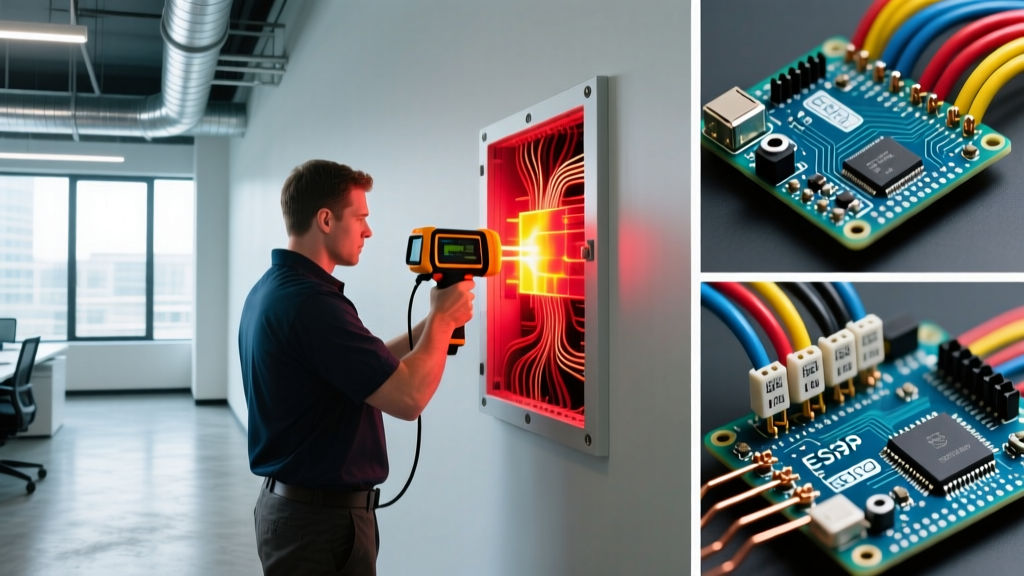
Inspector's Note: During final inspections, we frequently use thermal imaging cameras on loaded panels. Aluminum branch circuits, especially those installed in the 1960s and 70s using the now-banned AA-1350 alloy, routinely show up as glowing hot spots at the breaker terminations due to micro-arcing and oxidation. Copper circuits rarely exhibit this failure mode.
Ampacity Derating and Physical Space Constraints
When evaluating copper building wire applications, inspectors rely on NEC Table 310.15(B)(16) to verify ampacity. Copper allows for smaller wire gauges to carry the same current as aluminum, which directly impacts box fill calculations and physical installation compliance.
- 15-Amp Circuit: Requires 14 AWG Copper. (Aluminum requires 12 AWG, which is often too stiff and thick to neatly fold into standard residential junction boxes without violating NEC box-fill capacity rules).
- 20-Amp Circuit: Requires 12 AWG Copper. (Aluminum requires 10 AWG. Most standard 20A receptacles cannot physically accept 10 AWG solid wire, forcing the use of pigtails, which introduces more points of failure).
- 30-Amp Circuit: Requires 10 AWG Copper. (Aluminum requires 8 AWG).
Because copper allows for smaller, more pliable conductors, contractors can maintain compliance with NEC Article 314 (Outlet, Device, Pull, and Junction Boxes) much more easily. Overcrowded boxes lead to pinched insulation and short circuits—a major red flag during rough-in inspections.
The Legacy Aluminum Problem: Inspection Red Flags
The Consumer Product Safety Commission (CPSC) has long documented the hazards of legacy solid aluminum branch wiring. Homes built between 1965 and 1973 often contain AA-1350 aluminum wire, which is highly susceptible to thermal creep and galvanic corrosion when connected to copper screws or brass terminals.
If an inspector encounters AA-1350 aluminum branch wiring during a remodel or real estate transaction inspection, it will likely be flagged for immediate remediation. Acceptable, code-compliant remediation methods include:
- Complete Rewiring: Replacing all branch circuits with modern copper THHN/THWN or NM-B cable.
- COPALUM Crimping: A specialized, high-pressure cold-weld crimp system that permanently bonds copper pigtails to the aluminum wire. This requires a certified technician and specific tooling.
- AlumiConn Connectors: Using UL-listed, setscrew-type lug connectors (like the IDEAL 65 AlumiConn). The installer must strip the wire, apply anti-oxidant paste, and torque the setscrews to exactly 20 in-lbs using a calibrated torque driver. Wire nuts, even those marketed for Al-to-Cu transitions (like the purple Ideal 65), are heavily frowned upon by modern inspectors and often fail to meet current safety standards for legacy wire.
Healthcare Facilities: Where Copper is Strictly Mandated
There are specific environments where the National Fire Protection Association (NFPA) and the NEC explicitly mandate copper. Under NEC Article 517 (Health Care Facilities), the Critical Branch and Life Safety Branch of the essential electrical system must be wired with copper conductors.
In operating rooms and intensive care units, the risk of a loose neutral connection causing a difference in potential (and thus a lethal micro-shock hazard to a patient) is unacceptable. Copper’s stability, lower impedance, and resistance to thermal creep make it the only code-compliant choice for these life-safety circuits. An inspector will instantly fail a healthcare rough-in if aluminum is proposed or installed on any branch circuit within the patient care vicinity.
Modern Anti-Oxidant Compounds and Termination Hygiene
When modern AA-8000 series aluminum alloy is used for larger feeder wires (e.g., 2/0 AL for a 200A residential service), inspectors will check for the application of an anti-oxidant compound, such as Noalox or Penetrox. Aluminum instantly forms a microscopic layer of aluminum oxide when exposed to air. Unlike copper oxide, which is relatively conductive, aluminum oxide is a highly effective electrical insulator.
If an installer terminates bare aluminum into a panel lug without applying a zinc-dusted anti-oxidant paste, the oxide layer will impede current flow, generating heat. Inspectors look for the tell-tale grey/black paste at the service entrance lugs. Copper, by contrast, does not require these compounds for standard terminations, streamlining the installation process and reducing the margin for human error on the job site.
The Final Inspection Checklist for Conductor Compliance
To ensure your wiring project passes inspection on the first visit, verify the following conductor parameters:
- Device Ratings: Confirm all receptacles and switches are rated for the conductor material used (CU or AL/CU).
- Box Fill: Verify that the chosen wire gauge and material do not exceed the cubic inch capacity of the junction boxes.
- Torque Verification: Use a calibrated torque screwdriver for all panel and device terminations, adhering strictly to the manufacturer's printed specifications.
- Anti-Oxidant Paste: Ensure Noalox is applied to all aluminum feeder terminations, but never applied to copper wires (which can actually interfere with copper-to-copper connections).
- Stranding Integrity: Ensure no copper strands are cut or folded back when stripping insulation, which reduces the effective ampacity and violates NEC 110.14.
Ultimately, copper's dominance in electrical wiring is a matter of physics and risk mitigation. While aluminum offers cost savings on massive feeder runs, copper's unmatched termination reliability, superior conductivity, and alignment with standard device ratings make it the only logical, code-compliant choice for general branch circuit wiring.