
The Commercial Paradigm: Beyond Residential 120V Interconnects
When transitioning from residential to commercial construction, smoke detectors electrical wiring undergoes a fundamental paradigm shift. Residential systems typically rely on 120V AC hardwired interconnects with battery backups. In contrast, commercial fire alarm systems operate on supervised 24VDC Signaling Line Circuits (SLC) or Initiating Device Circuits (IDC). These systems demand strict adherence to NEC Article 760 and the NFPA 72 National Fire Alarm and Signaling Code.
In 2026, commercial addressable fire alarm panels, such as the Notifier NFS2-640 or Siemens Cerberus PRO FC722, dominate the market. Wiring these systems requires an intimate understanding of supervised topologies, fire-rated cabling, and voltage drop calculations. This guide provides a deep-dive into the technical specifications, code requirements, and real-world troubleshooting strategies for commercial fire alarm wiring.
Decoding Cable Requirements: FPL, FPLR, and FPLP
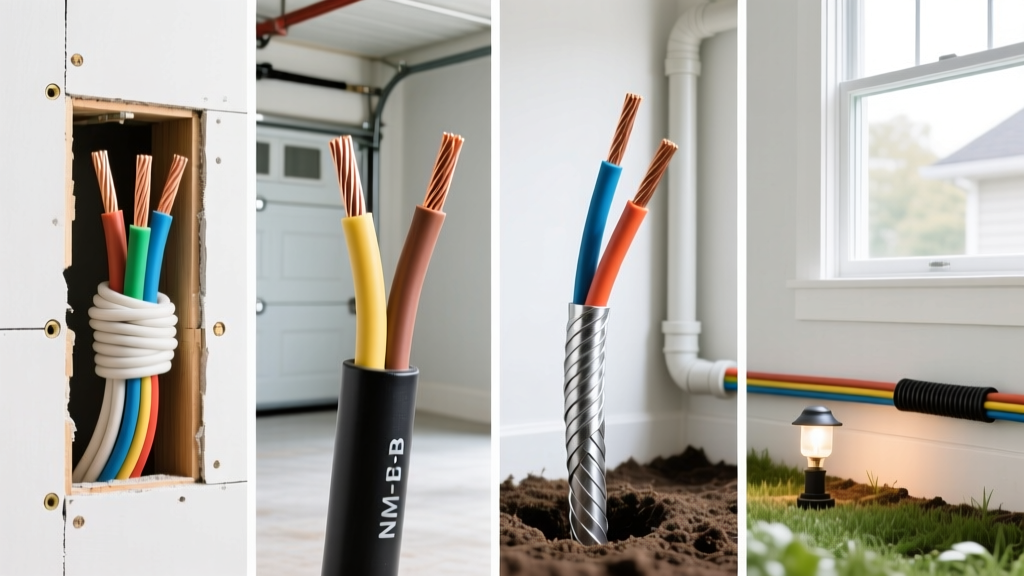
You cannot use standard THHN or NM-B (Romex) wire for commercial fire alarm signaling circuits. NEC Article 760 mandates the use of Fire Power Limited (FPL) cables. The specific jacket rating depends on the installation environment.
| Cable Rating | Full Name | Application Environment | Avg. Cost (14 AWG) |
|---|---|---|---|
| FPL | Fire Power Limited | General commercial spaces, surface runs, standard conduit | $0.45 - $0.60 / ft |
| FPLR | Fire Power Limited Riser | Vertical runs between floors (risers, elevator shafts) | $0.65 - $0.85 / ft |
| FPLP | Fire Power Limited Plenum | Dropped ceilings, raised floors, HVAC return air spaces | $0.90 - $1.30 / ft |
Expert Tip: Shielded vs. Unshielded
While unshielded 2-conductor FPL cable is acceptable in standard office environments, you must use shielded twisted-pair (STP) cable (e.g., Belden 1045A) when routing SLC loops near high-EMI sources. Variable Frequency Drives (VFDs), heavy elevator motor controllers, and high-voltage switchgear can induce electromagnetic interference, causing ghost alarms or SLC communication dropouts.
Class A vs. Class B Wiring Topologies
NFPA 72 Chapter 23 defines circuit survivability through Class A (Style 6/7) and Class B (Style 4) topologies. Understanding the difference is critical for passing Authority Having Jurisdiction (AHJ) inspections.
Class B (Style 4): The Standard Loop
Class B wiring is the most common topology for standard commercial spaces. The SLC loop leaves the panel, wires through all addressable smoke detectors and modules, and terminates at an End-of-Line (EOL) resistor (typically 47kΩ for Notifier systems). The panel supervises the circuit by monitoring the resistance. If a wire breaks, the panel detects an 'Open Circuit' trouble, but all devices prior to the break remain operational.
Class A (Style 6/7): Redundant Survivability
Class A wiring requires a return path. The SLC loop leaves the panel, travels through the devices, and returns to a separate terminal on the panel. If a single wire breaks or a short occurs, the panel automatically communicates with the devices from both directions. Class A is mandatory in high-rise buildings, hospitals, and specialized hazardous environments where circuit survivability is non-negotiable.
'T-tapping (branching off the main SLC loop to wire a device) is strictly prohibited in Class A wiring and heavily restricted in Class B wiring by most modern AHJs. Every device must be wired in a continuous daisy-chain sequence.' — NFPA 72 Installation Guidelines
Step-by-Step: Wiring an Addressable SLC Loop
Let us outline the physical wiring process for a Notifier NFS2-640 panel using addressable photoelectric smoke detectors (e.g., Notifier FAPT-851, retailing around $115 per head).
- Panel Preparation: Ensure the main panel breaker and backup battery leads are disconnected. Verify the SLC loop terminals (Out +, Out -, In +, In -) are clean and free of oxidation.
- Wire Stripping and Tinning: Strip exactly 3/8 inch of insulation from the 12 AWG or 14 AWG FPL wire. If using stranded wire, tin the ends with rosin-core solder or use ferrule crimps to prevent stray strands from causing short-circuit troubles.
- Polarity Matters: Unlike older conventional systems, addressable SLC loops are strictly polarity-sensitive. Connect the positive lead to the '+' terminal on the base (e.g., System Sensor B401 base) and the negative to the '-' terminal. Reversing polarity will prevent the device from addressing and throw a 'Device Type Mismatch' or 'Polling Error' on the panel.
- Daisy-Chaining Bases: Run the SLC cable from the 'Out' terminals of the first detector base to the 'In' terminals of the next. Maintain a continuous loop.
- EOL Resistor Installation (Class B): At the very last device on the Class B loop, wire the 47kΩ EOL resistor across the positive and negative terminals. Do not place the resistor in the panel; it must be at the physical end of the line to supervise the entire cable run.
- Shield Grounding: If using shielded FPLR cable, connect the drain wire to the panel's dedicated Shield Ground terminal. Never ground the shield at multiple points, as this creates a ground loop that will wreak havoc on the SLC data protocol.
Voltage Drop Calculations and Wire Gauge Sizing
Commercial smoke detectors draw minimal current in standby mode (approx. 300µA), but during an alarm state, notification appliances (horns/strobes) on the same Notification Appliance Circuit (NAC) can draw massive current. While SLC loops are primarily data-driven, voltage drop still dictates maximum loop length.
For a standard 24VDC SLC loop using 14 AWG copper wire, the resistance is approximately 2.525 ohms per 1,000 feet. The Notifier NFS2-640 manual specifies a maximum SLC loop resistance of 40 ohms. This translates to a maximum physical cable length of roughly 7,900 feet per loop. However, to maintain optimal data signal integrity and account for splice resistances, industry best practice limits a single 14 AWG SLC loop to 5,000 feet. If your building footprint exceeds this, you must either upgrade to 12 AWG wire (1.588 ohms/1000ft) or deploy a secondary SLC loop via an SLC-4 expander module (approx. $850).
Common Failure Modes and Troubleshooting
Even with meticulous installation, commercial fire alarm systems encounter field issues. Here are the most frequent edge cases and how to resolve them:
- Earth Ground Faults: The panel detects a voltage potential between the SLC common and the building ground. A reading greater than 1.5V DC on your multimeter indicates compromised wire insulation touching a metal conduit or junction box. Fix: Isolate the loop in halves using a megohmmeter (set to 250V DC max) to pinpoint the exact conduit run causing the fault.
- Open Circuit / Missing EOL: The panel reports an 'Open' on a Class B loop. This almost always means the EOL resistor was omitted, fell out of the terminal, or is the wrong value (e.g., a 2.2kΩ resistor was used instead of 47kΩ). Fix: Verify resistor color bands and measure with a multimeter before snapping the final detector head onto the base.
- Address Conflicts: Two devices on the SLC loop share the same address (e.g., both set to address 45 via their internal dials). The panel will flag a 'Duplicate Address' trouble. Fix: Use a handheld programmer (like the Notifier PROG-200) to read and rewrite the device addresses before installation.
- Dirty Optics / Environmental Faults: Addressable smoke detectors perform self-diagnostics. If construction dust enters the optical chamber, the panel will register a 'Maintenance Alert' or 'Dirty' trouble. Fix: Never install detector heads until all drywall sanding and concrete grinding is 100% complete. Use dust covers during construction and remove them only during final commissioning.
Frequently Asked Questions (FAQ)
Can I mix conventional and addressable smoke detectors on the same commercial panel?
Not on the same circuit. Conventional detectors (2-wire or 4-wire) must be wired to dedicated Initiating Device Circuits (IDC) or Conventional Zones, which supervise via a different resistance threshold than addressable SLC loops. Modern hybrid panels, like the Eaton Fire Alarm systems, support both, but they must be isolated to their respective designated terminals.
Are duct smoke detectors wired differently than ceiling-mounted units?
Yes. Duct detectors (e.g., System Sensor DH400) require integration with the HVAC shutdown relay. The electrical wiring must include the SLC data loop for supervision, plus a separate relay wiring run to the HVAC control board to drop power to the air handler fans upon alarm, preventing smoke migration through the ductwork.
What is the penalty for using standard THHN wire in a commercial fire alarm conduit?
Using non-FPL rated wire violates NEC Article 760. The AHJ (local fire marshal or electrical inspector) will fail the rough-in inspection, issue a stop-work order, and require you to pull out all the wire and replace it with rated FPL/FPLR cable, resulting in massive material waste and labor overruns.