
The Critical Distinction: Low-Voltage vs. Live AC Tracing
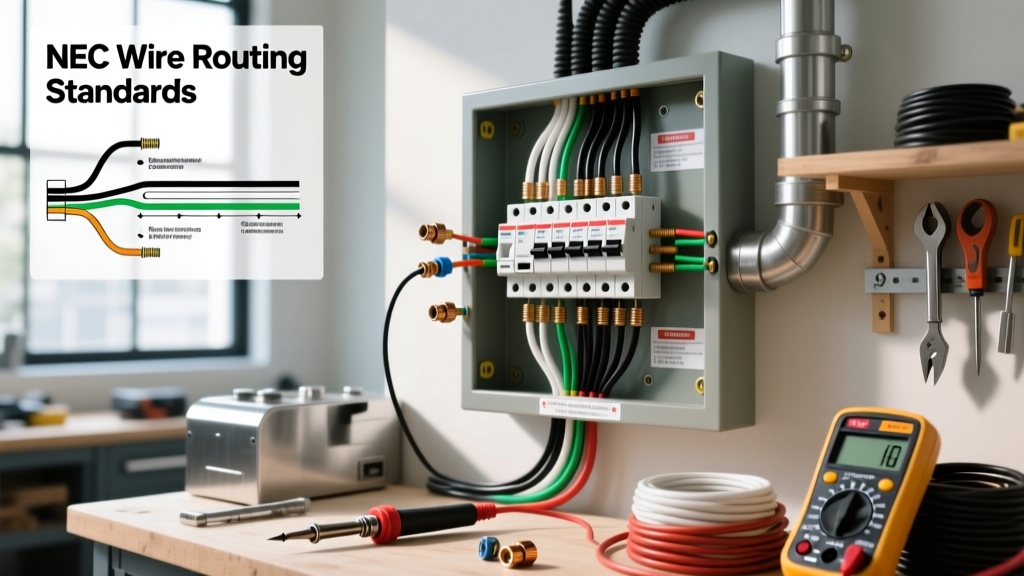
When performing tone generator electrical wiring diagnostics, the most common—and dangerous—mistake electricians and DIYers make is applying a standard telecom tone generator to an energized 120V or 240V AC circuit. Standard "fox and hound" kits (like the classic Triplett Fox & Hound) are designed strictly for de-energized, low-voltage lines such as Cat6, coaxial, or legacy telephone wiring. Applying these to live mains voltage will instantly destroy the transmitter, trip your breaker, and pose a severe arc-flash hazard.
For true electrical wiring troubleshooting, you must categorize your diagnostic approach into two distinct methodologies: de-energized tracing (using standard or high-power inductive tone generators) and energized tracing (using specialized digital AC circuit locators). This guide breaks down the exact tools, techniques, and edge-case failure modes for both scenarios in 2026.
⚠️ CRITICAL SAFETY WARNING: Always verify a circuit is de-energized using a CAT III or CAT IV rated non-contact voltage tester or a digital multimeter before connecting any standard tone generator transmitter. The Occupational Safety and Health Administration (OSHA) mandates strict lockout/tagout (LOTO) procedures for all dead-circuit testing. Never assume a wire is dead based solely on a wall switch position.Tool Selection Matrix for Electrical Troubleshooting
Choosing the right tracer dictates your success rate. Standard audio tone generators operate between 1kHz and 2kHz, which is easily absorbed by the grounded shields in modern AC cables. Advanced AC tracers use modulated magnetic fields to bypass this issue.
| Tool Category | Example Model (2026) | Avg. Price | Best Use Case | Limitations |
|---|---|---|---|---|
| Standard Telecom Tone Gen | Triplett Fox & Hound 2 | $35 - $50 | Tracing de-energized single-conductor wires, doorbell wiring, thermostat cables. | Fails completely on NM-B (Romex) due to ground wire shielding. Cannot be used on live AC. |
| High-Power Inductive Tracer | Fluke 2042 Advanced Cable Tracer | $380 - $450 | Deep-wall tracing, mapping de-energized branch circuits, finding hidden junction boxes. | High cost. Requires circuit to be de-energized for the transmitter clip-on method. |
| Digital AC Circuit Locator | Klein Tools ET45 / ET600 | $55 - $120 | Tracing live AC branch circuits, identifying breakers, finding breaks in energized cables. | Less precise for pinpointing exact millimeter-level breaks compared to de-energized inductive tracers. |
Step-by-Step Troubleshooting: De-Energized Branch Circuits
Tracing a dead circuit is the most reliable way to find hidden faults, provided you understand the physics of inductive coupling. When you clip a tone generator transmitter onto a wire, it sends an alternating current signal that creates an electromagnetic field around the conductor. The receiver (probe) detects this field.
Scenario 1: Locating a Hidden Splice or Junction Box
If a circuit is dead and you suspect an illegal or hidden splice behind drywall, follow this protocol:
- Isolate the Circuit: Turn off the main breaker or the specific branch breaker. Verify zero voltage at the receptacle.
- Disconnect the Load: Remove the receptacle or switch from the wall box to ensure the tone signal doesn't bleed into connected appliances or downstream devices.
- Connect the Transmitter: Clip the red lead of your tone generator to the hot (black) wire and the black lead to a known good ground (or the neutral wire, though hot-to-ground provides the strongest field).
- Sweep the Wall: Turn on the receiver. Hold it perpendicular to the wall surface. Sweep in a grid pattern. The audio tone will peak sharply when the probe crosses the physical path of the cable.
- Identify the Splice: When the tone abruptly stops or drops significantly in volume, you have found the end of the continuous run. This is the exact location of the hidden splice, wire nut failure, or severed conductor.
Scenario 2: The NM-B (Romex) Shielding Problem
A major edge case in tone generator electrical wiring diagnostics is the "Faraday cage" effect of modern NM-B cable. The bare copper ground wire wrapped around the insulated conductors acts as a shield, absorbing the 1kHz-2kHz signal from standard telecom tone generators. If you clip a standard transmitter to a Romex cable, the probe will detect nothing past the first three feet.
The Fix: To trace NM-B cable with a standard tone generator, you must isolate the ground wire at the panel or junction box so it does not form a continuous shield. Alternatively, use a high-powered tracer like the Fluke 2042, which utilizes a lower-frequency, higher-amplitude magnetic signal that easily penetrates the ground wire shield and drywall up to 20 inches thick.
Troubleshooting Live AC Circuits (Energized Tracing)
Sometimes, de-energizing a circuit is impossible because you need to trace a wire to find which breaker controls it, or you are hunting for a break in a live landscape lighting circuit. For this, you must use a Digital AC Circuit Locator (like the Klein Tools ET45).
These devices do not inject a tone; instead, they detect the 50/60Hz magnetic field naturally emitted by alternating current. Advanced models use digital signal processing (DSP) to filter out ambient electromagnetic interference (EMI) from Wi-Fi routers, microwaves, and fluorescent ballasts.
- Breaker Identification: Plug the transmitter into the dead receptacle. Go to the main panel and scan the breakers with the receiver. The breaker emitting the strongest digital signal (often indicated by a bar graph or specific LED array) is the correct circuit.
- Finding a Break in Landscape Wiring: If a low-voltage (12V-24V) landscape lighting run is dead but the transformer is energized, run the AC probe along the buried cable path. The signal will remain strong until you pass the physical break in the conductor, at which point the magnetic field collapses and the receiver goes silent.
Common Failure Modes and False Positives
Even with premium equipment, environmental factors can corrupt your diagnostic data. Be aware of these common pitfalls:
- Capacitive Bleed-Over: In multi-gang boxes or tightly bundled conduit, the tone signal can capacitively couple from the target wire to adjacent wires. This causes the probe to beep on multiple wires. Solution: Lower the sensitivity dial on your receiver and physically separate the wires at the testing point.
- Ground Loops: If you connect the transmitter's ground clip to a pipe that is bonded to the electrical ground, the tone signal will travel through the entire plumbing system, causing the probe to beep everywhere. Solution: Always use an isolated ground or clip the return lead directly to the neutral conductor of the specific circuit.
- Armored Cable (BX/MC) Interference: The metal spiral armor of BX or MC cable acts as a massive inductor and shield. Standard tone generators cannot penetrate this armor. You must use a specialized AC tracer or physically expose the conductors at a junction point to inject the signal.
Adhering to the National Electrical Code (NEC) standards regarding the identification and abandonment of concealed wiring is crucial. If you discover an undocumented, hidden splice during your tone tracing, NEC Article 300.15 requires that all splices be contained within an accessible junction box. Do not simply patch the drywall over a found fault.
Frequently Asked Questions
Can I use a tone generator to find a short circuit?
Yes, but indirectly. A tone generator will not beep to tell you "this is a short." Instead, if you connect the transmitter across the hot and neutral wires of a de-energized circuit that has a known dead short, the tone signal will travel exactly to the point of the short and stop. By tracing the tone through the wall, the exact point where the audio signal abruptly terminates is the physical location of the short circuit (often a crushed cable or a melted wire nut).
Why is my tone generator beeping everywhere on the wall?
This is caused by "ghosting" or capacitive coupling, heavily exacerbated by modern homes with high EMI (electromagnetic interference) from smart home hubs, LED drivers, and solar inverters. Switch to a digital AC tracer with DSP (Digital Signal Processing) filtering, or ensure your standard tone generator's sensitivity dial is turned down to the minimum threshold required to hear the tone directly over the wire.
Is it safe to tone a wire that is still connected to the breaker panel?
Only if the breaker is turned OFF. If the breaker is ON, the 120V/240V potential will feed back into the transmitter's output stage, instantly frying the internal oscillator circuit and potentially shocking the user. Always pull the breaker and verify zero voltage before clipping on a transmitter.