
The True Cost of Wiring a Trailer with Electric Brakes in 2026
Upgrading a utility, car hauler, or travel trailer to electric brakes is one of the most critical safety modifications you can make. According to the National Highway Traffic Safety Administration (NHTSA), trailers with a Gross Vehicle Weight Rating (GVWR) over 3,000 pounds are legally required to have independent braking systems in most jurisdictions. Yet, many buyers purchase trailers with surge brakes or no brakes at all, only to realize later that wiring a trailer with electric brakes is necessary for safe towing and legal compliance.
Estimating the cost of this upgrade requires looking beyond just the brake magnets. You must account for hub and drum replacements, heavy-gauge wiring harnesses, breakaway kits, and proportional brake controllers. In 2026, supply chain stabilization has brought component prices down slightly from their 2023 peaks, but labor rates at RV and trailer shops have continued to climb. This guide provides a meticulous, line-item cost breakdown for wiring a trailer with electric brakes, ensuring you can budget accurately whether you are tackling a DIY weekend project or hiring a certified technician.
2026 Component Cost Matrix
The table below outlines the average retail costs for high-quality, name-brand components required for a standard tandem-axle (4-wheel) electric brake conversion in 2026.
| Component Category | Recommended Model / Spec | Est. Cost (2026) | Quantity Needed |
|---|---|---|---|
| Brake Assembly (10" x 2.25") | Dexter Nev-R-Adjust (23-464-465) | $85.00 - $95.00 | 4 |
| Hub and Drum Assembly | Dexter 8-201-9UC3-EZ (5 on 4.5" Bolt) | $110.00 - $135.00 | 4 |
| Proportional Brake Controller | Tekonsha Prodigy P3 (90195) | $185.00 - $210.00 | 1 |
| 7-Way RV Blade Connector | Pollak Heavy-Duty (PK12706) | $30.00 - $40.00 | 1 |
| Bonded Wiring Harness (10 AWG) | 4-Conductor Copper (10/4) | $1.80 - $2.50 / ft | 30 - 50 ft |
| Breakaway Kit with Battery | Tekonsha Push-Top (2005-P) | $35.00 - $45.00 | 1 |
| Misc. Hardware & Terminals | Ring terminals, heat shrink, zip ties | $25.00 - $40.00 | 1 Kit |
Total Estimated Parts Cost (Tandem Axle): $1,150 to $1,450
Deep Dive: Where Your Budget Actually Goes
1. Brake Assemblies and Hub/Drums
The largest chunk of your parts budget will go toward the physical braking hardware. For a standard 3,500 lb axle, you will need 10-inch by 2.25-inch brake assemblies. While you can find generic, unbranded assemblies imported from overseas for as little as $45 each, they often suffer from weak electromagnets and poorly bonded friction pads that glaze over quickly. Investing in Dexter Axle Nev-R-Adjust assemblies (approx. $90 each) is highly recommended. These feature a self-adjusting star wheel mechanism that maintains optimal pad-to-drum clearance automatically, eliminating the need to crawl under the trailer with a brake spoon every 3,000 miles.
If your current axles have idler hubs (hubs without integrated brake drums), you must replace them with hub-and-drum assemblies. This requires pulling the bearings, seals, and grease caps. Ensure you match the bearing sizes (typically L68149 inner and L44649 outer for 3,500 lb axles) and the bolt pattern exactly.
2. The Wiring Harness: 10 AWG vs. 12 AWG
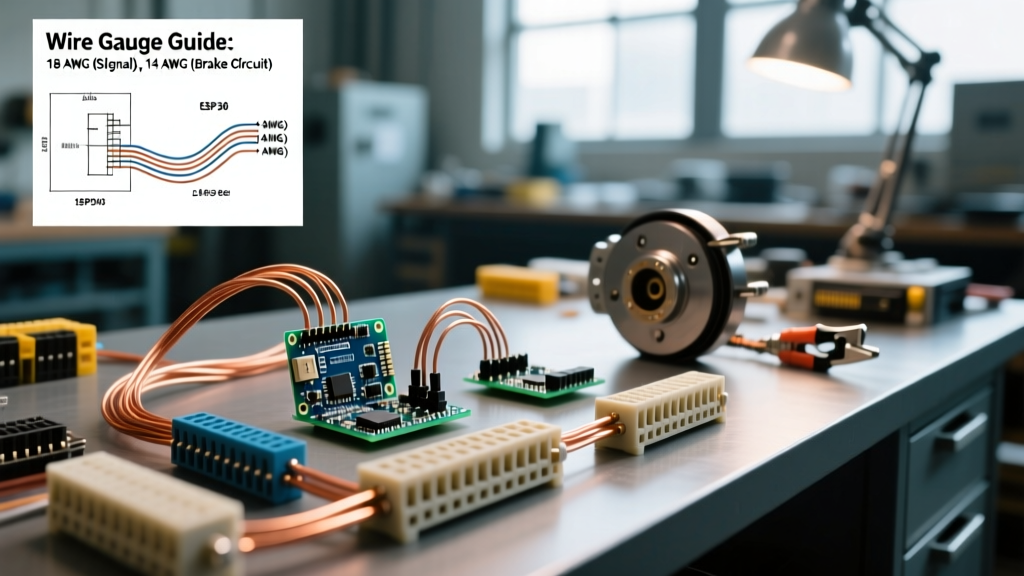
Voltage drop is the silent killer of trailer braking performance. On a 25-foot tandem-axle trailer, using standard 12 AWG wire for the brake circuit (Pin 2 on the 7-way connector) can result in a 1.5V to 2V drop by the time the current reaches the rear axle magnets. This translates to a 20% to 30% reduction in braking force on the rear wheels, causing the tow vehicle to push the trailer during panic stops. For any trailer over 20 feet, 10 AWG copper wire is mandatory for the brake feed and ground. Expect to pay around $2.00 per foot for high-quality, UV-resistant, bonded 4-wire harnesses.
3. Brake Controllers and Breakaway Kits
Time-delayed brake controllers are obsolete for modern towing. You must budget for a proportional controller like the Tekonsha Prodigy P3 or the Curt Spectrum, which use internal accelerometers to apply trailer braking force in exact proportion to the tow vehicle's deceleration. These units typically cost between $185 and $260. Do not forget the breakaway kit; this small, battery-powered module pulls a physical pin if the trailer detaches, sending 12V directly to the brake magnets to lock the wheels and prevent a runaway trailer.
Professional Installation vs. DIY Labor Costs
If you lack the tools to safely jack up a trailer, remove hub assemblies, and crimp heavy-gauge wire, you will need to hire a professional. In 2026, mobile RV and trailer technicians typically charge between $110 and $160 per hour, while dedicated trailer fabrication shops may charge $90 to $130 per hour but require you to drop off the trailer for several days.
- DIY Installation Time: 8 to 14 hours (depending on rust, bearing condition, and routing difficulties).
- Professional Labor Estimate: 6 to 8 hours at $125/hr = $750 to $1,000.
- Total Turnkey Cost (Parts + Pro Labor): $1,900 to $2,450.
While the DIY route saves nearly $1,000, improper wiring can lead to catastrophic brake failure or electrical fires. If you choose to DIY, invest in a proper wire crimping tool and a digital multimeter to verify voltage at each magnet before hitting the road.
Critical Edge Cases and Expensive Failure Modes
When wiring a trailer with electric brakes, cutting corners on specific edge cases will result in expensive troubleshooting and dangerous driving conditions. Avoid these common failure modes:
Expert Warning: The Breakaway Switch Wiring Error
A catastrophic mistake made by novice DIYers is wiring the breakaway switch to the brake controller's output wire (the blue wire). If the trailer detaches from the hitch, the 7-way plug rips out, severing the connection to the controller. The breakaway switch MUST be wired directly to the positive terminal of the dedicated breakaway battery, with the ground completing the circuit to the brake magnets. This ensures the brakes lock up independently of the tow vehicle.
Grounding Through the Chassis vs. Dedicated Ground
Never rely on the trailer chassis or the hitch ball for the brake ground. Paint, powder coating, and rust create high-resistance barriers that cause "ghost braking" or erratic controller behavior. You must run a dedicated 10 AWG white ground wire from the 7-way plug directly to a clean, bare metal grounding stud on the trailer frame. Use closed-loop ring terminals and coat them in dielectric grease to prevent corrosion.
Melted 7-Way Connector Pins
Electric brake magnets draw significant amperage (typically 3 to 4 amps per magnet, meaning 12 to 16 amps for a tandem axle). If you use a cheap, stamped-brass 7-way plug, the pins will overheat and melt the plastic housing under sustained braking on long mountain downgrades. Always buy heavy-duty 7-way plugs with solid copper pins and silver-plated contacts, such as the Pollak PK12706.
Legal Requirements and Safety Standards
Before finalizing your budget and parts list, verify your local and state regulations. The Federal Motor Carrier Safety Administration (FMCSA) provides baseline guidelines for commercial towing, but individual states dictate the exact GVWR thresholds for mandatory trailer brakes. For instance, many states require brakes on any trailer over 3,000 lbs, while others mandate them if the trailer weighs more than half the towing vehicle's curb weight. Furthermore, almost all jurisdictions legally require a functioning, independently powered breakaway system on any trailer equipped with electric brakes. Ensure your 2026 build includes a fresh 12V sealed lead-acid breakaway battery and a coiled steel lanyard attached securely to the tow vehicle's frame or bumper, not the hitch receiver.