
The True Cost of Spa Electrical Wiring in 2026
Installing a hot tub is a major backyard upgrade, but the spa electrical wiring required to power it safely is a high-stakes project governed by strict National Electrical Code (NEC) regulations. Because water and electricity are a lethal combination, the U.S. Consumer Product Safety Commission (CPSC) mandates rigorous safety standards that directly impact your bottom line. In 2026, homeowners can expect to pay between $1,800 and $4,200 for a professional, code-compliant hot tub electrical installation, assuming an existing 200-amp main panel and a standard 50-foot trenching run.
Unlike standard outdoor receptacles, spa electrical wiring requires dedicated circuits, specialized GFCI (Ground Fault Circuit Interrupter) protection, and an equipotential bonding grid. This comprehensive cost guide breaks down exactly where your money goes, the specific materials your electrician will use, and the hidden variables that can push your quote toward the higher end of the spectrum.
2026 Itemized Cost Breakdown Matrix
The table below outlines the average national pricing for a standard 50-amp, 240-volt spa installation in 2026. Labor rates have stabilized compared to the peak inflation years of the early 2020s, but copper wire prices and specialized GFCI breakers remain premium line items.
| Project Component | Estimated 2026 Cost | Details & Variables |
|---|---|---|
| Electrical Permit & Inspection | $150 – $350 | Required by local AHJ (Authority Having Jurisdiction). Varies by municipality. |
| Trenching & Site Prep | $400 – $1,200 | $8–$15 per linear foot. Rocky soil or concrete cutting adds 30-50%. |
| Wire, Conduit & Fittings | $250 – $650 | Dependent on AWG size and run length. PVC Schedule 40/80 conduit. |
| Spa Disconnect Panel (GFCI) | $350 – $600 | Includes outdoor weatherproof enclosure and 2-pole GFCI breaker. |
| Electrician Labor | $800 – $2,200 | Typically 8 to 16 hours at $100–$140/hour for licensed master/journeyman. |
| Main Panel Upgrade (If Needed) | $1,800 – $3,500+ | Required if your home lacks the spare amperage capacity on a 100A or 150A service. |
Amperage, Wire Gauges, and Material Specifications
The single largest material variable in spa electrical wiring is the amperage requirement of your specific hot tub model. Most modern residential spas require either a 40-amp, 50-amp, or 60-amp dedicated circuit. The NFPA 70 (National Electrical Code) strictly dictates the wire gauge and overcurrent protection based on these loads.
Standard Wire Sizing for 240V Spas
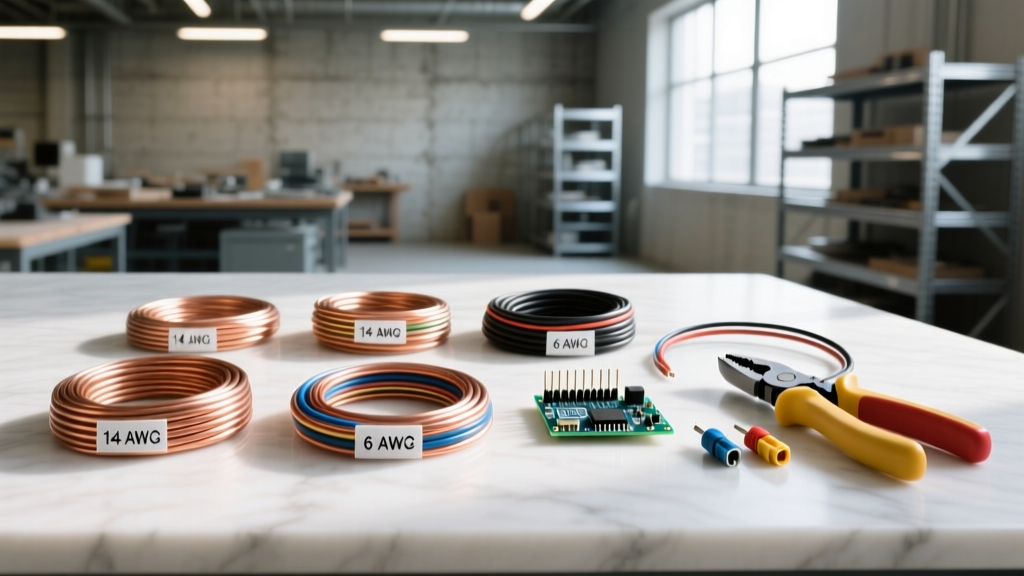
- 40-Amp Spas: Require #8 AWG THHN/THWN-2 copper wire. This is common for smaller, plug-and-play style tubs that are hardwired, or entry-level 240V models with a single 2HP pump.
- 50-Amp Spas: Require #6 AWG THHN/THWN-2 copper wire. This is the industry standard for 80% of mid-range residential hot tubs featuring dual pumps and a 4kW heater.
- 60-Amp Spas: Require #4 AWG THHN/THWN-2 copper wire. Reserved for luxury, large-capacity spas with multiple high-output pumps, advanced lighting arrays, and inline heating systems.
Expert Note: While UF-B (Underground Feeder) direct-burial cable is technically permitted by code if buried at 24 inches, top-tier electrical contractors in 2026 almost exclusively use individual THHN/THWN-2 conductors pulled through 1-inch or 1.25-inch Schedule 40 PVC conduit (buried at 18 inches). Conduit protects the wire from soil acidity, shifting earth, and future landscaping dig-ins, and allows for easy wire replacement if a fault occurs.
NEC Article 680: The Code Requirements Driving Your Quote
Article 680 of the NEC covers swimming pools, fountains, and similar installations, including spas and hot tubs. The stringent requirements of this article are why spa wiring costs significantly more than wiring a standard outdoor shed or EV charger. Electricians carry high liability for these installations, and their pricing reflects the meticulous attention to detail required to pass inspection.
⚠️ Critical Safety Mandate: All spa electrical wiring must feature Class A GFCI protection. Furthermore, an outdoor emergency disconnect switch must be installed within sight of the spa, but no closer than 5 feet from the water's edge. This prevents a user from reaching the switch while in the water, mitigating electrocution risks.
The Equipotential Bonding Grid: A Hidden Cost Factor
Many homeowners are surprised by the "bonding" line item on their electrical quote. Equipotential bonding is not the same as grounding. It involves tying all conductive metal parts within 3 feet of the spa (handrails, ladders, metal shell mesh, and pump housings) together using a continuous loop of #8 AWG solid bare copper wire.
This bonding grid ensures that if a voltage fault occurs, all metal surfaces rise to the exact same electrical potential simultaneously, preventing a shock hazard between two surfaces. Trenching a secondary pathway for the bonding wire and physically connecting it to the spa's internal rebar or copper mesh adds 2 to 4 hours of labor to the project.
Trenching, Site Prep, and Edge Cases
The physical distance between your main electrical panel and the spa pad is the primary driver of labor costs. However, the terrain between those two points dictates the final price.
- Soft Soil & Grass: Standard trenching rates apply ($8–$12 per linear foot). A two-man crew can hand-dig a 50-foot, 18-inch deep trench in a few hours.
- Rocky or Clay-Heavy Soil: Requires mechanical trenchers or rock saws. Expect trenching costs to jump to $15–$25 per linear foot.
- Concrete & Hardscaping: If the wire run must cross a driveway, stamped concrete patio, or retaining wall, the electrician will need to hire a concrete cutting service to saw the slab, lay the conduit, and patch the concrete. This alone can add $600 to $1,500 to the project.
When Your Main Panel Needs an Upgrade
Before pulling a permit, a licensed electrician will perform a "load calculation" on your home's existing electrical service. A 50-amp spa draws roughly 12,000 watts. If you have an older home with a 100-amp or 150-amp main service, and you are already running central air conditioning, an electric oven, and a clothes dryer, your panel may be maxed out.
If the load calculation fails, you will be forced to upgrade your main service to 200 amps. A 200-amp panel upgrade in 2026 costs between $1,800 and $3,500, depending on whether the utility company needs to drop new service lines from the street. Always request a preliminary load calculation before purchasing your hot tub to avoid this massive hidden cost.
Frequently Asked Questions (2026 Edition)
Can I use a plug-and-play 120V spa to avoid electrical wiring costs?
Yes, 120V "plug-and-play" spas can be plugged into a standard outdoor GFCI receptacle. However, they are limited to 15 or 20 amps, meaning the heater and jets cannot run simultaneously. In colder climates, the water will lose heat while the jets are on high. For a true therapeutic experience, the 240V hardwired route is highly recommended.
What brand of GFCI breaker is best for spa panels?
In 2026, the Siemens QF Series (e.g., QF250A for 50-amp) and the Square D HOM250GFICP remain the gold standards for spa disconnect panels. They offer superior resistance to moisture-induced nuisance tripping compared to older generation breakers, provided they are installed in a weatherproof NEMA 3R enclosure with a proper rain shield.
Is it legal to DIY my own spa electrical wiring?
While local laws vary, most jurisdictions require a licensed electrical contractor to pull permits and perform wiring for Article 680 installations due to the extreme life-safety risks. Furthermore, if a DIY wiring job results in a fire or injury, your homeowner's insurance will likely deny the claim. The National Fire Protection Association (NFPA) strongly advises against unlicensed electrical work in wet environments. Always hire a bonded and insured master electrician.