
The Physics of the Pull: Why Tool Selection Matters
Executing a flawless conduit pull is an exercise in applied physics, not brute force. When navigating complex commercial runs or tight residential remodels, the friction coefficient between the cable jacket and the conduit wall dictates the required pulling tension. Using the wrong electrical cable pulling tools leads to stretched conductors, degraded insulation, and catastrophic jamming. In 2026, modern synthetic lubricants and advanced composite fish tapes have revolutionized the trade, but foundational mechanics remain unchanged. Understanding the interplay between sidewall pressure, raceway fill capacity, and pulling tension is what separates a journeyman from a master electrician.
Core Categories of Electrical Cable Pulling Tools
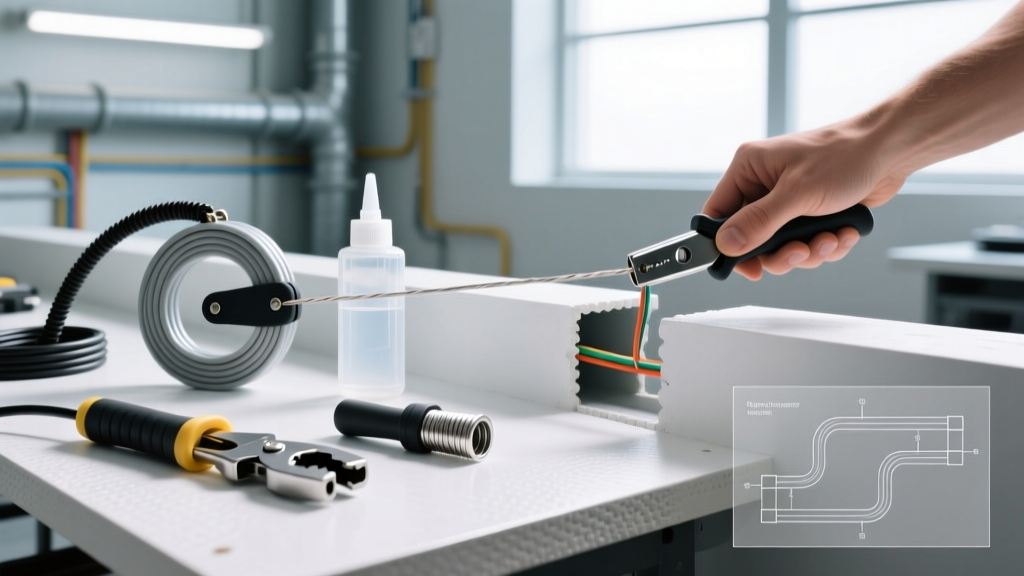
1. Fish Tapes and Leaders
- High-Carbon Steel: Ideal for empty, straight conduit runs. Offers maximum pushing stiffness but conducts electricity and can kink if forced through bends.
- Fiberglass: The standard for energized environments and multi-bend runs. Non-conductive and splinter-resistant, though less rigid than steel over long distances.
- Nylon/PET: Used for lightweight drops and data cables; lacks the column strength for heavy THHN pushes but excels in flexibility.
2. Pulling Lubricants
Never use dish soap or petroleum-based greases. Modern XLPE and PVC insulation requires pH-neutral, UL-listed pulling compounds that dry clear and do not degrade the jacket over time. Premium products are engineered to reduce the friction coefficient to below 0.15, dramatically reducing the physical strain on both the wire and the installer.
3. Tension Meters and Grips
For large feeder cables (e.g., 4/0 AWG and above), wire pulling grips distribute force across the jacket, while inline tension meters prevent exceeding the cable manufacturer's maximum pulling tension limits. These tools are essential for avoiding micro-tears in the insulation that can lead to ground faults years later.
2026 Pro Comparison Matrix: Top Pulling Equipment
| Tool Category | Model Example | Best Application | 2026 Price Range | Primary Failure Mode |
|---|---|---|---|---|
| Steel Fish Tape | Klein Tools 56335 (50 ft) | Empty straight PVC/EMT | $35 - $45 | Kinking on 90° sweeps |
| Fiberglass Leader | Greenlee 440 (240 ft) | Energized panels, multi-bend | $130 - $160 | Snapping threaded tips |
| Pulling Compound | Polywater J (1 Gallon) | XLPE/PVC feeder pulls | $30 - $40 | Freezing in cold weather |
| Tension Meter | Greenlee 1800 Series | Heavy commercial feeders | $450 - $600 | Calibration drift |
Deep Dive: Specific Tool Models and Field Performance
Klein Tools 56335 (50 ft Steel Fish Tape)
Priced around $38, the 56335 features a high-tensile spring steel core with a slotted tip for easy wire attachment. Pro Tip: Always wipe down steel tapes with a silicone-treated rag after use. Moisture trapped inside the casing causes rust, which increases friction and eventually snaps the tape under load.
Greenlee 440 (240 ft Fiberglass Fish Tape)
At approximately $145, this 1/8-inch fiberglass tape is the workhorse for commercial electricians. The splinter-free coating prevents the fiberglass from degrading into dangerous splinters. Edge Case: When threading the tip through a crowded junction box, use a bullet-nose attachment rather than the standard eyelet to prevent snagging on existing conductors.
Polywater J (Premium Pulling Lubricant)
Costing about $32 per gallon, Polywater J is the industry benchmark for medium-voltage and low-voltage cable pulls. It is compatible with all cable materials and leaves no residue. Warning: Store it in a climate-controlled environment; if it freezes on a winter job site, the emulsion breaks, rendering it useless for reducing friction.
Edge Cases and Failure Modes in the Field
The Jam Ratio Trap
The jam ratio is calculated by dividing the Conduit Inside Diameter (ID) by the Cable Outside Diameter (OD). If the ratio falls between 2.8 and 3.2, three cables pulled together can lock into a triangular formation and wedge tightly against the conduit walls in a sweep.
Solution: If your math lands in this danger zone, pull the cables individually, use a pulling eye to stagger them, or upsize the conduit.
Sidewall Pressure Limits
Sidewall pressure is the crushing force exerted on a cable as it rounds a bend. The industry standard limit is 300 pounds per foot of bend radius for standard thermoplastic insulation. Exceeding this flattens the insulation, compromising dielectric strength and potentially causing immediate failure during megger testing.
Step-by-Step Workflow for a Commercial 4-Inch Conduit Pull
- Verify Fill Capacity: Consult NEC Chapter 9, Table 1. For three or more conductors, the maximum fill is 40%.
- Clean the Raceway: Use a conduit swab attached to your fish tape to remove dirt, moisture, and debris left by other trades.
- Feed the Leader: Use a fiberglass tape for complex runs. If pushing past 100 feet, feed from both ends and use a pull string to hook them together.
- Attach the Pulling Eye: Never rely solely on electrical tape. Use a manufactured pulling eye or a properly tied lineman's knot secured with a heat-shrink sleeve.
- Lubricate Continuously: Apply pulling compound using a flow-control nozzle directly into the conduit mouth and onto the cable jacket as it feeds.
- Maintain Steady Tension: Pull at a maximum rate of 15 feet per minute. Jerky movements spike tension and risk snapping the pull string.
Maintenance and Storage of Pulling Tools
Proper tool maintenance extends the lifespan of your equipment and ensures safety. Fiberglass tapes should be inspected monthly for micro-cracks or delamination. If the outer coating is compromised, the tape must be destroyed and replaced, as exposed fiberglass splinters can cause severe skin irritation. Steel tapes require a light coating of WD-40 Specialist Silicone Lubricant before long-term storage to prevent oxidation. Always store pulling grips in a dry environment, as rust on the woven steel mesh can tear cable jackets during the next use.
Code Compliance and Pulling Tension Limits
Adherence to the National Electrical Code (NEC) is non-negotiable. Article 300.17 dictates raceway fill limits to ensure heat dissipation and physical pulling clearance. Furthermore, OSHA Electrical Safety Standards mandate the use of non-conductive tools (like fiberglass tapes) when working in or near energized panels to prevent arc flash incidents.
ICEA Tension Formula: The Insulated Cable Engineers Association (ICEA) recommends a maximum pulling tension of 0.008 x weight of cable per foot x length of pull for copper conductors. Always calculate this before selecting your pulling grips to prevent conductor stretching.
Frequently Asked Questions
Can I use dish soap as a wire pulling lubricant?
No. Dish soap contains salts and surfactants that dry out, leaving a sticky residue that makes future pulls impossible. Over time, it can also degrade the plasticizers in PVC and XLPE insulation. Always use a UL-listed pulling compound.
What is the best tool for pulling Cat6a through existing walls?
For low-voltage retrofits, a flexible nylon rod system (like the Greenlee Gator-Glide) or a weighted pull string with a magnetic finder is vastly superior to a rigid steel fish tape, which can easily puncture drywall or snag on fire blocking.
How do I prevent a fish tape from kinking?
Kinking occurs when you apply excessive pushing force against a resistance (like a 90-degree bend). When you feel resistance, stop pushing, retract slightly, rotate the tape reel 90 degrees, and feed again. Never force a steel tape through a tight sweep.
Where can I find more specialized pulling equipment?
For heavy-duty commercial and industrial applications, reviewing the Greenlee Pulling Equipment Catalog will provide specifications on motorized capstans and heavy-duty wire grippers designed for massive feeder pulls.