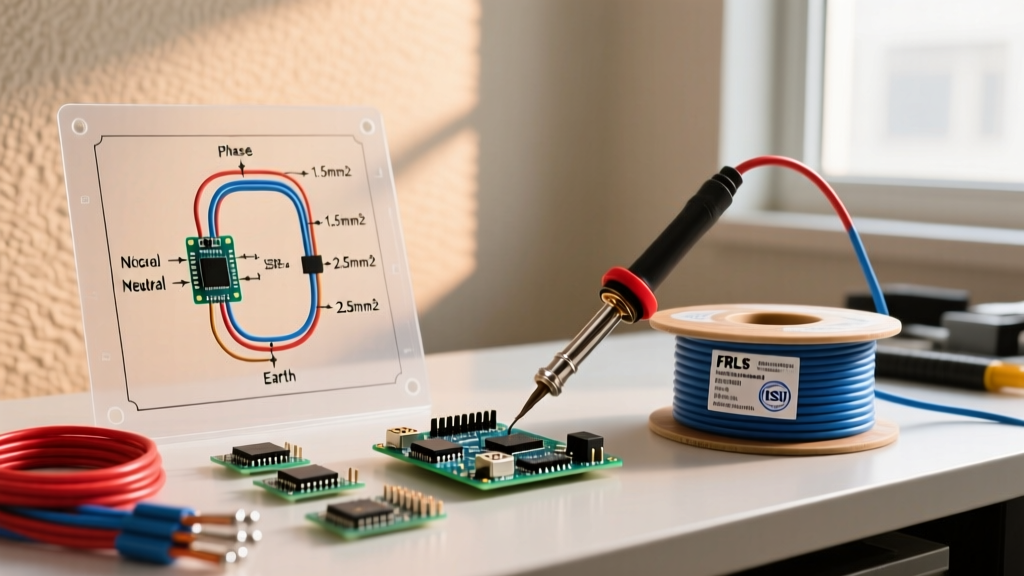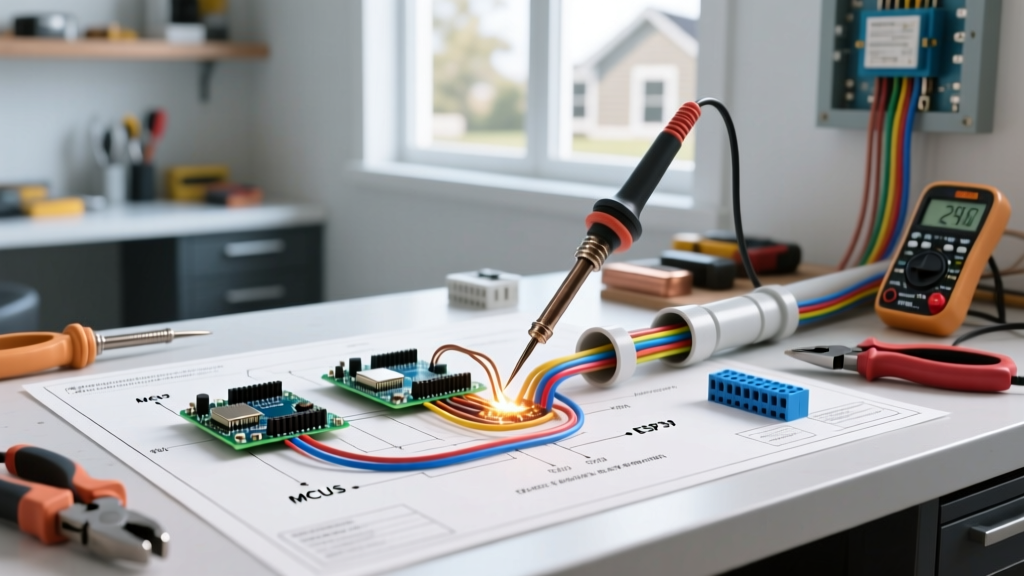

The Strategic Role of 240 Electrical Wiring in Modern Renovations
When undertaking a major home renovation, upgrading your electrical infrastructure is often the hidden backbone of the project. While standard 120V circuits handle everyday lighting and receptacles, integrating 240 electrical wiring is essential for powering high-demand appliances, modern HVAC systems, and Level 2 Electric Vehicle (EV) chargers. Properly planning these high-voltage runs during the demolition and framing phases prevents costly drywall repairs and ensures your home meets current safety standards.
According to the U.S. Consumer Product Safety Commission (CPSC), electrical distribution and lighting equipment are leading causes of home structure fires. Planning your 240V circuits with precision, adhering to the National Electrical Code (NEC), and selecting the correct materials mitigates these risks while future-proofing your property.
Renovation Pro-Tip: Never wait until the drywall is hung to finalize your 240V appliance locations. High-amperage circuits require specific routing, dedicated conduit paths, and precise breaker placements that must be mapped out during the initial framing stage.
Assessing Panel Capacity and Load Calculations
Before pulling a single foot of wire, you must verify that your main service panel can handle the additional load. Most modern homes built after 2010 feature a 200-amp main panel. However, adding a 50-amp double oven, a 40-amp workshop welder, and a 60-amp EV charger can quickly max out your capacity.
The NEC Article 220 Load Calculation
The NEC requires a formal load calculation to determine if your existing service is sufficient. This involves calculating the general lighting load, small appliance branch circuits, and the specific nameplate ratings of all hardwired 240V equipment. If your calculation exceeds 80% of your main breaker's rating, you will need to coordinate with your utility provider for a service upgrade—typically moving from a 200A to a 400A split-bus or dual-panel setup, which costs between $2,800 and $4,500 in 2026.
The Continuous Load Rule: A Critical EV Charging Pitfall
One of the most common mistakes in renovation planning is misunderstanding the NEC 'Continuous Load' rule. Any load expected to run for three hours or more is considered continuous. Under NEC Article 210.20, the branch circuit breaker must be rated at 125% of the continuous load.
This is highly relevant for EV chargers. If you purchase a Level 2 EV charger that draws 48 amps continuously, you cannot use a 50-amp breaker. You must multiply 48 by 1.25, which equals 60 amps. Therefore, a 48A EV charger requires a 60-amp breaker and 4 AWG copper wire. Failing to plan for this results in nuisance tripping, melted receptacles, and failed electrical inspections. The U.S. Department of Energy strongly recommends installing a 60-amp circuit for future-proofing residential EV infrastructure.
Wire Sizing and Breaker Matching Matrix
Selecting the correct wire gauge for your 240 electrical wiring is non-negotiable. The table below outlines standard residential 240V appliances, their required breaker sizes, and the minimum copper wire gauge required (based on 75°C terminal ratings standard in modern breakers).
| Appliance / Equipment | Max Amperage | Breaker Size (2-Pole) | Min. Copper Wire (NM-B / THHN) |
|---|---|---|---|
| Baseboard Heater (Small Room) | 16A | 20A | 12 AWG |
| Standard Electric Dryer | 24A - 30A | 30A | 10 AWG (with neutral) |
| Level 2 EV Charger (32A) | 32A (Continuous) | 40A | 8 AWG |
| Double Wall Oven | 35A - 40A | 50A | 6 AWG |
| Level 2 EV Charger (48A) | 48A (Continuous) | 60A | 4 AWG |
| Instantaneous Water Heater | 60A - 80A | 80A - 100A | 3 AWG to 1 AWG |
Choosing the Right Cable for Your Renovation Environment
The physical environment of your renovation dictates the type of 240V cable you must use. Buying the wrong jacket type will result in an immediate code violation.
- NM-B (Romex): Ideal for interior, climate-controlled spaces where the wire will be hidden behind drywall. It is flexible and easy to staple to studs. However, it cannot be used in wet locations or where subject to physical damage.
- THHN/THWN-2 in EMT Conduit: The gold standard for exposed basement ceilings, garages, and workshop renovations. Running individual THHN wires inside 3/4-inch or 1-inch Electrical Metallic Tubing (EMT) provides superior physical protection and makes future wire pulling significantly easier.
- UF-B (Underground Feeder): Required if your renovation involves trenching 240V power to a detached garage, outdoor kitchen, or pool equipment pad. UF-B is moisture-resistant and rated for direct burial, though local codes may still require PVC conduit for the stub-ups.
2026 Cost Estimates for 240V Upgrades
Budgeting accurately for high-voltage wiring requires understanding current material and labor markets. Copper prices remain volatile, directly impacting the cost of heavy-gauge cables.
Material Costs (Per Linear Foot)
- 10/3 NM-B (30A Dryer/Heater): $2.50 - $3.50 / ft
- 6/3 NM-B (50A Oven/EV): $5.50 - $7.00 / ft
- 4/3 NM-B (60A EV/Welder): $8.00 - $10.50 / ft
- 3/4" EMT Conduit + 4 THHN Wires: ~$4.00 / ft (materials only)
Labor and Permitting
Electrician rates in 2026 average $125 to $225 per hour, depending on the metropolitan area. Running a new 240V circuit from the panel to a garage EV charger typically takes 4 to 8 hours, resulting in labor costs between $500 and $1,800. Always factor in $150 to $300 for local municipal permits and rough/final inspections.
Common Renovation Pitfalls to Avoid
1. Ignoring Voltage Drop on Long Runs
The NEC recommends that the maximum voltage drop on a branch circuit not exceed 3%. If your main panel is in the front of the house and your renovation includes a detached rear workshop 150 feet away, standard wire sizing will result in excessive voltage drop, damaging sensitive power tools and EV chargers. For runs over 100 feet, you must upsize your wire by at least one gauge (e.g., using 4 AWG instead of 6 AWG for a 50A circuit).
2. Missing GFCI and AFCI Requirements
The National Fire Protection Association (NFPA) has progressively expanded Ground Fault (GFCI) and Arc Fault (AFCI) requirements. As of the latest adopted codes, 240V receptacles in garages, basements, and outdoor locations require GFCI protection. For hardwired 240V appliances in living spaces or bedrooms, AFCI protection is often mandated. Plan for the cost of specialized 2-pole GFCI/AFCI breakers, which cost $60 to $90 each, compared to $15 for standard breakers.
3. Improper Neutral and Ground Bonding
Modern 240/120V appliances (like dryers and ranges) require a 4-wire setup: two hots, a neutral, and a separate equipment grounding conductor. A frequent renovation error is reusing old 3-wire setups or bonding the neutral to the ground at the appliance. The neutral and ground must remain strictly isolated everywhere except the main service disconnect.
Frequently Asked Questions
Can I run 240V and 120V in the same conduit?
Yes, provided all wires are insulated for the maximum voltage present in the conduit (typically 600V rated THHN). However, you must be mindful of conduit fill capacity and thermal derating. If you bundle more than three current-carrying conductors in a single conduit, you must apply a derating factor, which may require upsizing your wire gauge to prevent overheating.
Do I need a neutral wire for a pure 240V circuit?
No. Pure 240V appliances, such as baseboard heaters, well pumps, and many hardwired EV chargers, only require two hot wires and a ground. They do not utilize a neutral conductor. Pulling an unnecessary neutral wire wastes money and takes up valuable conduit space.
How deep must I bury 240V UF-B cable?
For residential branch circuits rated 120V to 240V at 20 amps or less, direct burial UF-B cable must be trenching at least 12 inches deep. If the circuit is over 20 amps or rated up to 600V, the minimum burial depth increases to 24 inches. Always enclose the cable in rigid metal or PVC conduit where it emerges from the ground to protect it from physical damage and landscaping equipment.