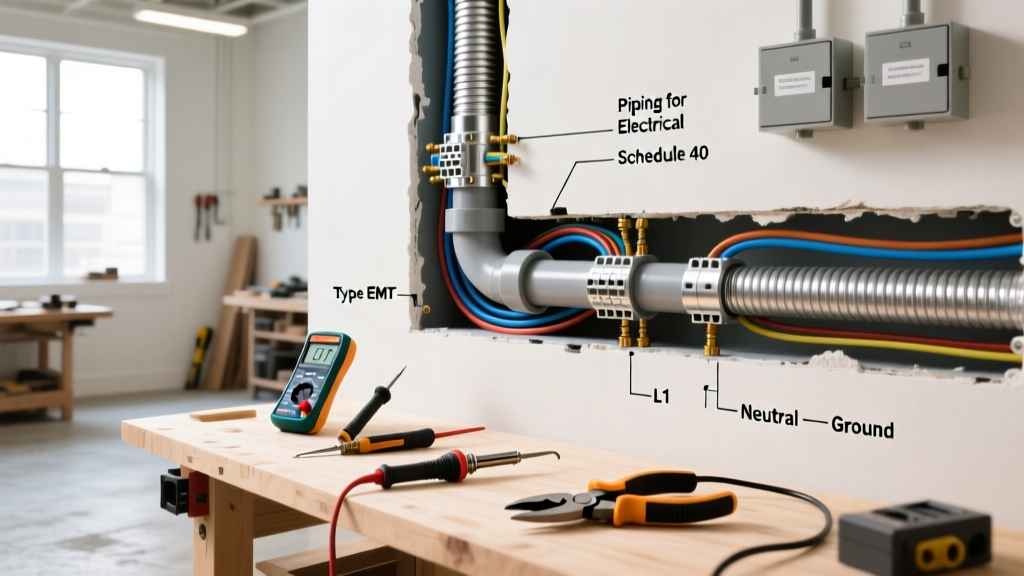

When general contractors, remodelers, or DIY enthusiasts search for piping for electrical wiring, they are usually crossing into a dangerous terminology trap that leads to immediate inspection failures. In the electrical trade, the correct term is conduit or raceway. The word "piping" belongs to the plumbing and HVAC trades. While a 3/4-inch white plastic tube from the plumbing aisle might look physically identical to a 3/4-inch white plastic tube from the electrical aisle, their chemical compositions, fire ratings, and manufacturing tolerances are vastly different.
As an electrical inspector or a contractor preparing for a rough-in inspection in 2026, understanding the distinction between plumbing pipe and UL-listed electrical conduit is critical. Using the wrong material doesn't just violate the National Electrical Code (NEC); it creates severe fire hazards, wire-pulling nightmares, and costly remediation work. This guide breaks down the exact code requirements, material differences, and inspection checkpoints for non-metallic raceways.
The "Piping" vs. Conduit Terminology Trap in Inspections
Inspectors are trained to look for specific manufacturer stamps and UL (Underwriters Laboratories) listing marks on all raceways. When an inspector walks onto a job site and sees plumbing-grade PVC (often marked with ASTM D1785 or NSF-pw) being used to route THHN/THWN conductors, the installation is immediately red-tagged.
According to the National Fire Protection Association (NFPA 70), specifically NEC Article 352, Rigid Polyvinyl Chloride Conduit (Type PVC) must be listed for electrical use. Plumbing pipes are tested for water pressure and chemical resistance, not for the heat generated by electrical short circuits or the friction of pulling copper wire.
NEC 2023/2026 Reference: "Equipment and materials shall be listed or labeled for the specific application." Using unlisted plumbing piping for electrical wiring violates NEC 110.2 and 110.3(A), as plumbing pipe lacks the required fire-retardant additives and UV stabilizers mandated for electrical raceways.
Material Comparison Matrix: Plumbing Pipe vs. Electrical Conduit
To understand why inspectors reject plumbing piping for electrical wiring, review the physical and chemical differences between the materials commonly found in big-box stores.
| Feature | Plumbing PVC (Sch 40) | Electrical PVC (Sch 40 UL651) | EMT (Steel Conduit) |
|---|---|---|---|
| Primary Standard | ASTM D1785 (Pressure) | UL 651 / NEC Article 352 | UL 797 / NEC Article 358 |
| Fire Retardancy | None (Toxic smoke when melting) | Self-extinguishing additives | Non-combustible |
| UV Resistance | Degrades rapidly in sunlight | UV inhibitors (if marked Sun Res) | Requires corrosion coating |
| Internal Finish | May have molding ridges | Extruded smooth (low friction) | Smooth galvanized zinc |
| Avg Cost (3/4" x 10ft) | $2.95 | $3.80 | $6.50 |
Note: The $0.85 savings per stick of plumbing PVC is entirely wiped out by a standard $150–$250 municipal re-inspection fee, not to mention the labor cost of tearing out and replacing the failed run.
Top 3 Code Violations Inspectors Flag with "Piping"
If you attempt to use plumbing components for electrical routing, you will inevitably trigger one of these three major NEC violations during the rough-in or final inspection.
1. The Sweep Radius and Wire Shredding Hazard
Plumbing systems rely on directional fittings, sharp 90-degree elbows, and tee-joints to route water. Electrical systems require long-radius sweeps to allow fish tape and wire pulling lubricants to guide conductors around corners. A plumbing 90-degree elbow has a tight internal radius and often features a microscopic "step" or ridge where the injection mold halves meet. When a contractor pulls 10 AWG THHN through a plumbing elbow, that ridge acts like a cheese grater, stripping the wire insulation and creating a hidden ground-fault or short-circuit hazard inside the wall.
2. Missing Thermal Expansion Fittings
PVC expands and contracts significantly with temperature changes. Per NEC 352.44, expansion fittings are required for outdoor PVC runs where the temperature change exceeds 25°F. Electrical PVC expands at a rate of 3.38 inches per 100 feet for every 100°F temperature change. Electrical manufacturers (like Carlon or Atkore) produce specific expansion couplings (e.g., Carlon E975R) designed to accommodate this movement while maintaining a continuous grounding path. Plumbing pipes do not have compatible, UL-listed electrical expansion fittings, meaning long outdoor runs will inevitably buckle, snap, or pull apart at the glued joints.
3. Improper Support Spacing
Inspectors measure the distance between conduit straps. NEC Table 352.30 dictates that 1/2-inch through 1-inch PVC conduit must be secured within 3 feet of every outlet box, junction box, or fitting, and at intervals not exceeding 3 feet. Plumbing installers are used to supporting horizontal drain lines every 4 feet (per IPC code). If an inspector sees 4-foot spacing on an electrical PVC run, it fails immediately for inadequate support, which can lead to sagging and water pooling inside the raceway.
Underground Burial Depths: Where "Piping" Fails the Trench Inspection
One of the most common scenarios where DIYers search for piping for electrical wiring is for underground feeder runs to a detached garage, shed, or landscape lighting transformer. The Electrical Safety Foundation International (ESFI) heavily emphasizes strict adherence to trench depths to prevent accidental shovel or aerator strikes.
If an inspector sees non-UL-listed plumbing pipe in a trench, they cannot legally classify it as a "raceway." They will classify the installation as unprotected direct burial, which requires a much deeper trench.
| Wiring Method | Minimum Burial Depth (Residential) | Inspector Classification |
|---|---|---|
| Rigid Metal Conduit (RMC/IMC) | 6 inches | Approved Raceway |
| UL-Listed PVC Electrical Conduit | 18 inches | Approved Raceway |
| Plumbing PVC (Non-Listed) | Treated as Direct Burial (24 inches) | Code Violation / Unprotected |
| UF-B Direct Burial Cable (No Conduit) | 24 inches | Approved Cable Type |
The Failure Mode: A homeowner digs a 12-inch trench and lays plumbing PVC over their THWN-2 wires, thinking they are protected. The inspector measures 12 inches, notes the pipe is not UL-listed for electrical use, and fails the inspection because unprotected wire requires 24 inches of cover. The homeowner must now dig the trench 12 inches deeper, or pull the wire out and buy proper electrical PVC.
Step-by-Step Inspection Prep for PVC Conduit Runs
To ensure your non-metallic raceway installation passes the rough-in inspection on the first visit, follow this targeted checklist based on OSHA and NEC wiring method standards.
- Verify the Stamp: Before gluing, check every 10-foot stick for the "UL Listed" mark, the manufacturer name (e.g., Carlon, JM Eagle), and the "Sun Res" marking if any part of the run is exposed to direct sunlight.
- Use Electrical Sweeps: Never use plumbing elbows. Purchase factory-molded electrical sweeps (Schedule 40 or Schedule 80 depending on physical protection needs) that feature a gradual, sweeping radius.
- Deburr and Chamfer: Use a PVC reaming tool on every cut end. Inspectors will shine a flashlight into the conduit ends; if they see jagged plastic burrs that could damage wire insulation, they will fail the run.
- Apply Proper Solvent Cement: Use clear or gray PVC cement specifically formulated for electrical conduit (e.g., Oatey Medium-Bodied Clear Cement). Do not use plumbing cements that contain aggressive primers designed for high-pressure water seals, as they can degrade the conduit wall over time.
- Install a Pull String: For any conduit run with more than two 90-degree sweeps, leave a nylon mule tape or pull string inside the pipe. Inspectors look for this as a sign of professional foresight and code compliance regarding future wire pulling.
Expert Troubleshooting: What if You Already Installed Plumbing Pipe?
If you are a remodeler taking over a botched DIY project, or a homeowner who accidentally glued plumbing PVC for an exterior circuit, do not attempt to "sneak it past" the inspector. The liability of an electrical fire originating inside an unlisted, non-fire-retardant plastic tube is catastrophic.
Remediation Strategy: Cut out the plumbing fittings and replace them with UL-listed electrical PVC. If the straight runs of plumbing pipe are perfectly straight, undamaged, and properly supported, some lenient local AHJs (Authority Having Jurisdiction) might allow the straight plumbing pipe to remain if it is transitioned to proper electrical sweeps and boxes using approved adapters, provided the pipe is physically accessible and not concealed behind drywall. However, in 95% of jurisdictions, the entire run must be torn out and replaced with UL 651 listed conduit to ensure the fire-retardant additives are present throughout the entire circuit path.
Ultimately, when sourcing materials for your next project, abandon the search for "piping" and head straight to the electrical aisle. The minimal upfront cost of proper conduit guarantees code compliance, protects your wire insulation, and ensures a safe, long-lasting electrical installation.