
The Foundation of 120V Circuits: Black and White Wires
When navigating electrical wiring colors, black and white conductors form the absolute foundation of residential and light commercial 120-volt circuits in North America. While modern electrical panels may feature a rainbow of THHN wires, the standard non-metallic (NM-B) cable relies strictly on black, white, and bare copper to deliver power safely. Misunderstanding the specific roles, material properties, and National Electrical Code (NEC) mandates for these two colors is a leading cause of reversed polarity, overloaded neutrals, and electrical fires.
This comprehensive material and tool guide breaks down the exact specifications of black (ungrounded/hot) and white (grounded/neutral) wires, compares cable types, and provides professional-grade termination techniques for DIYers and journeyman electricians alike.
Core Functions: Hot vs. Neutral
To work safely with these conductors, you must understand their distinct electrical roles within a single-phase AC circuit:
- Black Wire (Ungrounded/Hot): This conductor carries the 120V alternating current from the breaker panel to the load (receptacle, switch, or fixture). It is the source of the voltage potential and is always considered dangerous, even when the load is turned off, unless the circuit breaker is physically opened.
- White Wire (Grounded/Neutral): This conductor provides the return path for the current back to the electrical panel's neutral bus bar, completing the circuit. Under normal operating conditions, the white wire carries the exact same amperage as the black wire. However, because it is bonded to ground at the main service disconnect, its voltage potential relative to earth is near zero.
Material Breakdown: NM-B vs. THHN/THWN-2
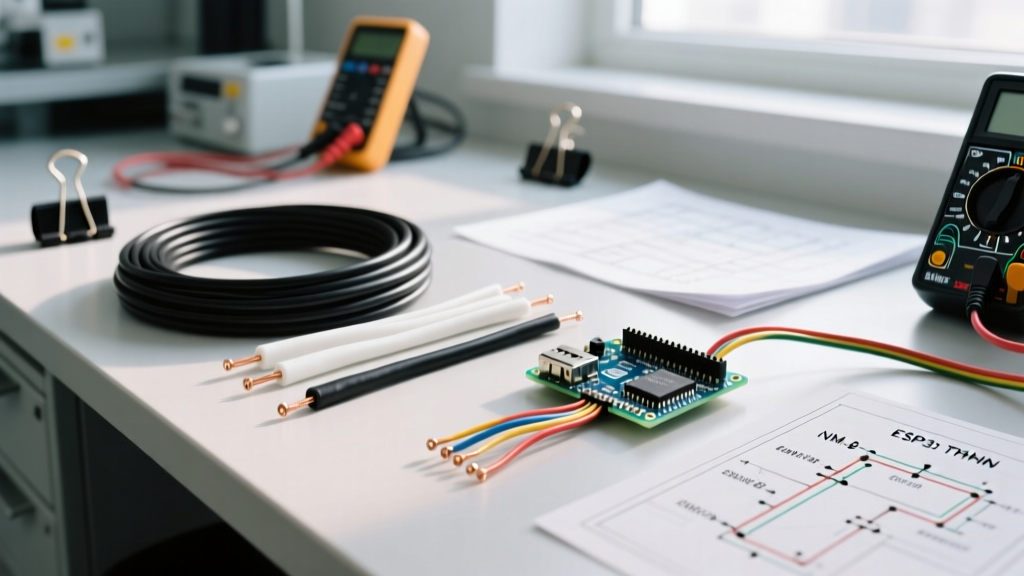
Black and white wires are manufactured in two primary formats for branch circuit wiring: bundled Non-Metallic Sheathed Cable (NM-B, commonly known by the brand name Romex) and individual thermoplastic wires (THHN/THWN-2) pulled through conduit. Selecting the right material depends on your installation environment and local code amendments.
| Material Type | Gauge & Colors | Insulation / Jacket | Max Temp Rating | 2026 Avg. Cost (per ft) | Primary Use Case |
|---|---|---|---|---|---|
| 14/2 NM-B | 14 AWG (Black, White, Bare) | PVC Jacket / THHN Insulation | 90°C (Ampacity rated at 60°C) | $0.48 | 15A Lighting & Receptacle Circuits |
| 12/2 NM-B | 12 AWG (Black, White, Bare) | PVC Jacket / THHN Insulation | 90°C (Ampacity rated at 60°C) | $0.68 | 20A Kitchen, Bath, & Appliance Circuits |
| 14 AWG THHN | Individual Black or White | PVC/Nylon THHN/THWN-2 | 90°C (Dry), 75°C (Wet) | $0.22 | Conduit Runs, Commercial Lighting |
| 12 AWG THHN | Individual Black or White | PVC/Nylon THHN/THWN-2 | 90°C (Dry), 75°C (Wet) | $0.34 | Conduit Runs, 20A Commercial Circuits |
Note: While THHN insulation is rated for 90°C, NEC Article 310.15(B)(16) requires branch circuits rated 100A or less (and sized 14-1 AWG) to have their ampacity calculated using the 60°C column, unless the termination points (breakers and receptacles) are explicitly rated for 75°C.
NEC Code Requirements for White and Black Wires
The National Fire Protection Association (NFPA 70), which publishes the NEC, strictly regulates the use of these colors to ensure uniform safety across the industry.
The Grounded Conductor Mandate
According to NEC Article 200.2 and OSHA 1910.304 Wiring Design Standards, the grounded (neutral) conductor must be continuous and easily identifiable by its white or gray insulation. You cannot use a white wire as a hot conductor without permanently re-identifying it.
⚠️ The Switch Loop Exception & 2026 Code Updates:
Historically, electricians used 2-wire cables for switch loops, sending hot down on the white wire and returning switched-hot on the black wire. The white wire was re-identified with black tape. However, modern NEC requirements mandate a neutral wire at all switch locations to support smart switches and timers. Therefore, you must now use 3-wire cable (e.g., 14/3) for new switch loops, reserving the white wire strictly for the neutral return and using black and red for the hot and switched-hot legs.
Essential Tools for Stripping and Terminating
Proper termination of black and white wires prevents arcing, voltage drop, and thermal expansion failures. Ditch the generic pocket knife and invest in precision tools calibrated for specific wire gauges.
- Wire Strippers: The Klein Tools 11063W Katapult (approx. $34) automatically strips 14 and 12 AWG wires without nicking the copper conductor. Nicked copper creates a micro-fracture that will snap under thermal cycling.
- Lever Connectors: WAGO 221-412 2-conductor lever nuts (approx. $0.45 each). These provide a gas-tight, maintenance-free connection and allow for instant visual verification of the wire seat through the transparent polycarbonate housing.
- Twist Connectors: IDEAL 35-084 Twister wire nuts (approx. $0.12 each). Features a built-in wire stripper notch and a square-wire spring that bites into the copper for high pull-out resistance.
- Torque Screwdriver: For terminating black and white wires directly to receptacle screw terminals, use a calibrated torque driver (like the Milwaukee M12 1/4-inch Torque Driver) set to the manufacturer's spec—typically 12 to 14 lb-in for standard 15A/20A duplex receptacles.
Step-by-Step: Properly Terminating a Black and White Connection
- Measure and Strip: For WAGO 221 connectors, strip exactly 11mm (7/16") of insulation. For IDEAL wire nuts, strip 19mm (3/4"). Use the gauge-specific hole on your Klein strippers to avoid shaving the copper.
- Inspect the Copper: Ensure no insulation is pushed up under the copper, and verify there are no deep gouges in the metal.
- Insert (WAGO Method): Push the stripped black wire into port 1 until it hits the internal stop. Flip the orange lever down. Repeat for the white wire in port 2. Tug gently (approx. 5 lbs of force) to verify the clamp is engaged.
- Twist (Wire Nut Method): Align the stripped black and white wires parallel to each other. Do not pre-twist them with pliers, as this can damage the conductors. Push the IDEAL Twister onto the wires and rotate clockwise until the wire nut clicks or the wires twist together at the base of the nut.
- Verify: Use a non-contact voltage tester (e.g., Klein NCVT-3) to ensure the black wire is hot and the white wire is not energized before closing up the junction box.
Common Failure Modes and Troubleshooting
Even experienced electricians can make critical errors when managing black and white conductors in complex circuits. Here are the most dangerous failure modes to watch for:
1. The Multi-Wire Branch Circuit (MWBC) Shared Neutral Overload
In an MWBC, two black wires (from different phases, e.g., Phase A and Phase B) share a single white neutral wire. If the two black wires are placed on the same phase leg in the panel, or if they are not on a handle-tied 2-pole breaker, the white neutral wire will carry the sum of the two loads rather than the difference. This can push 32 amps of current through a 12 AWG white wire rated for only 20 amps, melting the insulation inside the walls without tripping a breaker.
2. Reversed Polarity at Receptacles
If the black and white wires are swapped at a receptacle (black to the silver screw, white to the brass screw), the device will still function. However, the internal fuse or switch of the plugged-in appliance will only interrupt the neutral path, leaving the internal components energized at 120V even when turned off, creating a severe shock hazard during maintenance.
3. Bootleg Neutrals
In older remodels, a DIYer might jumper the white neutral terminal to the bare ground screw to trick a receptacle tester into reading "correct." This forces the equipment grounding conductor to carry normal return current, electrifying the grounding system and any connected metal appliance enclosures.
Frequently Asked Questions (FAQ)
Can I use a white wire as a ground?
No. NEC Article 250.119 strictly requires equipment grounding conductors to be bare, covered, or insulated green (or green with yellow stripes). Using a white wire as a ground is a severe code violation that will fail inspection and create a shock hazard.
Why is my white wire reading 120V with a multimeter?
If a white neutral wire reads 120V to ground, you likely have an "open neutral" condition upstream. The current is attempting to return to the panel but is blocked by a loose wire nut or broken conductor. The voltage is back-feeding through the connected load (like a lightbulb) and energizing the white wire up to the break.
Does the black wire always go on the brass screw?
Yes. Standard industry practice and manufacturer instructions dictate that the black (hot) wire terminates on the brass-colored screw, while the white (neutral) wire terminates on the silver-colored screw. Remember the mnemonic: "Black to Brass, or you'll be on your ass."