
Understanding L1 and L2 in Split-Phase Systems
In North American residential and light commercial electrical systems, L1 L2 electrical wiring forms the backbone of high-power 240V circuits. Unlike single-phase 120V circuits that utilize one hot leg and a neutral, L1 (Line 1) and L2 (Line 2) represent the two distinct 120V hot legs delivered by the utility transformer. Because these legs are 180 degrees out of phase with one another, the potential difference between L1 and L2 is 240V, while the difference between either leg and the neutral or ground is 120V.
Whether you are wiring a Level 2 Electric Vehicle Supply Equipment (EVSE) charger, a subpanel, or a heavy appliance like an electric range, selecting the correct materials and tools is non-negotiable. As of 2026, copper pricing has stabilized, but the National Electrical Code (NEC) has become increasingly stringent regarding termination torque and wire ampacity derating. This guide details the exact materials, hardware, and tools required to execute L1 and L2 wiring safely and to code.
Cable and Wire Selection Matrix for 240V Circuits
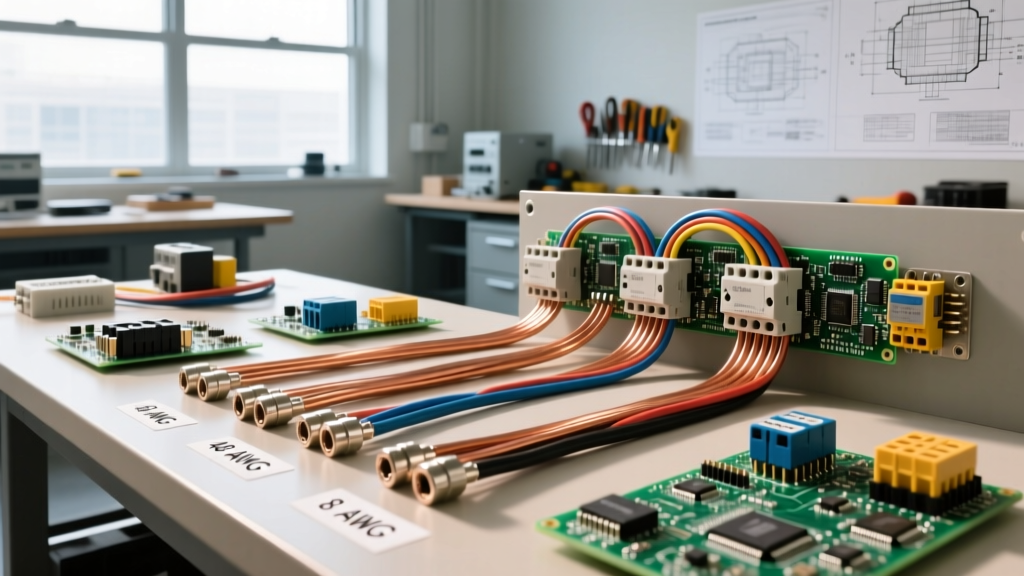
Choosing the right cable type depends entirely on the installation environment. A common and dangerous mistake is using standard NM-B (Romex) in wet locations or exceeding its temperature ratings. Below is a comparison of the primary cable types used for L1/L2 wiring.
| Cable Type | Best Application | Max Temp Rating | 2026 Avg. Cost (250ft, 6 AWG) | NEC Constraints |
|---|---|---|---|---|
| NM-B (Romex) | Interior, dry, concealed walls | 90°C (but ampacity limited to 60°C column) | $360 - $410 | NEC 334.80 restricts ampacity to 60°C column. 6 AWG is max 55A. |
| THHN/THWN-2 | Interior/exterior conduit runs | 90°C (ampacity based on 75°C terminations) | $280 - $320 (per 3 wires) | Must be in conduit. Fill capacity limits apply (NEC Chapter 9). |
| UF-B | Direct burial, outdoor damp locations | 90°C (ampacity limited to 60°C column) | $450 - $520 | Requires deep trenching (24 inches) unless protected by conduit. |
| SER (Service Entrance) | Subpanels, heavy HVAC, ranges | 90°C (75°C ampacity column) | $5.50 - $7.00 per foot | Can be run inside without conduit. Excellent for 4-wire L1/L2/N/G. |
The 6 AWG Ampacity Trap
Many DIYers assume 6 AWG copper wire is universally rated for 60 Amps. While the 75°C column in NEC Table 310.16 lists 6 AWG at 65A, and the 90°C column lists it at 75A, NEC 110.14(C) dictates that for circuits 100A or less, you must use the 60°C column for ampacity unless the equipment is specifically listed and marked for 75°C terminations. Most standard residential breakers and receptacles are rated for 75°C, allowing 6 AWG THHN to carry 65A (protected by a 60A breaker). However, if you use 6 AWG NM-B, NEC 334.80 forces you to use the 60°C column, capping its ampacity at 55A. You cannot protect a 55A wire with a 60A breaker unless it falls under specific HVAC motor exceptions.
Breaker Hardware and Panel Compatibility
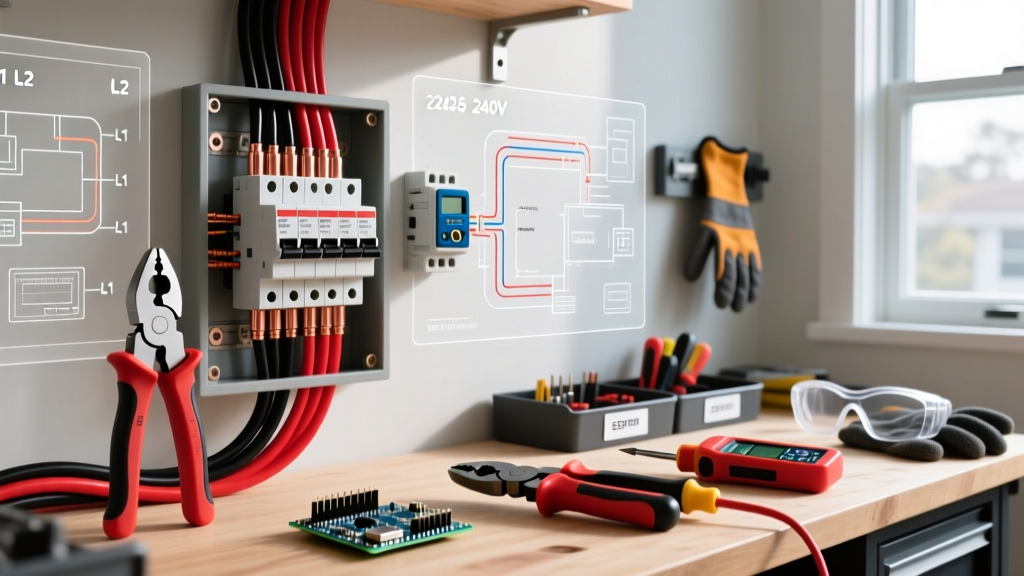
Wiring L1 and L2 requires a double-pole breaker that simultaneously disconnects both hot legs. This ensures that if a fault occurs on L1, L2 is also de-energized, protecting anyone working on the circuit.
- Square D Homeline (HOM): The HOM240 (40A) and HOM250 (50A) are industry standards. They feature a common trip mechanism and require 1-inch of panel space per pole (2 inches total).
- Siemens QT Series: Models like the Q240 (40A) are highly reliable. Siemens breakers often require a specific torque of 35 in-lbs for the wire binding screws.
- Eaton BR Series: The BR250 (50A) utilizes a distinctive tan/black handle design and requires 40 in-lbs of torque on the terminal screws.
Warning: Never use two independent single-pole breakers tied together with a handle tie for standard L1/L2 branch circuits unless it is a specifically listed multi-wire branch circuit (MWBC) configuration. Standard 240V loads require a factory-assembled double-pole breaker with an internal common trip.
Mandatory Tools for Safe L1/L2 Termination
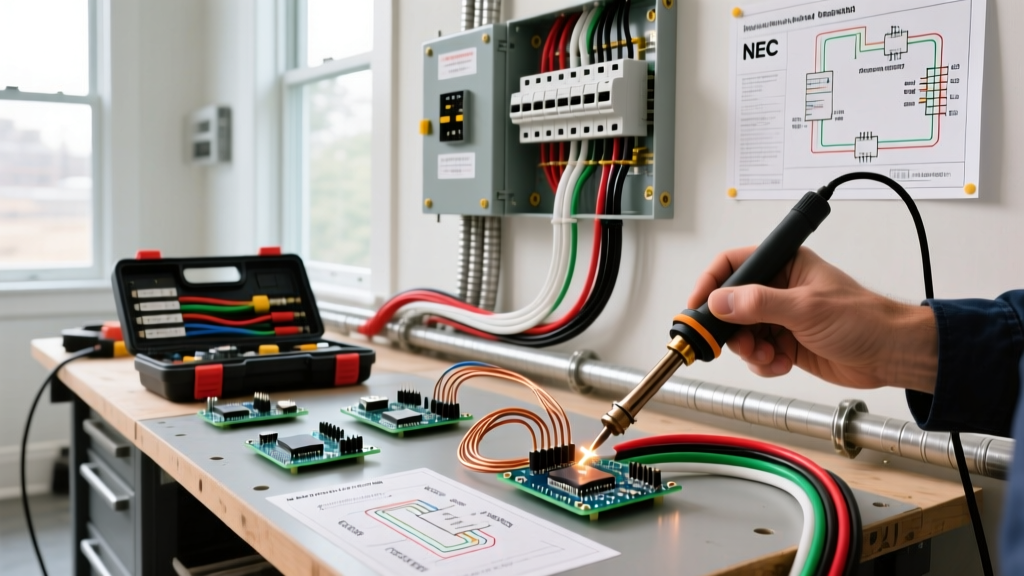
The days of tightening breaker terminals until they 'feel tight' are over. The NEC now strictly enforces calibrated torque requirements to prevent arc faults and thermal runaway.
CRITICAL CODE UPDATE: NEC 110.14(D) mandates that all electrical terminations must be tightened using a calibrated torque tool to the manufacturer's specified values. Failure to do so is an automatic inspection fail in most jurisdictions and a leading cause of panel fires. For more on NEC standards, refer to the National Fire Protection Association (NFPA).
Essential 2026 Tool Kit for 240V Wiring
- Wiha 61061 Insulated Torque Screwdriver: Pre-set to 40 in-lbs (adjustable models available). Essential for Square D and Eaton breakers. Cost: ~$145.
- Klein Tools 11063W Wire Stripper: Handles 8-22 AWG solid and stranded wire without nicking the copper, which reduces the wire's cross-sectional area and creates a hot spot. Cost: ~$32.
- Fluke 117 True RMS Multimeter: Required to verify 240V across L1 and L2, and 120V from each leg to ground/neutral. The non-contact VoltAlert feature is a lifesaver for initial dead-circuit verification. Cost: ~$210.
- Knipex 13 88 250 Lineman Pliers: For twisting and pulling heavy 6 AWG and 8 AWG wires through junction boxes. Cost: ~$65.
Multi-Wire Branch Circuits (MWBC) and Shared Neutrals
When wiring L1 and L2 circuits that also require a 120V neutral (such as a 4-wire dryer or range receptacle), you are creating a Multi-Wire Branch Circuit. Because L1 and L2 are 180 degrees out of phase, the neutral wire only carries the imbalance of the current between the two legs. If L1 draws 15A and L2 draws 12A, the neutral carries only 3A.
The Edge Case Danger: If an electrician mistakenly wires L1 and L2 to the same phase leg (e.g., both on L1), the phases no longer cancel each other out. The neutral wire will carry the sum of the currents (15A + 12A = 27A), which will overload a standard 14 AWG or 12 AWG neutral wire, causing it to melt and catch fire inside the walls. Always verify 240V between the two hot wires with a multimeter before connecting the neutral.
Furthermore, NEC 210.4(B) requires that all ungrounded (hot) conductors of an MWBC be provided with a means to disconnect simultaneously. This is achieved by using a double-pole breaker or approved handle ties on adjacent single-pole breakers.
Lockout/Tagout (LOTO) and Safety Protocols
Working on L1 and L2 bus bars inside a live panel exposes you to 240V potential and high available fault current. Before removing the panel cover, the main breaker must be switched off. However, the utility feed lugs at the top of the main breaker remain energized. According to OSHA's Lockout/Tagout (LOTO) standards, you must apply a physical lock to the main breaker mechanism and wear appropriate PPE, including an arc-flash rated face shield and voltage-rated gloves, when working near the service entrance lugs.
Real-World Application: Wiring a Level 2 EV Charger
The most common 2026 residential L1/L2 project is installing a 48A Level 2 EV charger (like the ChargePoint Home Flex or Tesla Wall Connector). A 48A continuous load requires a circuit rated for 125% of the load, meaning you need a 60A breaker and wire rated for 60A.
- Wire Choice: 4 AWG THHN/THWN-2 run in 3/4-inch PVC or EMT conduit, or 4 AWG NM-B (if run through dry framing, though 4 AWG NM-B is stiff and difficult to pull).
- Termination: The EVSE manufacturer will specify a torque value (often 45 in-lbs) for the internal terminal blocks. Use your Wiha torque driver.
- Grounding: A dedicated equipment grounding conductor (EGC) is required. Do not rely on the conduit alone unless using rigid metal conduit with listed grounding fittings.
For more on the energy efficiency and grid impact of home EV charging, the U.S. Department of Energy provides excellent guidelines on load management and utility rebates.
Frequently Asked Questions (FAQ)
Can I use aluminum wire for L1 and L2 circuits?
Yes, but only for larger feeder circuits (like subpanels or heavy HVAC) using SER or XHHW-2 aluminum cable (e.g., 2-2-2-4 MH feeder). You must use an anti-oxidant compound like Noalox on aluminum terminations and ensure the breaker lugs are specifically rated for aluminum (AL/CU). Never use aluminum for standard 15A or 20A branch circuits.
Does it matter which wire goes to L1 and which goes to L2 on a 240V receptacle?
For pure 240V loads (like baseboard heaters or water heaters), L1 and L2 are interchangeable. However, for 120/240V appliances (like dryers and ranges) or EV chargers, the black wire typically goes to the brass/gold terminal (L1) and the red wire goes to the other hot terminal (L2). While swapping them usually won't damage the appliance, maintaining standard color coding (Black=L1, Red=L2, White=Neutral, Bare/Green=Ground) is critical for future troubleshooting and code compliance.
Why is my L1 to Neutral reading 120V, but L2 to Neutral is reading 0V?
You have a lost phase or an open neutral/leg issue. This could be caused by a tripped main breaker pole, a blown utility fuse on the transformer, or a broken L2 conductor. Turn off the main breaker immediately and contact your utility provider or a licensed electrician to test the service drop.