
Understanding the Load: Why Electric Ranges Need 50 Amps
Upgrading or installing a new kitchen stove is one of the most rewarding home improvement projects, but the electrical infrastructure must be flawless. When planning the wiring for electric range appliances, you are dealing with a 240-volt, high-amperage circuit that demands strict adherence to the National Electrical Code (NEC). A standard residential electric range typically draws between 40 and 50 amps under peak load (such as running the oven and multiple stovetop burners simultaneously during a self-cleaning cycle).
According to NFPA's National Electrical Code (specifically Article 220.55), while demand factors allow for some load calculation adjustments, the standard branch circuit requirement for a freestanding electric range rated up to 12 kW is a 50-amp, 240-volt dedicated circuit. Attempting to wire this on a 30-amp or 40-amp breaker will result in nuisance tripping and potential fire hazards due to thermal overload.
3-Prong vs. 4-Prong Receptacles: The NEC Mandate
If you are wiring an older home, you might encounter a 3-prong NEMA 10-50R receptacle. Do not use this for new installations. Since the 1996 NEC revision, and strictly enforced in all modern 2023/2026 code cycles, new installations must utilize a 4-wire setup terminating in a NEMA 14-50R receptacle.
- 3-Wire (Obsolete for new installs): Two hots and a combined neutral/ground. This forces returning neutral current to flow over the equipment grounding conductor, creating a shock hazard if the neutral connection fails.
- 4-Wire (Current Code): Two hots (X and Y), one dedicated neutral (W), and one dedicated equipment ground (G). This isolates the current-carrying neutral from the safety ground, as mandated by NEC Article 250.140.
Materials & Tools Checklist (2026 Specs & Pricing)
Sourcing the correct materials is critical. Cheap receptacles often suffer from poor terminal grip, leading to arcing and melted plugs. Below is the professional-grade bill of materials for a standard 50-amp range circuit.
| Component | Specification / Model | Est. Cost |
|---|---|---|
| Wire Cable | 6/3 NM-B with Ground (Copper) | $4.50 / ft |
| Breaker | 50A 2-Pole (e.g., Square D HOM250) | $18.00 |
| Receptacle | NEMA 14-50R (Hubbell HBL9450A Heavy Duty) | $38.00 |
| Range Cord | 4-Prong, 50A, 4ft (e.g., GE WX09X10018) | $25.00 |
| Wall Plate | Single Gang, 50A Flush Plate | $6.00 |
| Torque Tool | Calibrated Torque Screwdriver (inch-lbs) | $45.00 |
Pro-Tip: While big-box stores sell generic 14-50R receptacles for $12, the Copper Development Association and seasoned electricians highly recommend the Hubbell HBL9450A. Its heavy-duty brass contacts provide superior clamping force, preventing the loose connections that cause 90% of melted range plugs.
Step-by-Step Installation: Wiring for Electric Range
Step 1: Panel Preparation and Breaker Installation
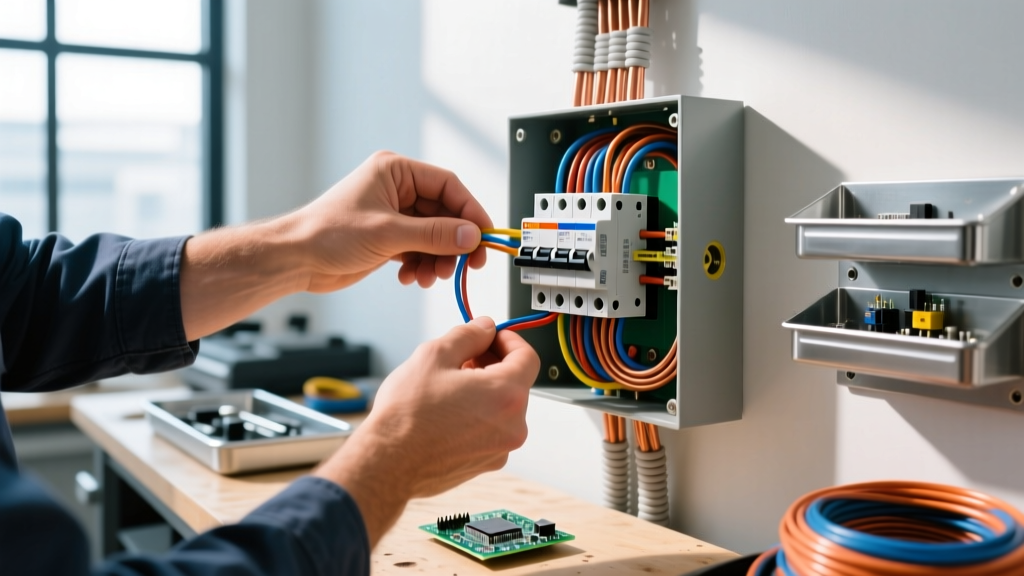
- Shut off the main breaker to de-energize the panel. Use a non-contact voltage tester and a multimeter to verify zero voltage at the bus bars.
- Snap the 50-amp 2-pole breaker into an available slot, ensuring it connects to opposite bus legs to achieve 240 volts.
- Route the 6/3 NM-B cable into the panel through a knockout, securing it with a 3/4-inch NM cable connector. Leave at least 8 inches of slack inside the panel.
Step 2: Routing and Securing the Cable
Per NEC Article 334.30, NM-B cable must be secured within 12 inches of the receptacle box and at intervals not exceeding 4.5 feet. Use approved cable staples. Do not overdrive the staples, which can crush the cable jacket and damage the internal wire insulation.
Step 3: Terminating the NEMA 14-50R Receptacle
Strip the outer NM jacket, leaving at least 1/4 inch of the jacket extending into the receptacle box. Strip 3/4 inch of insulation from the individual conductors.
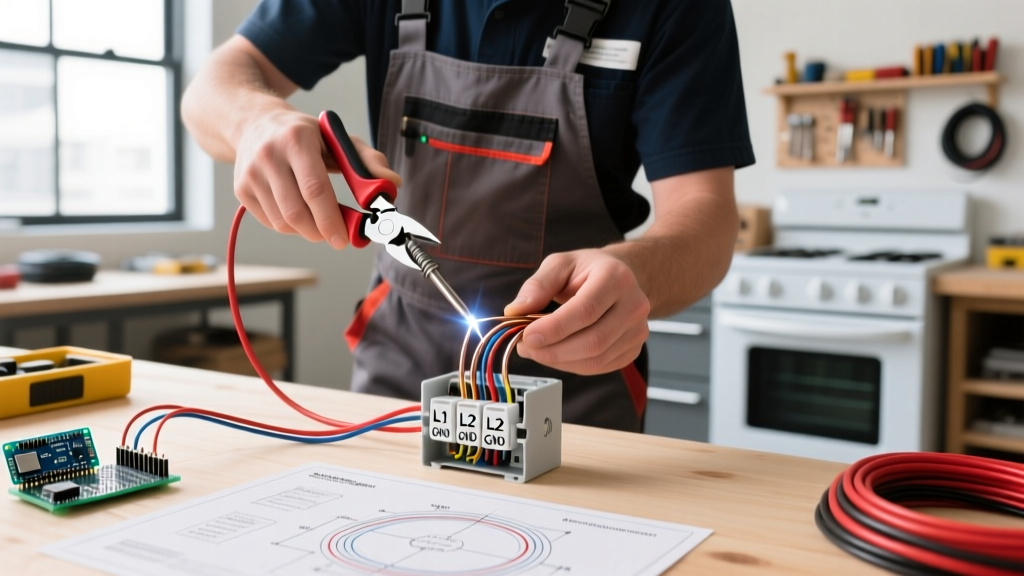
- Black (Hot 1): Connect to the right brass terminal (X).
- Red (Hot 2): Connect to the left brass terminal (Y).
- White (Neutral): Connect to the top silver terminal (W).
- Bare (Ground): Connect to the bottom green terminal (G).
CRITICAL CODE REQUIREMENT: NEC 110.14(D) requires that all terminations be torqued to the manufacturer's specifications using a calibrated torque tool. For the Hubbell HBL9450A, tighten the terminal screws to exactly 14 inch-pounds. Hand-tightening leads to thermal expansion cycles that loosen the wire over time, causing arcing and fires.
Step 4: Range-Side Cord Termination
This is where most DIYers make a fatal error. On the back of the electric range, remove the access cover to expose the terminal block.
- Remove the Bonding Jumper: If your range was previously set up for a 3-prong cord, there will be a copper strap or green wire connecting the center neutral terminal to the metal chassis. You must remove this strap. In a 4-wire system, the neutral and ground must remain completely isolated at the appliance.
- Connect the 4-prong cord: The two outer hots to the outer terminals, the white neutral to the center terminal, and the green ground to the chassis grounding screw.
- Install the strain relief clamp to prevent the cord from being pulled out of the terminal block.
Common Failure Modes & Troubleshooting
Even with perfect wiring, issues can arise. Here is how to troubleshoot the most common problems associated with electric range circuits:
- Melted Plug Prongs: Caused by under-torqued terminal screws at the receptacle or worn-out receptacle contacts. Replace both the cord and the receptacle with heavy-duty models.
- Range Clock/Timer Works, but Elements Won't Heat: This indicates a lost leg. One of the 120V hot wires is disconnected or the breaker has tripped on only one pole. Check breaker seating and hot terminations.
- Chassis Shock Hazard: If you feel a tingle when touching the range and a grounded sink, the bonding jumper was likely left in place on a 4-wire system, or the neutral and ground are swapped. Immediately disconnect power and verify terminal block wiring.
- GFCI Tripping: While NEC 2023 expanded GFCI requirements to many 250V receptacles, kitchen ranges are generally exempt unless located within 6 feet of a sink. If your local inspector requires a 50A GFCI breaker, ensure the range's internal EMI filters aren't causing nuisance trips; if they are, consult the appliance manufacturer for a compatible GFCI-rated model.
Frequently Asked Questions
Can I use aluminum wire for a 50-amp range circuit?
Yes, but you must upsize the wire. While 6 AWG copper is rated for 55 amps (allowing a 50A breaker), aluminum has higher resistance. You must use 4 AWG aluminum wire (such as 4-4-4-6 SER cable) for a 50-amp circuit. Additionally, you must use an anti-oxidant compound (like Noalox) on the aluminum terminations to prevent oxidation and subsequent overheating.
What if my new range came with a 3-prong cord but my house has a 4-prong outlet?
Never use an adapter. Instead, purchase a 4-prong range cord (NEMA 14-50P) and swap it on the back of the range. Remember to remove the internal bonding jumper when making the swap. For more on workplace and residential electrical safety standards, refer to the OSHA electrical safety guidelines.
Does a hardwired range require a disconnect switch?
If you choose to hardwire the range directly into a junction box rather than using a cord and receptacle, the branch circuit breaker in the main panel serves as the required disconnecting means, provided it is within sight of the appliance or can be locked out in the open position.