
Navigating the Language of Electrical Materials and Tools
Whether you are pulling permits for a new residential build, troubleshooting a commercial panel, or simply navigating the aisles of a big-box hardware store for a weekend DIY project, fluency in specific electrical wiring terms is non-negotiable. Misunderstanding the difference between THHN and NM-B, or confusing EMT with RMC, can lead to catastrophic code violations, failed inspections, or severe fire hazards. As jurisdictions across the country continue to adopt the 2023 and upcoming 2026 National Electrical Code (NEC) cycles, the precision of your material selection and tool usage is under greater scrutiny than ever.
This comprehensive material and tool guide decodes the essential electrical wiring terms you need to know, focusing specifically on the physical components, insulation types, raceways, and diagnostic hardware used in modern electrical installations.
⚠️ SAFETY & CODE COMPLIANCE WARNING: The Occupational Safety and Health Administration (OSHA) strictly mandates that all electrical work be performed with an understanding of the specific materials' voltage and environmental ratings. Always verify local amendments to the NEC before purchasing materials, as local inspectors may have specific regional requirements for conduit and cable types.
Core Conductor & Cable Material Terms
The foundation of any electrical system lies in its conductors. Below are the critical terms used to describe the physical cables and wires you will handle on the job site.
| Term / Acronym | Full Name | Jacket / Insulation | Primary Application | NEC Article | Avg. Cost (250ft Roll) |
|---|---|---|---|---|---|
| NM-B | Non-Metallic Sheathed Cable | PVC Outer Jacket, THHN inner | Interior dry-wall residential framing | Article 334 | $110 - $145 |
| THHN/THWN-2 | Thermoplastic High Heat Nylon | PVC insulation, Nylon jacket | Conduit pulls, commercial panels | Article 310 | $65 - $90 (per spool) |
| UF-B | Underground Feeder | Solid, moisture-resistant PVC | Direct burial, outdoor lighting | Article 339 | $160 - $210 |
| MC | Metal-Clad Cable | Interlocked aluminum armor | Commercial exposed runs, hospitals | Article 330 | $220 - $280 |
Understanding 'Romex' vs. NM-B
While 'Romex' is frequently used as a catch-all electrical wiring term for residential indoor cable, it is actually a trademarked brand name owned by Southwire. The correct industry and NEC term is NM-B (Non-Metallic Sheathed Cable, Type B). The 'B' designates that the internal conductors are rated for 90°C (194°F), a standard that has been mandatory for decades. When purchasing, you will specify the gauge and number of current-carrying conductors, such as '12/2 with ground' (meaning two 12-AWG insulated conductors plus a bare copper ground).
Insulation & Jacket Terminology
The materials wrapping the copper or aluminum conductors dictate where and how the wire can be used. Understanding these polymer terms is crucial for preventing insulation breakdown and short circuits.
- PVC (Polyvinyl Chloride): The most common thermoplastic insulation. It is flexible, cost-effective, and flame-retardant, but becomes brittle in extreme cold and can melt under high-heat fault conditions.
- XLPE (Cross-Linked Polyethylene): A thermoset insulation created by chemically linking polymer chains. XLPE offers superior thermal stability and is often used in high-voltage or high-temperature industrial applications where standard PVC would fail.
- Nylon Jacket: Found on THHN wire, this ultra-thin outer layer provides exceptional resistance to oil, gasoline, and mechanical abrasion during conduit pulls. However, nylon is highly susceptible to water degradation over time, which is why the underlying PVC must be rated for wet locations (THWN-2) if exposed to moisture.
Conduit & Raceway Definitions
Raceways protect wires from physical damage and environmental hazards. Using the wrong raceway terminology when ordering materials can result in massive delays and failed inspections.
EMT (Electrical Metallic Tubing)
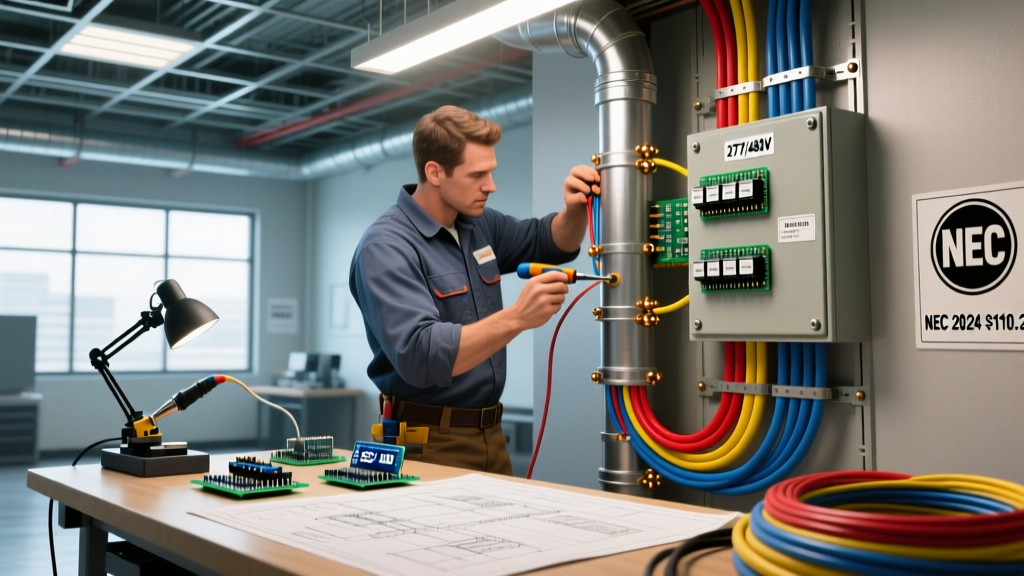
Often called 'thin-wall' conduit, EMT is an unthreaded steel or aluminum raceway. It is lightweight, easy to bend with a hand bender, and secured using set-screw or compression fittings. It is the standard for interior commercial wiring but cannot be used where subject to severe physical damage.
RMC (Rigid Metal Conduit) vs. IMC
RMC is 'rigid conduit'—a heavy-duty, threaded steel pipe used in hazardous locations, underground encasement, or areas prone to severe impact. IMC (Intermediate Metal Conduit) is slightly thinner and lighter than RMC but is approved for all the same applications, making it the modern preferred choice for heavy-duty metallic raceways.
PVC Schedule 40 vs. Schedule 80
PVC conduit is essential for underground runs and corrosive environments. Schedule 40 is standard for underground burial and normal above-ground use. Schedule 80 features a thicker wall and is strictly required by the NEC in areas subject to physical damage, such as the bottom 8 feet of a wall in a commercial garage or exposed exterior corners.
Hardware, Fasteners, & Connectors
The Consumer Product Safety Commission (CPSC) notes that loose connections are a leading cause of residential electrical fires. Knowing the exact terminology for connectors ensures you buy the right hardware for the specific wire gauge and strand type.
Twist-On Connectors (Wire Nuts)
Color-coded by size and capacity. For example, the industry-standard Ideal 34 Yellow wire nut is rated to connect a minimum of two #14 AWG wires up to a maximum of three #10 AWG wires. They rely on a coiled steel insert to bite into the copper and maintain torque over decades of thermal expansion and contraction.
Push-In / Lever Connectors
Brands like Wago have revolutionized junction box terminations. The Wago 221 Series Lever Nuts (e.g., the 221-413 for three conductors) allow for the connection of solid, stranded, and flexible stranded wires simultaneously without twisting. While they cost roughly $0.35 each compared to $0.08 for a traditional wire nut, they reduce installation time by up to 50% and provide a transparent housing to visually verify wire seating depth.
Cable Clamps & Strain Relief
When transitioning NM-B cable into a metal junction box or panel, the NEC requires a listed connector to protect the cable jacket from the sharp metal knockout edge. The Arlington NM94 is a popular 'snap-in' non-metallic cable connector that requires no locknut, saving electricians hours of labor on large commercial fit-outs.
Diagnostic Tools & Testing Vocabulary
You cannot safely work on what you cannot measure. Familiarity with testing tool terminology is a hallmark of a professional.
- NCVT (Non-Contact Voltage Tester): A capacitive sensor that detects the alternating electric field around a live conductor. The Klein Tools NCVT-2 (~$35) is a dual-range staple, capable of detecting standard 120V/240V circuits as well as low-voltage 12V-70V doorbell and thermostat wiring.
- DMM (Digital Multimeter): Used to measure exact voltage, current, and resistance. For electrical wiring, a True-RMS DMM with a CAT III (1000V) or CAT IV (600V) safety rating is mandatory. The Fluke 117 (~$220) is the industry benchmark, featuring 'VoltAlert' built-in non-contact detection and 'AutoVolts' to automatically differentiate between AC and DC.
- Fish Tape / Draw Wire: A coiled steel, fiberglass, or nylon tape used to pull wires through conduit. The Milwaukee 48-22-7100 Premium Steel Fish Tape features a specialized tip designed to navigate tight PVC sweeps without kinking or binding.
- Tone Generator & Probe: Used for tracing hidden wires inside walls or identifying specific circuits in a massive, unlabeled panel. Often referred to generically by the brand name 'Fox and Hound'.
Frequently Asked Questions (FAQ)
What does 'Ampacity' mean in electrical wiring terms?
Ampacity is the maximum amount of electric current a conductor or device can carry before sustaining immediate or progressive deterioration. It is dictated by the wire gauge, the insulation temperature rating (e.g., 60°C vs 90°C), and the ambient temperature of the environment, as detailed in NEC Table 310.15(B)(16).
What is the difference between a 'Neutral' and a 'Ground'?
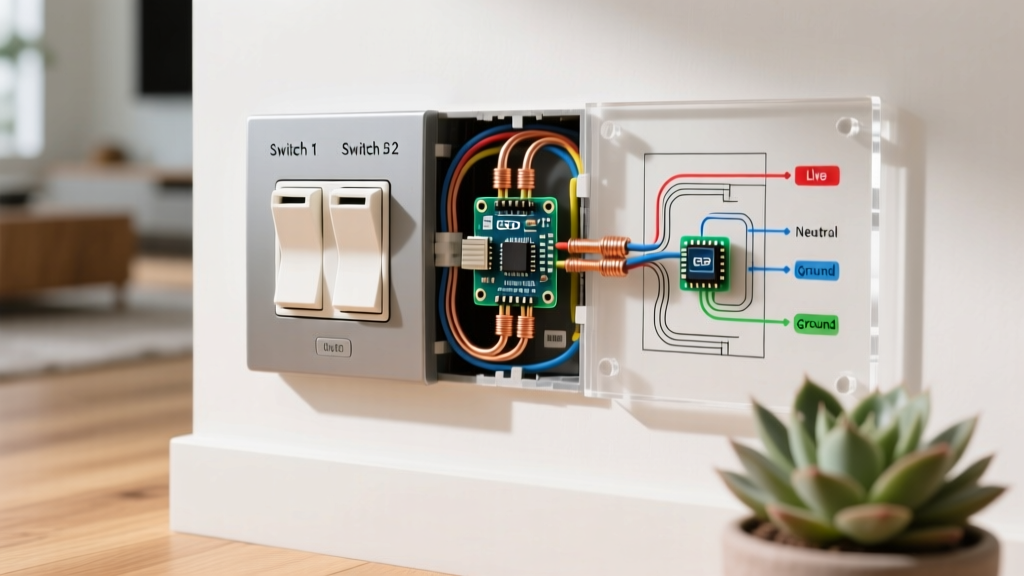
While both are connected to the earth at the main service panel, they serve entirely different functions. The Neutral is a current-carrying conductor that completes the circuit back to the source under normal operation. The Ground (Equipment Grounding Conductor) is a safety path that carries current ONLY during a fault condition, tripping the breaker to prevent electrocution.
Where can I find the official definitions for NEC wiring terms?
Article 100 of the National Electrical Code contains the official definitions for all standardized electrical wiring terms. You can access code updates, definitions, and safety standards directly through the National Fire Protection Association (NFPA) portal.
Final Thoughts on Material Selection
Mastering these electrical wiring terms bridges the gap between an amateur DIYer and a seasoned professional. By understanding the exact material compositions, insulation ratings, and tool specifications, you ensure that your installations are not only compliant with the latest 2026 NEC standards but are also built to last safely for decades. Always cross-reference your material purchases with your local AHJ (Authority Having Jurisdiction) to guarantee full compliance on your next project.