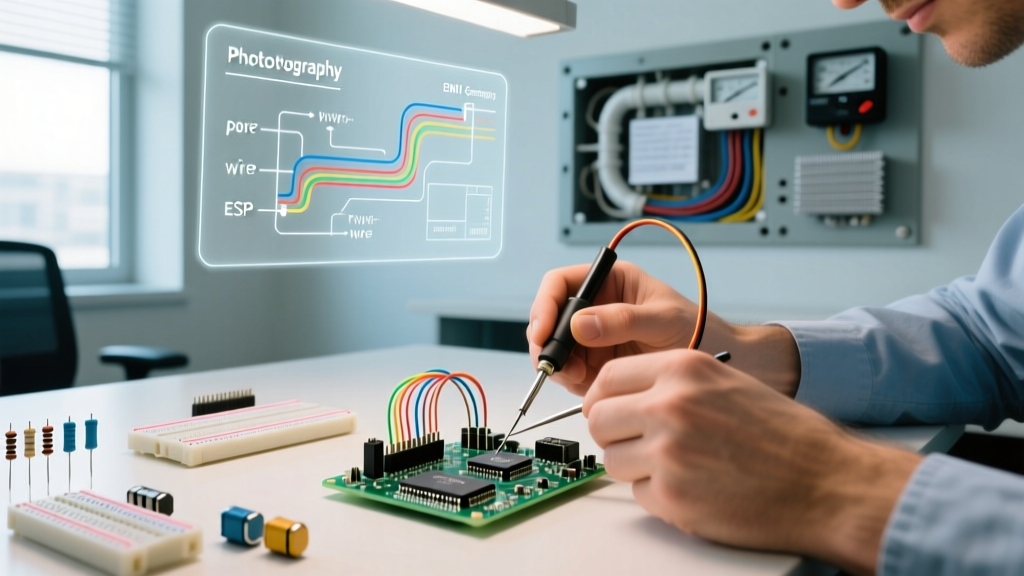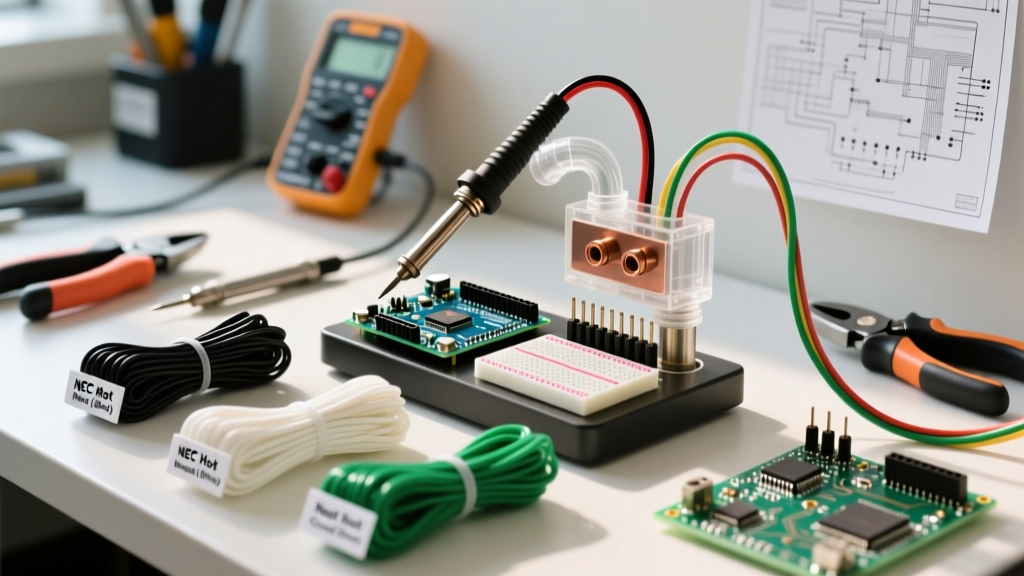

The Critical Divide: Aesthetics vs. Life Safety
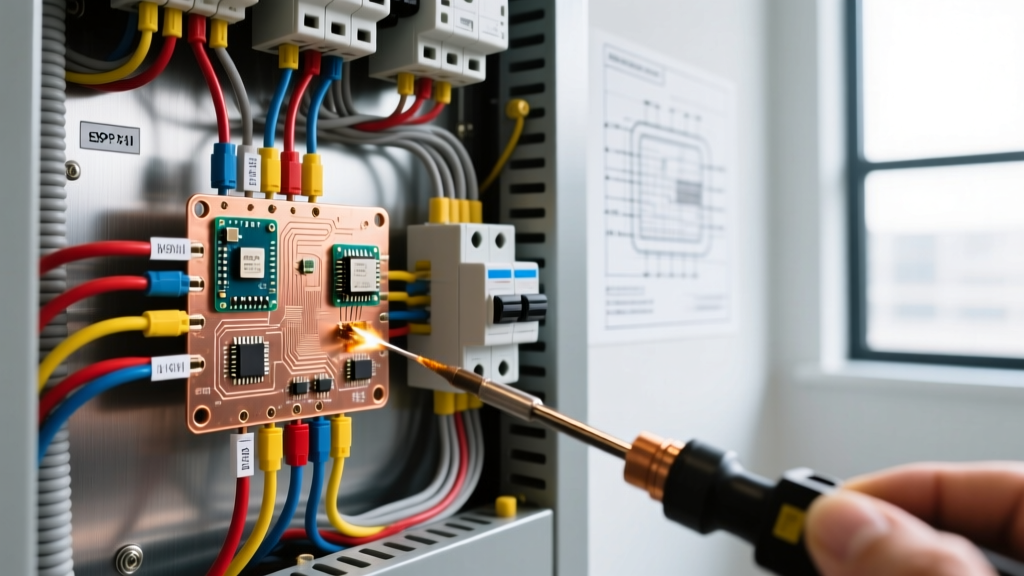
When opening a junction box, the visual chaos of unorganized wires is a hallmark of amateur work, while a meticulously color-coded panel signals professional mastery. However, color coding for electrical wiring is not merely an organizational preference; it is a rigid life-safety protocol dictated by the National Electrical Code (NEC). As we navigate the 2026 electrical landscape, with the widespread enforcement of NEC 2023 and early adoption of NEC 2026 drafts, the gap between DIY shortcuts and professional compliance has never been more heavily scrutinized by local inspectors.
This analysis dissects the realities of wire color identification, contrasting the common pitfalls of the DIY enthusiast with the rigorous, code-compliant workflows of licensed electricians. Whether you are pulling 12/2 NM-B (Romex) for a living room receptacle or routing THHN through EMT conduit for a commercial 3-phase panel, understanding the legal and practical boundaries of wire coloring is essential.
NEC Color Coding Matrix: Residential vs. Commercial
The NEC does not explicitly mandate a universal color for ungrounded (hot) conductors in standard residential single-phase systems, but it strictly dictates the colors for grounded (neutral) and equipment grounding conductors. Commercial and industrial settings, however, enforce strict phase-coloring rules. Below is the definitive matrix based on current National Fire Protection Association (NFPA) standards.
| System Type | Ungrounded (Hot) | Grounded (Neutral) | Equipment Ground |
|---|---|---|---|
| Residential 120/240V (NM-B Cable) | Black, Red (for 240V/3-way) | White or Gray | Bare Copper or Green |
| Residential 120/240V (Conduit/THHN) | Black, Red, Blue | White or Gray | Green or Bare Copper |
| Commercial 120/208V 3-Phase | Black, Red, Blue | White or Gray | Green or Bare Copper |
| Commercial 277/480V 3-Phase | Brown, Orange, Yellow | Gray | Green or Bare Copper |
The DIY Perspective: Common Code Violations and Risks
Homeowners and weekend warriors often approach wiring with a 'make it work' mentality. While a circuit may function perfectly well with reversed colors, the U.S. Consumer Product Safety Commission (CPSC) notes that improper identification is a leading contributor to fatal shock incidents during subsequent repairs or modifications.
The 'Sharpie' Re-Identification Myth
One of the most pervasive DIY violations involves using a white neutral wire as a hot conductor—common in 240V baseboard heaters or 3-way switch loops—without proper re-identification. Many DIYers believe wrapping a piece of black electrical tape around the ends or coloring it with a permanent marker satisfies the code. It does not. NEC Article 200.7(C)(2) requires that the re-identification must encircle the insulation and be applied at every location where the conductor is visible and accessible. Standard vinyl electrical tape (like generic 3M TemFlex) degrades, unspools, and loses adhesion inside warm junction boxes over time, leaving a future worker with a presumed neutral wire that is actually carrying 120V.
Multi-Wire Branch Circuit (MWBC) Phase Clashes
When running 12/3 or 14/3 cable to feed an MWBC (sharing a single neutral between two hot legs), the black and red wires must be connected to opposite phases (or opposite poles of a 240V breaker). If a DIYer incorrectly lands both the black and red wires on the same 120V phase, the neutral wire will carry the additive sum of the currents rather than the difference. A 14 AWG neutral wire carrying 30A instead of 0A will overheat, melt its insulation, and ignite a fire behind the drywall long before the 15A breakers trip.
The Professional Perspective: Workflow and Compliance
Licensed electricians view color coding as a risk-management tool and a benchmark of craftsmanship. Professional workflows rely on premium materials and strict adherence to NEC Article 210.4 (Multiwire Branch Circuits) and Article 250.119 (Equipment Grounding Conductors).
Phase Tape and Commercial 277/480V Systems
In commercial conduit runs, electricians pull individual THHN/THWN-2 conductors. While manufacturers sell pre-colored wire, professionals frequently use high-grade phase tape to identify hots at the termination points. A master electrician will use 3M Super 33+ vinyl tape or, preferably, 3M Scotch 2242 rubber splicing tape for permanent re-identification. Unlike cheap tape, Scotch 2242 vulcanizes to the wire insulation, creating a permanent, heat-resistant bond that will not unspool in a 140°F attic or a loaded panelboard.
Tooling and Verification
Professionals never trust color alone. Before stripping a wire, an electrician will verify the absence of voltage using a non-contact tester or a multimeter like the Fluke T6-1000. When stripping 12 AWG solid wire, pros use precision tools like the Klein Tools 11063W Katapult wire stripper to ensure the insulation is cut cleanly without nicking the copper, which could create a hot spot. Furthermore, professionals use handle-ties (NEC 210.4(B)) or 2-pole breakers for MWBCs, ensuring both the black and red hot legs are disconnected simultaneously during maintenance.
Expert Insight: 'Color is your first line of defense, but it is never your only line of defense. A professional assumes every wire is live until proven dead with a calibrated meter, regardless of whether the insulation is white, black, or green.' — Senior Electrical Inspector, 2026
Cost, Risk, and Execution Analysis
Understanding the financial and safety implications of DIY versus professional wiring helps contextualize why color coding standards are so rigorously enforced. The table below outlines the 2026 market realities for electrical labor and materials.
| Metric | DIY Execution | Professional Execution |
|---|---|---|
| Material Cost (per 100ft run) | $45 - $65 (Retail NM-B / THHN) | $35 - $50 (Wholesale bulk pricing) |
| Labor Cost (Hourly) | $0 (Your time) | $95 - $165 (Licensed Electrician) |
| Inspection Pass Rate | ~40% (Frequent re-identification failures) | 98% (First-time pass) |
| Risk of Arc Fault / Fire | High (Improper torque, stripped neutrals) | Minimal (Torque screwdrivers used) |
| Insurance Validity | Voided if unpermitted/uninspected | Fully covered and warrantied |
Edge Cases: 240V Appliances and Switched Legs
Where DIYers often freeze, professionals navigate edge cases seamlessly. Consider a standard 240V electric water heater or baseboard heater. These devices require two hot legs and a ground, but no neutral. When wiring these with 12/2 or 10/2 NM-B cable, the white wire must be used as a hot conductor. The NEC requires this white wire to be permanently re-identified with black or red tape or heat shrink at both the panel and the appliance junction box.
Similarly, in 3-way and 4-way switch loops, the white wire is frequently used as a 'traveler' or a 'switched leg' returning power to a light fixture. Again, NEC 200.7(C)(2) mandates re-identification. Professionals often opt to pull 14/3 or 12/3 cable specifically to keep the white wire reserved strictly for the neutral, using the black, red, and sometimes blue (in conduit) for the travelers, thereby eliminating the need for re-identification tape entirely and reducing the chance of an inspector issuing a correction notice.
Final Verdict: When to Step Back
The Occupational Safety and Health Administration (OSHA) maintains stringent guidelines on electrical safety, emphasizing that improper wiring identification leads to catastrophic failures in both residential and occupational settings. If your project involves pulling new circuits, upgrading a panel, or working with 240V+ systems, the complexity of NEC color coding and phase balancing demands professional intervention.
For simple like-for-like receptacle replacements where the existing color coding is intact and verified with a meter, a knowledgeable DIYer can proceed safely. However, if you open a box and find a white wire wrapped in fading masking tape, or a bare copper wire tucked under a hot screw terminal, stop immediately. These are the hallmarks of dangerous amateur work that require a licensed professional to audit, re-identify, and correct to 2026 code standards.