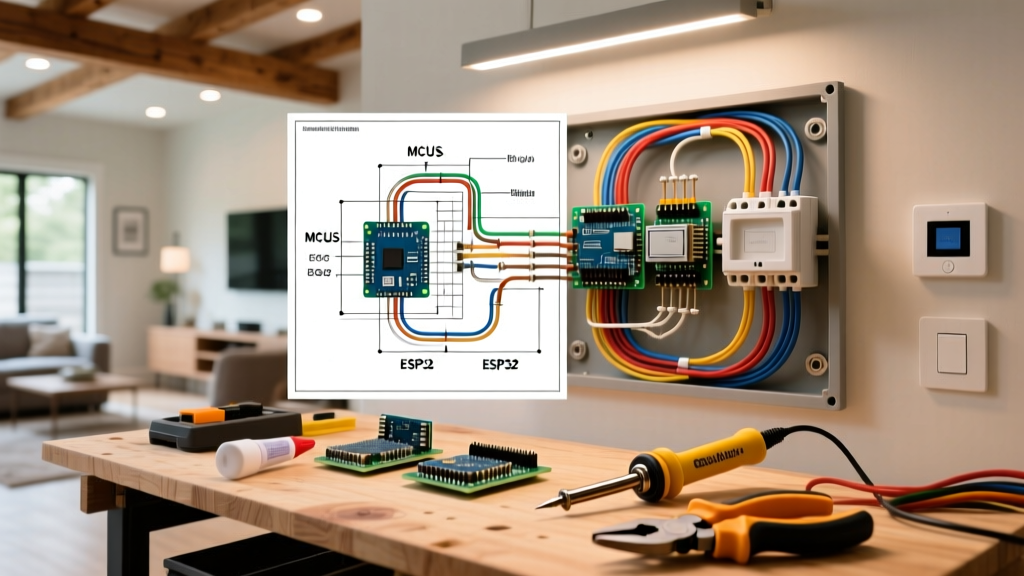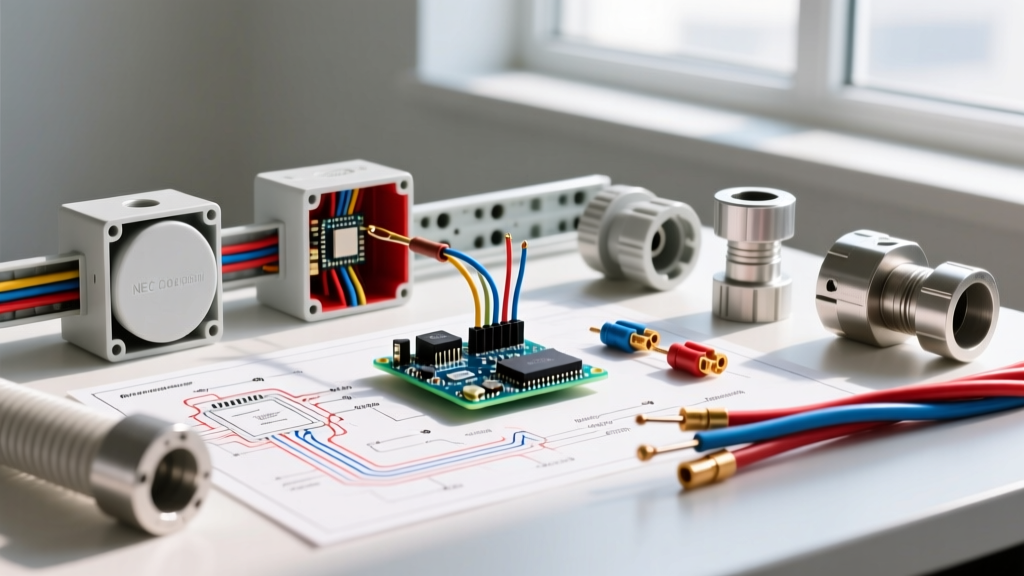

Decoding the NEC: What Qualifies as an Electric Wiring Cover?
In the electrical trade, the term "electric wiring cover" is semantically broad. A homeowner might use it to describe a plastic blanking plate over an abandoned junction box, while a commercial electrician might use it to refer to the snap-on lid of a surface metal raceway or the heavy-duty brass plate sealing a concrete floor box. Regardless of the specific hardware, the National Electrical Code (NEC / NFPA 70) treats all wiring covers under a strict, unified mandate: they must contain arcs, prevent accidental contact with live parts, and maintain the fire-resistive rating of the building assembly.
This guide breaks down the exact NEC articles, UL testing standards, and real-world installation parameters governing every type of electric wiring cover. Whether you are roughing in a new commercial build or troubleshooting a residential remodel, understanding these code boundaries is critical for passing inspection and ensuring long-term safety.
Core NEC Mandates: Articles 314 and 110
The foundational rules for wiring covers are located in NEC Article 314 (Outlet, Device, Pull, and Junction Boxes; Conduit Bodies; Fittings; and Handhole Enclosures) and Article 110 (Requirements for Electrical Installations).
The "No Exposed Live Parts" Rule (NEC 110.27)
NEC 110.27(A) requires the guarding of live parts. Any wiring splice, termination, or connection point operating at 50 volts or more must be housed in an approved enclosure. The electric wiring cover is the final barrier that satisfies this requirement. If a cover is missing, cracked, or improperly seated, the enclosure is considered "open," resulting in an immediate code violation.
Box and Conduit Body Covers (NEC 314.25)
NEC 314.25 explicitly states that boxes and conduit bodies must be closed by covers that are "approved for the conditions of use." This means a standard indoor steel blanking plate cannot be used in a wet location, and a non-metallic PVC cover cannot be used on a metal box unless specifically listed for such mating by the manufacturer. Furthermore, the cover must be secured with the appropriate machine screws or captured hardware; using drywall screws or friction-fit tape is a direct violation.
Electric Wiring Cover Taxonomy & Code Applications
To specify the correct electric wiring cover, you must first identify the enclosure type and environmental conditions. The matrix below outlines the most common cover types, their governing code sections, and current market pricing for standard commercial-grade components.
| Cover Type | Primary NEC Reference | Typical Application | Example Product & Est. Cost |
|---|---|---|---|
| Blanking Plate (Junction Box) | NEC 314.25, 314.80 | Sealing unused 4x4 or octagonal boxes where splices exist but no device is installed. | Arlington F104 (4-in. Steel) ~ $0.85 |
| Conduit Body Cover | NEC 314.28, 314.29 | Type LB, LL, LR, and C bodies used for wire pulling and directional changes in EMT/Rigid conduit. | Appleton C-Type Cover w/ Gasket ~ $4.50 |
| Surface Raceway Lid | NEC Article 344, 362 | Wiremold or surface PVC channels used in retrofits where in-wall routing is impossible. | Wiremold V5 Metal Lid ~ $2.15/ft |
| Floor Box Cover | NEC 314.27(B), 406.9 | Recessed concrete or raised floor boxes in commercial offices; must withstand foot traffic and wet mopping. | Hubbell HBL40GB (Brass) ~ $68.00 |
| In-Use Weatherproof Cover | NEC 406.9(B)(1) | Outdoor receptacles where a cord will remain plugged in while exposed to rain. | TayMac ML500 Extra-Duty ~ $14.50 |
Wet, Damp, and Outdoor Locations (NEC 406.9)
When an electric wiring cover is installed outdoors or in a damp location (such as an unheated garage or under a canopy), standard flat steel plates are strictly prohibited. Moisture ingress leads to corrosion, which increases resistance at splice points and creates a severe fire hazard.
For outdoor receptacles, NEC 406.9(B)(1) mandates the use of an "extra-duty" weatherproof in-use cover. These covers are deeper than standard bubble covers, allowing a standard 15A or 20A plug to be fully inserted while the hinged door remains closed and latched. Products like the TayMac ML500 or Sigma Electric ProConnect in-use covers feature integrated gaskets and lockable hasps, satisfying both the NEC and general security requirements for commercial exteriors.
Inspector’s Note: A common failure point in wet location covers is the omission of the internal foam or rubber gasket. Even if the cover is listed for wet locations, installing it without the manufacturer-provided gasket voids the UL listing and violates NEC 110.3(B), which requires equipment to be installed in accordance with the instructions included in the listing.
The Accessibility Mandate: NEC 314.29
Perhaps the most frequently violated code regarding electric wiring covers is NEC 314.29, which governs accessibility. The code dictates that boxes and conduit bodies must be installed so that the wiring within them is "accessible without removing any part of the building or, in underground circuits, without excavating sidewalks, paving, earth, or other substance that is to be used to establish the finished grade."
What Constitutes "Accessible"?
- Acceptable: A junction box cover located behind a drop-ceiling grid tile, behind a hinged access panel, or exposed on a basement ceiling.
- Violation: A junction box cover that is buried behind drywall, plaster, wood paneling, or spray foam insulation.
- Violation: A conduit body cover buried inside a concrete wall or under a poured slab without a designated access hatch.
If a splice is to be buried permanently, it cannot be inside a standard box with a cover. Instead, electricians must use listed direct-burial splice kits (such as 3M Scotchcast resin-filled splice kits) that do not require future access, or pull continuous, unspliced wire runs.
Material Standards: UL 514A and Plenum Ratings
All electric wiring covers must be tested and listed by a Nationally Recognized Testing Laboratory (NRTL) like UL or CSA. For boxes and covers, the governing standard is UL 514A (Boxes and Fittings for Use with Rigid and Electrical Metallic Tubing) or UL 514C (Nonmetallic Outlet Boxes, Flush-Device Boxes, and Covers).
Metal vs. Non-Metallic Mating
You generally cannot mix and match materials arbitrarily. A PVC conduit body cover must be threaded onto a PVC conduit body using PVC solvent cement or listed threaded adapters. Attempting to thread a metal cover onto a PVC body, or vice versa, often results in stripped threads and a loss of environmental sealing. Furthermore, NEC 314.3 requires that non-metallic boxes and covers be used only with non-metallic wiring methods (like NM-B Romex or PVC conduit) unless a specific grounding provision is met.
Plenum Space Requirements (NEC 300.22)
If your wiring cover is located in an environmental air-handling space (a drop ceiling used for return air), the cover and its enclosure must be constructed of metal or be listed as having adequate fire-resistance and low-smoke-producing characteristics. Standard PVC covers will emit toxic halogen gases when exposed to fire, making them a severe life-safety hazard in plenums.
Top 3 Code Violations & Edge Cases
Based on OSHA wiring method standards and field inspection data, here are the most common infractions involving wiring covers:
- The "Drywall Mud" Cover-Up: Drywall finishers frequently trowel joint compound over junction box edges and covers to create a seamless wall. This violates NEC 314.29 (accessibility) and creates a massive fire hazard if a splice arcs, as the drywall compound will crack and fall away, exposing the arc to the wall cavity. Solution: Always use adjustable plaster rings and protect covers with masking tape during the mudding phase.
- Missing Conduit Body Gaskets: In outdoor EMT runs, electricians often lose the small neoprene gasket that sits between the conduit body (e.g., an LL body) and its cover. Omitting this gasket allows water to wick into the conduit via capillary action, eventually destroying wire insulation. Solution: Carry spare Appleton or O-Z/Gedney gaskets in your pouch; never rely on silicone caulk as a substitute for a listed gasket.
- Oversized Knockouts Left Open: When pulling wire through a 4x4 box, an electrician might punch out a 1-inch knockout but only use a 1/2-inch connector. Leaving the remaining gap open, or covering it with electrical tape, violates NEC 314.17 and 110.12. Solution: Use an Arlington Industries KO Seal (e.g., KO-100) or a listed steel knockout reducer ring before securing the main cover.
Summary
An electric wiring cover is never just a cosmetic afterthought; it is a critical life-safety component regulated by stringent NEC articles and UL testing standards. From ensuring wet-location gaskets are fully seated to verifying that no box cover is buried behind architectural finishes, adherence to these codes prevents electrical fires and ensures system maintainability. Always verify the NRTL listing mark on the cover itself, match the material to the enclosure, and ensure the final installation remains fully accessible to future electricians.