
Planning Your Remodel: Choosing the Right Electrical Wire for Outlets
When gutting a room or adding a new addition, the electrical rough-in phase is where your renovation either succeeds or faces costly inspection failures. Selecting the correct electrical wire for outlets is not just about meeting the bare minimum code; it is about future-proofing your home for the power demands of 2026 and beyond. From home offices packed with high-draw electronics to kitchens running smart appliances, the branch circuit conductors you pull behind the drywall dictate the safety and functionality of your space.
This guide cuts through the jargon to provide contractors and DIY renovators with exact specifications, current material costs, and critical National Electrical Code (NEC) requirements for outlet wiring.
The Core Decision: 14 AWG vs. 12 AWG NM-B Cable
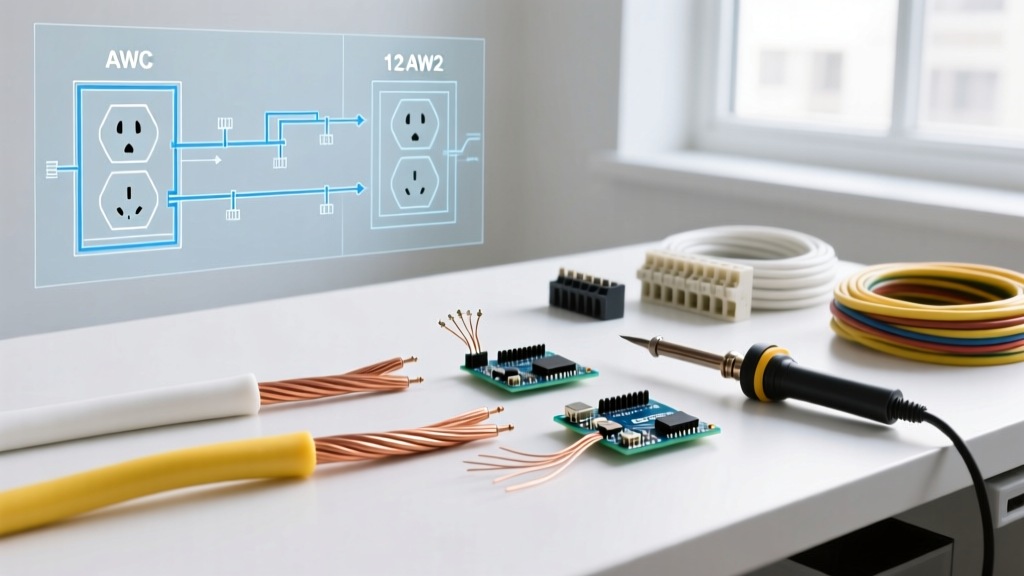
The most common cable used for indoor residential outlet wiring is Non-Metallic Sheathed Cable (NM-B), widely known by the brand name Romex. For standard 120-volt receptacle circuits, you are choosing between 14 AWG and 12 AWG.
Why 12 AWG is the Renovation Standard in 2026
While 14 AWG wire is rated for 15-amp breakers and is perfectly legal for general living areas and bedrooms, experienced renovators are increasingly standardizing on 12 AWG wire (rated for 20-amp breakers) for almost all outlet circuits. Why? The cost difference per linear foot is marginal, but 12 AWG provides a 33% increase in current capacity. This prevents voltage drop on long runs and accommodates the higher baseline power draw of modern household electronics, space heaters, and vacuum cleaners without nuisance tripping.
| Cable Type | Gauge | Max Breaker | 2026 Avg. Cost (250ft Roll) | Best Renovation Use |
|---|---|---|---|---|
| NM-B (Standard) | 14/2 w/ Ground | 15 Amp | $85 - $100 | Bedrooms, living rooms, low-draw lighting |
| NM-B (Standard) | 12/2 w/ Ground | 20 Amp | $115 - $135 | Kitchens, bathrooms, garages, home offices |
| NM-B (3-Wire) | 12/3 w/ Ground | 20 Amp | $170 - $195 | Multi-way switches, smart home neutral runs |
| MC (Metal Clad) | 12/2 w/ Ground | 20 Amp | $160 - $190 | Exposed basement walls, commercial remodels |
Note: Copper prices fluctuate. Pricing reflects early 2026 market averages for major brands like Southwire and Cerro Wire.
NEC Code Requirements by Room (2023/2026 Cycle)
The National Fire Protection Association (NFPA) updates the NEC regularly, and most jurisdictions in 2026 are enforcing the 2023 or newer code cycles. Here is how the code dictates your electrical wire for outlets in specific rooms:
- Kitchens (NEC 210.11(C)(1)): You must install at least two 20-amp small-appliance branch circuits. 14 AWG wire is strictly prohibited here. You must use 12/2 NM-B minimum. These circuits cannot serve lighting or other rooms.
- Bathrooms (NEC 210.11(C)(3)): Requires at least one 20-amp circuit for receptacle outlets. Again, 12 AWG wire is mandatory. If the bathroom has a high-draw hair dryer or heated towel rack, a dedicated 20-amp circuit is highly recommended.
- Garages and Outdoors (NEC 210.8): All 125-volt through 250-volt receptacles installed in garages, outdoors, or in crawl spaces must have GFCI (Ground-Fault Circuit Interrupter) protection. While the GFCI protection can be at the breaker or the first outlet in the chain, using 12 AWG wire is standard practice to handle power tools and EV trickle chargers.
Expert Insight: Do not confuse GFCI with AFCI. Under NEC 210.12, almost all 120-volt, 15- and 20-amp branch circuits supplying outlets in living areas, bedrooms, kitchens, and laundry rooms now require Arc-Fault Circuit Interrupter (AFCI) protection. Plan your breaker panel budget accordingly, as AFCI/GFCI dual-function breakers cost between $45 and $65 each in 2026.
The Smart Home Trap: Neutral Wire Requirements
If you are renovating an older home (pre-1990s) and plan to install smart outlets, smart switches, or automated window treatments, you must account for neutral wires. Legacy switch loops often only pulled a 2-wire cable (hot and switched-hot) to the wall box, relying on the fixture for the neutral return.
Modern smart devices require a constant neutral wire in the box to power their internal Wi-Fi or Zigbee radios. When planning your rough-in, always pull 12/3 or 14/3 NM-B cable to switch locations that might host smart devices. This provides the hot, the switched-hot, and the dedicated neutral, saving you from having to tear open finished walls later.
Voltage Drop: The Hidden Renovation Failure
One of the most frequently overlooked edge cases in large renovations—such as finishing a distant bonus room over a garage or running power to a detached workshop—is voltage drop. The NEC recommends that the maximum voltage drop for a branch circuit should not exceed 3%.
If you are running a 120-volt outlet circuit that is more than 50 feet from the main panel, standard 14 AWG or even 12 AWG wire might result in a voltage drop exceeding 5%, which can damage sensitive electronics and cause motors to overheat. As detailed by industry experts at Mike Holt Enterprises, the solution is to upsize your conductors.
Voltage Drop Upsizing Guide (120V, 20A Circuit)
- 0 to 45 feet: 12 AWG Copper (Standard)
- 46 to 75 feet: 10 AWG Copper (Upsized)
- 76 to 115 feet: 8 AWG Copper (Upsized)
Remember: You must ensure the lugs on your breaker and the receptacle terminals are rated to accept the larger wire gauge. If a standard 20A receptacle cannot physically accept 10 AWG wire, you must pigtail it down to 12 AWG inside an oversized junction box.
Estimating Material and Pro-Tips for Pulling Wire
Accurate material estimation prevents mid-project delays. When calculating the electrical wire for outlets needed for your renovation, use the following formula:
- Measure the Run: Measure from the panel to the first outlet, then daisy-chain to the furthest outlet.
- Add Box Allowances: Add 12 inches of slack for every outlet box and 24 inches of slack at the main panel.
- Apply the Waste Factor: Add 15% to your total linear footage to account for measurement errors, mis-cuts, and complex routing around HVAC ducts or plumbing stacks.
Physical Pulling Tips for Finished Walls
If your renovation involves retrofitting outlets into existing drywall rather than a full gut, the physical properties of the wire matter. Cables featuring advanced jacket lubricants (such as Southwire's SIMpull technology) reduce pulling tension by up to 50%. When fishing wire through blind stud bays, use a fiberglass fish tape and attach the wire using a smooth, tapered pulling eye to prevent the cable from snagging on fire blocks or existing plumbing.
Common Inspection Failures to Avoid
Do not let a failed electrical inspection halt your renovation timeline. Avoid these common mistakes:
- Mixed Gauge Circuits: Never put 14 AWG wire on a 20-amp breaker, even if it is just a short jumper to a single outlet. The entire circuit must be rated for the breaker size. If 12 AWG wire enters a box and you need to extend it, the extension must also be 12 AWG.
- Stapling Too Close to the Edge: When running NM-B cable through studs, it must be set back at least 1.25 inches from the edge of the framing. If this is impossible due to pipe or duct crowding, you must install a steel nail plate to prevent drywall screws from piercing the wire jacket later.
- Overcrowding Boxes: NEC box fill calculations dictate how many wires can enter a receptacle box. A standard single-gang box can typically hold four 12/2 cables. If you are daisy-chaining multiple outlets, upgrade to deep 2.5-inch boxes to accommodate the stiff 12 AWG copper and smart device pigtails.
Final Thoughts on Renovation Wiring
Choosing the best electrical wire for outlets during a renovation requires balancing upfront material costs against long-term safety, code compliance, and functional capacity. By standardizing on 12 AWG NM-B for general receptacles, respecting AFCI/GFCI mandates, and planning for smart-home neutrals and voltage drop, you ensure your remodeled space is safe, legal, and ready for the future.